
Short Description
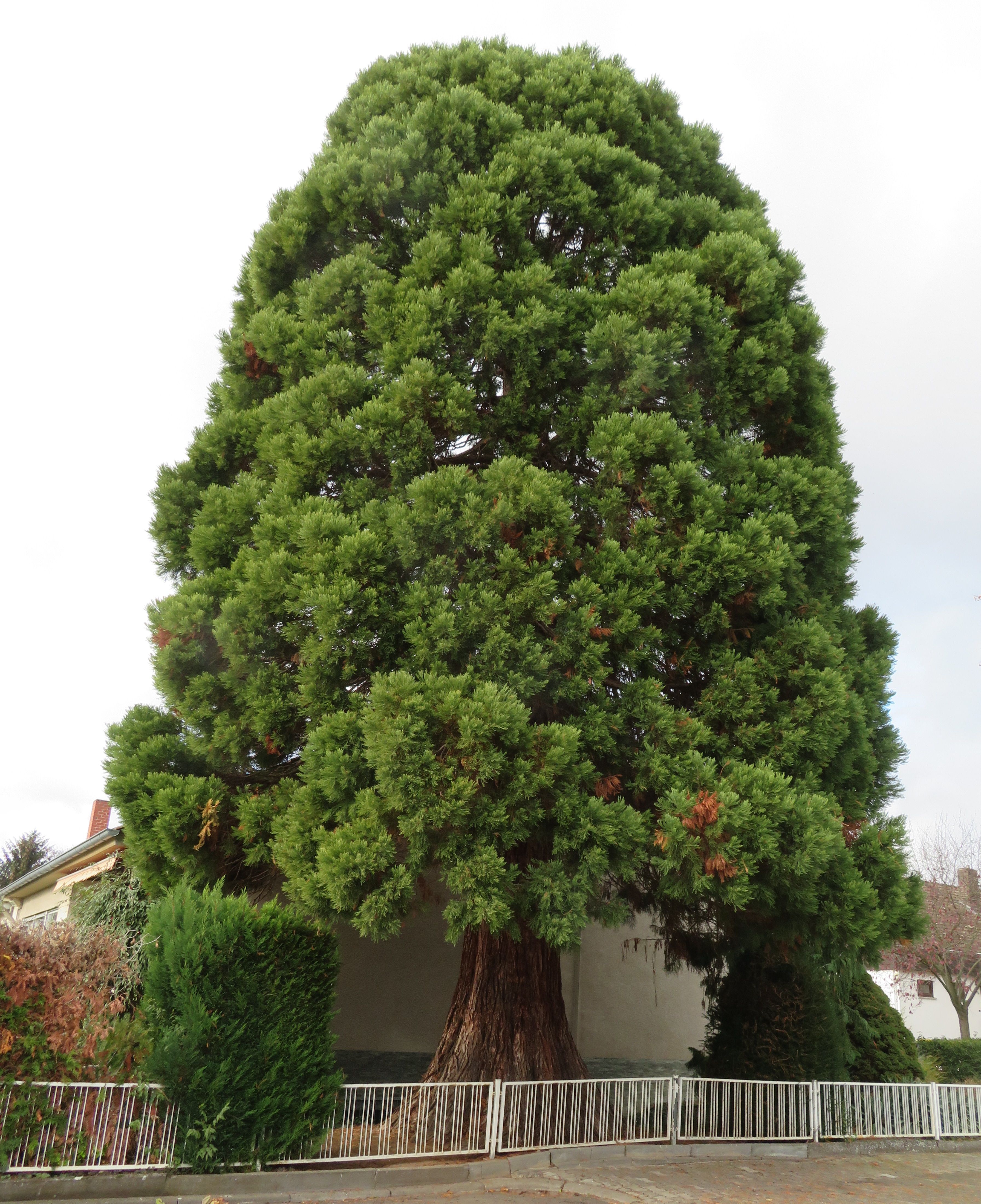
The giant sequoia is an evergreen conifer. It grows up to 50 metres high in Central Europe.
The scale-like needles sit spirally in three rows on the twig. They are bluish green.
The trunk is upright and straight. It widens noticeably near the ground. The bark is cinnamon brown.
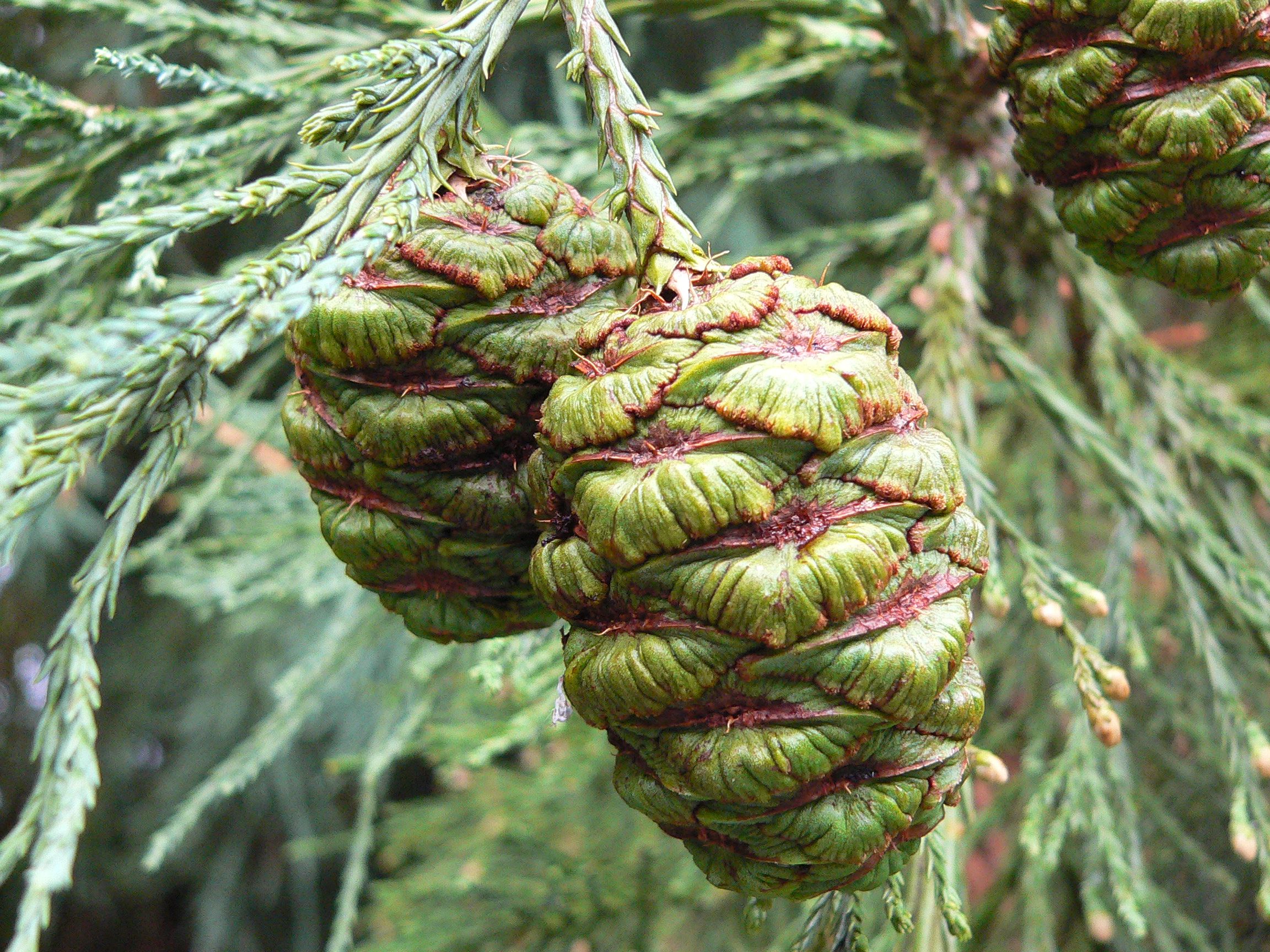
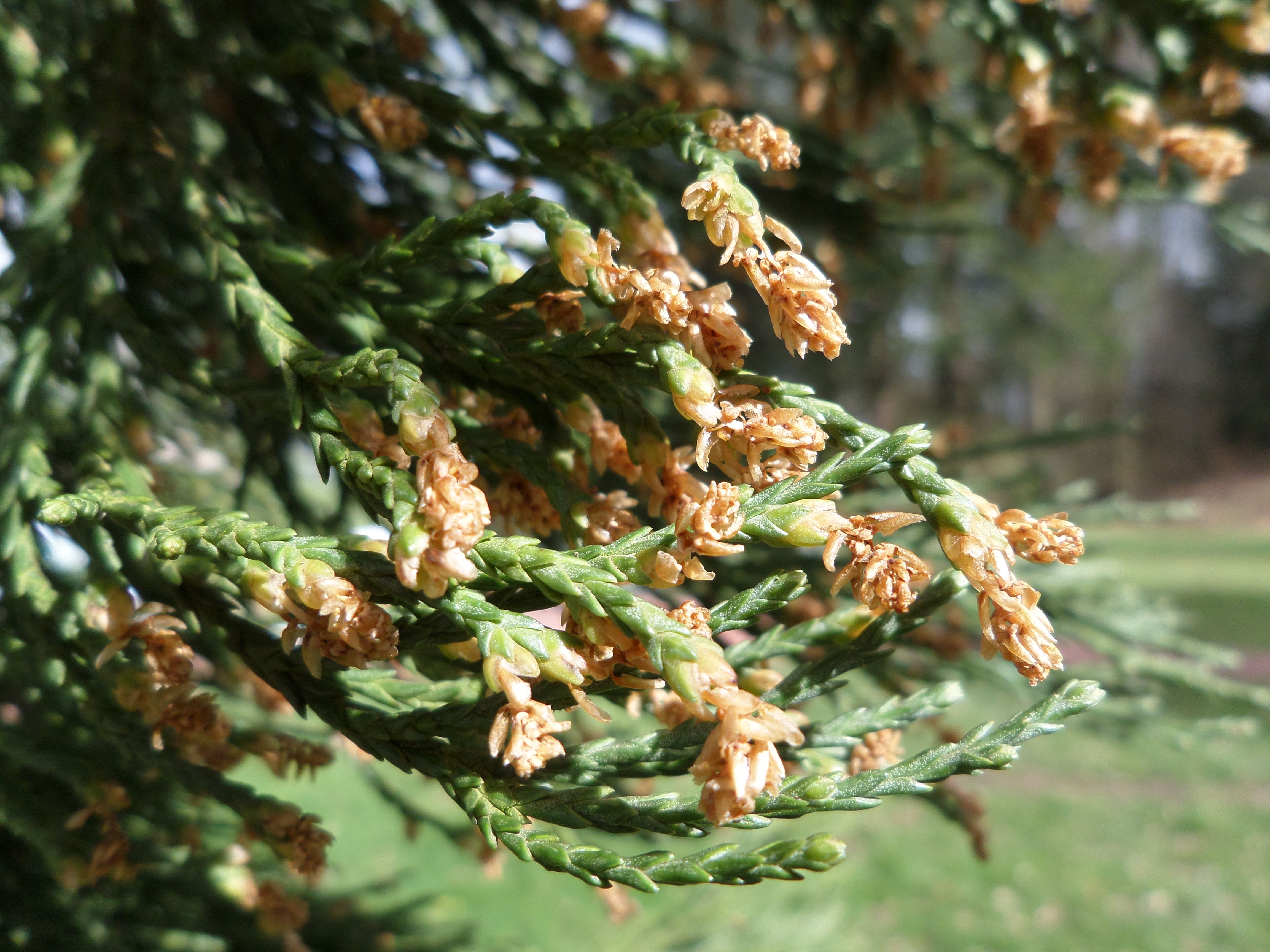
There are male and female flower cones. The male flowers are small and yellowish. The female flower cones are larger, green and usually sit singly at the end of a shoot.
The cones are ovate. They are leathery green at first. At maturity they become woody and reddish brown in colour.
Features
Giant sequoia
Sequoiadendron giganteum
cinnamon brown bark
stem broadened near the ground
In the city
The giant sequoia originally comes from America and was introduced to Europe as an ornamental tree. It is often found as a large solitary tree in parks. Occasionally it is also planted in gardens.
Fun Facts
The flowering period is from March to April.
The oldest living giant sequoia grows in California and is over 3200 years old.
The giant sequoia is a pyrophyte, i.e. a plant adapted to living with fire. The thick bark protects the trunk and the cones release the seeds preferentially in high heat, as the open soils provide good germination conditions after a forest fire.
Redwood trees were also native to Europe before the Ice Age.
- Endangerment level Germany: not evaluated
Sources
Weibliche Zapfen, Thereidshome, PD, https://upload.wikimedia.org/wikipedia/commons/e/ef/GreenSeedConesSequoiadendronGiganteum.JPG

Männliche Blütenzapfen, Rosser1954, CC BY-SA 4.0, https://upload.wikimedia.org/wikipedia/commons/3/38/Wellingtonia_male_cones_-_Sequoiadendron_giganteum.JPG

Habitus, Sciencia58, CC BY-SA 4.0, https://upload.wikimedia.org/wikipedia/commons/5/59/Sequoiadendron_giganteum_-_jung.jpg

Bachofer, M. & Mayer, J. (2015) Der Kosmos Baumführer. 370 Bäume und Sträucher Mitteleuropas. Stuttgart: Franckh-Kosmos Verlags-GmbH & Co. KG.
Lüder, R. (2019) Bäume bestimmen. Knospen, Blüten, Blätter, Früchte. Bern: Haupt Verlag.
Page „Riesenmammutbaum“. : Wikipedia, The Free Encyclopedia. Date of last revision: 22.06.2021, 17:05 UTC. URL: https://de.wikipedia.org/w/index.php?title=Riesenmammutbaum&oldid=213200166 (Accessed: 22.09.2021).