
Short Description
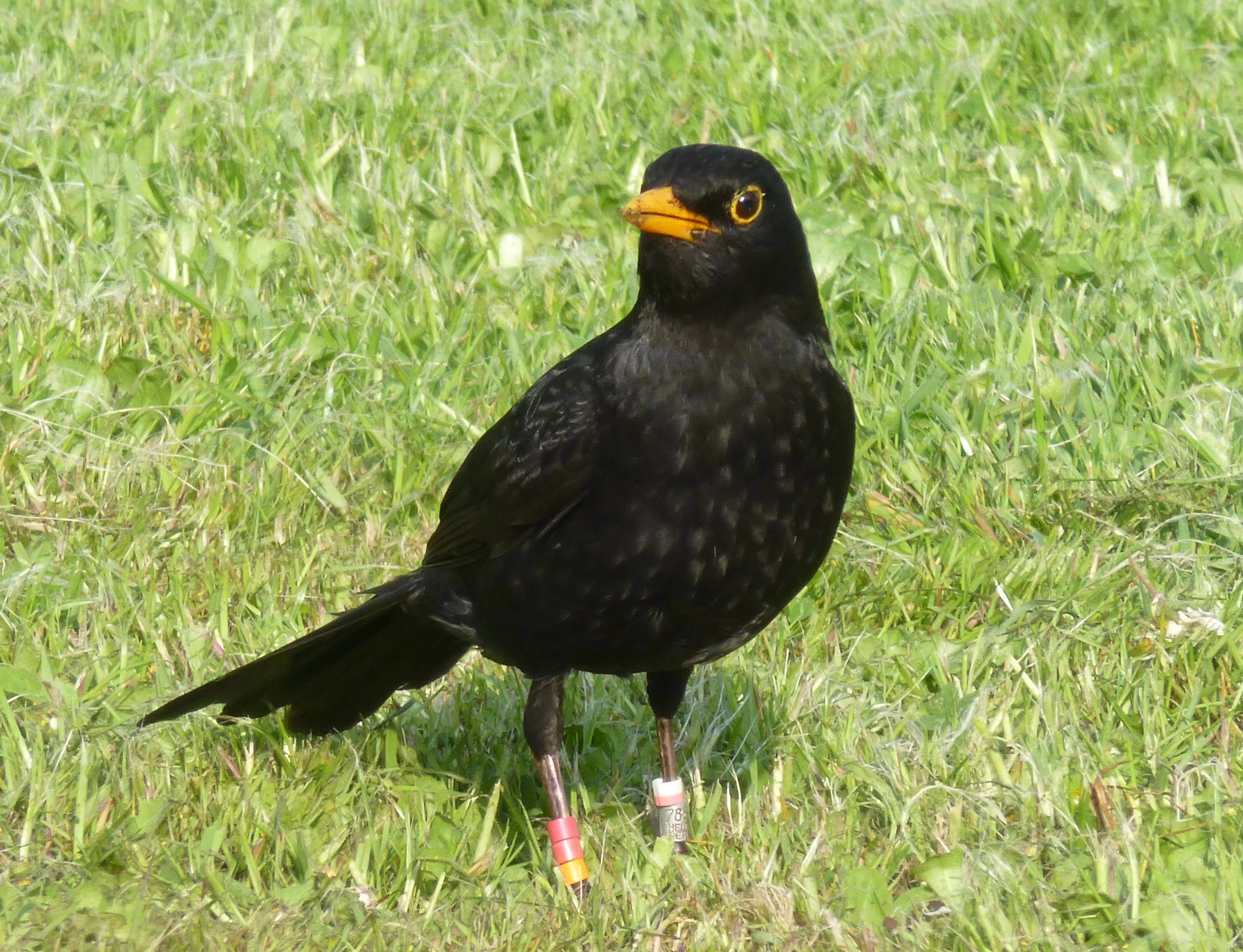
The common blackbird is a medium-sized songbird that often moves about by running or hopping on the ground.
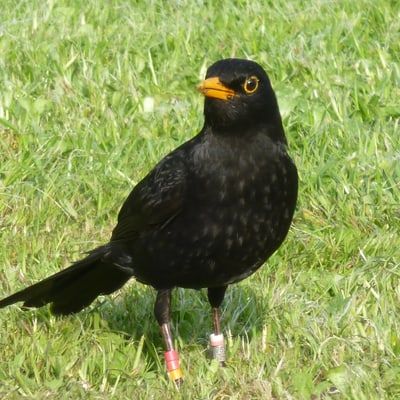
Males can be recognised by their black plumage, their striking yellow to orange bill and eye-ring.
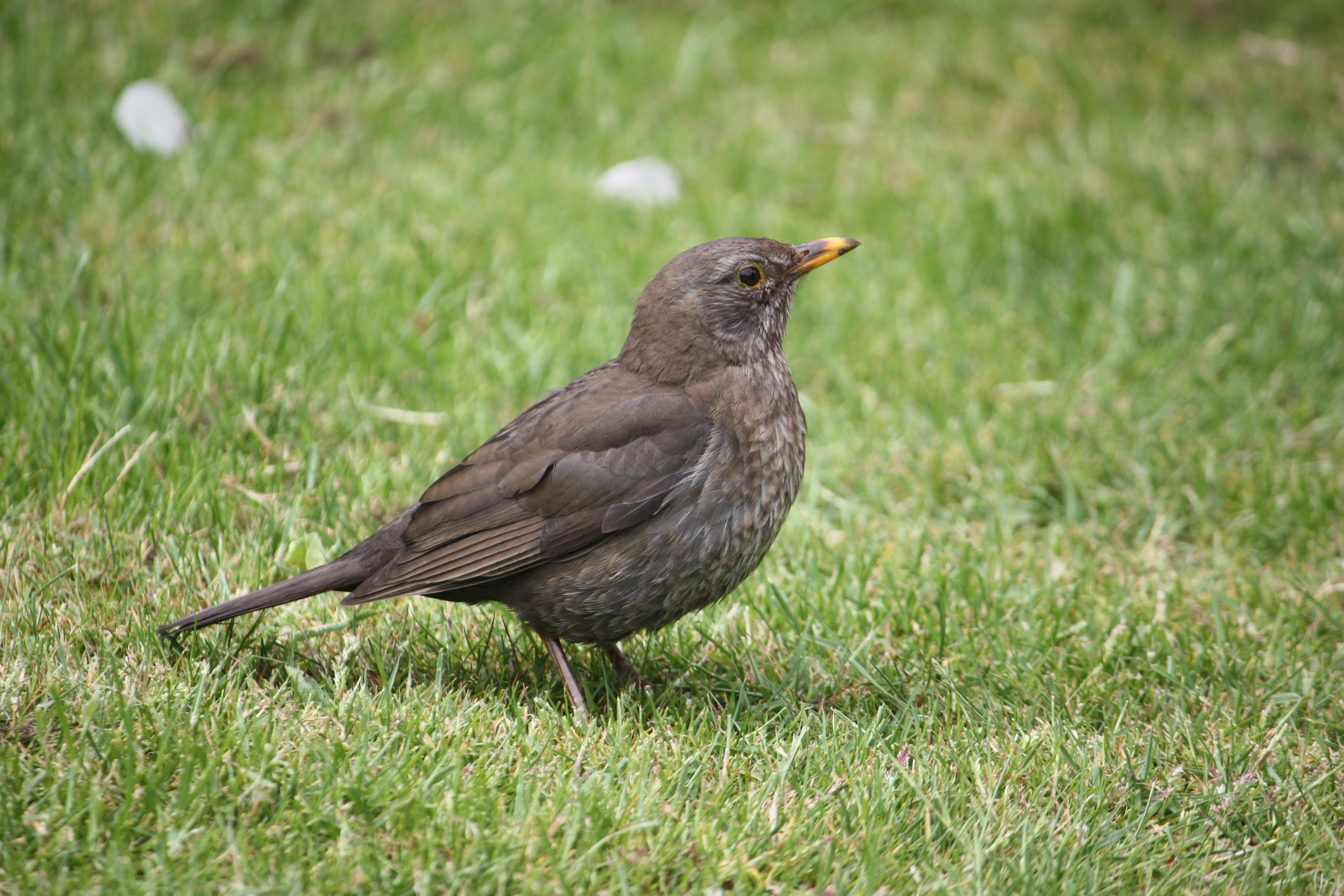
The female is brown with less striking bill and eye-ring than in males.
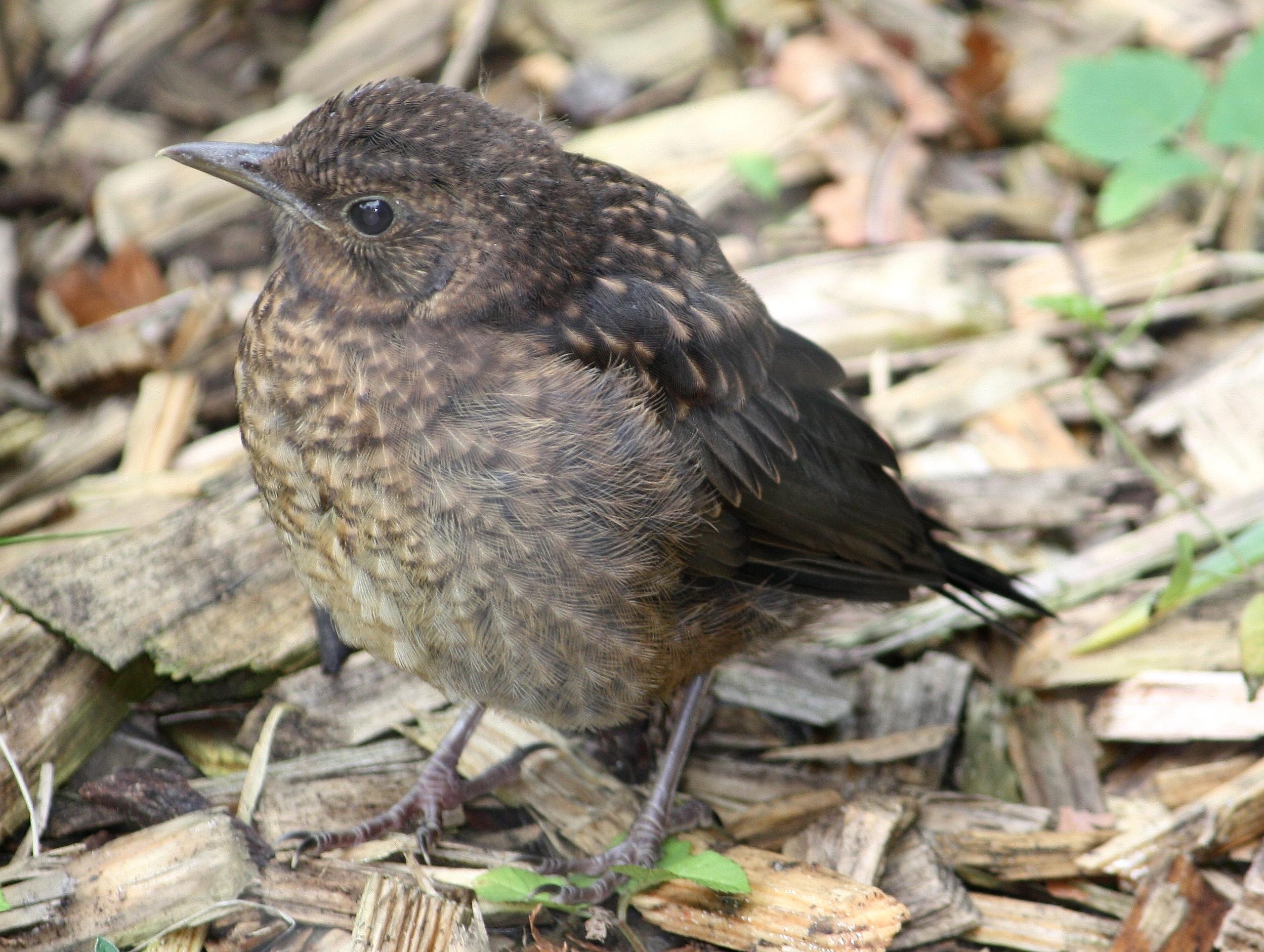
Young males have a brown plumage and thus look similar to females. But they already have a bright orange-yellow bill and eye-ring in males.
Features
Common blackbird
Turdus merula
bright orange-yellow bill and eye-ring in males
fluttering up and loud clamouring when disturbed
Amselgesang
Tembrock, CC BY-SA 3.0

Similar species
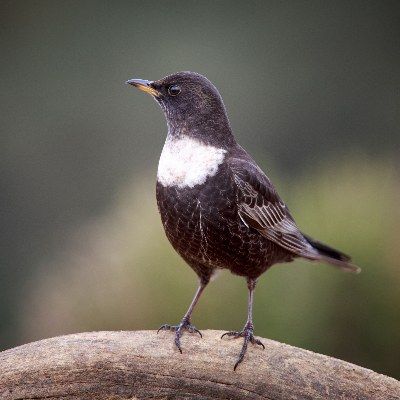
Ring ouzel
Turdus torquatus
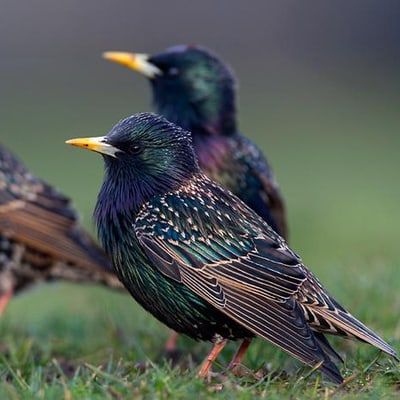
Starling
Sturnus vulgaris
In the city
Originally, blackbirds lived in forests, building their nest in the undergrowth. Nowadays, blackbirds can be frequently found in urban areas, too. They live in cemeteries, gardens and parks. They can increasingly also be found in inner-city areas devoid of many green spaces. As a result of the mild climate and a good supply of food all year round, blackbirds stay for the winter. In an urban environment, the blackbird mating season already starts in winter and their territorial song can be heard. Studies have shown that in urban noise blackbirds tend to sing at a higher pitch and can thus be heard better over greater distances in the city.
Blackbirds often visit bird feeders and are less shy in an urban setting.
Fun Facts
About 150 years ago, blackbirds tended to be shy forest birds. These days, they are the most common bird species in Germany and can be found in almost any green space.
From February to July, they start to sing approx. 45 minutes before sunrise.
As a blackbird is a well-known and common medium-sized songbird, it is often used in size comparisons.
- Endangerment level Germany: not endangered
Sources
Männchen, Wald1siedel, CC BY-SA 4.0, https://commons.wikimedia.org/wiki/File:Turdus_merula,_Common_Blackbird,_Amsel.JPG?uselang=de

Weibchen, Romate, CC BY-SA 3.0, https://commons.wikimedia.org/wiki/File:Amsel_weiblich_g.JPG

Jungtier, Romate, CC BY-SA 3.0, https://commons.wikimedia.org/wiki/File:21_days_old_a.jpg

Page „Amsel“. : Wikipedia, The Free Encyclopedia. Date of last revision: 10.02.2021, 08:42 UTC. URL: https://de.wikipedia.org/w/index.php?title=Amsel&oldid=208651516 (Accessed: 10.02.2021).
Svensson, L. (2011) Der Kosmos Vogelführer - Alle Arten Europas, Nordafrikas und Vorderasiens, Stuttgart: Franckh Kosmos Verlag.
Fiedler, W. (2015) Die Vögel Mitteleuropas sicher bestimmen - Schlüssel zur Art-, Alters- und Geschlechtsbestimmung, Wiebelsheim: Quelle & Meyer Verlag.
Lieckfeld, C.-P. & Straaß, V. (2002) Mythos Vogel, München: BLV.
Voigt, A. (2006) Exkursionsbuch zum Studium der Vogelstimmen, Heidelberg: Quelle & Meyer Verlag.
Harrison, C. (1975) Jungvögel, Eier und Nester aller Vögel Europas, Nordafrikas und des Mittleren Ostens - Ein Naturführer zur Fortpflanzungsbiologie, Hamburg und Berlin: Verlag Paul Parey.
Slabbekoorn, H. (2013) Songs of the city: noise-dependent spectral plasticity in the acoustic phenotype of urban birds, Animal Behaviour, 85(5), 1089-1099.
Witt, K. & Steiof, K. (2013) Rote Liste und Liste der Brutvögel von Berlin, 3. version, 15.11.2013. : Berliner Ornithologische Arbeitsgemeinschaft e.V. (eds.) Berliner Ornithologischer Bericht, volume 23, Berlin: Berliner Ornithologische Arbeitsgemeinschaft e.V., 1-23.
NABU – Naturschutzbund Deutschland e.V. (2016) Vogeluhr, URL: https://www.nabu.de/nabu_vogeluhr2/index.php?iframed=1 (Accessed: 10.02.2021).
Artenfinder (2016) Turdus merula (Amsel), URL: https://arteninfo.net/elearning/voegel/speciesportrait/3120 (Accessed: 18.04.2016).