
Short Description
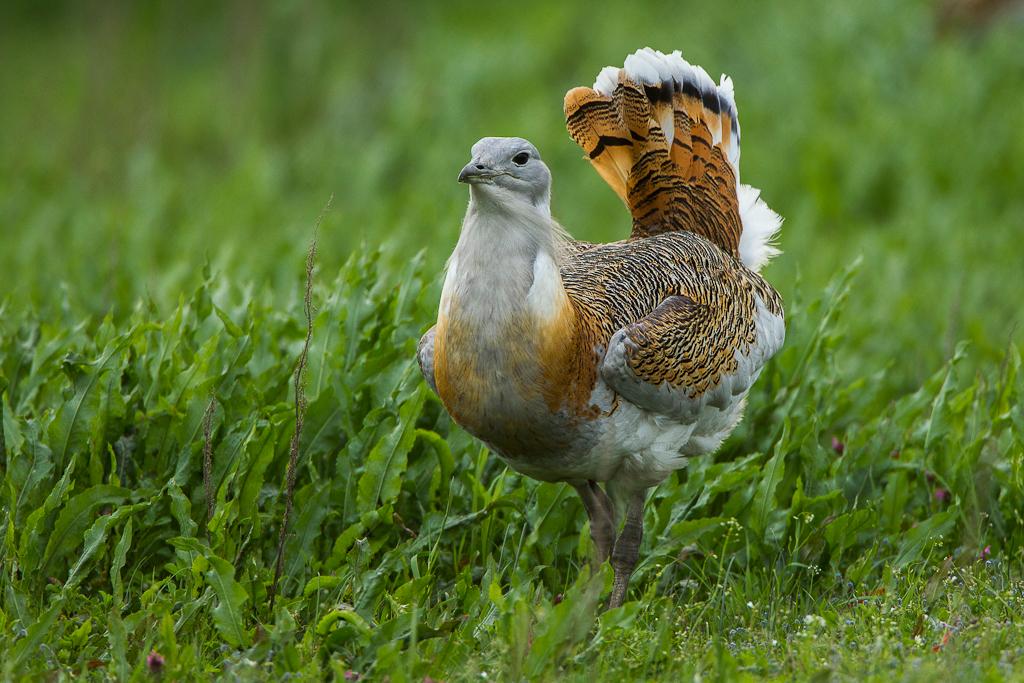
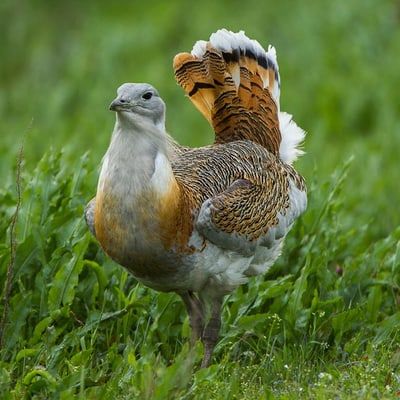
The great bustard is a brown pied, large bird with strong legs.
Older males have a feathery beard from the beak to the middle of the neck.
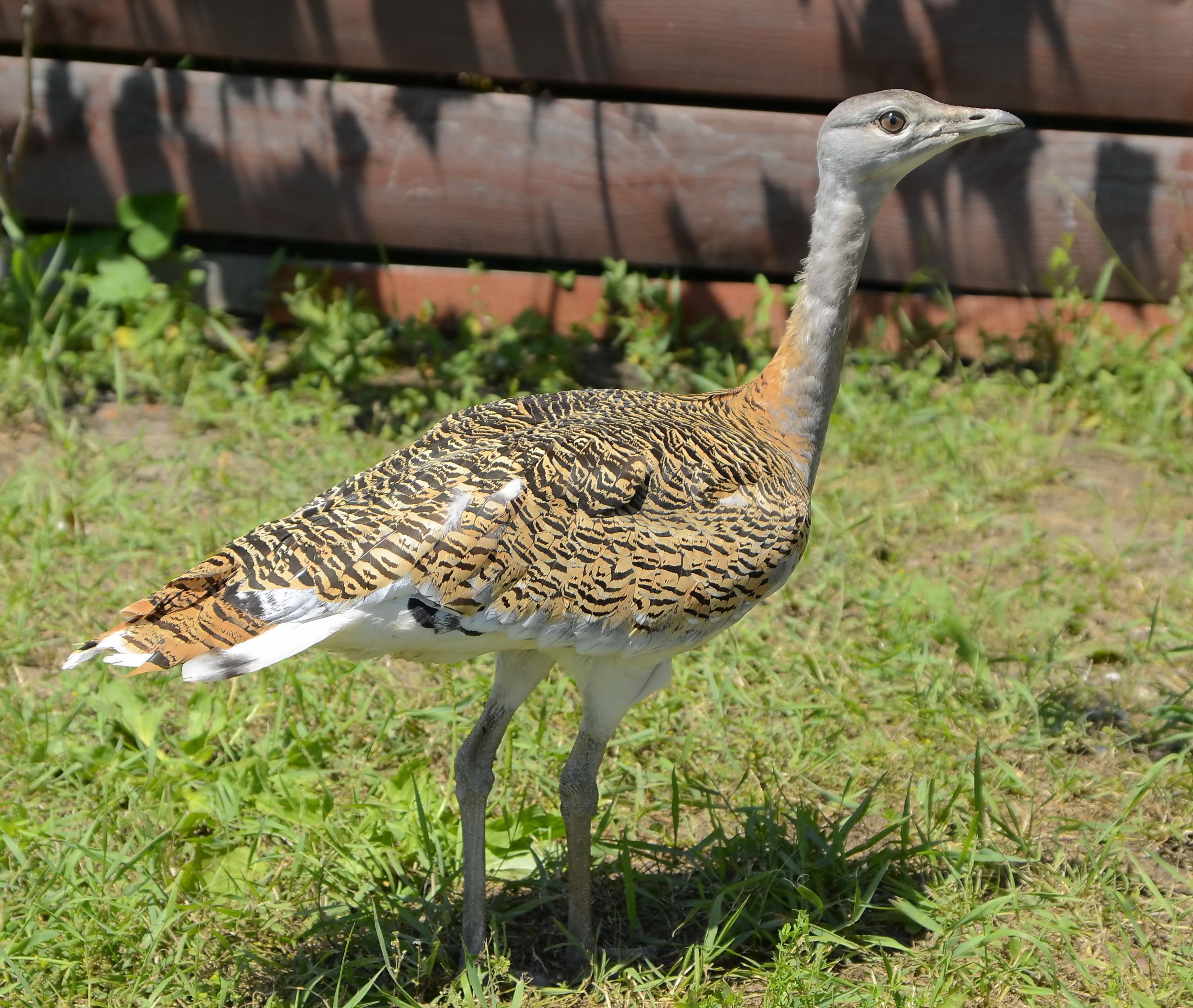
The females are half the size and about a third to half the weight.
Features
Great bustard
Otis tarda
large
In the city
The great bustard occurs only very locally. It needs as wide an open area as possible with little disturbance. Its habitat is farmland, cultivated steppes and green meadows. In Germany, its last refuges are in Brandenburg in the Havelländisches Luch, the Belziger Landschaftswiesen and the Fiener Bruch. In March 2015, an animal was also sighted near the town of Ueckermünde.
Fun Facts
Great bustards are among the heaviest flying birds in the world.
It is extinct in most countries and is now considered endangered throughout the world.
Great bustards initiate their flight up with several two-legged jumps. They always fly up against the wind.
The great bustard can live up to 20 years.
During courtship, the males lift the white under feathers of the wings and tail and visibly protrude them. This makes them easy to spot even at a greater distance.
- Endangerment level Germany: threatened with extinction
Sources
Männchen, Francesco Veronesi, CC BY-SA 2.0, https://commons.wikimedia.org/wiki/File:Otis_tarda,_Hortobagy,_Hungary_1.jpg

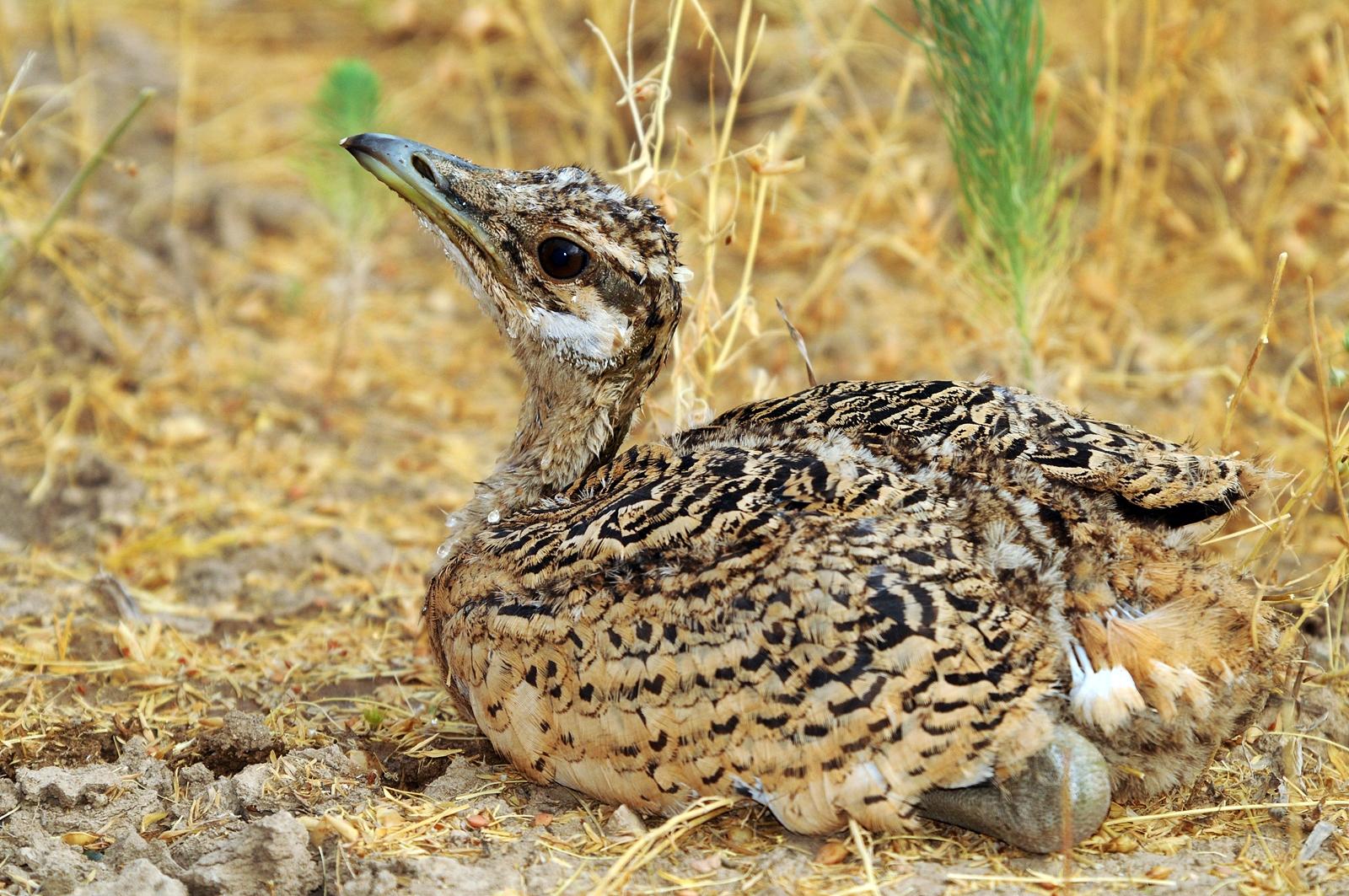
Jungtier, Dûrzan cîrano, CC BY-SA 3.0, https://commons.wikimedia.org/wiki/File:%C3%87%C3%AAlika_bet%C3%AA.jpg

Weibchen, Andrew Butko, CC BY-SA 3.0, https://commons.wikimedia.org/wiki/File:%D0%91%D0%B5%D1%80%D0%B4%D1%8F%D0%BD%D1%81%D0%BA%D0%B8%D0%B9_%D0%B7%D0%BE%D0%BE%D0%BF%D0%B0%D1%80%D0%BA_097.jpg

Page „Großtrappe“. : Wikipedia, The Free Encyclopedia. Date of last revision: 27.12.2018, 00:21 UTC. URL: https://de.wikipedia.org/w/index.php?title=Gro%C3%9Ftrappe&oldid=184066242 (Accessed: 29.01.2019).
Witt, K. & Steiof, K. (2013) Rote Liste und Liste der Brutvögel von Berlin, 3. version, 15.11.2013. : Berliner Ornithologische Arbeitsgemeinschaft e.V. (eds.) Berliner Ornithologischer Bericht, volume 23, Berlin: Berliner Ornithologische Arbeitsgemeinschaft e.V., 1-23.