
Short Description
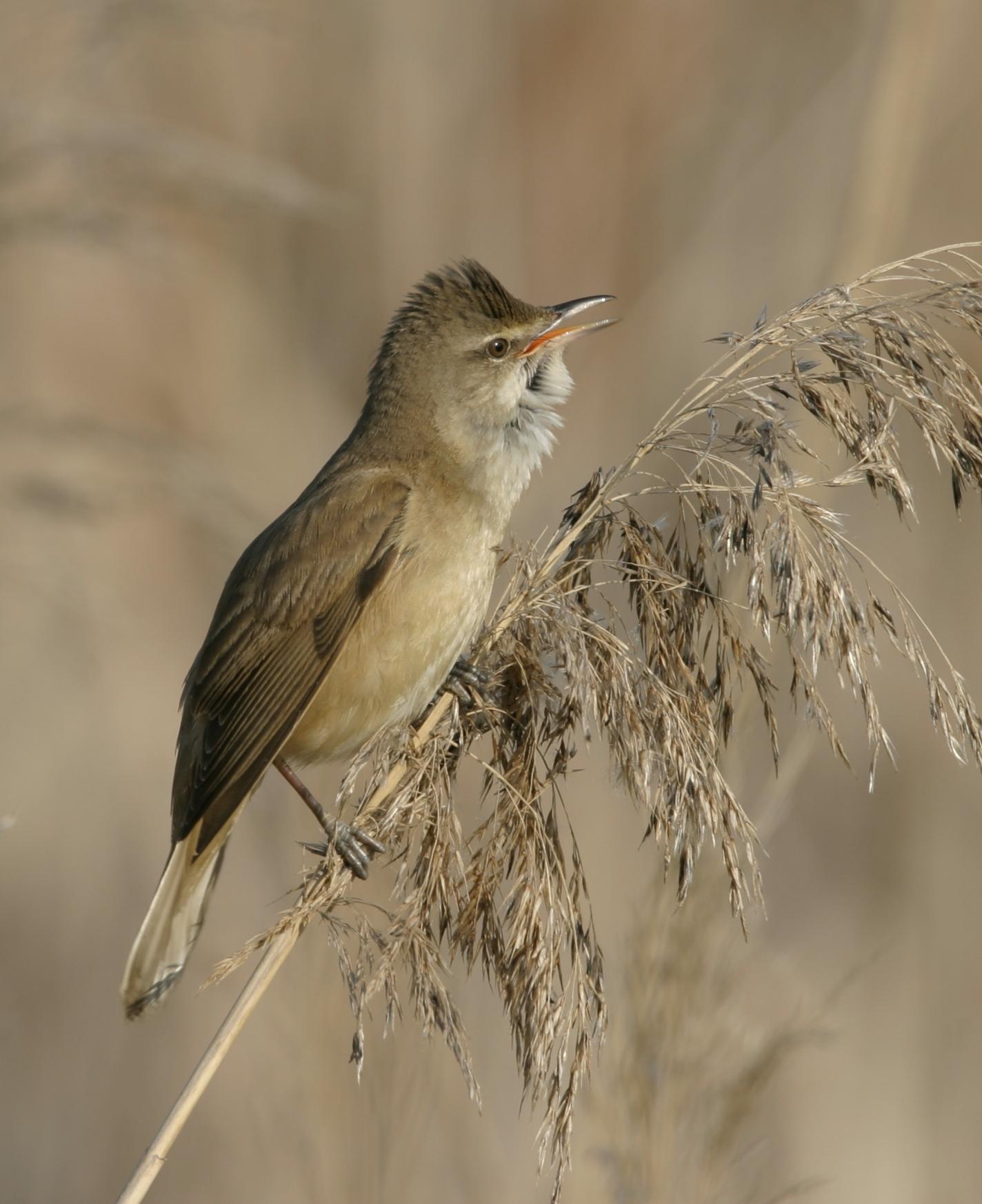
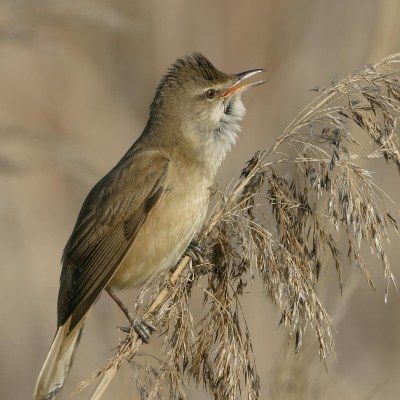
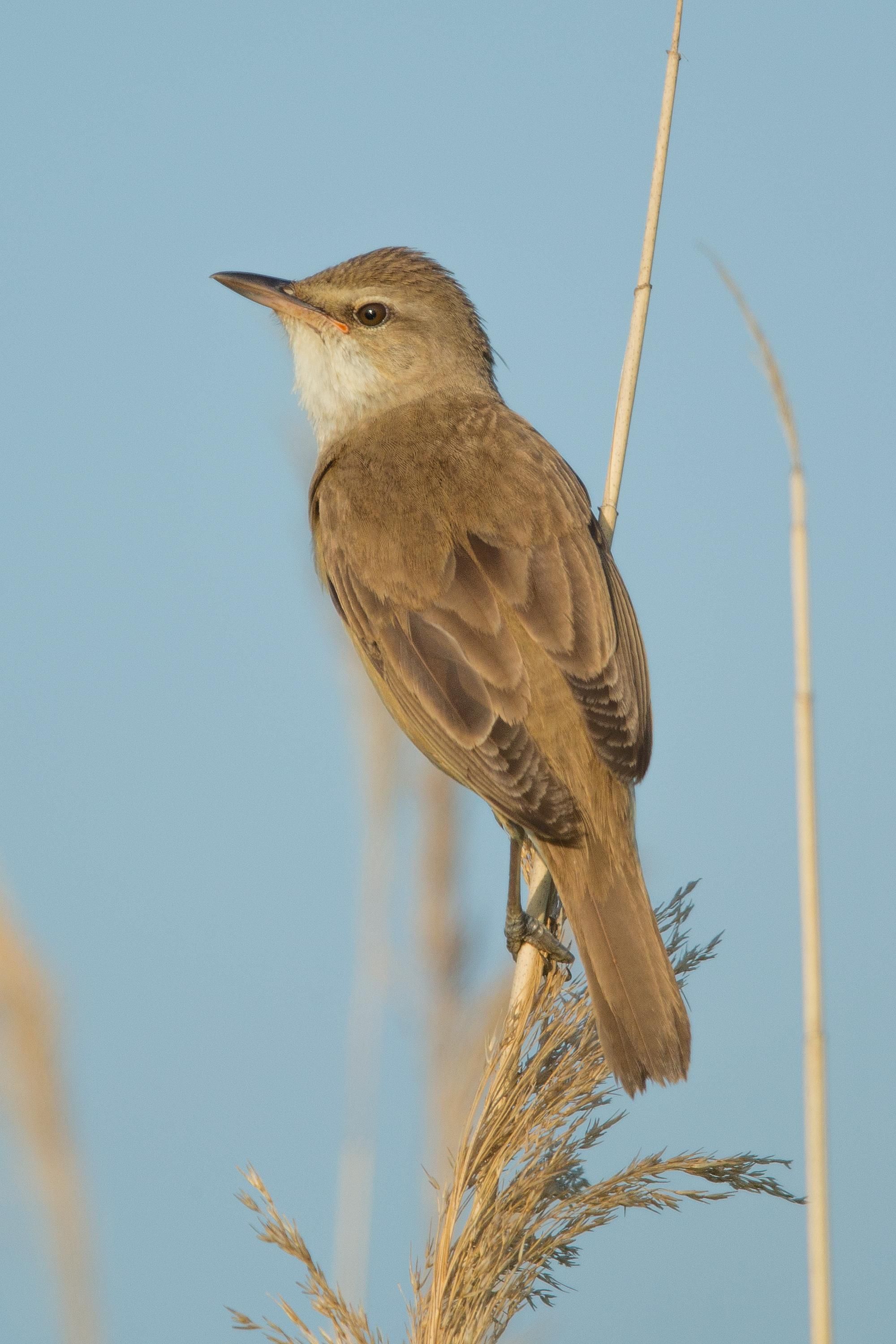
The great reed warbler is comparably inconspicuous with brown upper parts and yellowish-white underparts. Its throat is whitish.
Features
Great reed warbler
Acrocephalus arundinaceus
distinctive call
Gesang
Frommolt, CC BY-SA 3.0

In the city
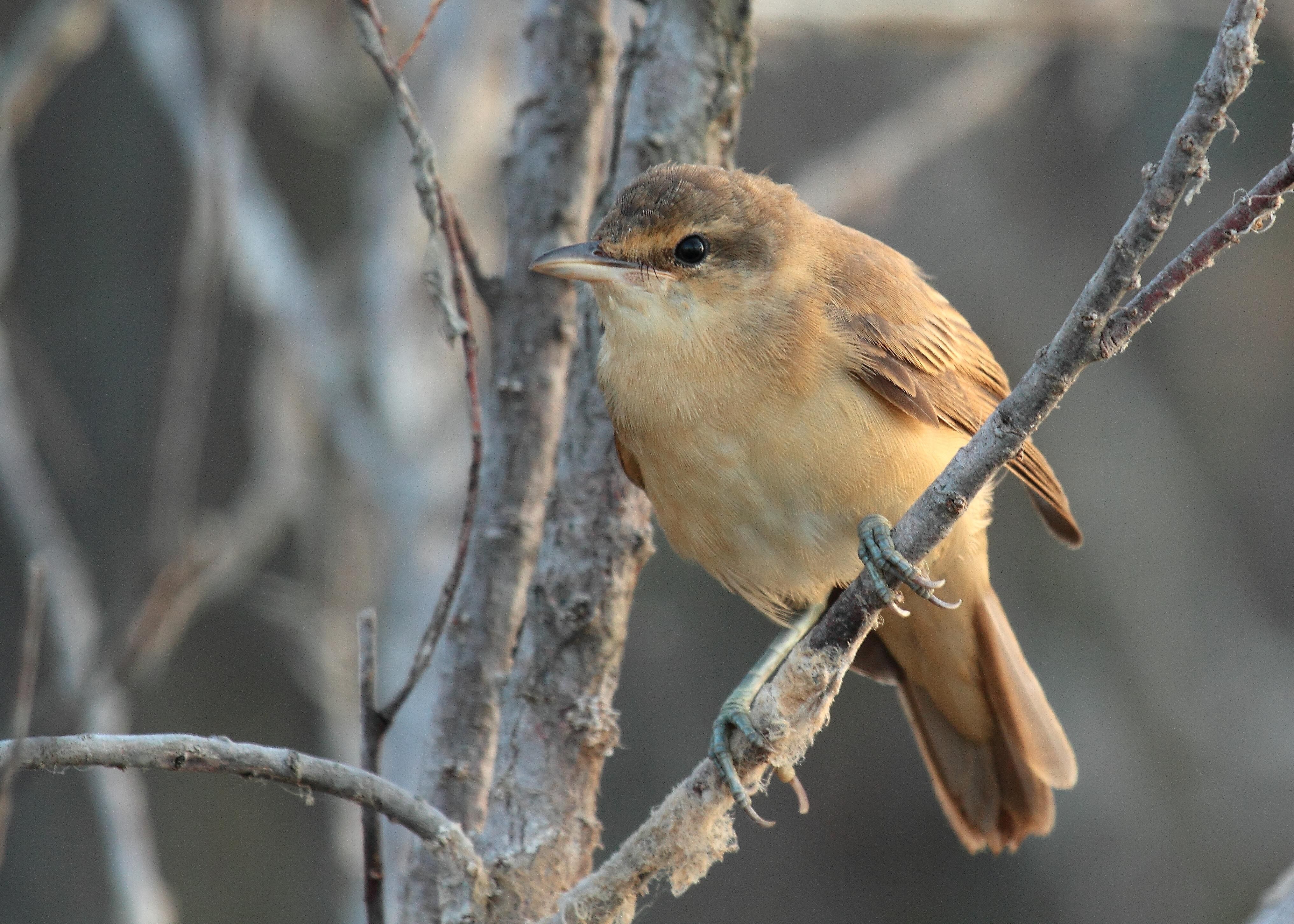
The great reed warbler can be seen in the dense reeds of the shores of near-natural lakes, ponds or rivers. It is not a typical urban bird.
Fun Facts
The eggs of the reed warblers are similar in colour to those of a cuckoo. For that reason, cuckoo eggs are often found in their nests.
As a migratory bird, it moves to central and south-east Africa from the end of August to mid-September. It returns to Germany in early May.
- Endangerment level Germany: not endangered
Sources
Habitus , Carles Pastor, CC BY-SA 3.0, https://commons.wikimedia.org/wiki/File:Carricero_tordal.jpg

Habitus , Agustín Povedano, CC BY-SA 2.0, https://commons.wikimedia.org/wiki/File:Carricero_tordal_Acrocephalus_arundinaceus.jpg

Habitus , Andreas Trepte, CC BY-SA 2.5, https://commons.wikimedia.org/wiki/File:Drosselrohrs%C3%A4nger_Great_reed_warbler.jpg

Page „Drosselrohrsänger“. : Wikipedia, The Free Encyclopedia. Date of last revision: 24.10.2020, 08:49 UTC. URL: https://de.wikipedia.org/w/index.php?title=Drosselrohrs%C3%A4nger&oldid=204841623 (Accessed: 10.02.2021).
Witt, K. & Steiof, K. (2013) Rote Liste und Liste der Brutvögel von Berlin, 3. version, 15.11.2013. : Berliner Ornithologische Arbeitsgemeinschaft e.V. (eds.) Berliner Ornithologischer Bericht, volume 23, Berlin: Berliner Ornithologische Arbeitsgemeinschaft e.V., 1-23.
Bejcek, V. (1988) Zugvögel, Hanau/Main: Verlag Werner Dausien.
Fiedler, W. (2015) Die Vögel Mitteleuropas sicher bestimmen - Schlüssel zur Art-, Alters- und Geschlechtsbestimmung, Wiebelsheim: Quelle & Meyer Verlag.
Makatsch, W. (1989) Wir bestimmen die Vögel Europas, Leipzig: Neumann Verlag.
Voigt, A. (2006) Exkursionsbuch zum Studium der Vogelstimmen, Heidelberg: Quelle & Meyer Verlag.
Svensson, L. (2011) Der Kosmos Vogelführer - Alle Arten Europas, Nordafrikas und Vorderasiens, Stuttgart: Franckh Kosmos Verlag.
Harrison, C. (1975) Jungvögel, Eier und Nester aller Vögel Europas, Nordafrikas und des Mittleren Ostens - Ein Naturführer zur Fortpflanzungsbiologie, Hamburg und Berlin: Verlag Paul Parey.