
Short Description
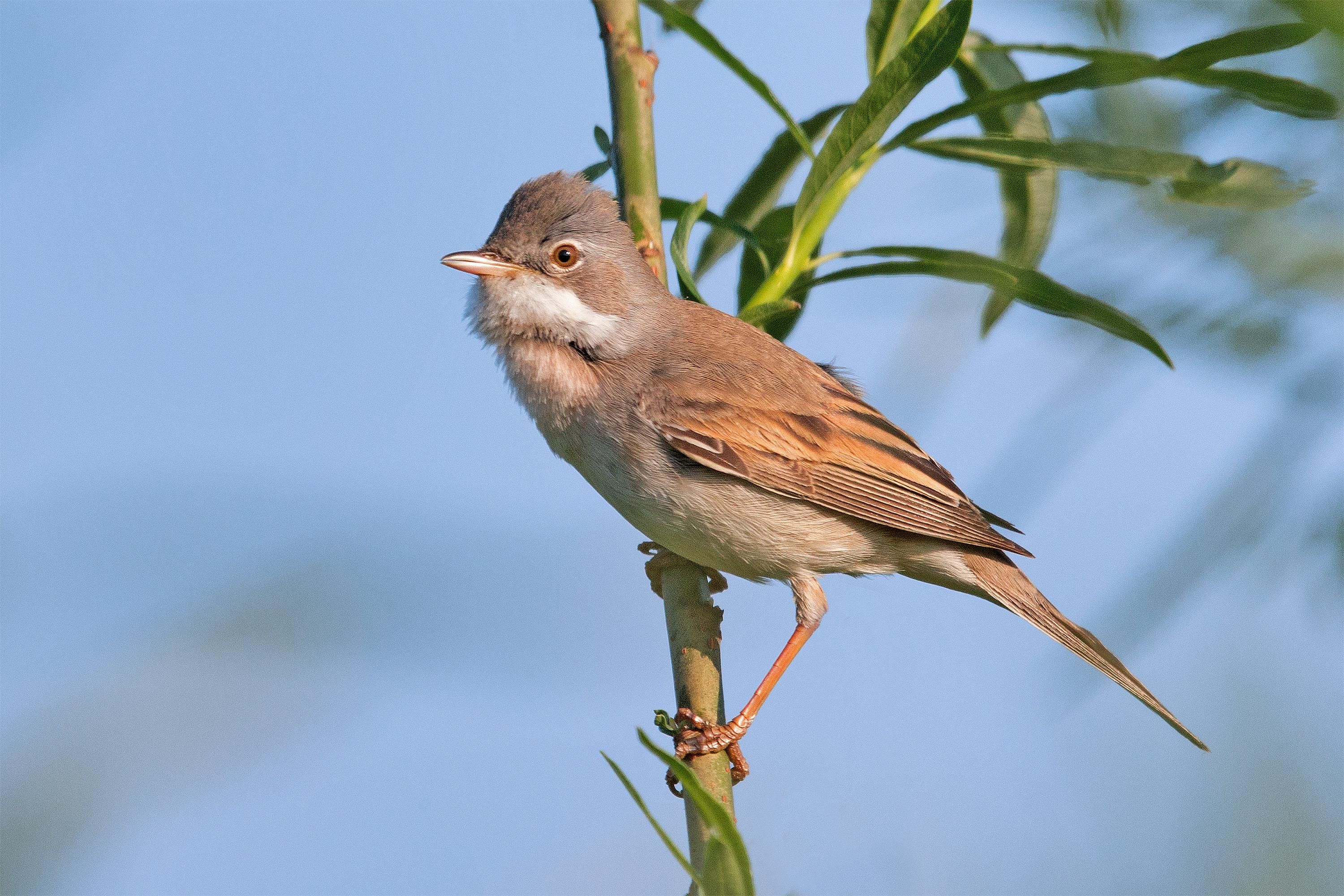
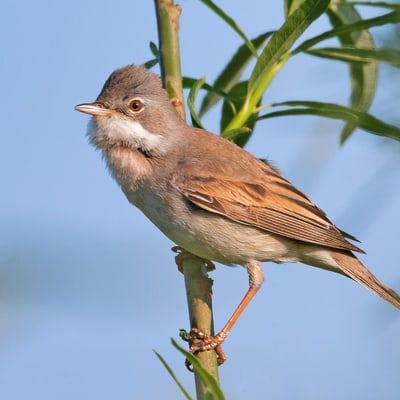
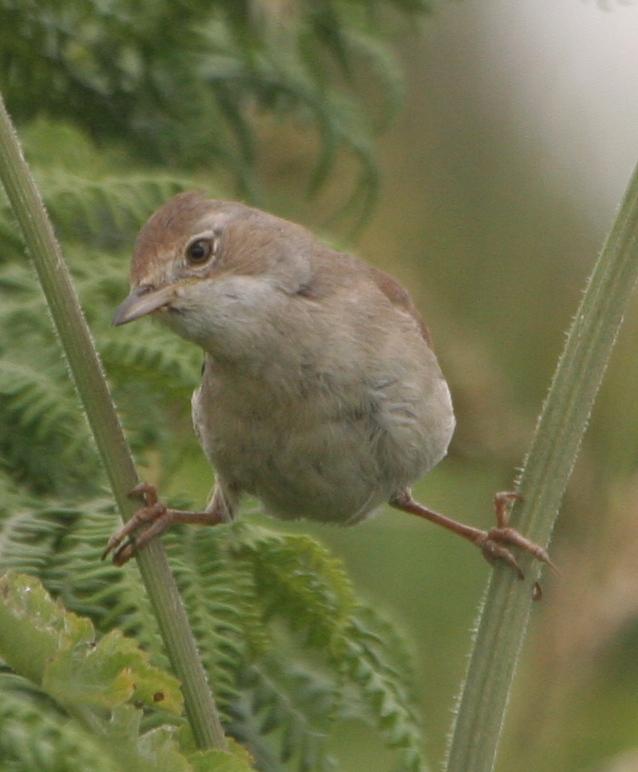
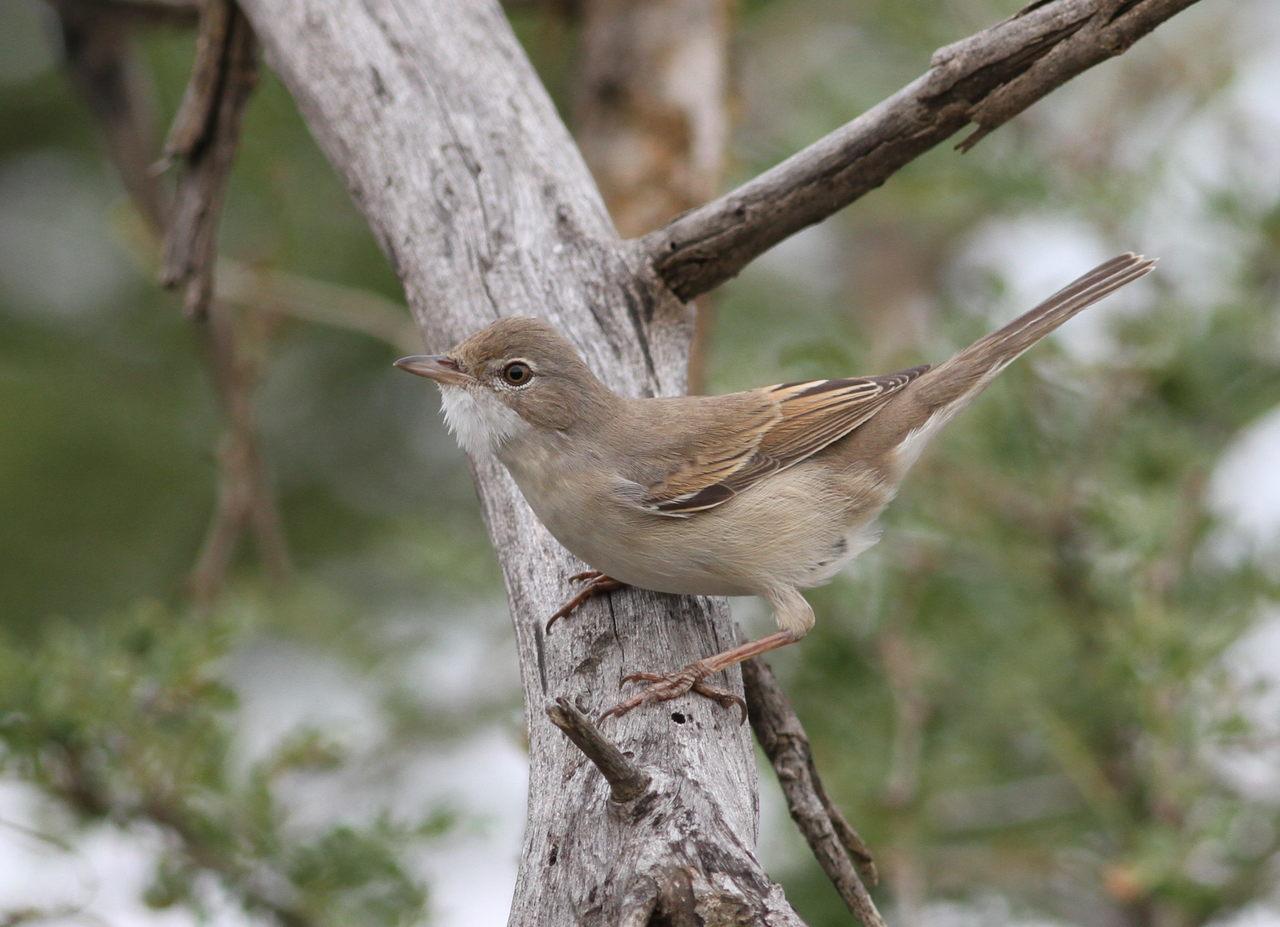
The common whitethroat is small and comparatively inconspicuous. The upper parts are grey-brown, the wings red-brown and the underparts are pale. Typical features are the comparatively long tail, white throat and pale legs.
Males can be recognised by their grey head, red-ochre iris and pink chest.
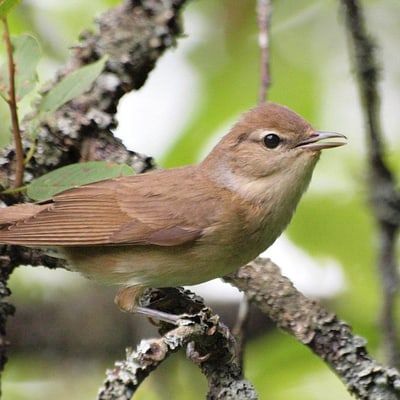
Females have a light-beige chest, a brown head and a brown iris.
Features
Common whitethroat
Sylvia communis
characteristic call
red-brown wings
Gesang
Conrads, CC BY-SA 3.0

In the city
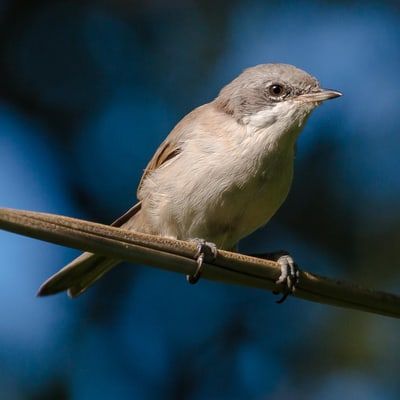
The common whitethroat lives in open gardens and parks and in wasteland with thorny shrubs and hedges. These structures are often perceived as untidy by humans and cleared and thus destroyed.
Fun Facts
The common whitethroat is a migratory bird that flies to tropical Africa in early October. It returns to Germany at the end of April.
The common whitethroat used to be a very common bird until the late 20th century. However, populations dropped dramatically in the spring of 1969. This had the consequence of severe droughts in its winter quarters south of the Sahara.
The common whitethroat feeds mainly on insects and their larvae, spiders and berries.
The cup-shaped nest from grass, roots and hairs is hidden close to the ground in dense shrubs.
In the main breeding season from May to July, both parents take turns to sit on the eggs.
- Endangerment level Germany: not endangered
Sources
Männchen, Andreas Trepte, CC BY-SA 2.5, https://commons.wikimedia.org/wiki/File:Common_Whitethroat.jpg

Weibchen, N p holmes, CC BY-SA 3.0, https://commons.wikimedia.org/wiki/File:Female_whitethroat.JPG

Habitus , Derek Keats, CC BY-SA 2.0, https://commons.wikimedia.org/wiki/File:Common_whitethroat,_Sylvia_communis_at_Pilanesberg_National_Park,_Northwest_Province,_South_Africa_(16274512424).jpg
.jpg)
Page „Dorngrasmücke“. : Wikipedia, The Free Encyclopedia. Date of last revision: 08.05.2020, 15:30 UTC. URL: https://de.wikipedia.org/w/index.php?title=Dorngrasm%C3%BCcke&oldid=199743503 (Accessed: 10.02.2021).
Witt, K. & Steiof, K. (2013) Rote Liste und Liste der Brutvögel von Berlin, 3. version, 15.11.2013. : Berliner Ornithologische Arbeitsgemeinschaft e.V. (eds.) Berliner Ornithologischer Bericht, volume 23, Berlin: Berliner Ornithologische Arbeitsgemeinschaft e.V., 1-23.
Fiedler, W. (2015) Die Vögel Mitteleuropas sicher bestimmen - Schlüssel zur Art-, Alters- und Geschlechtsbestimmung, Wiebelsheim: Quelle & Meyer Verlag.
Makatsch, W. (1989) Wir bestimmen die Vögel Europas, Leipzig: Neumann Verlag.
Voigt, A. (2006) Exkursionsbuch zum Studium der Vogelstimmen, Heidelberg: Quelle & Meyer Verlag.
Svensson, L. (2011) Der Kosmos Vogelführer - Alle Arten Europas, Nordafrikas und Vorderasiens, Stuttgart: Franckh Kosmos Verlag.
Harrison, C. (1975) Jungvögel, Eier und Nester aller Vögel Europas, Nordafrikas und des Mittleren Ostens - Ein Naturführer zur Fortpflanzungsbiologie, Hamburg und Berlin: Verlag Paul Parey.
Artenfinder (2016) Sylvia communis (Dorngrasmücke), URL: https://arteninfo.net/elearning/voegel/speciesportrait/3116 (Accessed: 15.04.2016).