
Short Description
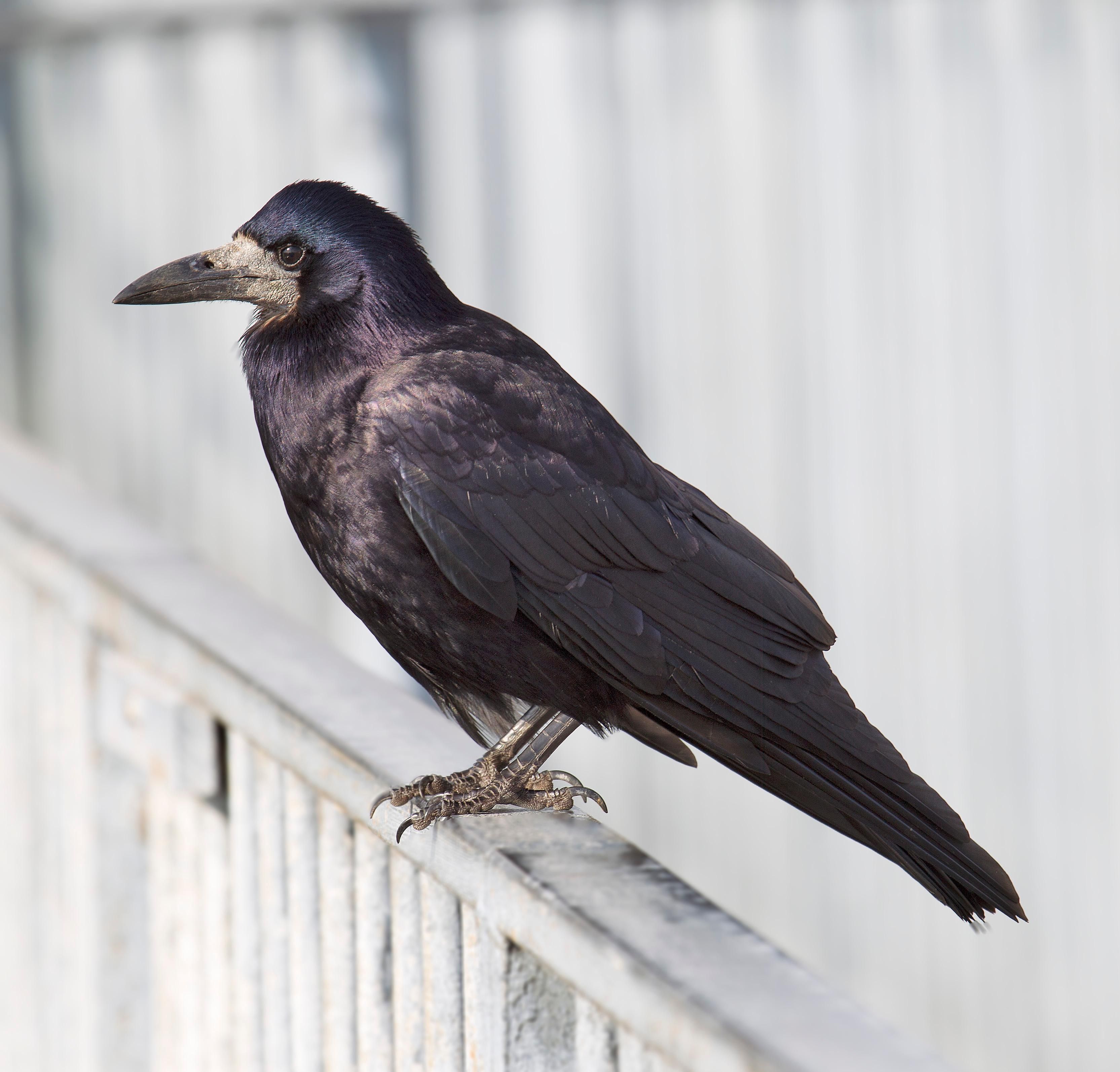
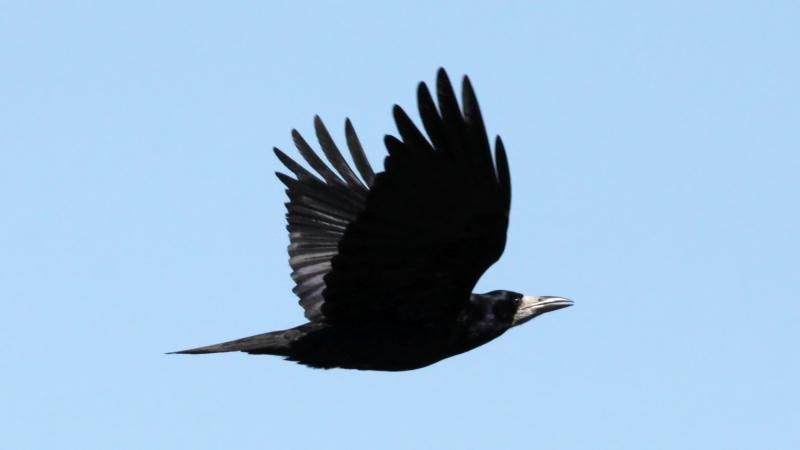
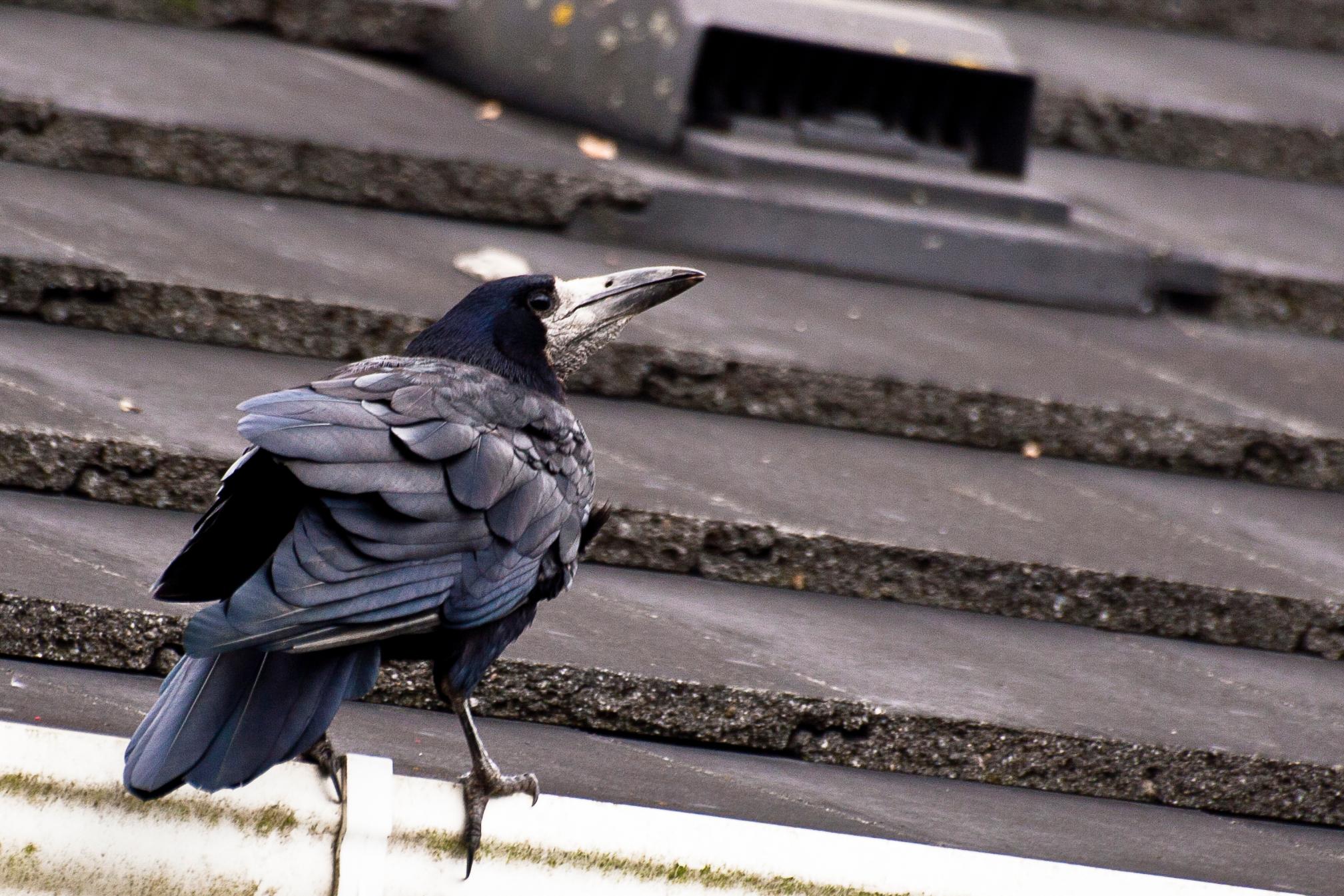
The rook is completely black with a blueish-purple metallic sheen. The grey-black bill is powerful with a slight downward curve. In adult birds, the base of the bill is bare and whitish.
In juvenile birds, the base of the bill is feathered.
Features
Rook
Corvus frugilegus
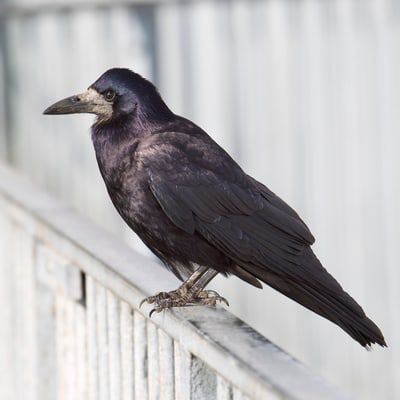
light base of beak in adults
Gruppe: Rufe
Krey, CC BY-SA 3.0

In the city
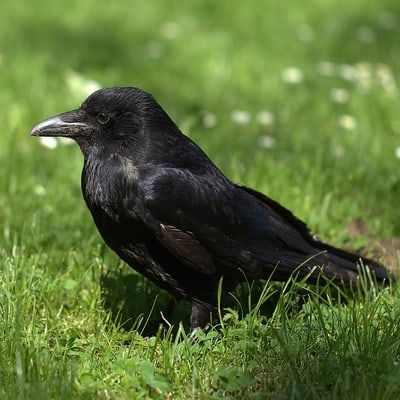
Rooks are mainly seen in parks. Particularly in winter, rooks can be observed close to human habitation. Because their original habitat has come under threat, they have gradually been displaced into an urban environment. In winter, they feed on food scraps produced by humans or on winter feed provided for them.
As a supposed pest, rooks are still heavily persecuted in agriculture. In addition to picking out cereal seeds, they also feed on common pests such as mice and insects.
Fun Facts
Rooks gather in the evening for sleeping colonies (“rookeries”).
Their German name "Saatkrähe" (“seed crow”) refers to the fact that they look for food on agricultural land and particularly pick up freshly sown seeds.
Rooks hibernate in Germany.
Common hazards include the wide-scale use of pesticides, loss of habitat and the specific destruction of nesting places by humans.
- Endangerment level Germany: not endangered
Sources
Habitus , Andreas Trepte, CC BY-SA 2.5, https://commons.wikimedia.org/wiki/File:Rook-Corvus_frugilegus.jpg

im Flug, Ken Billington, CC BY-SA 3.0, https://commons.wikimedia.org/wiki/File:Rook_(Corvus_frugilegus)_(11).JPG
_(11).JPG)
Habitus , Shane Gavin, CC BY-SA 2.0, https://commons.wikimedia.org/wiki/File:Corvus_frugilegus_-Waterford,_Ireland-8.jpg

Page „Saatkrähe“. : Wikipedia, The Free Encyclopedia. Date of last revision: 21.01.2016, 09:19 UTC. URL: https://de.wikipedia.org/w/index.php?title=Saatkr%C3%A4he&oldid=150493427 (Accessed: 09.02.2016).
Witt, K. & Steiof, K. (2013) Rote Liste und Liste der Brutvögel von Berlin, 3. version, 15.11.2013. : Berliner Ornithologische Arbeitsgemeinschaft e.V. (eds.) Berliner Ornithologischer Bericht, volume 23, Berlin: Berliner Ornithologische Arbeitsgemeinschaft e.V., 1-23.
Artenfinder (2016) Corvus frugilegus (Saatkrähe), URL: https://arteninfo.net/elearning/voegel/speciesportrait/3174 (Accessed: 21.04.2016).
NABU – Naturschutzbund Deutschland e.V. (n.d.) Die Saatkrähe. Vogel des Jahres 1986, URL: https://www.nabu.de/tiere-und-pflanzen/aktionen-und-projekte/vogel-des-jahres/1986-saatkraehe/ (Accessed: 21.04.2016).