
Short Description
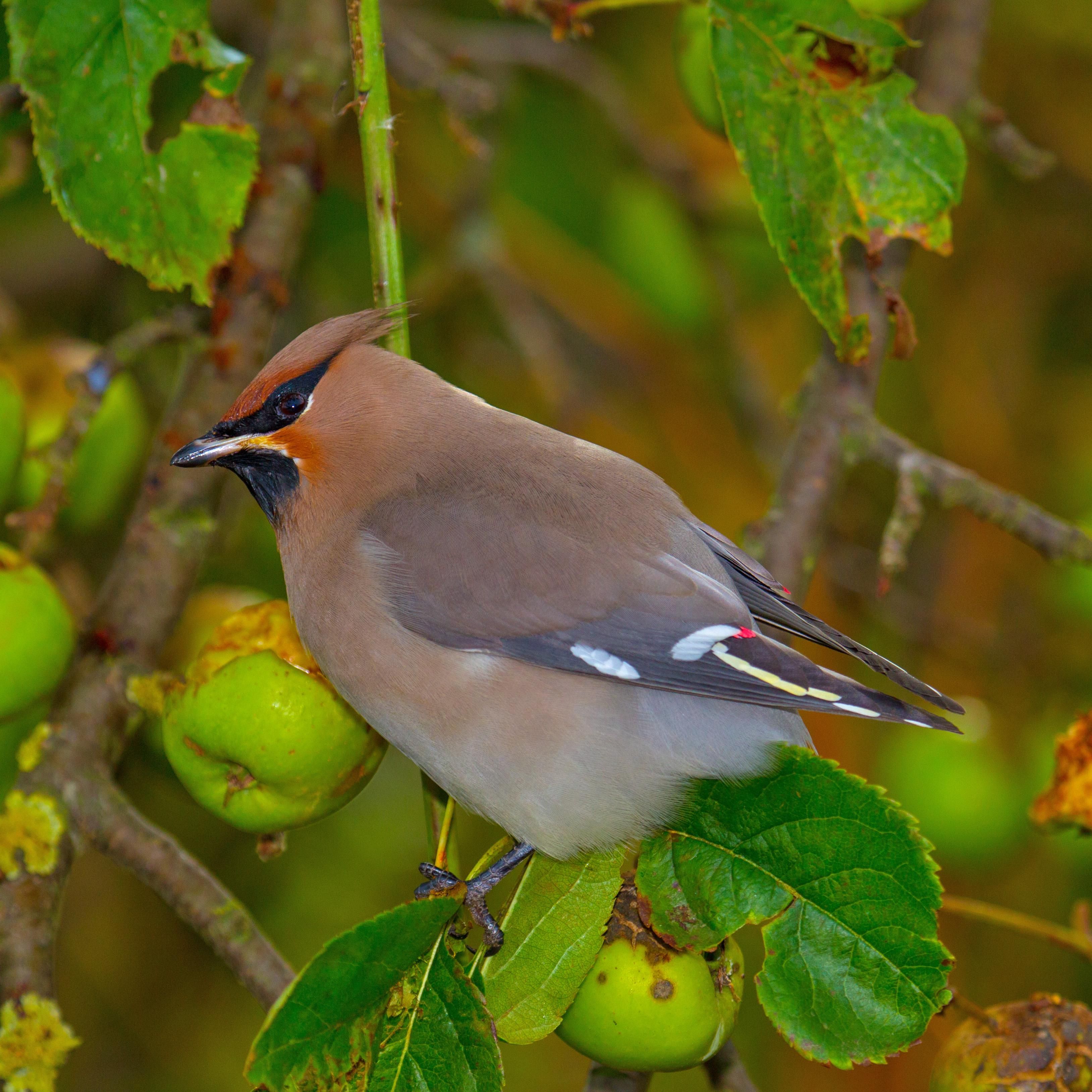
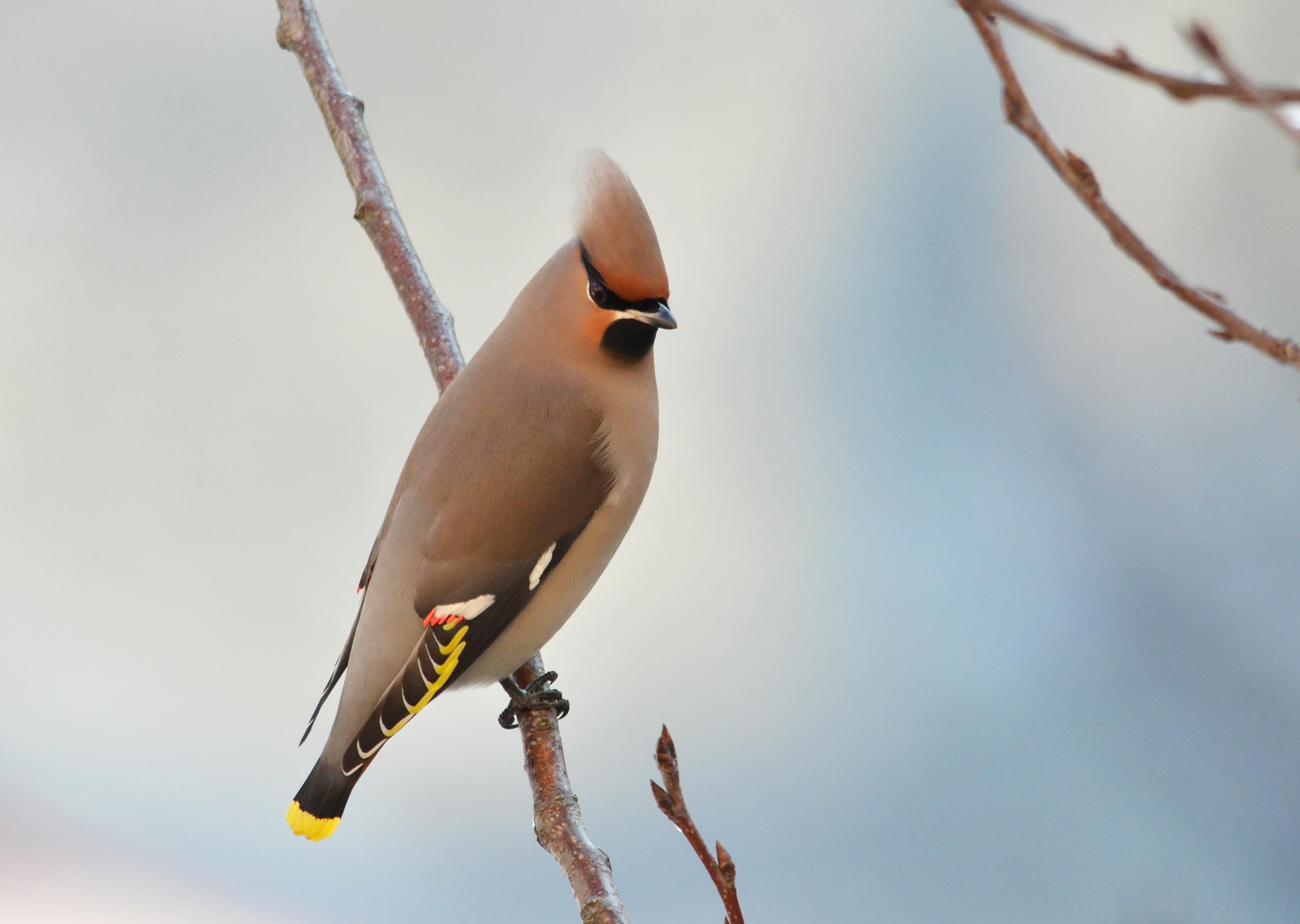
At first glance, the Bohemian waxwing appears inconspicuously reddish-greyish-brown. Looking closer, it is more striking and almost colourful. The tips of its tail shine brightly with a black and dark-yellow and. The tips of its wings are generally marked with red droplets. However, the most striking and distinctive features are its erectable crest of feathers and its black eye stripe.
Features
Bohemian waxwing
Bombycilla garrulus
pointed crest of feathers
Gruppe: Rufe
Frommolt, CC BY-SA 2.5

In the city
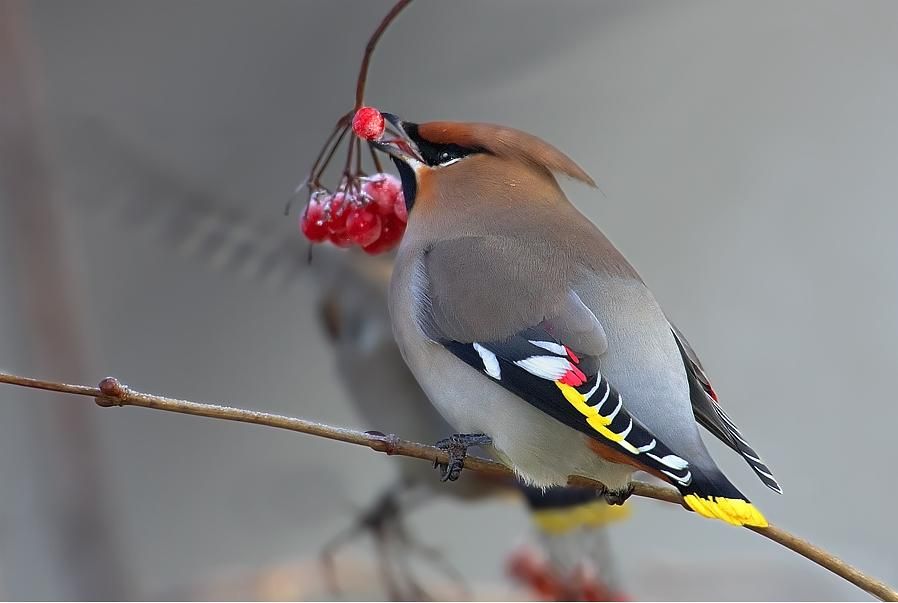
Bohemian waxwings are frequent winter visitors in parks, gardens and cemeteries. Ornamental shrubs such as rowan and roses offer a good supply of food during the winter. Groups of Bohemian waxwings are more rarely seen at bird feeders.
Fun Facts
Bohemian waxwings are winter visitors; they come to Germany from Scandinavia and Russia.
Each day, a Bohemian waxwing consumes about twice its weight in food.
In medieval times, Bohemian waxwings were seen as harbingers of misfortune. They were called the death bird or plague bird and blamed for the plague and for fires.
- Endangerment level Germany: not evaluated
Sources
Habitus , Andreas Trepte, CC BY-SA 2.5, https://commons.wikimedia.org/wiki/File:Bombycilla_garrulusII.jpg

Habitus , Ekaterina Chernetsova, CC BY-SA 2.0, https://commons.wikimedia.org/wiki/File:Bombycilla_garrulus,_Saint_Petersburg_3.jpg

Habitus , Martin Mecnarowski, CC BY-SA 3.0, https://commons.wikimedia.org/wiki/File:Bombycilla_garrulus_1_(Martin_Mecnarowski).jpg
.jpg)
Page „Seidenschwanz (Art)“. : Wikipedia, The Free Encyclopedia. Date of last revision: 24.01.2021, 15:36 UTC. URL: https://de.wikipedia.org/w/index.php?title=Seidenschwanz_(Art)&oldid=208019899 (Accessed: 23.03.2021).
Bejcek, V. (1988) Zugvögel, Hanau/Main: Verlag Werner Dausien.
NABU – Naturschutzbund Deutschland e.V. (n.d.) Stunde der Wintervögel. Der Seidenschwanz, URL: https://www.nabu.de/tiere-und-pflanzen/aktionen-und-projekte/stunde-der-wintervoegel/vogelportraets/13075.html (Accessed: 14.09.2016).