
Short Description
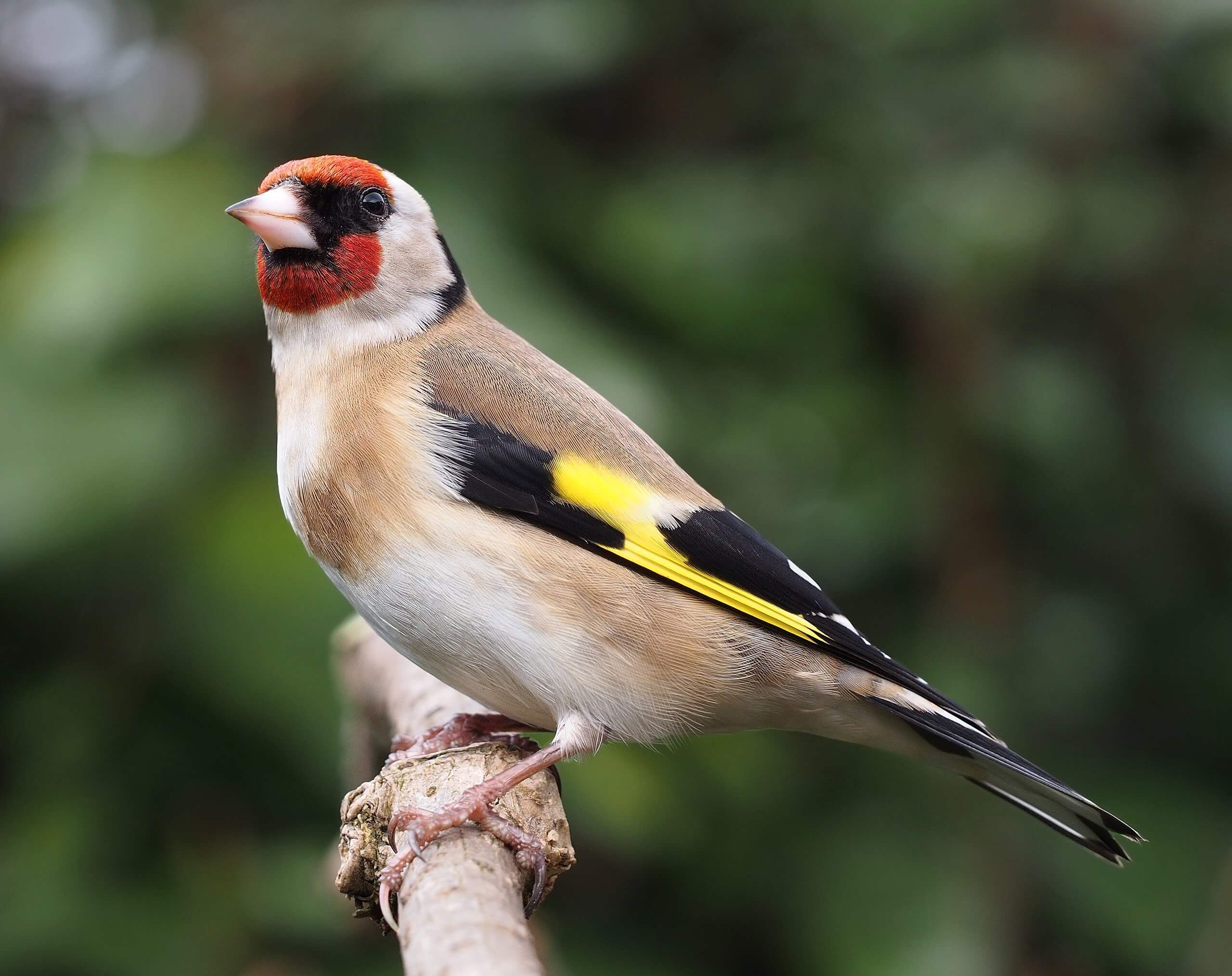
The light-brown to whitish goldfinch can be identified particularly well by its red face mask. Another striking feature are its black wings with a central yellow bar and a white terminal bar.
In males, the facial mask extends beyond the eyes.
In females, it only extends to the middle of the eye.
Features
Goldfinch
Carduelis carduelis
bright red face mask
wings with a yellow bar
Gesang
Tembrock, CC BY-SA 3.0

In the city
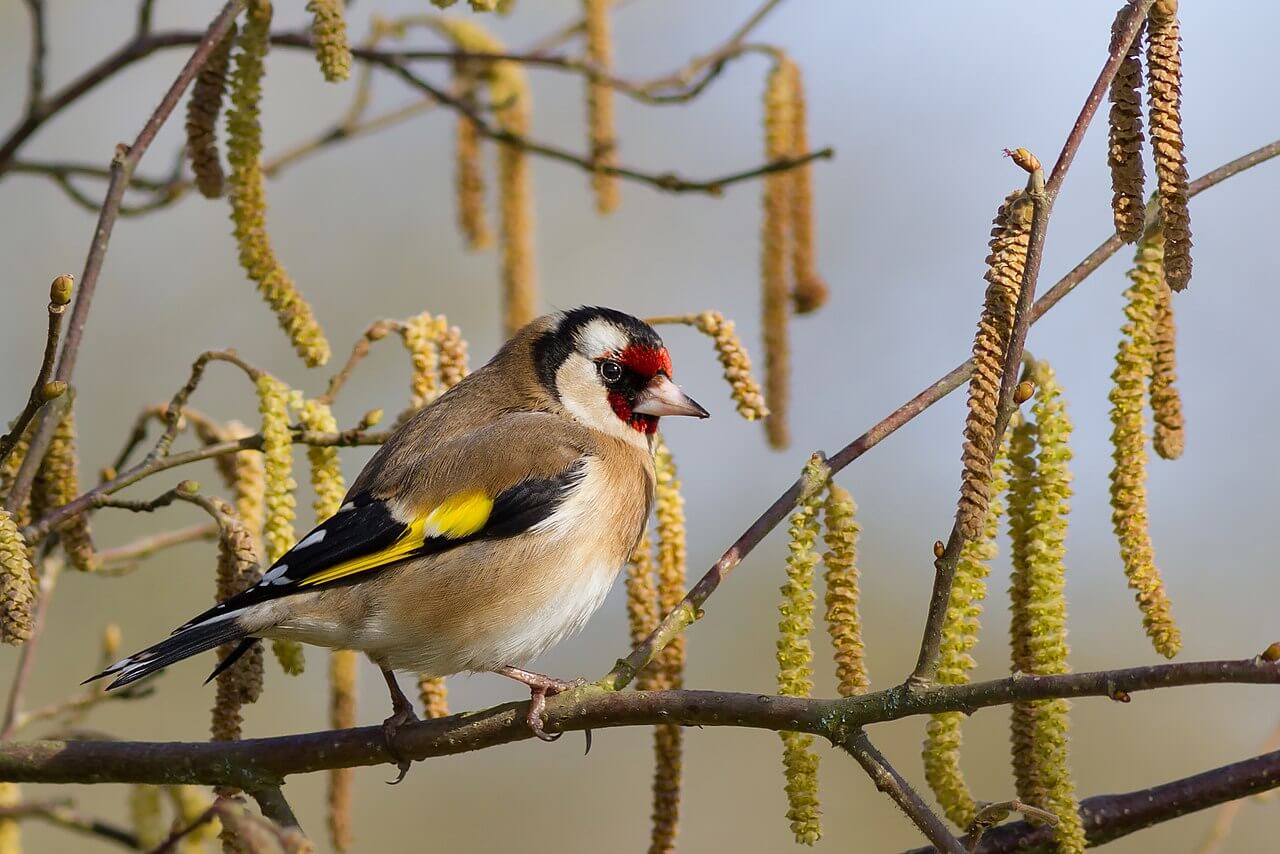
Goldfinches can be found in parks and near-natural gardens. They feed mainly on wild herbs that can be found on uncultivated urban land.
Fun Facts
The name of the Berlin district of Steglitz has Slavic origins and refers to a place where goldfinches (“Stieglitz”) live.
From February to June, goldfinches start to sing approx. 20 minutes before sunrise.
They are often seen perched on thistles, hence their German name “Distelfink”.
They can be seen in Germany all year round.
- Endangerment level Germany: not endangered
Sources
Male, Francis C. Franklin, CC-BY-SA-3.0, https://commons.wikimedia.org/wiki/File:Carduelis_carduelis_close_up.jpg

Habitus, Pierre Dalous, CC BY-SA 3.0, https://upload.wikimedia.org/wikipedia/commons/e/e7/Carcar.jpg

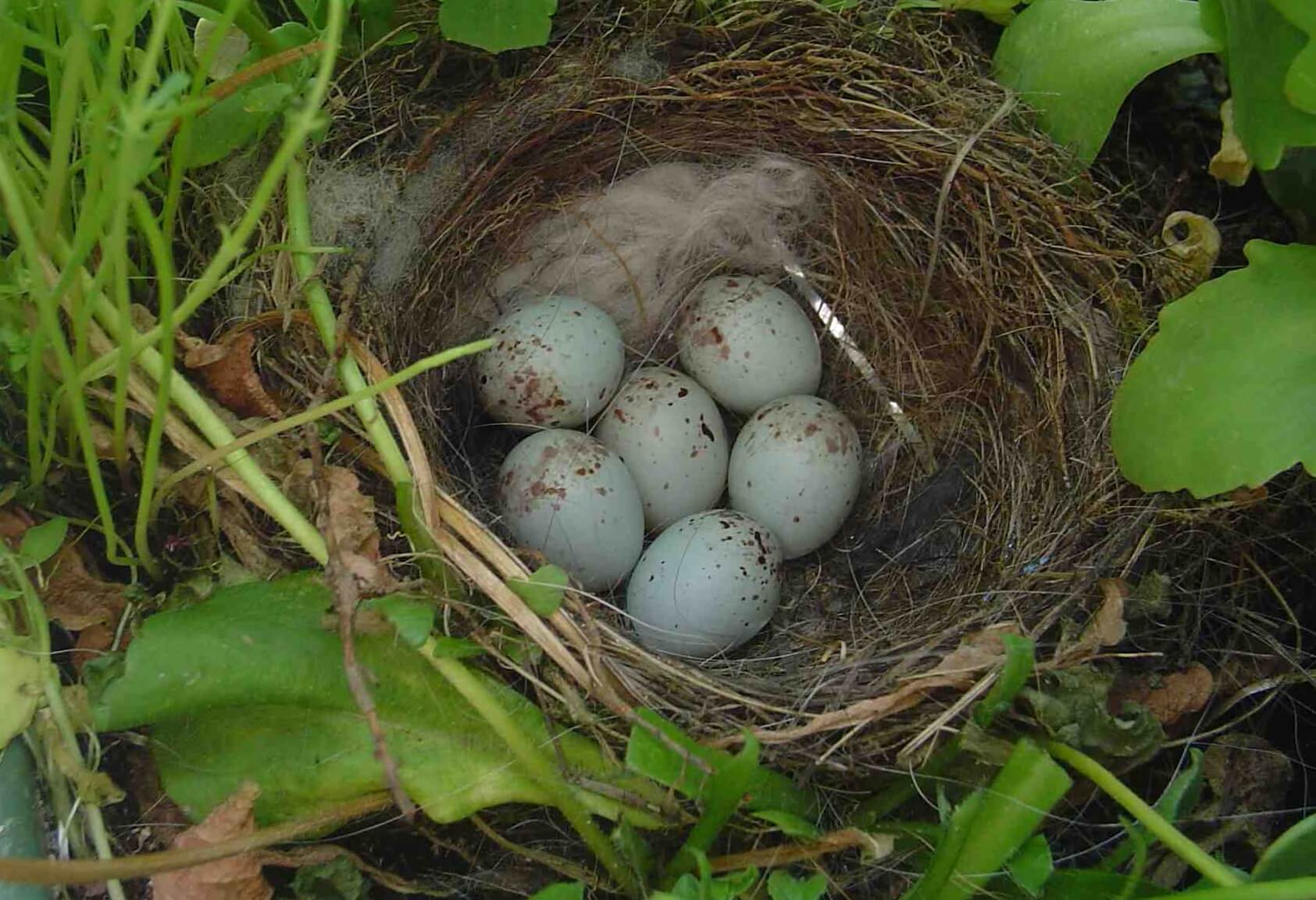
Nest of eggs, Bukk, CC BY-SA 3.0, https://upload.wikimedia.org/wikipedia/commons/b/bc/Stieglitzgelege.jpg

Harrison, C. (1975) Jungvögel, Eier und Nester aller Vögel Europas, Nordafrikas und des Mittleren Ostens - Ein Naturführer zur Fortpflanzungsbiologie, Hamburg und Berlin: Verlag Paul Parey.
Page „Stieglitz“. : Wikipedia, The Free Encyclopedia. Date of last revision: 05.02.2016, 22:56 UTC. URL: https://de.wikipedia.org/w/index.php?title=Stieglitz&oldid=151125769 (Accessed: 17.02.2016).
NABU – Naturschutzbund Deutschland e.V. (2016) Vogeluhr, URL: https://www.nabu.de/nabu_vogeluhr2/index.php?iframed=1 (Accessed: 10.02.2021).
Witt, K. & Steiof, K. (2013) Rote Liste und Liste der Brutvögel von Berlin, 3. version, 15.11.2013. : Berliner Ornithologische Arbeitsgemeinschaft e.V. (eds.) Berliner Ornithologischer Bericht, volume 23, Berlin: Berliner Ornithologische Arbeitsgemeinschaft e.V., 1-23.