
Short Description
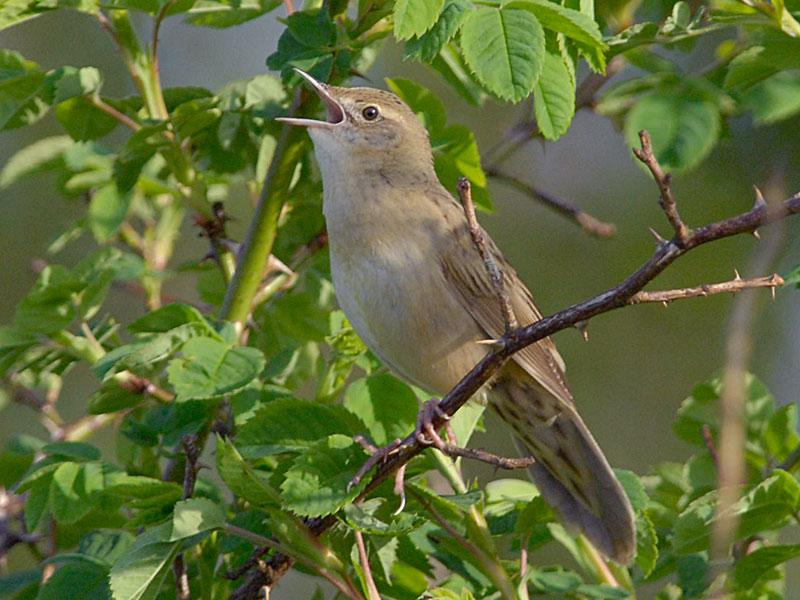
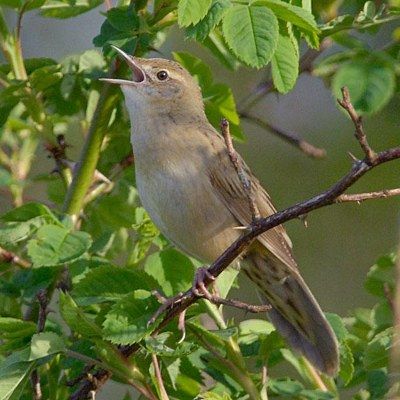
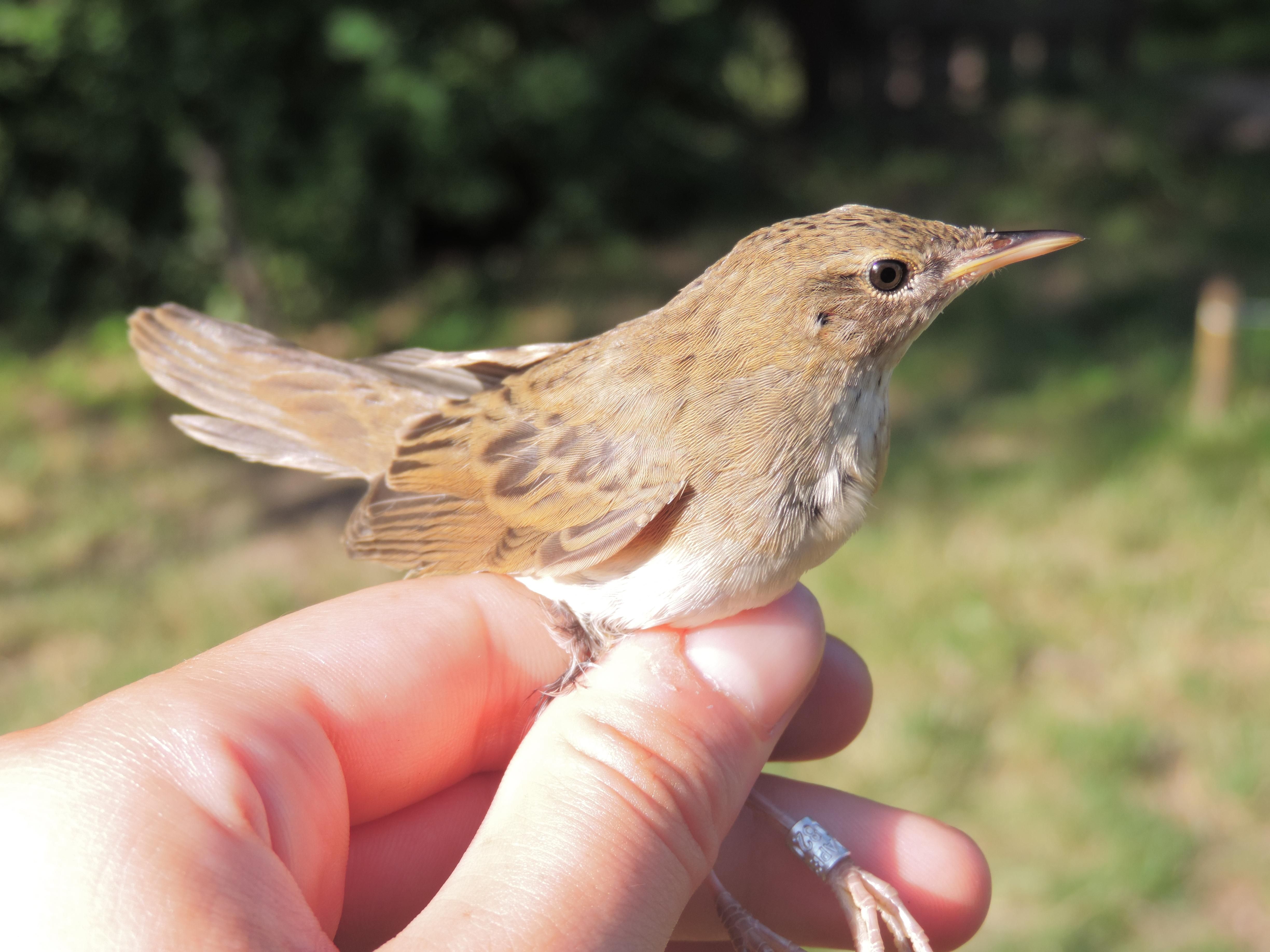
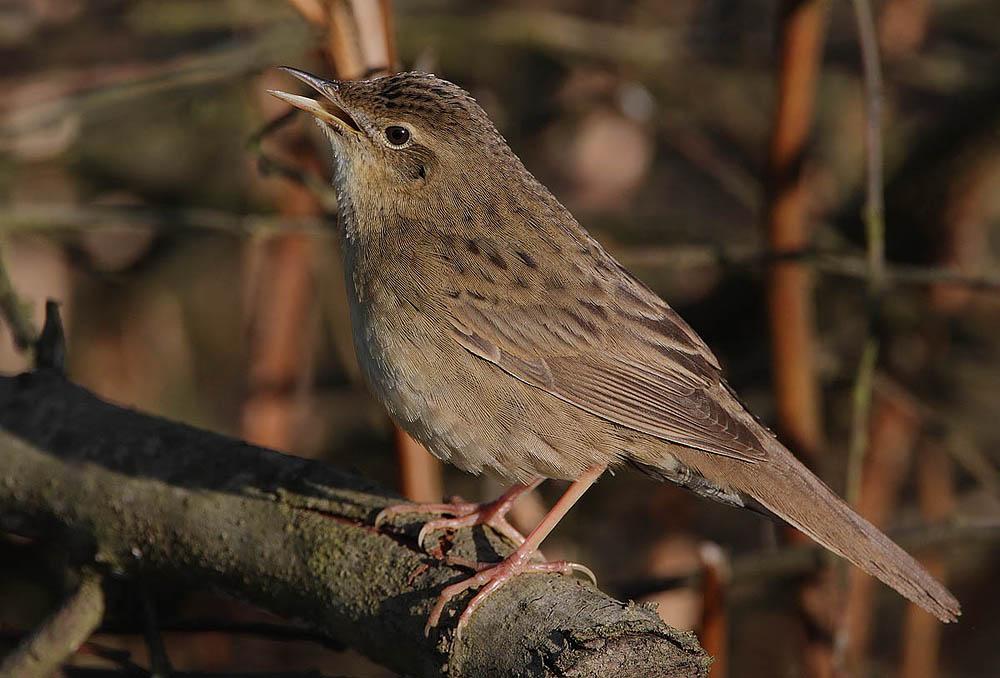
The common grasshopper warbler is drab with a brownish plumage, speckled in dark-brown. The underparts are yellowish-white and the legs reddish-brown. Characteristic features are its comparatively large wedge-shaped tail and its song that could be confused with a grasshopper. It mainly scurries around on the ground.
Features
Common grasshopper warbler
Locustella naevia
mostly moves on the ground
song reminiscent of grasshoppers
Gesang
Tembrock, CC BY-SA 3.0

In the city
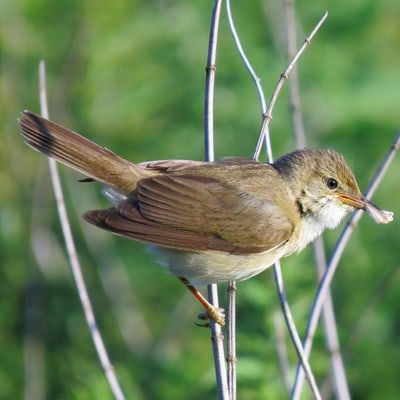
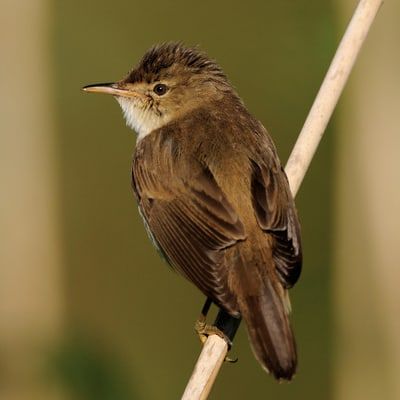
The grasshopper warbler is found in open areas with bushes or other plants such as nettles. It prefers wet meadows and floodplains. This is why it is mostly seen on the outskirts of towns.
Fun Facts
The common grasshopper warbler is a migratory bird. It can be seen in Germany from April to September. In early September, it flies south to hibernate.
- Endangerment level Germany: endangered
Sources
Habitus , Stefan Hage, CC BY-SA 3.0, https://commons.wikimedia.org/wiki/File:Grashoppsangare-070512.jpg

Habitus , Nouhouhouk, CC BY-SA 4.0, https://commons.wikimedia.org/wiki/File:Locustelle_tachet%C3%A9e_-_Locustella_naevia.JPG

Habitus , Steve Garvie, CC BY-SA 2.0, https://commons.wikimedia.org/wiki/File:Flickr_-_Rainbirder_-_Grasshopper_Warbler_(Locustella_naevia)_(1).jpg
_(1).jpg)
Witt, K. & Steiof, K. (2013) Rote Liste und Liste der Brutvögel von Berlin, 3. version, 15.11.2013. : Berliner Ornithologische Arbeitsgemeinschaft e.V. (eds.) Berliner Ornithologischer Bericht, volume 23, Berlin: Berliner Ornithologische Arbeitsgemeinschaft e.V., 1-23.
Bejcek, V. (1988) Zugvögel, Hanau/Main: Verlag Werner Dausien.
Artenfinder (2016) Locustella naevia (Feldschwirl), URL: https://arteninfo.net/elearning/voegel/speciesportrait/3093 (Accessed: 18.04.2016).
Page „Feldschwirl“. : Wikipedia, The Free Encyclopedia. Date of last revision: 28.08.2016, 10:54 UTC. URL: https://de.wikipedia.org/w/index.php?title=Feldschwirl&oldid=157442871 (Accessed: 07.04.2017)
NABU – Naturschutzbund Deutschland e.V. (2016) Rote Liste der Brutvögel Deutschlands. 5. version, published August 2016, URL: https://www.nabu.de/tiere-und-pflanzen/voegel/artenschutz/rote-listen/10221.html (Accessed: 07.04.2017).