
Short Description
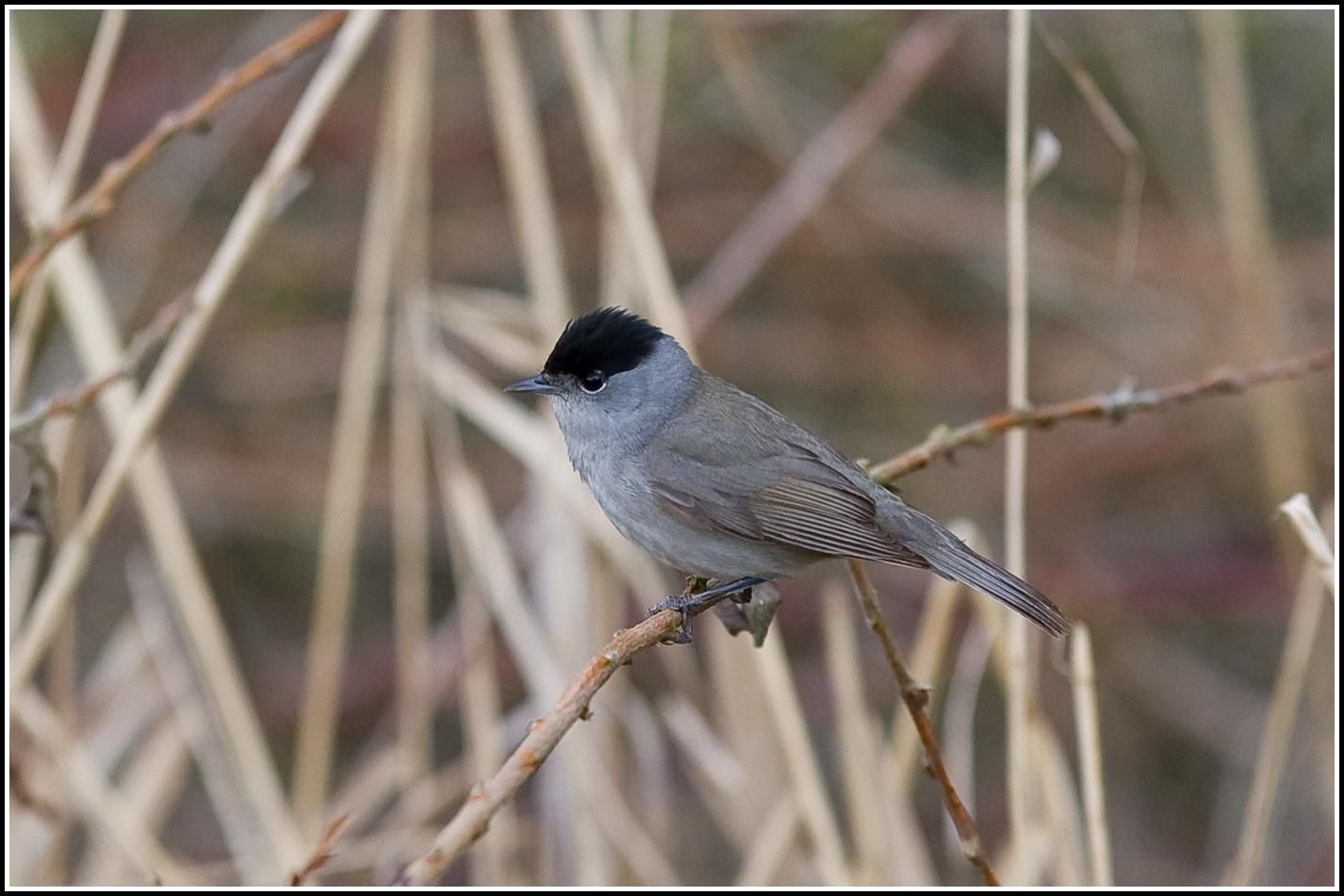
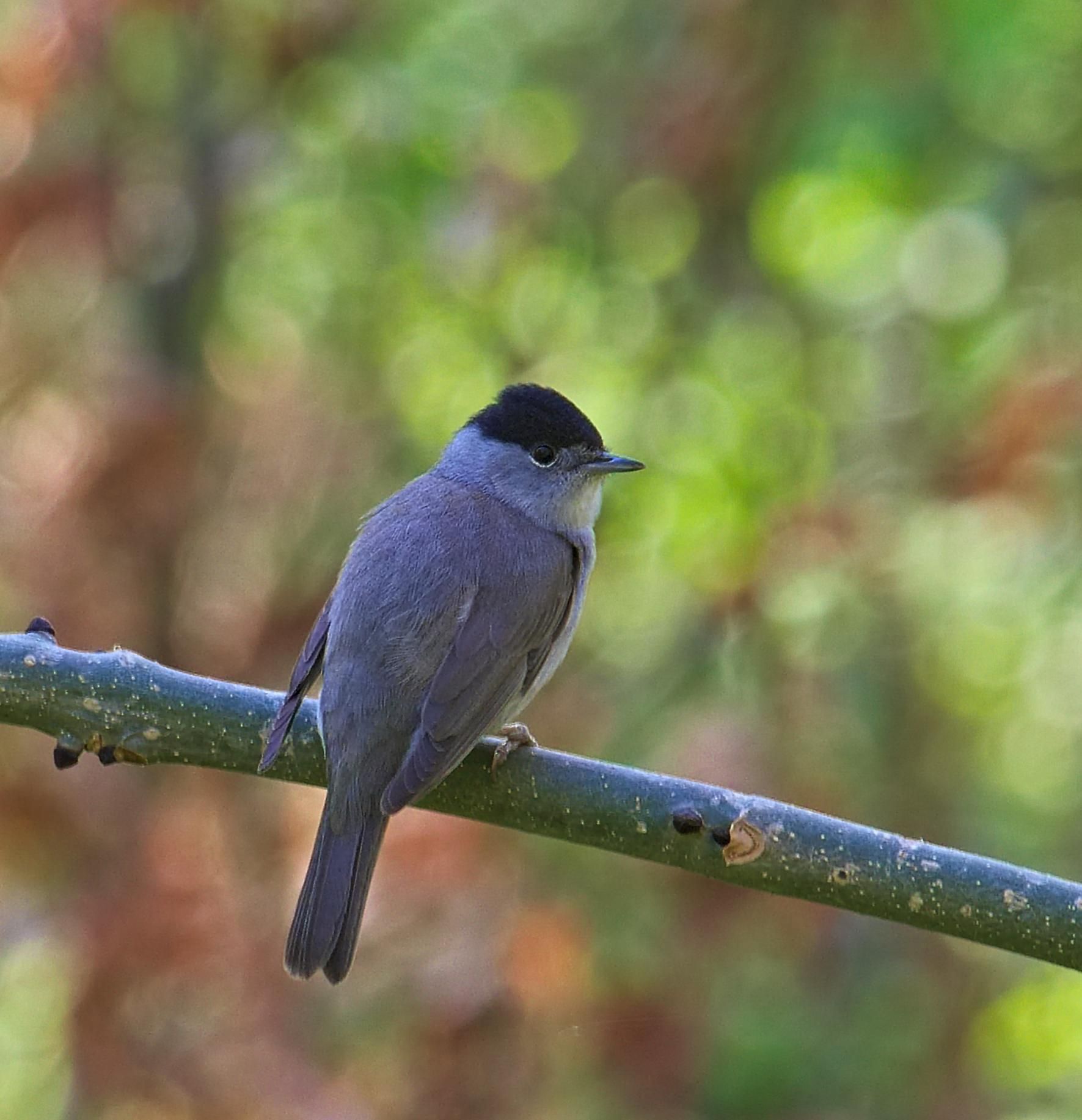
The blackcap with its dark grey upper parts and lighter olive-green underparts is rather dull and inconspicuous. It can be easily recognised by its differently coloured feather cap.
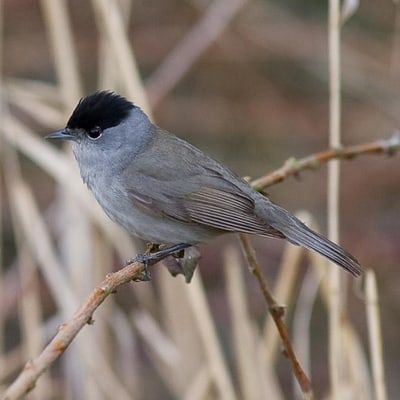
In males, this cap is black.
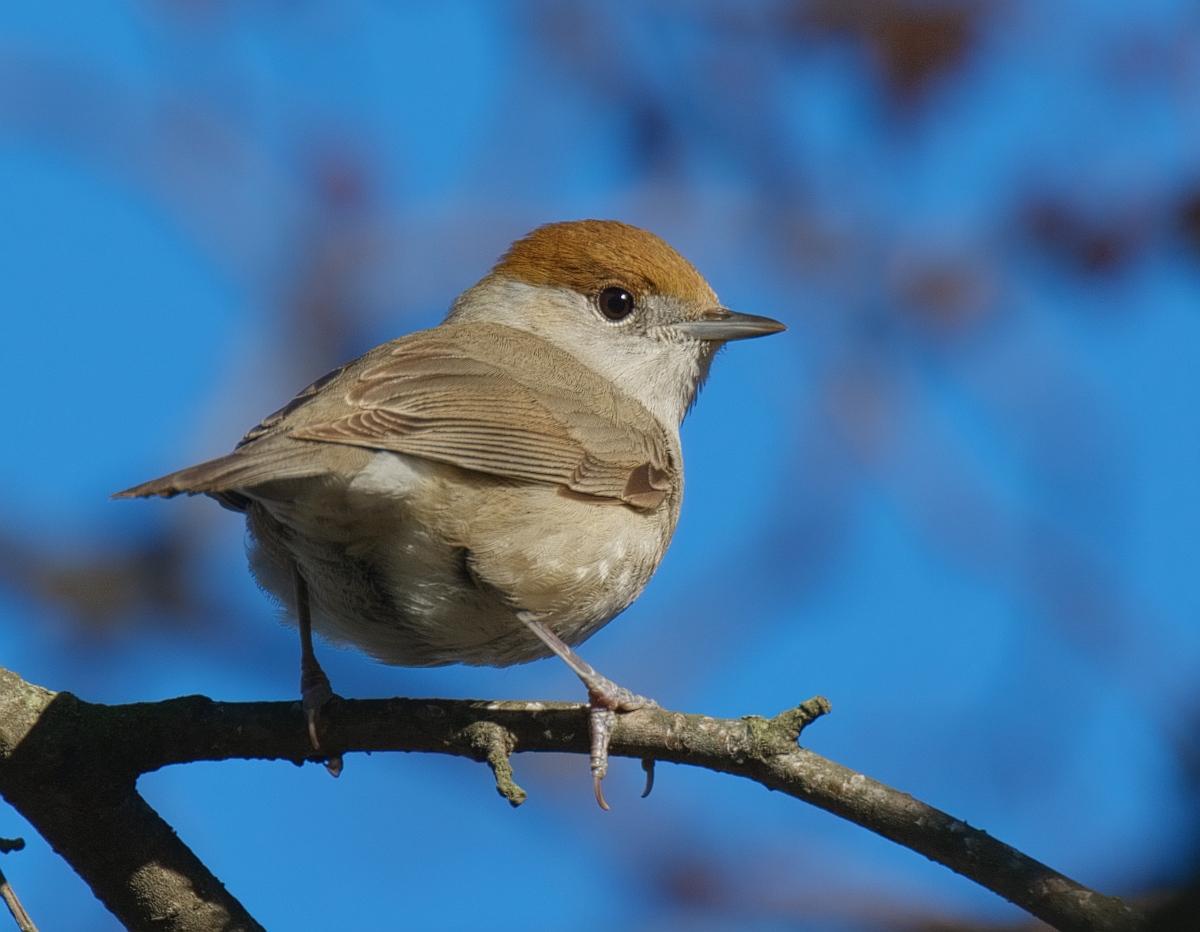
Females have a reddish-brown cap.
Male and female juvenile birds also have reddish-brown caps.
Features
Blackcap
Sylvia atricapilla
black or reddish-brown cap
Männchen: Gesang
Frommolt, CC BY-SA 3.0

In the city
Blackcaps become more common in towns. In addition to parks and gardens, they also live in the smallest of green spaces.
They do not let road traffic or humans disturb them.
Fun Facts
There are regional differences in their song (“dialects”).
From March to July, they start to sing approx. 45 minutes before sunrise.
Blackcaps are migratory birds that hibernate in the South. They can be observed in Germany from the middle of April to early October.
- Endangerment level Germany: not endangered
Sources
Männchen, Tony Smith, CC BY 2.0, https://www.flickr.com/photos/pc_plod/7145668109/
Weibchen, Stefan Berndtsson, CC BY 2.0, https://commons.wikimedia.org/wiki/File:Sylvia_atricapilla_-Slottsskogen,_Gothenburg,_Vastra_Gotaland,_Sweden_-female-8.jpg

Männchen, Andreas Eichler, CC-BY-SA 4.0, https://commons.wikimedia.org/wiki/File:2017.04.09.-17-Hirschberg_an_der_Bergstra%C3%9Fe--Moenchsgrasmuecke-Maennchen.jpg

Bejcek, V. (1988) Zugvögel, Hanau/Main: Verlag Werner Dausien.
Page „Mönchsgrasmücke“. : Wikipedia, The Free Encyclopedia. Date of last revision: 18.07.2015, 19:51 UTC. URL: https://de.wikipedia.org/w/index.php?title=M%C3%B6nchsgrasm%C3%BCcke&oldid=144148280 (Accessed: 08.03.2016).
Artenfinder (2016) Sylvia atricapilla (Mönchsgrasmücke), URL: https://arteninfo.net/elearning/voegel/speciesportrait/3114 (Accessed: 18.04.2016).
NABU – Naturschutzbund Deutschland e.V. (2016) Vogeluhr, URL: https://www.nabu.de/nabu_vogeluhr2/index.php?iframed=1 (Accessed: 10.02.2021).
Witt, K. & Steiof, K. (2013) Rote Liste und Liste der Brutvögel von Berlin, 3. version, 15.11.2013. : Berliner Ornithologische Arbeitsgemeinschaft e.V. (eds.) Berliner Ornithologischer Bericht, volume 23, Berlin: Berliner Ornithologische Arbeitsgemeinschaft e.V., 1-23.
NABU – Naturschutzbund Deutschland e.V. (2016) Rote Liste der Brutvögel Deutschlands. 5. version, published August 2016, URL: https://www.nabu.de/tiere-und-pflanzen/voegel/artenschutz/rote-listen/10221.html (Accessed: 07.04.2017).