
Short Description
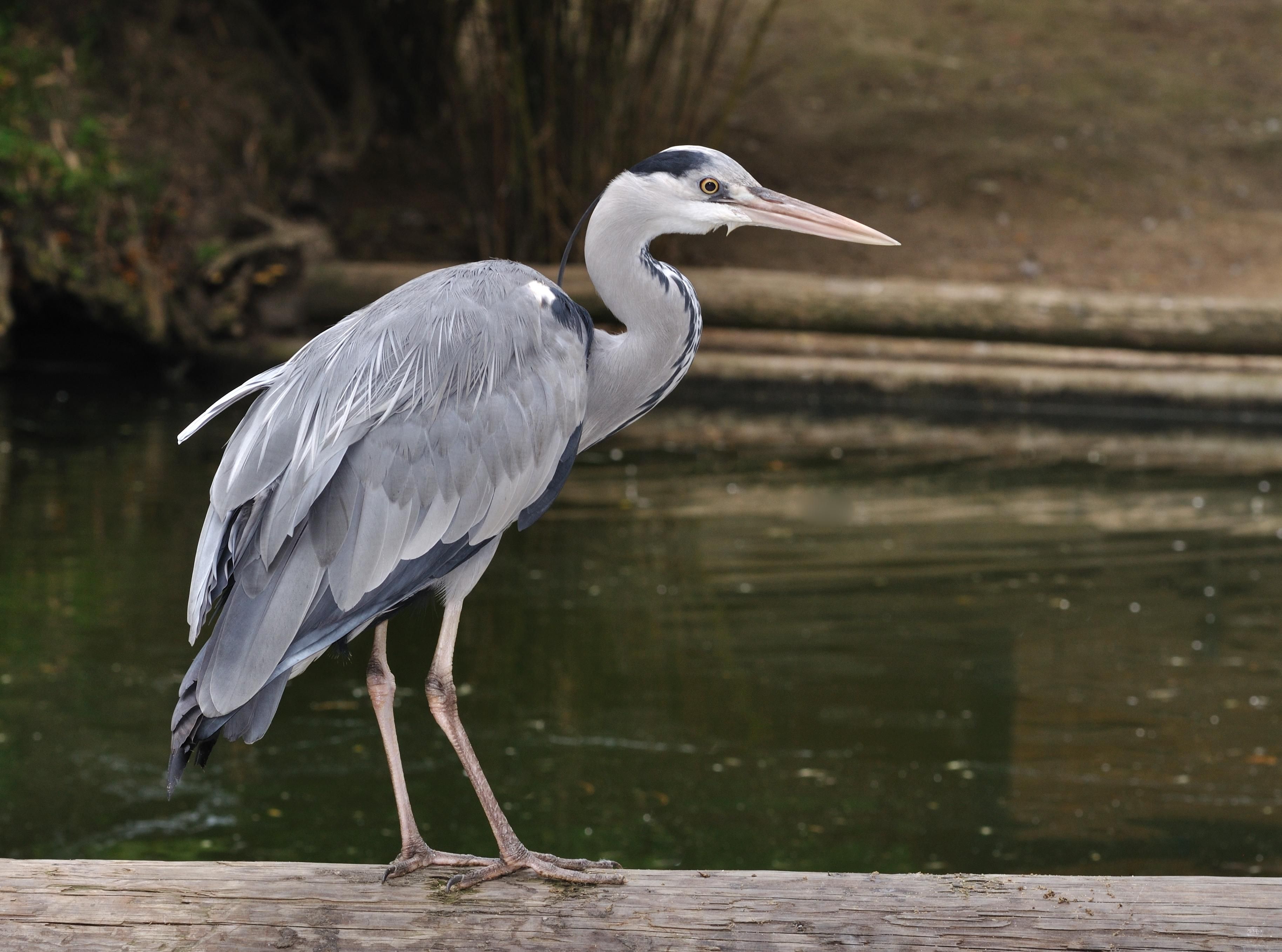
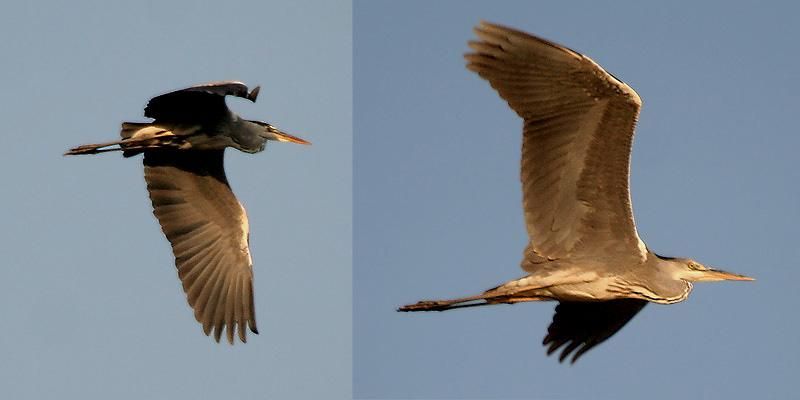
The grey heron stands out for its size and long, powerful orange bill. Its long white neck cannot be seen in flight, because it is retracted between the shoulders. Its plumage is silver-grey on top and its wings are black.
Males are a little bit bigger than females.

Features
Grey heron
Ardea cinerea
powerful straight bill
retracted neck
Flugrufe
Frommolt, CC BY-SA 3.0

Similar species
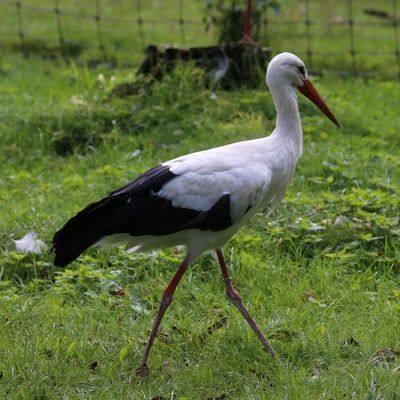
White stork
Ciconia ciconia

Great egret
Ardea alba
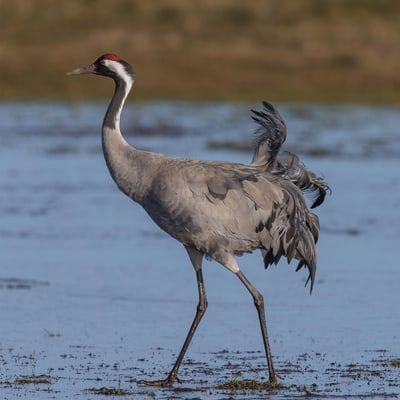
Common crane
Grus grus
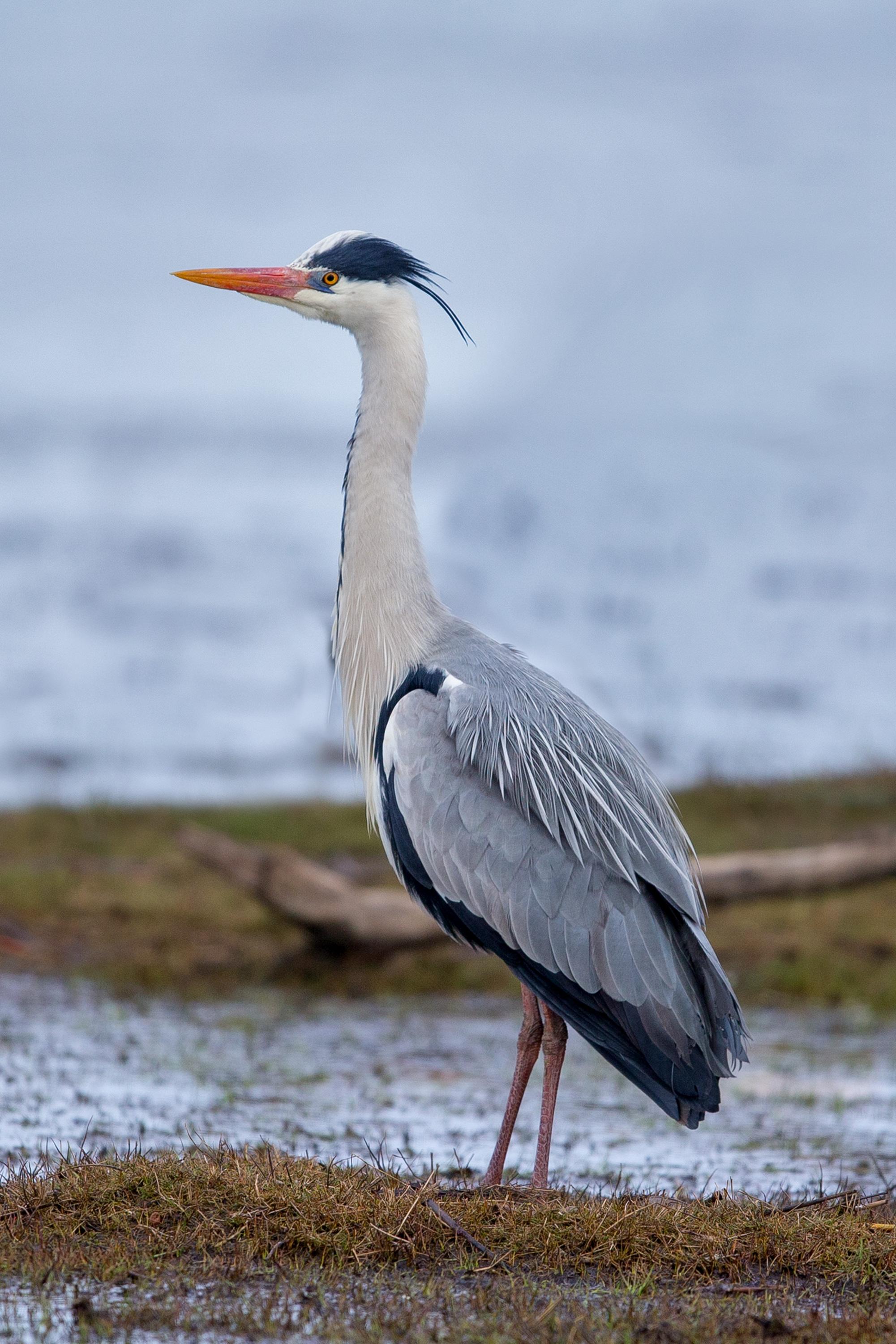
In the city
Grey herons can be seen increasingly frequently in urban settings. Old trees in parks serve as their breeding sites. They find their food (fish, amphibians, reptiles) in the shallow areas of various bodies of water, including park ponds.
In towns, grey herons tend not to be shy and venture quite close to humans. They also fish for food in garden ponds and can thus be observed visiting domestic gardens.
Fun Facts
Grey heron can often be observed in zoos even though they are not kept there. They are attracted by the abundant fish supply on offer there and form wild breeding colonies within zoos.
rey herons breed in colonies. Outside of a colony, the prospect of successfully raising offspring are very low.
They can be seen in Germany all year round.
- Endangerment level Germany: not endangered
Sources
Habitus , Quartl, CC BY-SA 3.0, https://commons.wikimedia.org/wiki/File:Ardea_cinerea_qtl3.jpg

Habitus , Andreas Trepte, CC BY-SA 2.5, https://commons.wikimedia.org/wiki/File:Graureiher_Grey_Heron.jpg

im Flug, J.M.Garg, CC BY-SA-3.0, https://commons.wikimedia.org/wiki/File:Grey_Heron_I11.jpg

von Blotzheim, G. & Urs N. (1987) Gaviiformes – Phoenicopteriformes. : von Blotzheim, G. & Urs N. (eds.) Handbuch der Vögel Mitteleuropas, volume 1, Wiesbaden: AULA-Verlag, 300-331.
Svensson, L. (2011) Der Kosmos Vogelführer - Alle Arten Europas, Nordafrikas und Vorderasiens, Stuttgart: Franckh Kosmos Verlag.
Bejcek, V. (1988) Zugvögel, Hanau/Main: Verlag Werner Dausien.
Witt, K. & Steiof, K. (2013) Rote Liste und Liste der Brutvögel von Berlin, 3. version, 15.11.2013. : Berliner Ornithologische Arbeitsgemeinschaft e.V. (eds.) Berliner Ornithologischer Bericht, volume 23, Berlin: Berliner Ornithologische Arbeitsgemeinschaft e.V., 1-23.
NABU – Naturschutzbund Deutschland e.V. (2016) Rote Liste der Brutvögel Deutschlands. 5. version, published August 2016, URL: https://www.nabu.de/tiere-und-pflanzen/voegel/artenschutz/rote-listen/10221.html (Accessed: 07.04.2017).
Page „Graureiher“. : Wikipedia, The Free Encyclopedia. Date of last revision: 08.02.2016, 16:00 UTC. URL: https://de.wikipedia.org/w/index.php?title=Graureiher&oldid=151240788 (Accessed: 10.02.2016).
Fiedler, W. (2015) Die Vögel Mitteleuropas sicher bestimmen - Schlüssel zur Art-, Alters- und Geschlechtsbestimmung, Wiebelsheim: Quelle & Meyer Verlag.
Makatsch, W. (1989) Wir bestimmen die Vögel Europas, Leipzig: Neumann Verlag.
Voigt, A. (2006) Exkursionsbuch zum Studium der Vogelstimmen, Heidelberg: Quelle & Meyer Verlag.
Harrison, C. (1975) Jungvögel, Eier und Nester aller Vögel Europas, Nordafrikas und des Mittleren Ostens - Ein Naturführer zur Fortpflanzungsbiologie, Hamburg und Berlin: Verlag Paul Parey.
Artenfinder (2016) Ardea cinerea (Graureiher), URL: https://arteninfo.net/elearning/voegel/speciesportrait/2822 (Accessed: 14.04.2016).
Verband der Zoologischen Gärten e.V. (2015) Graureiher - Ardea cinerea, URL: http://www.zoodirektoren.de/index.php?option=com_k2&view=item&id=2728:graureiher-ardea-cinerea (Accessed: 14.04.2016).
NABU Landesverband Nordrhein-Westfalen (2014) Steckbrief Graureiher - Ardea cinerea, URL: https://nrw.nabu.de/natur-und-landschaft/landnutzung/jagd/jagdbare-arten/wasservoegel/06747.html (Accessed: 10.02.2021).