
Short Description
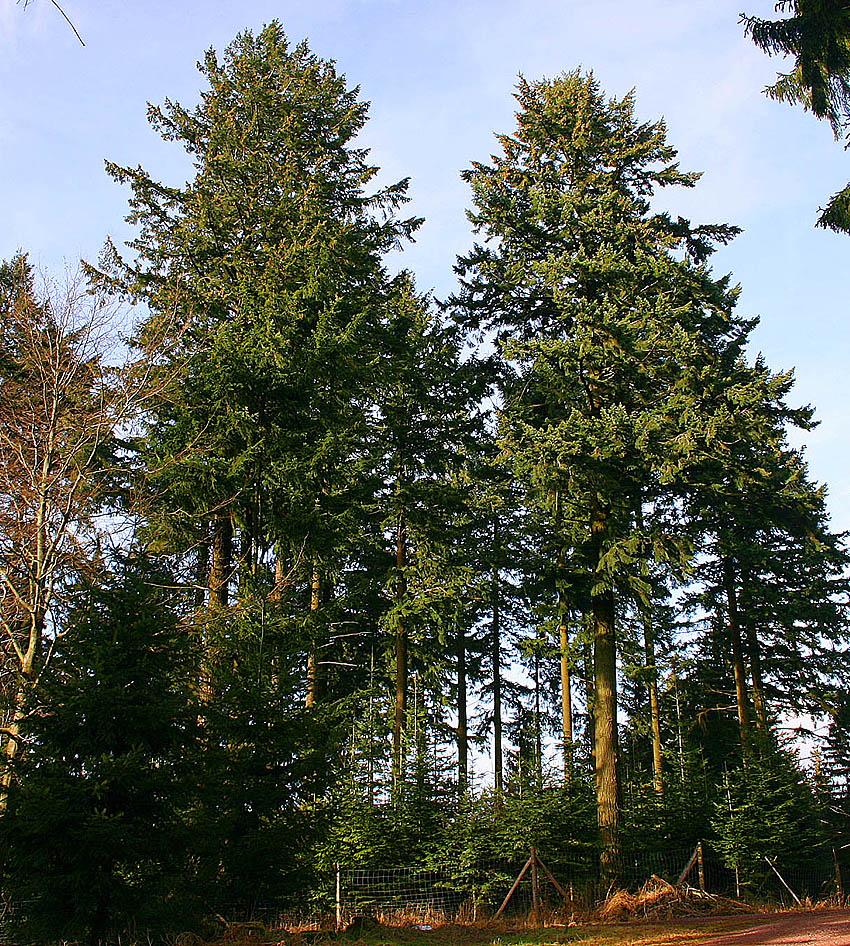
The Douglas-fir is an evergreen conifer that can reach a height of up to 60 metres.
The blue-green needles have two shiny white bands on the lower surface. They stand singly and are soft and blunt at the front.
The bark of young trees is dark grey-green and often has resin blisters. On old trees, the trunk is almost black to dark red with deep furrows in the bark.
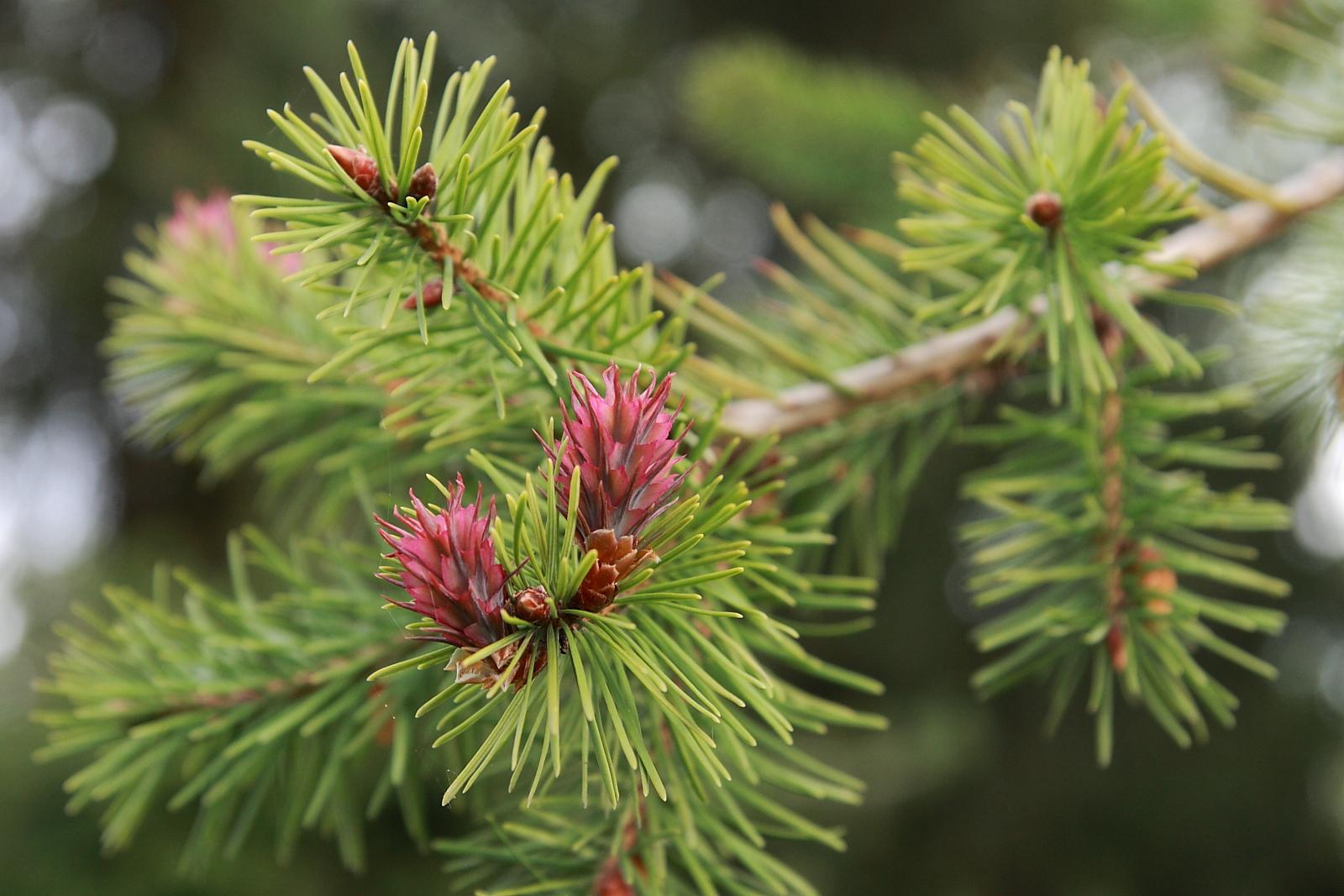
The male flower cones are small, yellow and egg-shaped. They are located on the lower surface of the shoots. The female flower cones are larger, yellowish to reddish and sit at the ends of the shoots.
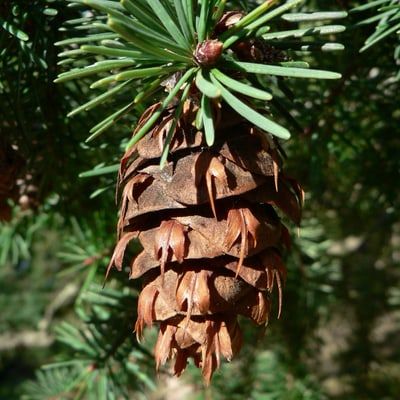
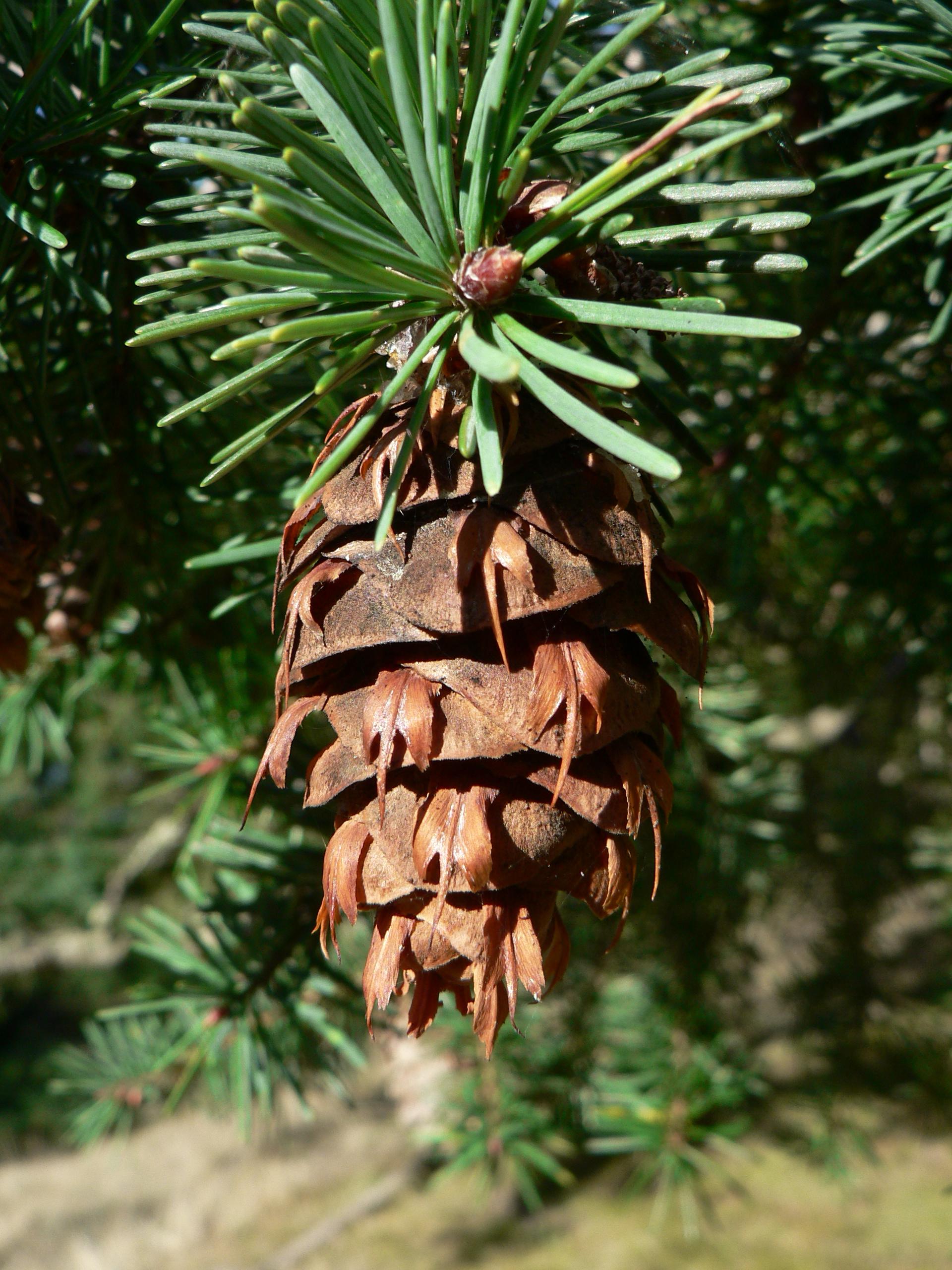
The mature cones are brown and up to ten centimetres long. They have conspicuous, three-cornered covering scales. The cones hang on the shoots.
Features
Douglas-fir
Pseudotsuga menziesii
soft needles
crushed needles smell of citrus fruits
hanging cones
In the city
The Douglas fir is often used as a forest tree in Central Europe. However, it is also frequently planted in gardens and parks. It prefers rather dry and nutrient-rich soils. In suitable locations, it is dominant and displaces native species.
Fun Facts
The essential oil of the needles is often used in aromatherapy because of its pleasant fragrance.
The tallest Douglas fir in Germany stands in the city forest of Freiburg im Breisgau and is 66.58 metres high.
The Federal Agency for Nature Conservation considers the Douglas fir to be potentially dangerous for native tree species (invasive neophyte).
The flowering period is from April to May.
It can live from 400 to over 1400 years.
The English common name Douglas-fir fir refers to David Douglas, who brought it back to Europe from an expedition in 1827.
- Endangerment level Germany: not evaluated
- Usage:
The wood is used as construction timber because of its durability.
The Douglas-fir originates from the west coast of North America and was introduced to Europe as a forest tree in the 19th century. In Europe it belongs to the non-native species (neophytes).
Sources
Habitus, Thomas Dreger, CC BY-SA 3.0, https://commons.wikimedia.org/wiki/File:Pseudotsuga_menziesii_Schleus_Berg_Suhl_Th_Dreger.jpg

weibliche Blütenzapfen, Iifar, CC0 1.0, https://commons.wikimedia.org/wiki/File:Pseudotsuga_menziesii_seed_cones.jpg

Zapfen, Walter Siegmund, CC BY-SA 3.0, https://commons.wikimedia.org/wiki/File:Pseudotsuga_menziesii_28226.JPG

Spohn, M. & Spohn, R. (2011) Kosmos - Baumführer Europa. 680 Bäume, 2600 Zeichnungen, Stuttgart: Franckh Kosmos Verlag.
Mitchell, A. (1979) Die Wald- und Parkbäume Europas. Ein Bestimmungsbuch für Dendrologen und Naturfreunde, Hamburg und Berlin: Verlag Paul Parey.
Jacobi, F. (2006) Das Pflanzenbestimmungsbuch. Gehölze, Hamburg: Dr. Felix Büchner, Handwerk und Technik.
Page „Gewöhnliche Douglasie“. : Wikipedia, The Free Encyclopedia. Date of last revision: 06.11.2017, 13:57 UTC. URL: https://de.wikipedia.org/w/index.php?title=Gew%C3%B6hnliche_Douglasie&oldid=170719988 (Accessed: 09.11.2017).