
Short Description
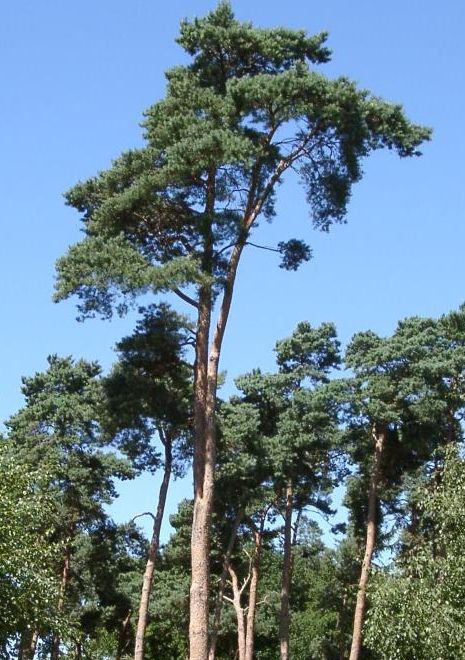
The Scots pine is an evergreen tree that can reach a height of up to 50 metres and a trunk diameter of up to one metre.
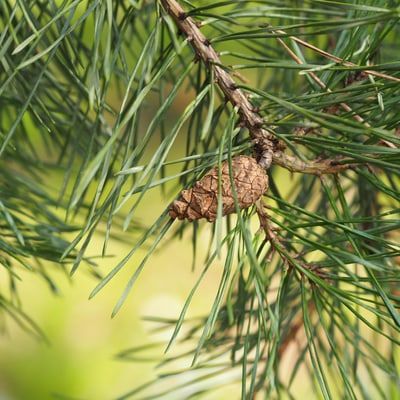
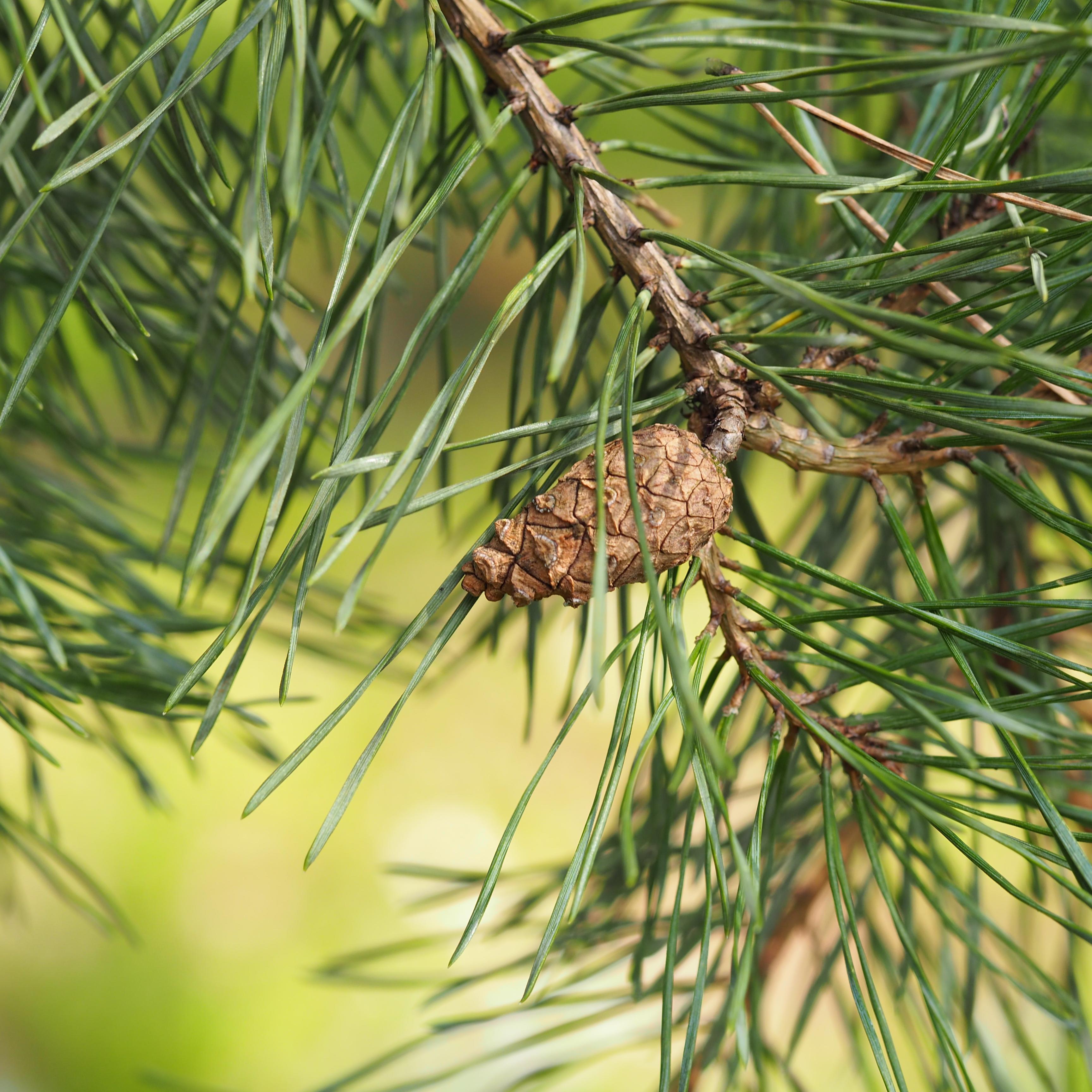
The blue-green needles are long and stand in pairs. They are stiff, prickly and more or less twisted.
The bark is initially smooth and greyish. Later, coarse brown-red, deep fissured scales form.
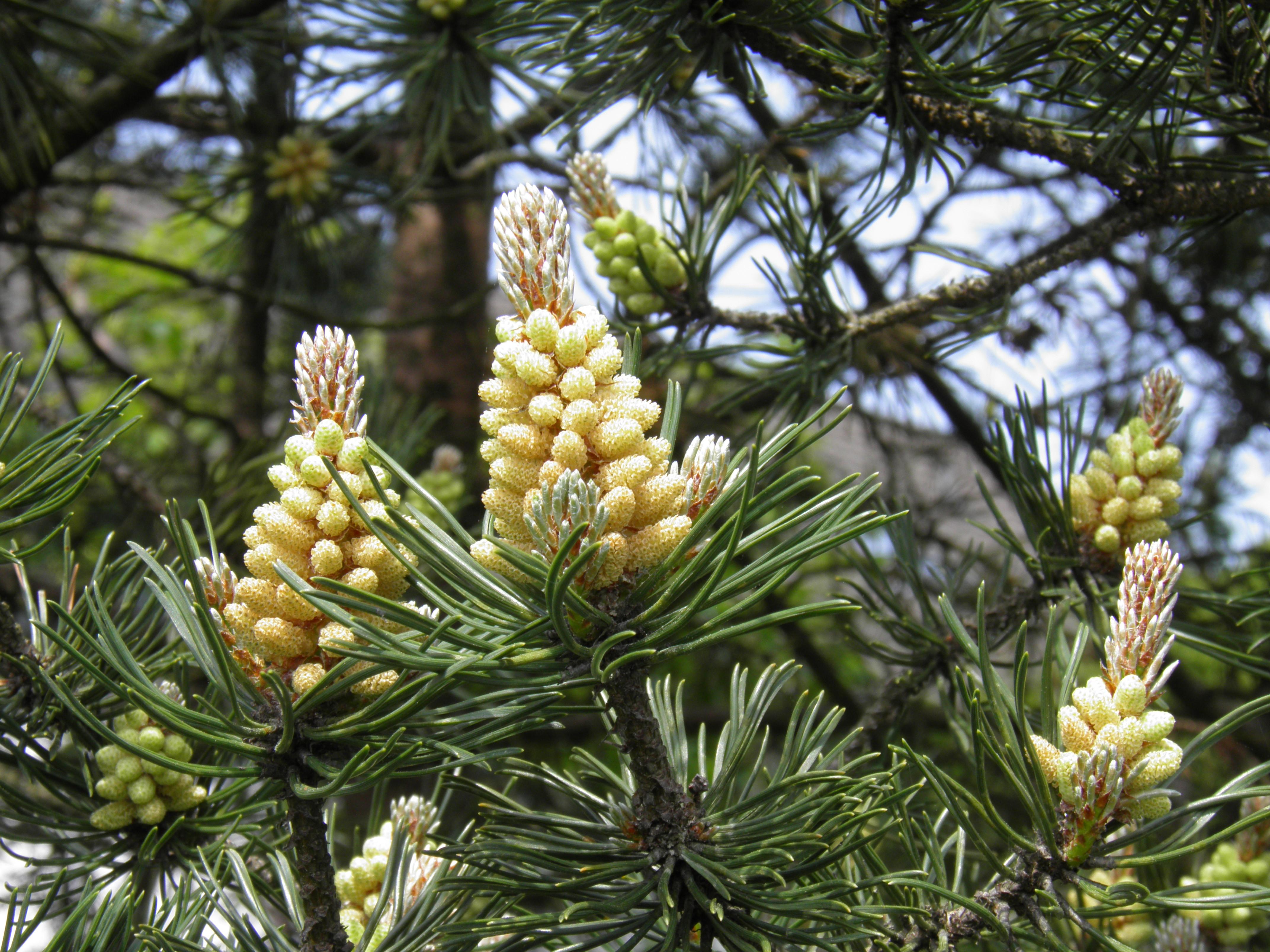
The male flowers appear in large numbers below the youngest long shoots. They are roundish and greenish-yellow at first and later reddish-brown. At the end of the short shoots there are a few female flowers. They are reddish. The seed-bearing cones develop from them later.
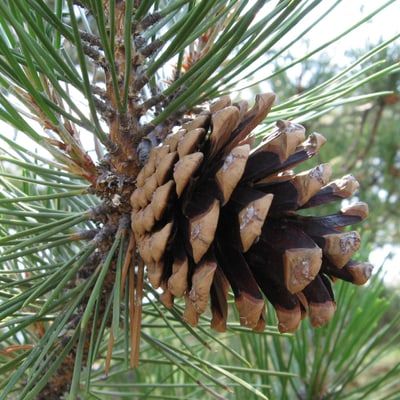
The mature cones are dark grey-brown and roundish. They contain numerous, winged seeds.
Features
Scots pine
Pinus sylvestris
erect cones
long, paired needles
In the city
In the city, the Scots pine is mostly found in pine forests. In addition, it is often used as a solitary tree in parks and gardens. As a solitary tree, it does not achieve the usual shape with a straight, branchless trunk, but an irregular and gnarled growth habit. It prefers dry to wet sites with sandy, nutrient-poor soils.
Fun Facts
In Germany, Scots pine only occurs naturally in a few locations.
The flowering period is from April to May.
The oil from the pine needles is used in natural medicine for bronchitis.
The Scots pine provides a considerable amount of wood for furniture production.
The age of younger pines can be read from the number of branch whorls. Exactly one branch whorl is formed per year.
- Endangerment level Germany: not endangered
The resin is irritating to the skin and slightly poisonous.
Sources
Habitus, Ramin Nakisa, CC BY-SA 3.0, https://commons.wikimedia.org/wiki/File:PinusSylvestris.jpg

männliche Blütenzapfen, Hans Kadereit, GFDL 1.3, https://commons.wikimedia.org/wiki/File:Kieferbl%C3%BCte.JPG

Zapfen, Alice Kracht, CC BY-SA 4.0, https://species-id.net/openmedia/File:Pinus_sylvestris_(4).JPG
.JPG)
Roth, L., Daunderer, M. & Kormann, K. (2008) Giftpflanzen - Pflanzengifte. Vorkommen, Wirkung, Therapie. Allergische und phototoxische Reaktionen, Hamburg: Nikol Verlag.
Page „Waldkiefer“. : Wikipedia, The Free Encyclopedia. Date of last revision: 27.03.2017, 07:17 UTC. URL: https://de.wikipedia.org/w/index.php?title=Waldkiefer&oldid=163991872 (Accessed: 03.04.2017).