
Short Description
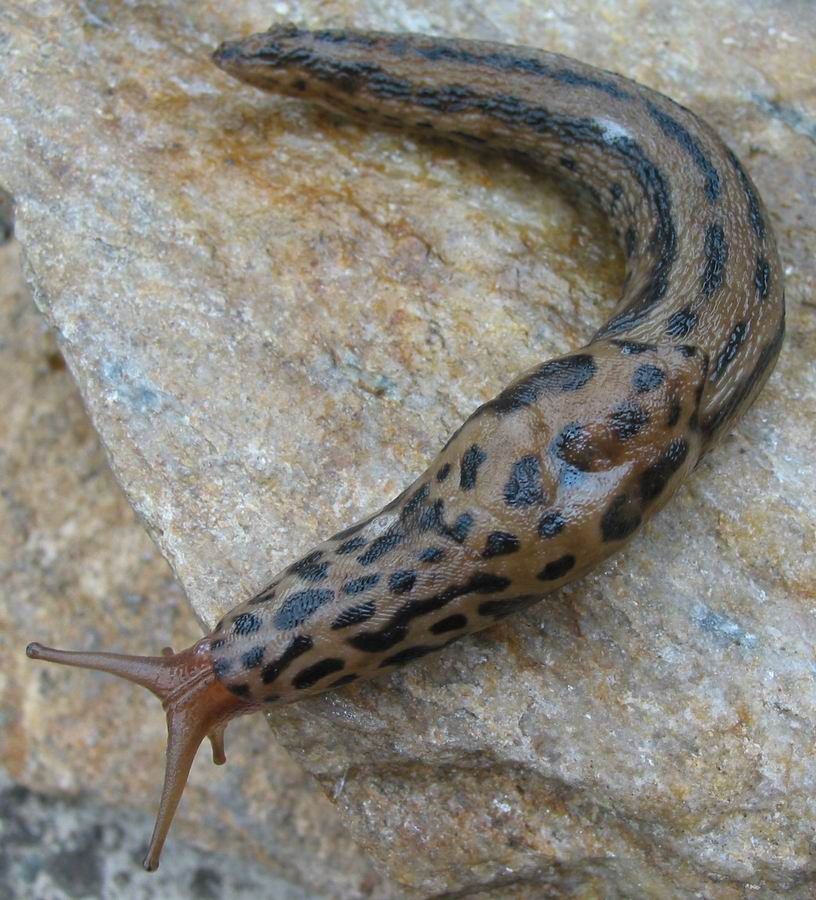
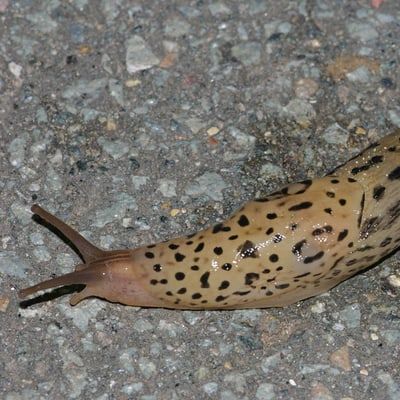
With a length of up to 20 centimetres, the leopard slug is one of the largest native slugs. Its body is mostly grey-brown to cream-coloured with irregularly arranged black spots and longitudinal stripes. Colouration and patterning can vary greatly. The antennae are reddish-brown. The underside is uniformly whitish. It has a short ridge on the back at the end of the tail.
Features
Leopard slug
Limax maximus
very large
black, irregular spots or stripes
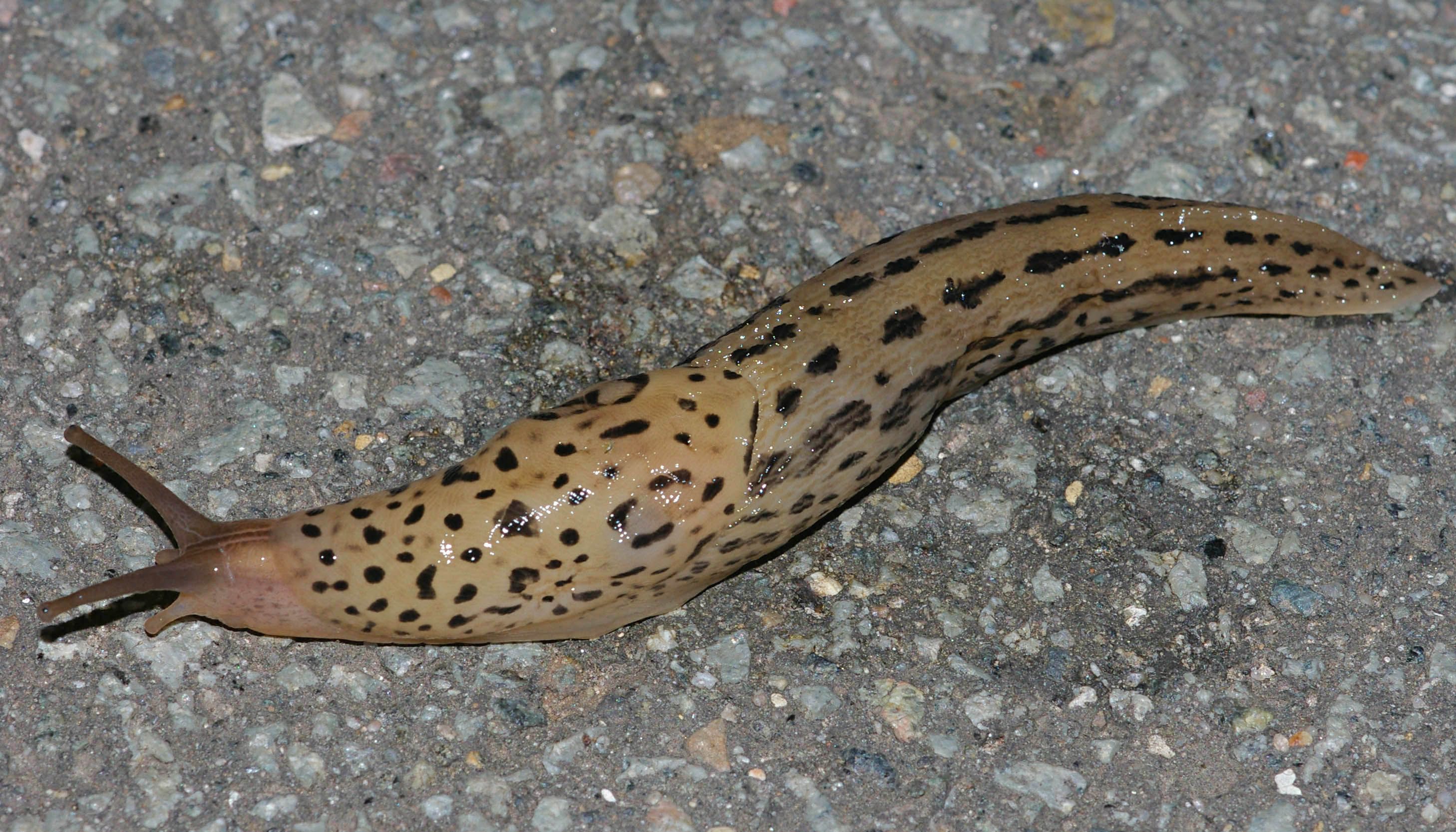
In the city
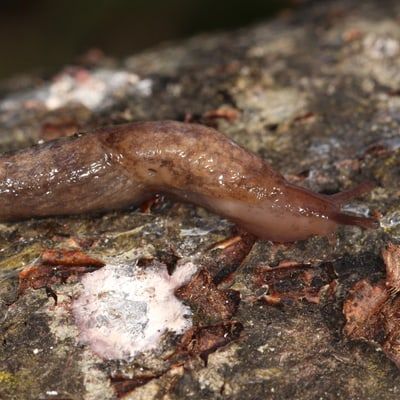
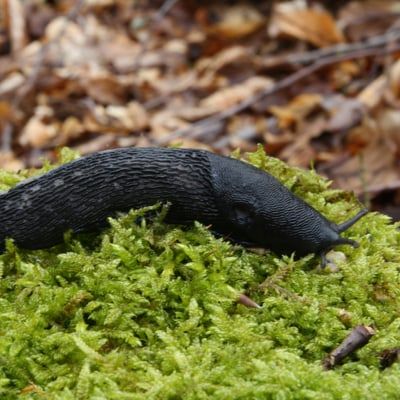
They occur in a wide variety of habitats such as forests, meadows, floodplains, gardens or parks and also on buildings and in cellars.
Fun Facts
It is considered a beneficial species in the garden because it eats dead plant material, fungi and carrion as well as other slugs.
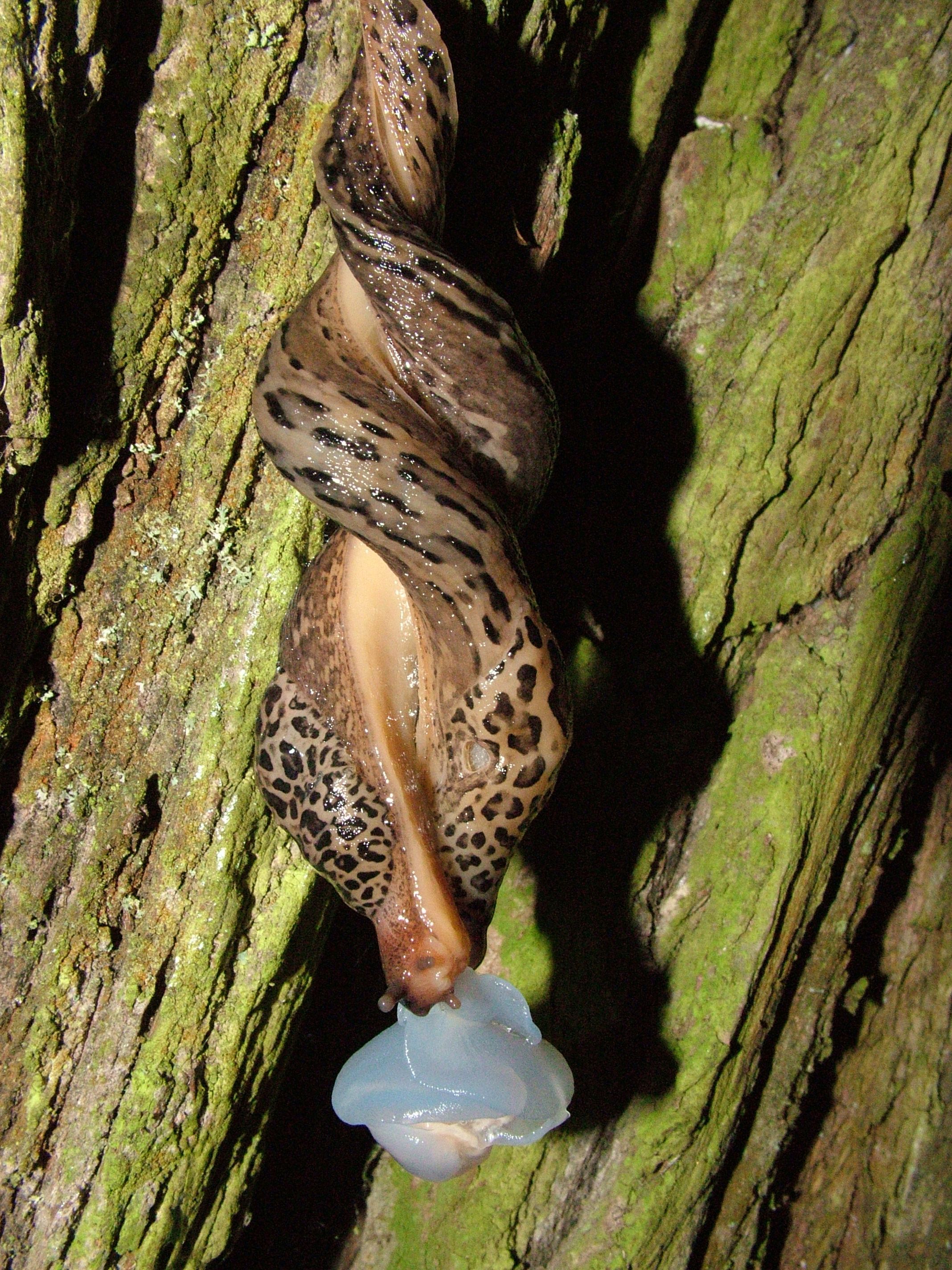
When mating, two animals hang vertically on a slime thread, wrapped around each other.
It is crepuscular and nocturnal and hides during the day.
It can live up to two and a half years.
- Endangerment level Germany: not endangered
Sources
Habitus, Michal Maňas, CC BY 2.5, https://commons.wikimedia.org/wiki/File:Limax_maximus_5.jpg

Habitus, Christian Fischer, CC BY-SA 3.0, https://commons.wikimedia.org/wiki/File:LimaxMaximus.jpg

Bildung der „Lampenglocke“ während der Paarung, T. Hiddessen, CC BY 3.0, https://commons.wikimedia.org/wiki/File:Limax-maximus_mating_2.jpg

Page „Tigerschnegel“. : Wikipedia, The Free Encyclopedia. Date of last revision: 24.08.2017, 10:46 UTC. URL: https://de.wikipedia.org/w/index.php?title=Tigerschnegel&oldid=168428180 (Accessed: 21.09.2017).
Wiese, V. (2014) Die Landschnecken Deutschlands. Finden – Erkennen – Bestimmen, Wiebelsheim: Quelle & Meyer Verlag.
Nordsiek, R. (n.d.) Limax maximus - Die faszinierende Welt der Schnegel, URL: http://www.schnegel.at/index.html?/arten/limax_maximus.html (Accessed: 21.09.2017).
Hackenberg, E. & Müller, R. (2017) Rote Liste und Gesamtartenliste der Weichtiere (Mollusca: Gastropoda und Bivalvia) von Berlin. : Der Landesbeauftragte für Naturschutz und Landschaftspflege/Senatsverwaltung für Umwelt, Verkehr und Klimaschutz (eds.) Rote Listen der gefährdeten Pflanzen, Pilze und Tiere von Berlin, URL: http://dx.doi.org/10.14279/depositonce-5845 (Accessed: 09.10.2017).