
Short Description
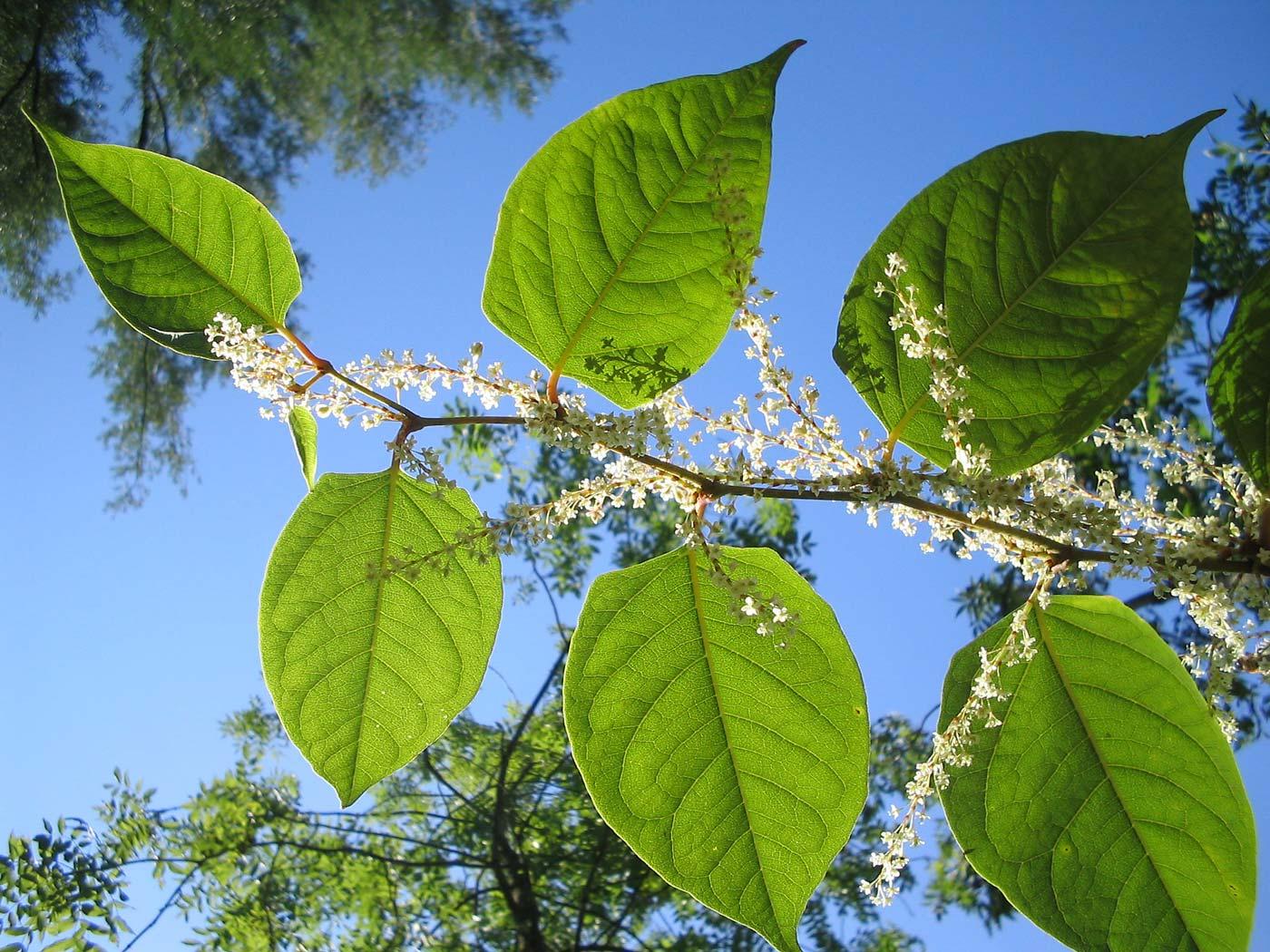
The Japanese knotweed is a very fast-growing plant that can grow up to four metres high.
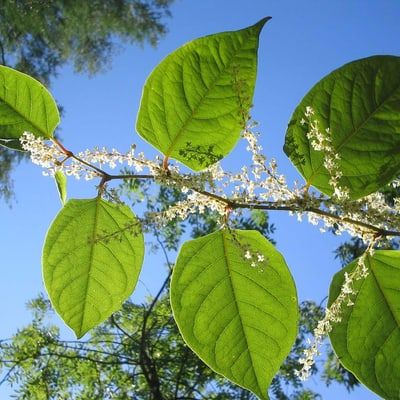
The leaves are large and heart-shaped to broad-ovate. They have a narrow tip. They are solitary and alternate on the stem.
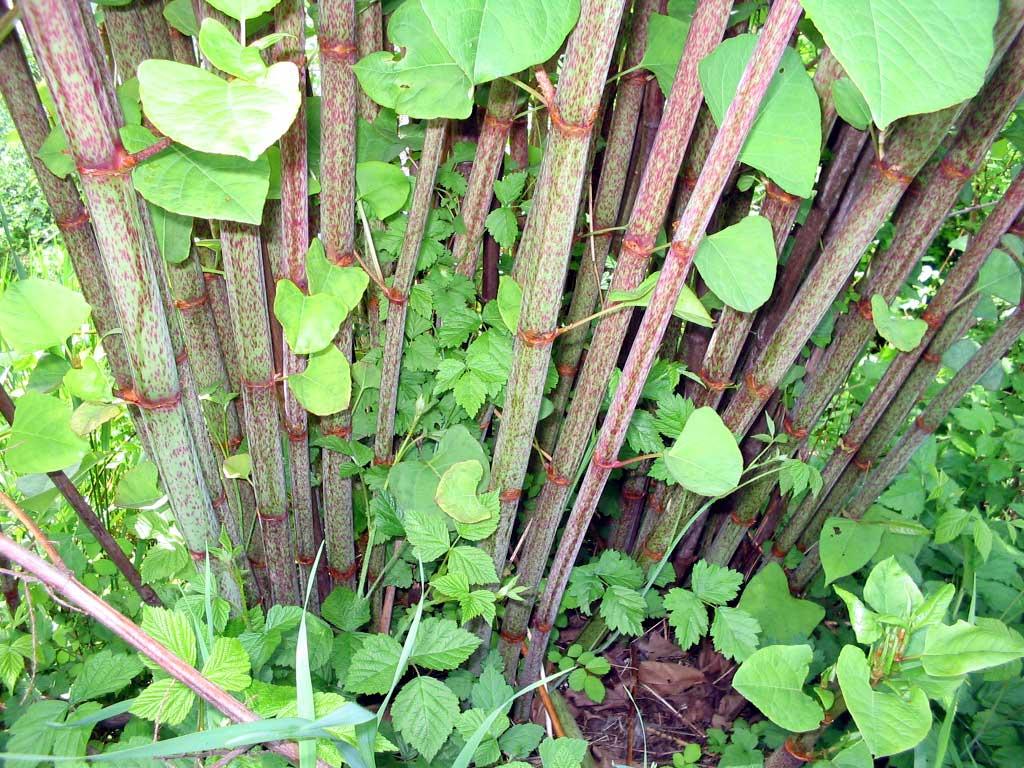
The stem is relatively thick, hollow inside and usually overlaid with dark red.
The numerous flowers stand together in loose inflorescences. The male and female flowers are on different plants (dioecious). They have five whitish petals and either only stigmas (female) or only stamens (male) in the centre of the flower.
The fruits are triangular, winged nuts.
Features
Japanese knotweed
Reynoutria japonica
heart-shaped leaves
very fast-growing
In the city
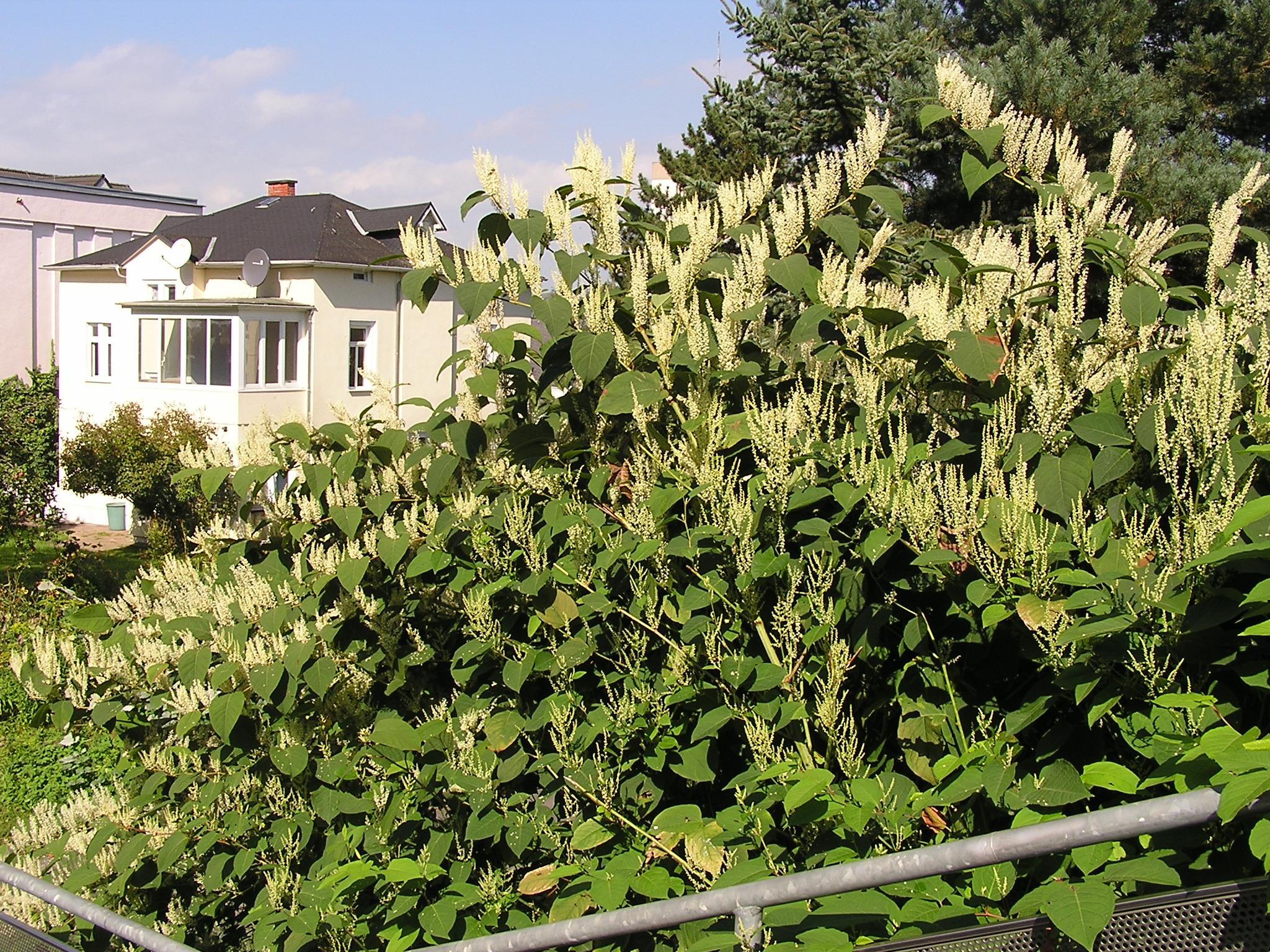
In the city, Japanese knotweed is mostly found on sites near groundwater or temporarily flooded sites such as riverbanks. It prefers moist to wet, nutrient-rich sites with clayey soils.
It is available as a garden plant and is often planted as a privacy screen.
Fun Facts
The flowering period is from July to September.
It reproduces mainly vegetatively and extremely efficiently via creeping shoots. This enables it to form large and very dense stands in a very short time. These stands usually consist of either purely female or purely male specimens.
From the perspective of nature conservation, the species is problematic because it reproduces very strongly and quickly and is capable of replacing native species.
Controlling the plant is difficult because new plants can always grow from even very small parts of the creeping shoots.
Japanese knotweed is a perennial plant. This means that it grows older than two years, but flowers only once and dies after the seeds have ripened.
- Endangerment level Germany: not evaluated
The Japanese knotweed comes from China, Korea and Japan. In Germany it belongs to the non-native plants (neophytes).
The very young shoots can be prepared and eaten like asparagus.
Sources
Habitus, Michael Gasperl (Migas), CC BY-SA 3.0, https://commons.wikimedia.org/wiki/File:Fallopia-japonica(Blaetter).jpg
.jpg)
Stängel, Migas, CC BY-SA 3.0, https://commons.wikimedia.org/wiki/File:Fallopia-japonica(Staude).jpg
.jpg)
Habitus, MdE, CC BY-SA 3.0, https://commons.wikimedia.org/wiki/File:Fallopia_japonica_MdE_1.jpg

Jäger, E. J. (2011) Rothmaler - Exkursionsflora von Deutschland. Gefäßpflanzen: Grundband, Heidelberg: Spektrum Akademischer Verlag.
Kammer, P. M. (2016) Pflanzen einfach bestimmen. Schritt für Schritt einheimische Arten kennenlernen, Bern: Haupt Verlag.
Page „Japanischer Staudenknöterich“. : Wikipedia, The Free Encyclopedia. Date of last revision: 13.08.2017, 15:22 UTC. URL: https://de.wikipedia.org/w/index.php?title=Japanischer_Staudenkn%C3%B6terich&oldid=168122652 (Accessed:14.08.2017).