
Short Description
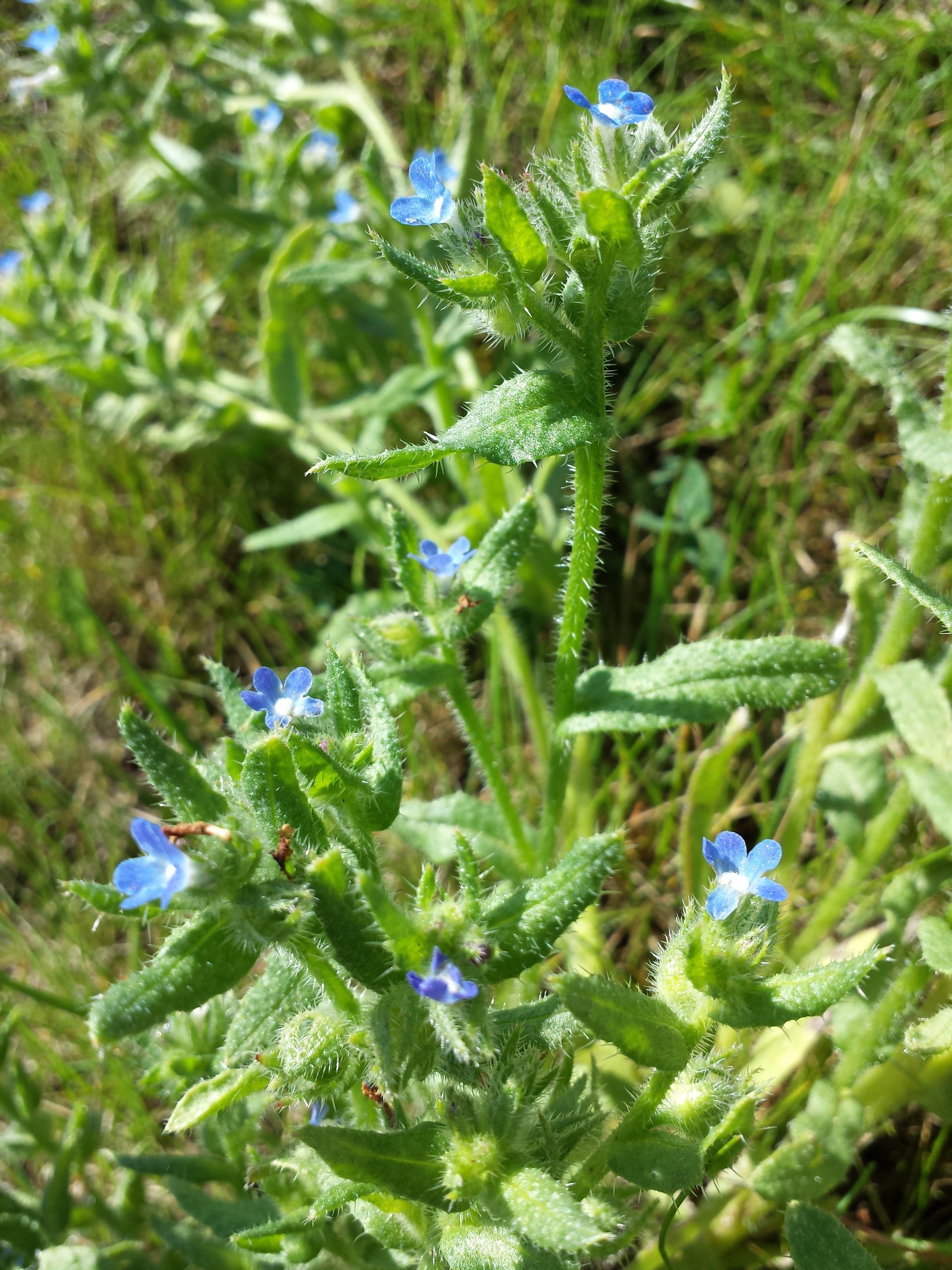
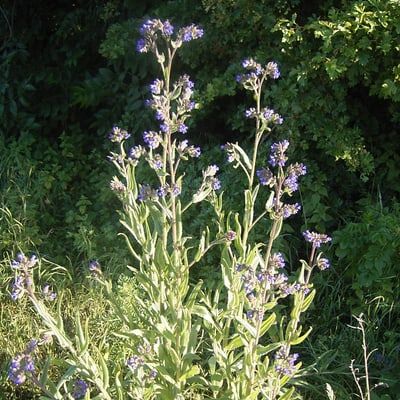
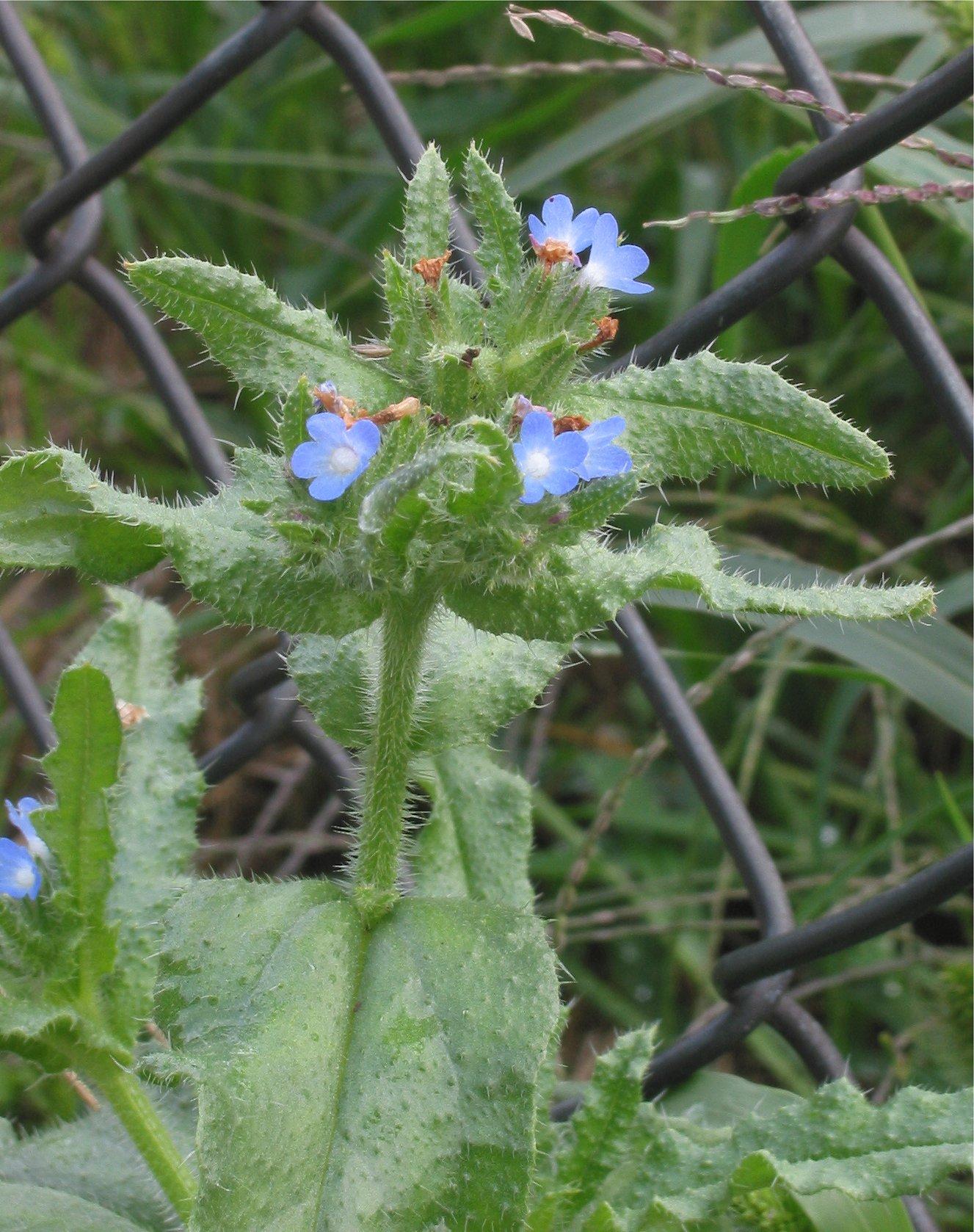
The small bugloss can grow up to 40 centimetres high.
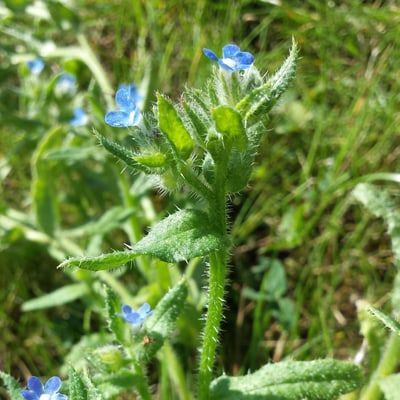
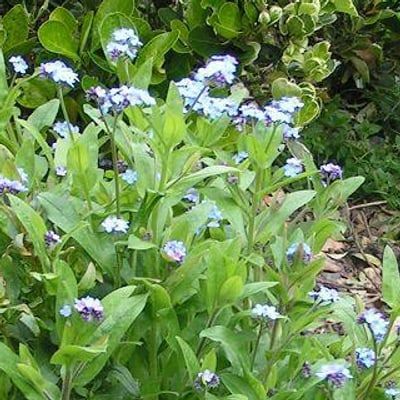
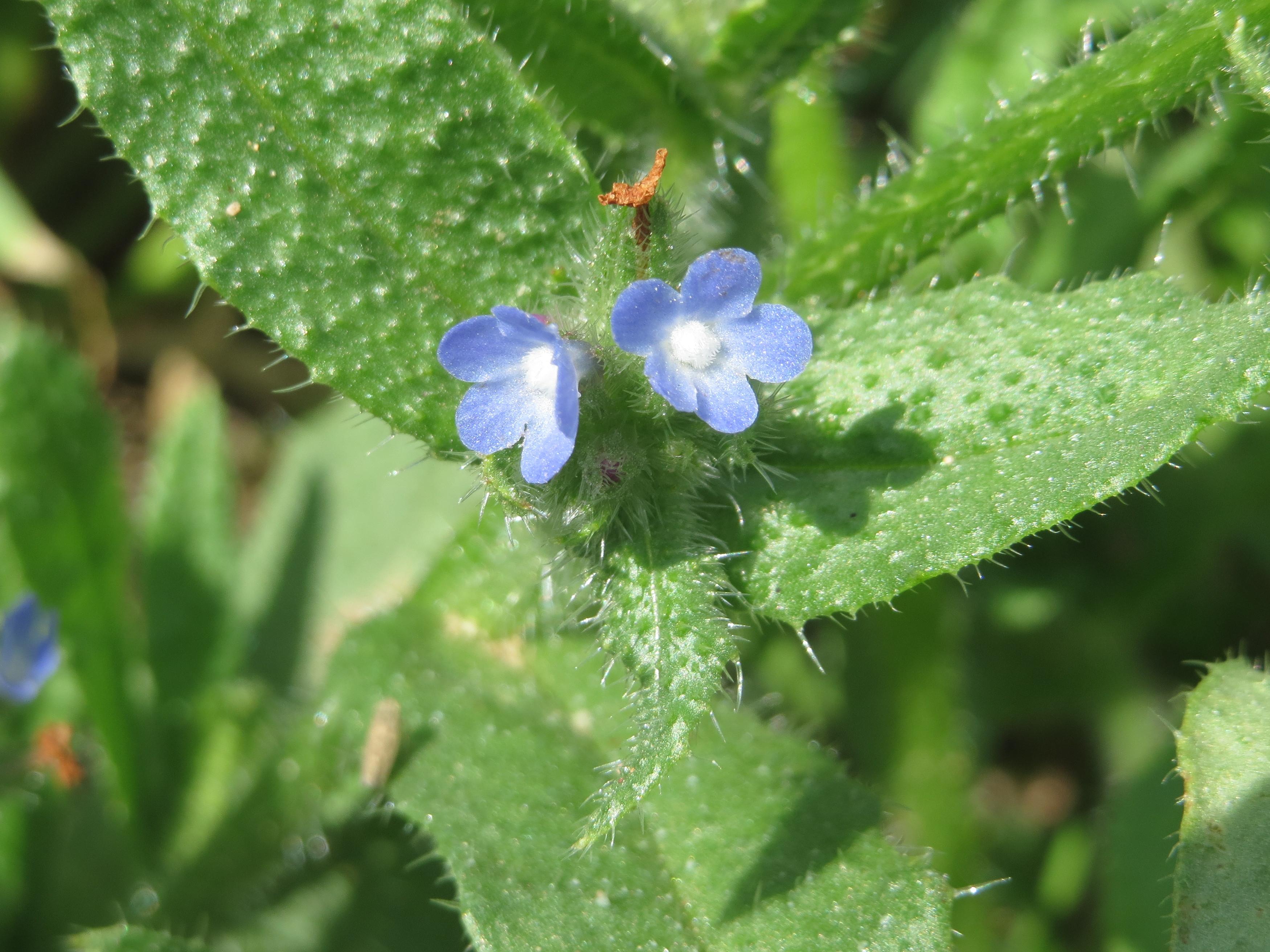
The leaves have dense, bristly hairs. They are elongated-lanceolate and wavy at the leaf edge. They sit singly and alternately on the stem.
The stem grows erect and is bristly-haired.
The numerous flowers have five petals that are fused together in the lower area and form a tube. They are light blue to white. In the centre of the corolla there are whitish scales. The flower tube is bent knee-shaped.
The fruits are small, single-seeded nutlets. There are always four of them in the calyx of the flower.
Features
Small bugloss
Lycopsis arvensis
possibly poisonous
light blue and white flowers
hirsute
In the city
In the city, the small bugloss is found mainly in locations with nutrient-rich soils such as fields and fallow land. It is an arable crop companion and has been spread with agriculture.
Fun Facts
If animals brush past the plant, they get caught on the bristle hairs and bend the stems. These then spring back and fling the fruits out of the flowers.
The fruits bear nutritious oil bodies (elaiosome) and are carried away by ants. The ants can thus contribute to the spread of the plant.
The flowering period is from May to September.
The small bugloss is an annual, i.e. the plant flowers for only one summer and dies after the seeds have matured.
Pollination is carried out by bees or by self-pollination.
It is an indicator of sand.
- Endangerment level Germany: not endangered
The small bugloss may contain pyrrolizidine alkaloids, which cause cancer and are considered liver toxins. It should therefore not be consumed.
Sources
Habitus, Stefan.lefnaer, CC BY-SA 4.0, https://commons.wikimedia.org/wiki/File:Anchusa_arvensis_sl11.jpg

Blüten, AnRo0002, CC0, https://commons.wikimedia.org/wiki/File:20150927Anchusa_arvensis1.jpg

Blüten und Blätter, Rasbak, CC BY-SA 3.0, https://commons.wikimedia.org/wiki/File:Kromhals_bloeiwijze_(Anchusa_arvensis).jpg
.jpg)
Kammer, P. M. (2016) Pflanzen einfach bestimmen. Schritt für Schritt einheimische Arten kennenlernen, Bern: Haupt Verlag.
Schauer, T., Caspari, C. & Caspari, S. (2015) Der illustrierte BLV-Pflanzenführer für unterwegs. 1150 Blumen, Gräser, Bäume und Sträucher, München: BLV.
Spohn, M., Golte-Bechtle, M. & Spohn, R. (2015) Was blüht denn da? Stuttgart: Franckh Kosmos Verlag.
Page „Acker-Ochsenzunge“. : Wikipedia, The Free Encyclopedia. Date of last revision: 15.11.2017, 21:12 UTC. URL: https://de.wikipedia.org/w/index.php?title=Acker-Ochsenzunge&oldid=171038825 (Accessed: 24.04.2018).