
Short Description
The wild liquorice can grow up to 1.5 metres long.
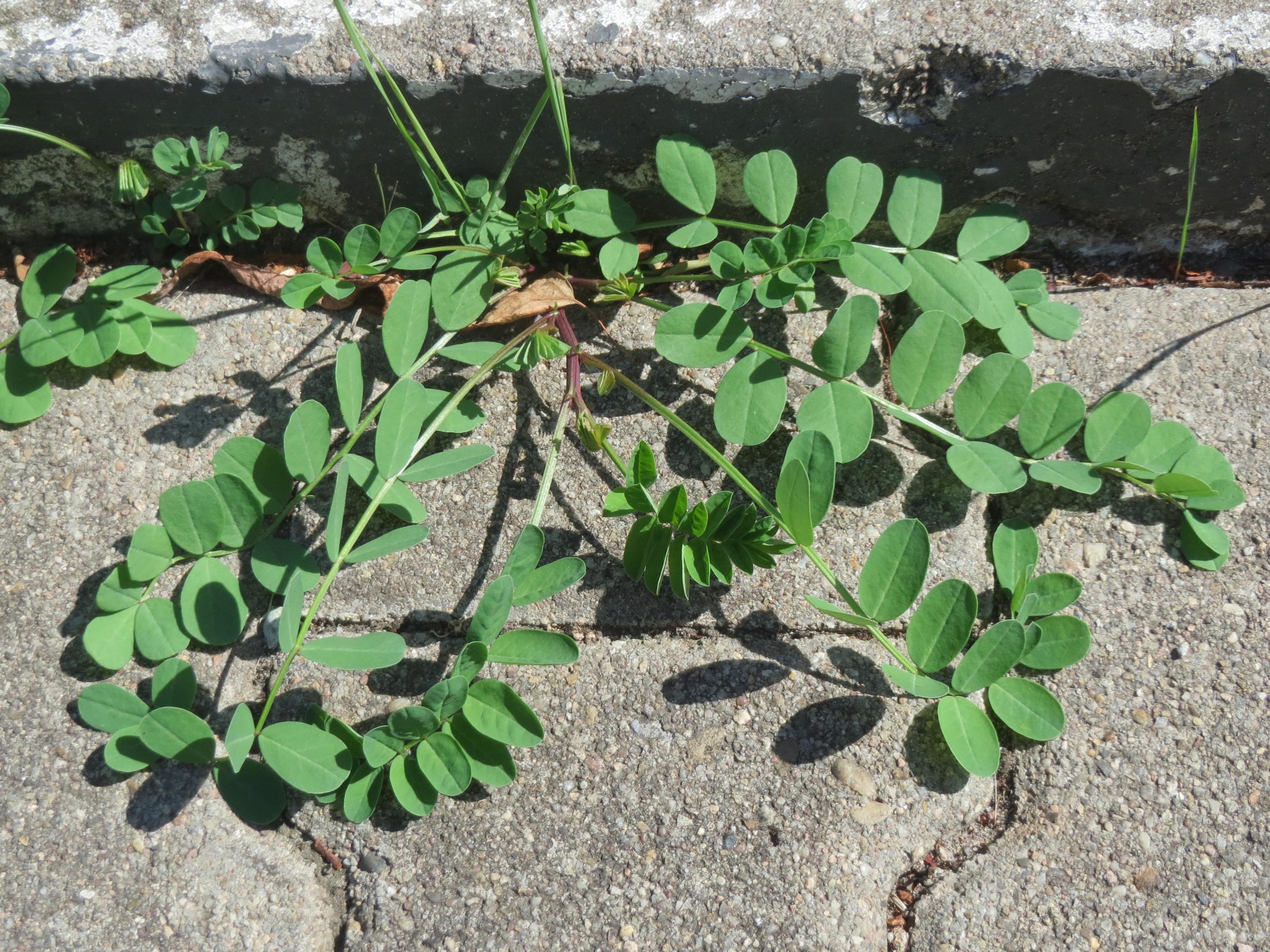
The leaves are divided into 8 to 15 leaflets and one terminal leaflet (pinnate). The fresh green leaflets are ovate and hairy on the underside.
The stem grows creeping and zigzag-like. It rises at the ends.
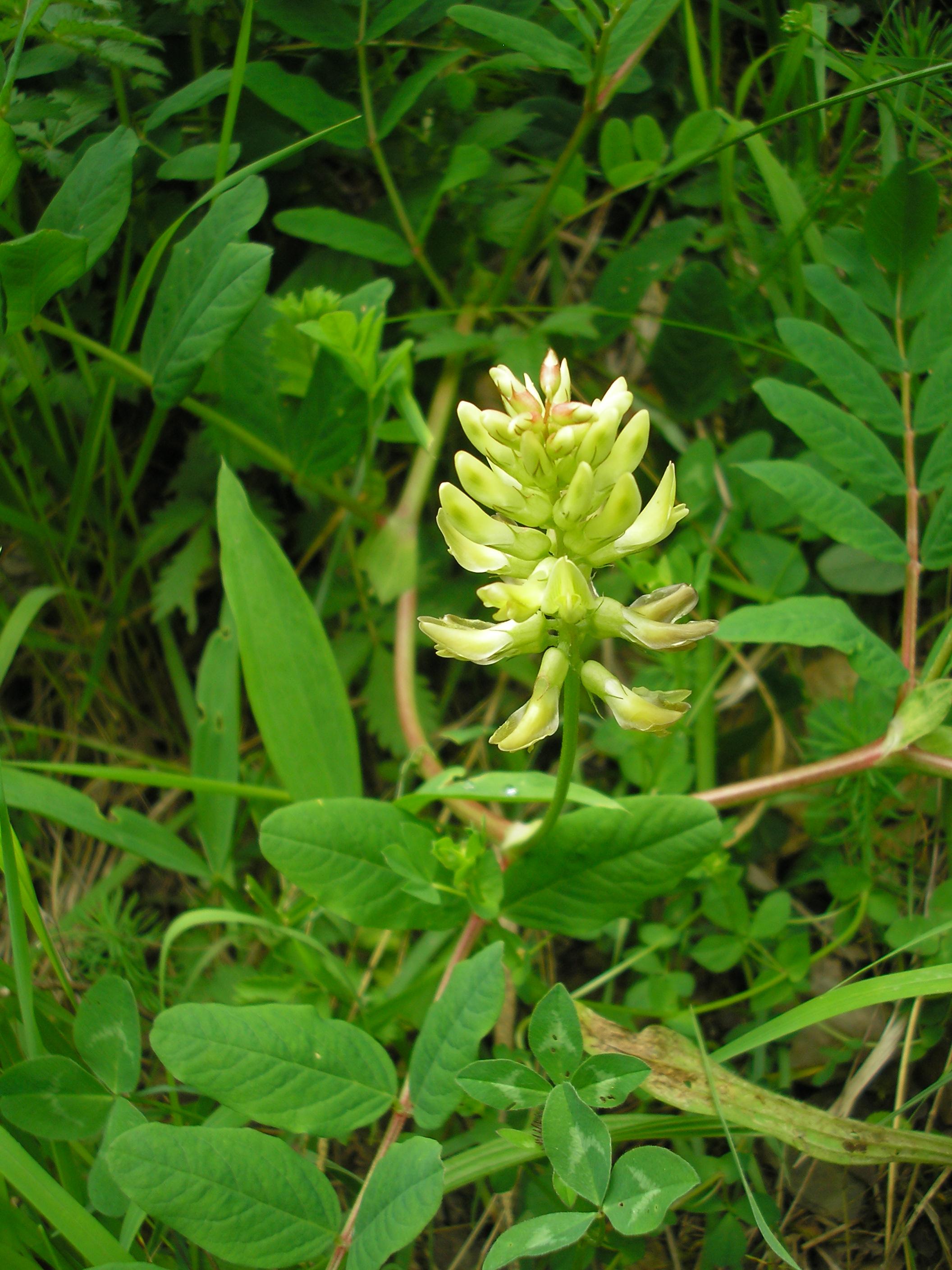
The flowers are of a greenish yellow and stand in a short, dense inflorescence. They consist of five petals that form the typical zygomorphic pea-flower-type (papilionaceous) within this family. The large, upper petal is the standard and projects upwards. The two smaller lateral petals are the wings. The two lower leaves form a hollow keel that surrounds the anthers and the pistil.
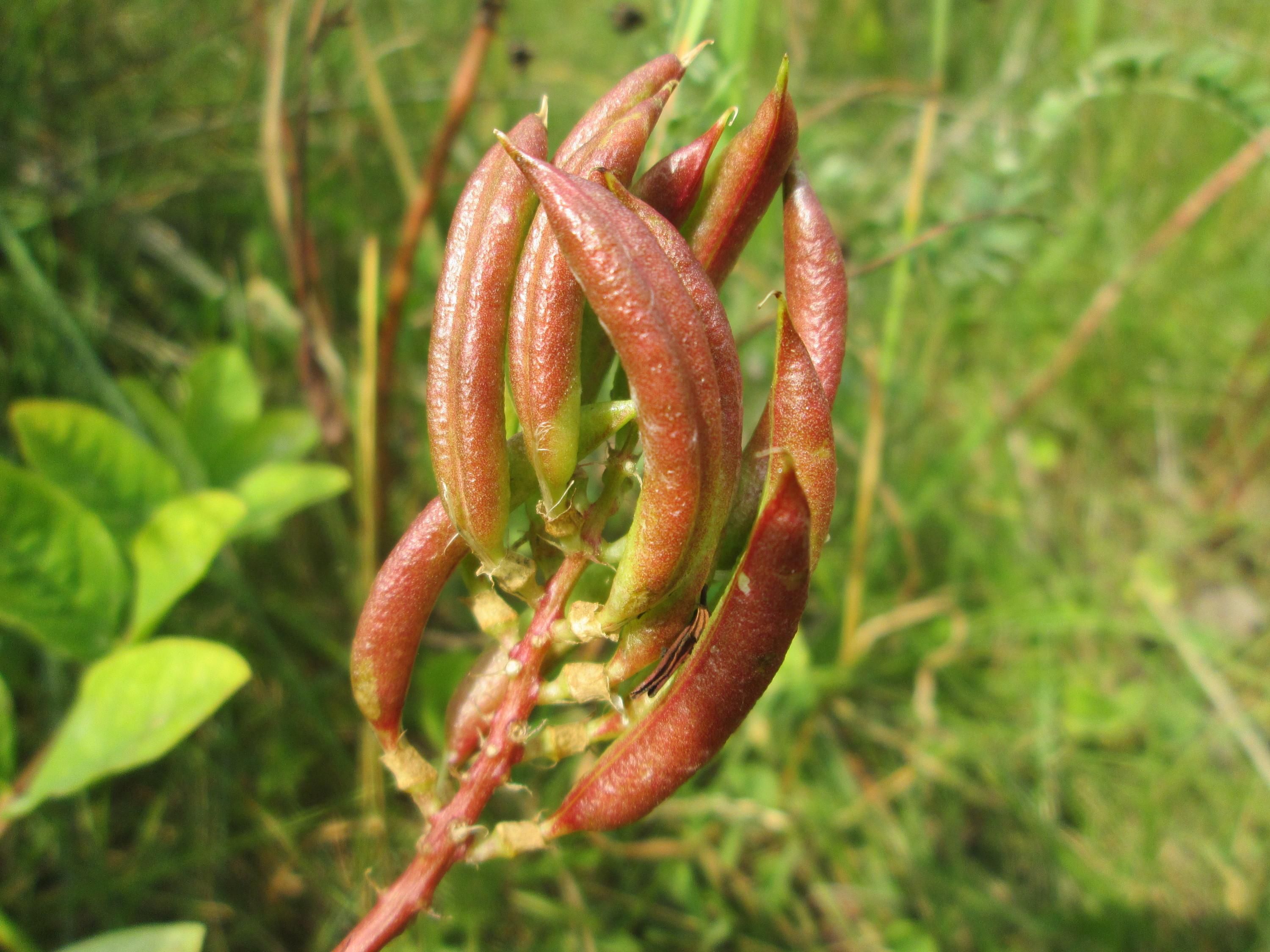
The fruits are brown, curved pods. They are about four centimetres long.
Features
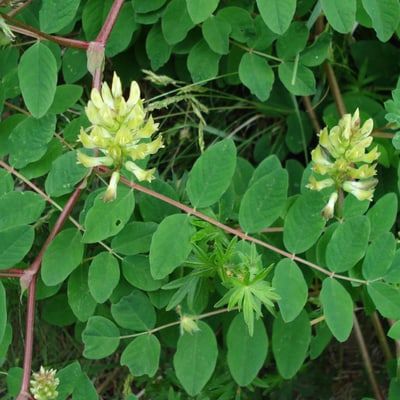
Wild liquorice
Astragalus glycyphyllos
creeping, zigzagging stem
crescentic curved fruits
In the city
Wild liquorice is a pioneer plant on warm and nutrient-rich soils. In the city, it is therefore often found on rubble areas and on forest edges, paths and embankments.
Fun Facts
It contains various sugars and glycyrrhizin and tastes sweet.
Living together with bacteria in their root nodule is typical for the pea family. The bacteria supply the plant with nitrogen. Since the bacteria need a plant for nitrogen fixation, this coexistence has a positive effect on both species (symbiosis).
The flowering period is from June to August.
The pollinators are bumblebees and moths.
The seeds are spread by animals. In open terrain, however, wind dispersal as tumbleweed is also possible.
- Endangerment level Germany: not endangered
The wild liquorice is native to Central Europe.
The name wild liquorice refers to its close relationship to 'real' liquorice (Glycyrrhiza glabra), both of which belong to the pea family. The leaves of wild liquorice have a sweet taste due to the high content of various sugars and glycerine.
The plant is a valuable and frequently cultivated forage crop.
Sources
Blütenstand, Julia Kruse, CC BY-SA 3.0, https://species-id.net/openmedia/File:Astragalus_glycyphyllos_JuliaKruse_1.jpg

Blätter, AnRo0002, CC0 1.0, https://commons.wikimedia.org/wiki/File:20170823Astragalus_glycyphyllos.jpg

Früchte, AnRo0002, CC0 1.0, https://commons.wikimedia.org/wiki/File:20190713Astragalus_glycyphyllos2.jpg

Kammer, P. M. (2016) Pflanzen einfach bestimmen. Schritt für Schritt einheimische Arten kennenlernen, Bern: Haupt Verlag.
Schauer, T., Caspari, C. & Caspari, S. (2015) Der illustrierte BLV-Pflanzenführer für unterwegs. 1150 Blumen, Gräser, Bäume und Sträucher, München: BLV.
Spohn, M., Golte-Bechtle, M. & Spohn, R. (2015) Was blüht denn da? Stuttgart: Franckh Kosmos Verlag.
Page „Bärenschote“. : Wikipedia, The Free Encyclopedia. Date of last revision: 08.03.2017, 11:46 UTC. URL: https://de.wikipedia.org/w/index.php?title=B%C3%A4renschote&oldid=163388985 (Accessed: 09.05.2018).