
Short Description
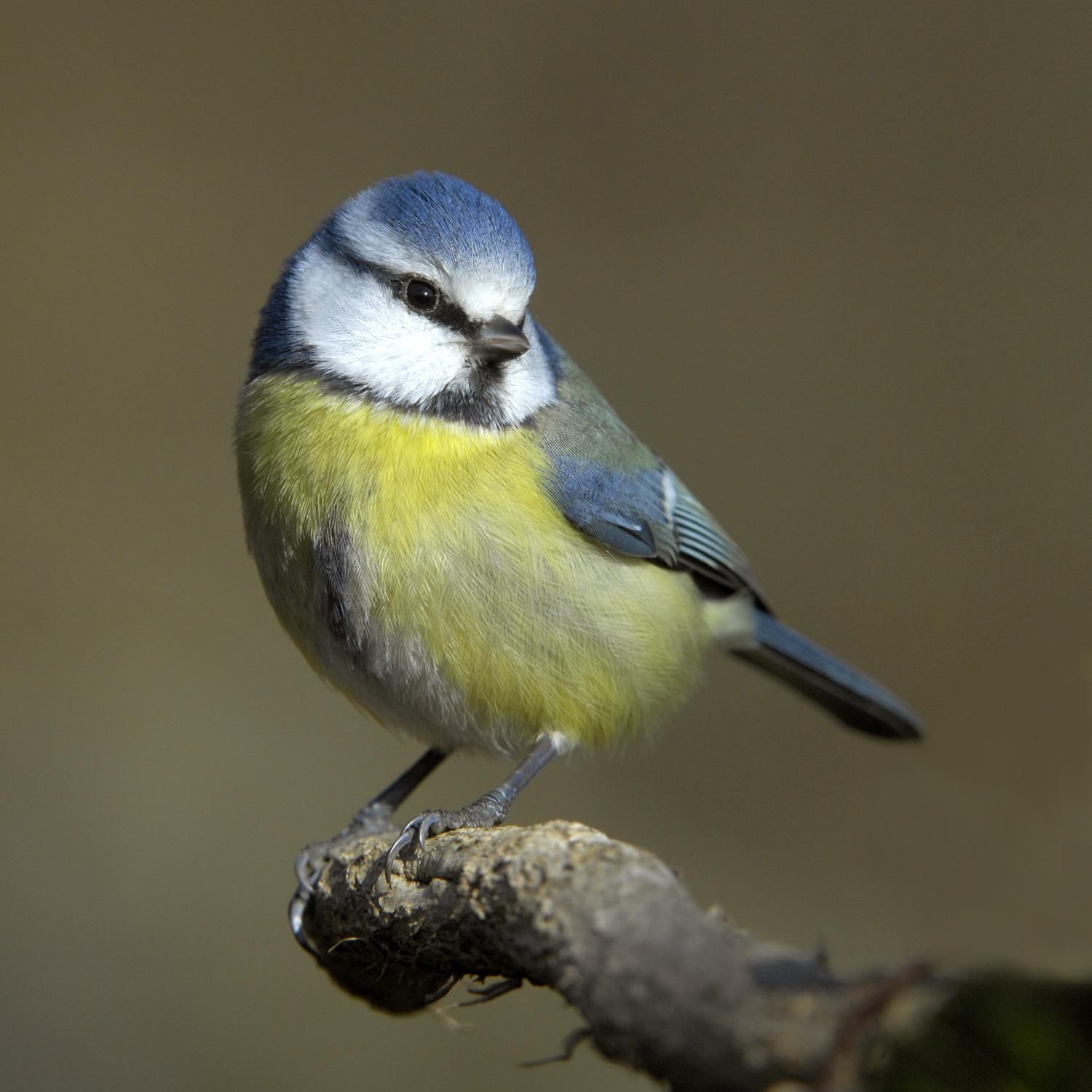
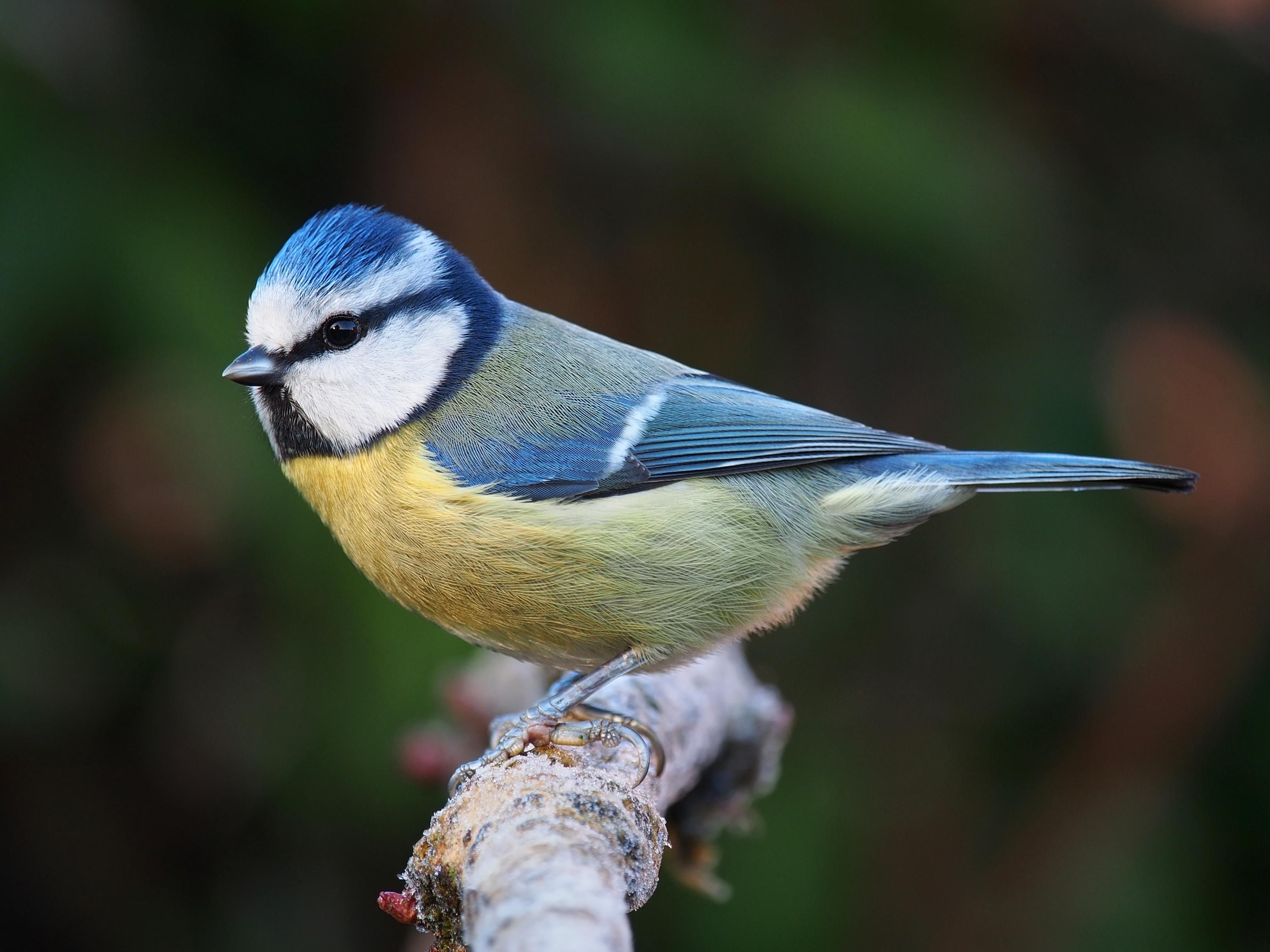
The blue plumage on head and upper parts is unique in Central Europe and thus a clearly identifying feature. Chest and belly are bright yellow and the back and shoulders greenish in colour. The wings are blue with a white band. Males and females cannot be clearly distinguished.

Features
Eurasian blue tit
Cyanistes caeruleus
blue head and wings
Gesang (HG: Amsel, Kohlmeise)
Frommolt, CC BY-SA 3.0

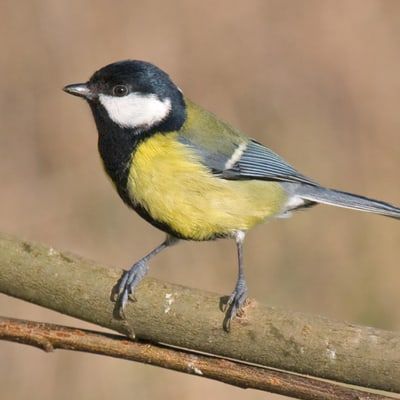
Similar species
In the city
Eurasian blue tits are frequently found in gardens and parks. As cavity-nesting birds, they use wall recesses or similar building structures in urban settings.
They have come to like visiting feeding stations and also use artificial nesting aids for hibernating.
Fun Facts
After the great tit, the Eurasian blue tit is the second most common tit in Germany.
In the last few years, Eurasian blue tits have become the main predators of the horse chestnut leafminer moth, much to the benefit of horse chestnuts.
From January to June, they start to sing approx. 35 minutes before sunrise.
Eurasian blue tits rarely tend to migrate these days. If they do, they migrate to south-western Europe at the end of October and return to Germany at the end of March.
- Endangerment level Germany: not endangered
Sources
Habitus , Maximilian Dorsch, CC BY-SA 3.0, https://commons.wikimedia.org/wiki/File:ParusCaeruleus.jpg

Habitus , Francis Franklin, CC BY-SA 3.0, https://commons.wikimedia.org/wiki/File:Eurasian_blue_tit_Lancashire.jpg

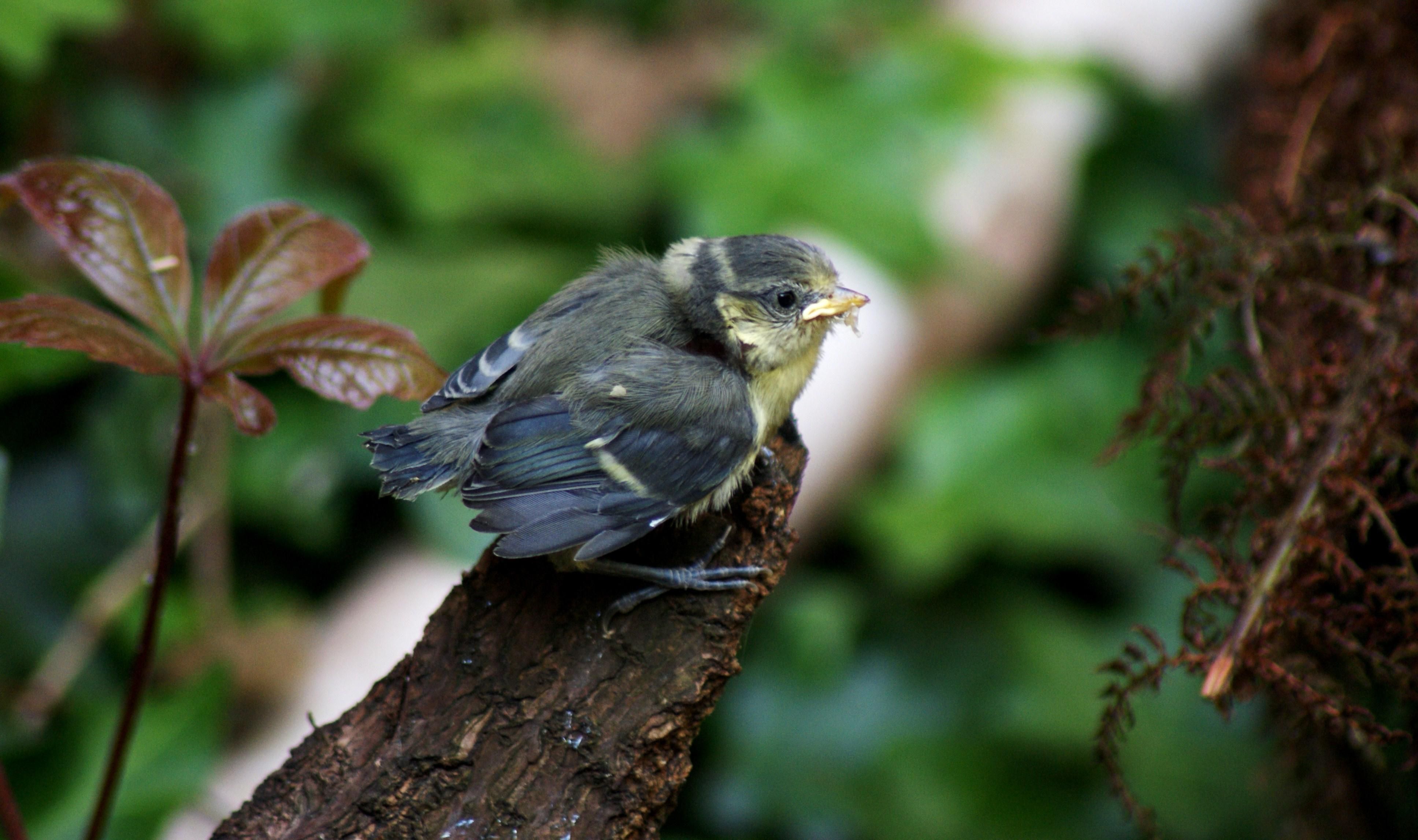
Jungtier, Dave Howes, CC BY-SA 2.0, https://commons.wikimedia.org/wiki/File:Cyanistes_caeruleus_-Norfolk,_England_-chick-8.jpg

Page „Blaumeise“. : Wikipedia, The Free Encyclopedia. Date of last revision: 09.02.2021, 08:47 UTC. URL: https://de.wikipedia.org/w/index.php?title=Blaumeise&oldid=208616712 (Accessed: 10.02.2021).
Witt, K. & Steiof, K. (2013) Rote Liste und Liste der Brutvögel von Berlin, 3. version, 15.11.2013. : Berliner Ornithologische Arbeitsgemeinschaft e.V. (eds.) Berliner Ornithologischer Bericht, volume 23, Berlin: Berliner Ornithologische Arbeitsgemeinschaft e.V., 1-23.
Fiedler, W. (2015) Die Vögel Mitteleuropas sicher bestimmen - Schlüssel zur Art-, Alters- und Geschlechtsbestimmung, Wiebelsheim: Quelle & Meyer Verlag.
Makatsch, W. (1989) Wir bestimmen die Vögel Europas, Leipzig: Neumann Verlag.
Voigt, A. (2006) Exkursionsbuch zum Studium der Vogelstimmen, Heidelberg: Quelle & Meyer Verlag.
Svensson, L. (2011) Der Kosmos Vogelführer - Alle Arten Europas, Nordafrikas und Vorderasiens, Stuttgart: Franckh Kosmos Verlag.
Harrison, C. (1975) Jungvögel, Eier und Nester aller Vögel Europas, Nordafrikas und des Mittleren Ostens - Ein Naturführer zur Fortpflanzungsbiologie, Hamburg und Berlin: Verlag Paul Parey.
Goedecke, L. & Brehme, S. (2009) Nachweis einer erfolgreichen Brut der Blaumeise (Parus caeruleus) in 21,3 m Höhe in Berlin. : Berliner Ornithologische Arbeitsgemeinschaft e.V. (eds.) Berliner Ornithologischer Bericht, volume 19, Berlin: Berliner Ornithologische Arbeitsgemeinschaft e.V., 31-33.
NABU – Naturschutzbund Deutschland e.V. (2016) Vogeluhr, URL: https://www.nabu.de/nabu_vogeluhr2/index.php?iframed=1 (Accessed: 10.02.2021).
Artenfinder (2016) Parus caeruleus (Blaumeise), URL: https://arteninfo.net/elearning/voegel/speciesportrait/3130 (Accessed: 18.04.2016).