
Short Description
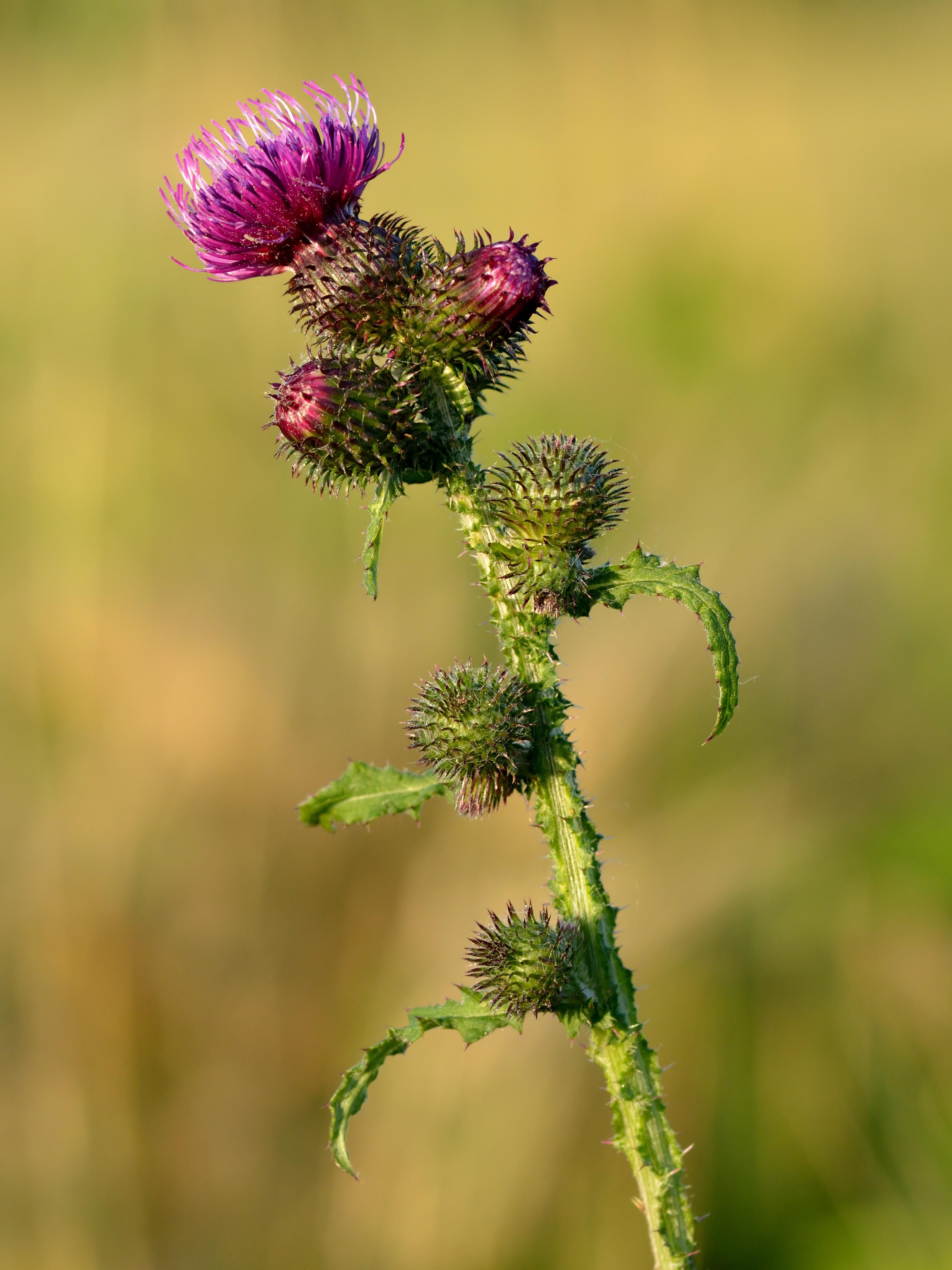
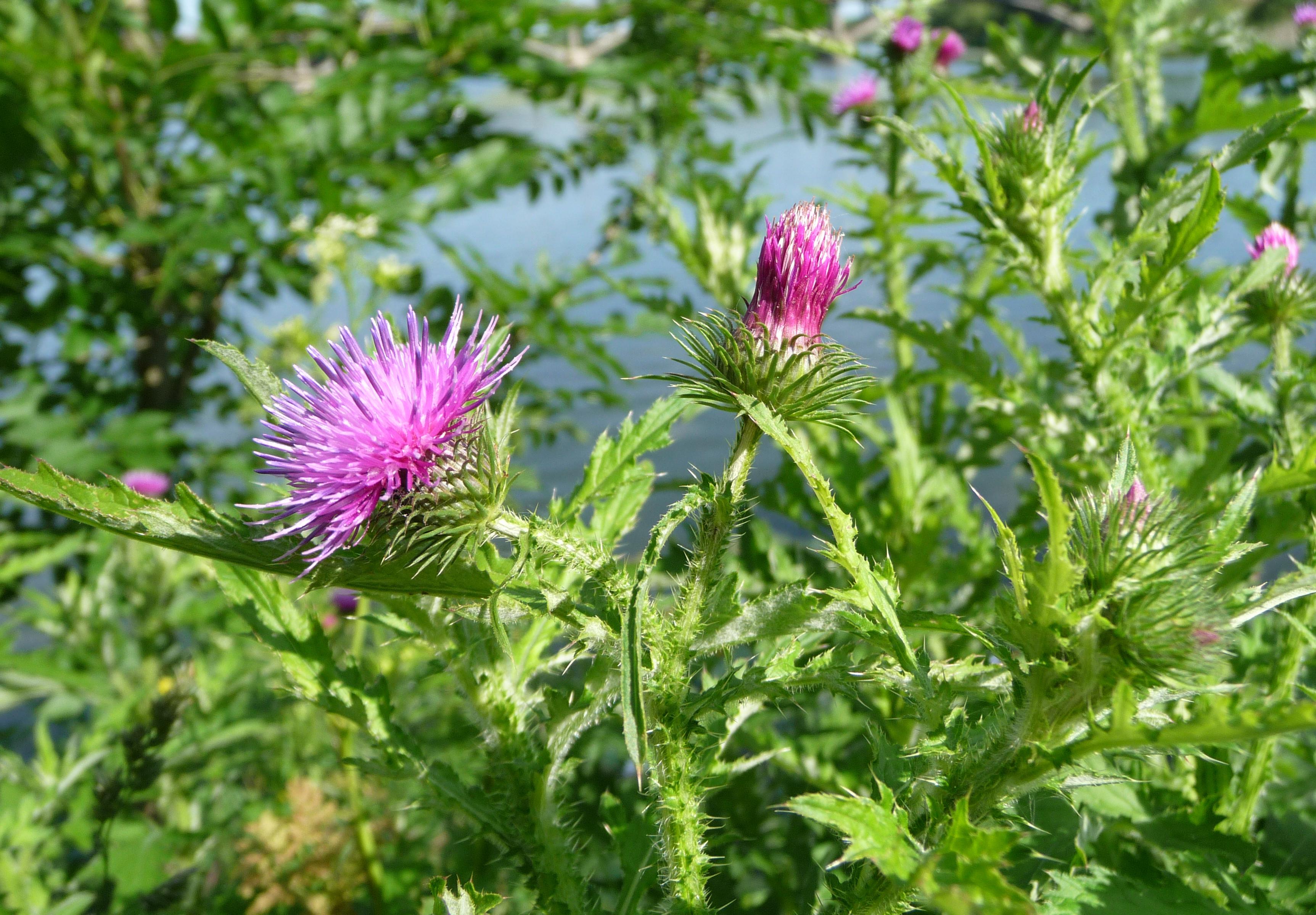
The welted thistle can grow up to two metres high.
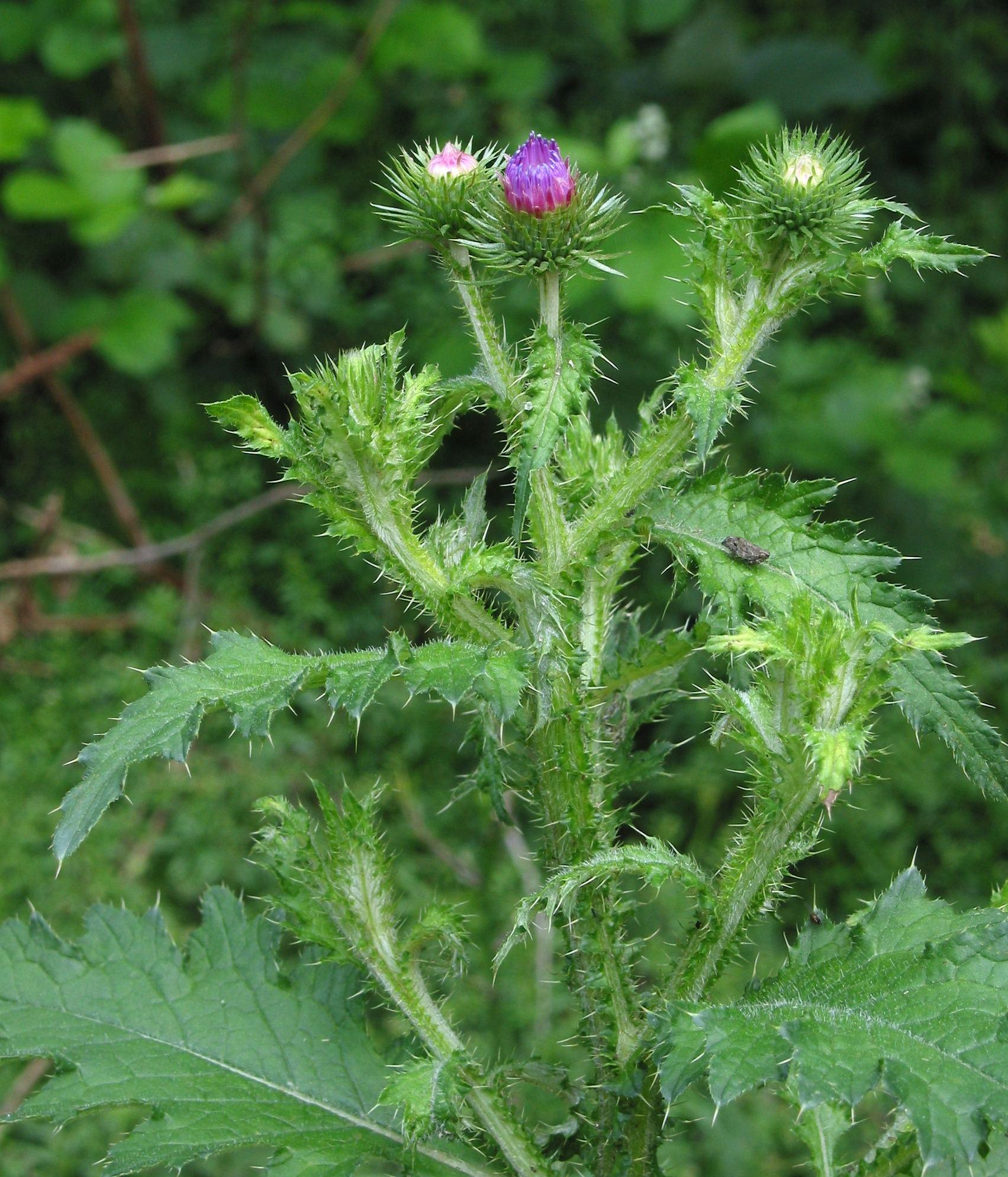
The leaves are dark green. The upper surface is glabrous. The lower surface is white or grey-felted.
The stem grows erect, branched and is covered with spines right under the flowers.
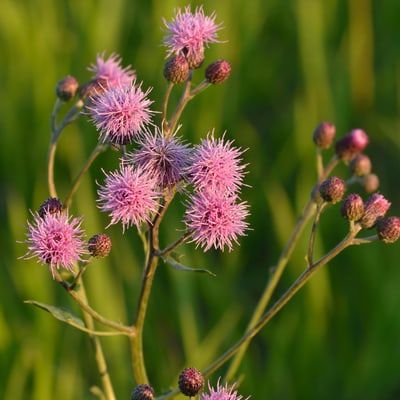
At the end of a stem there are usually three to five short-stemmed, purple-coloured inflorescences. At first glance, the flower heads can be mistaken for a single flower. However, they consist of numerous individual purple disc florets.
The plant forms very small, nut-like fruits with a white ring of hairs at the tip. The fruits are yellow-brown, flattened and smooth.
Features
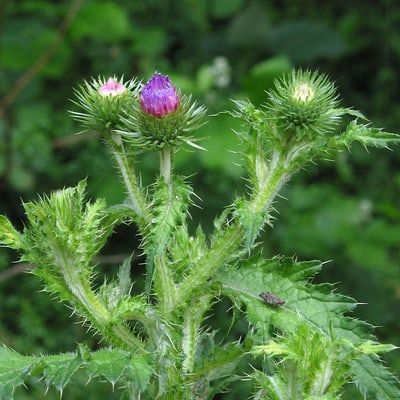
Welted thistle
Carduus crispus
glabrous upper surface of the leaf
felty lower surface of the leaf
Stem with spines
Similar species
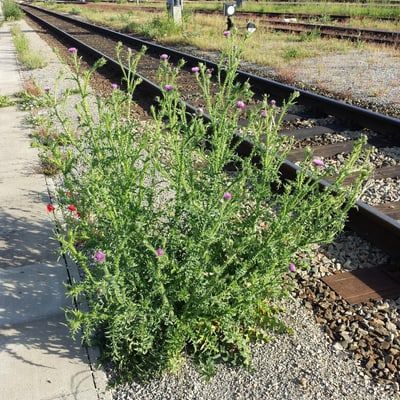
Plumeless thistle
Carduus acanthoides
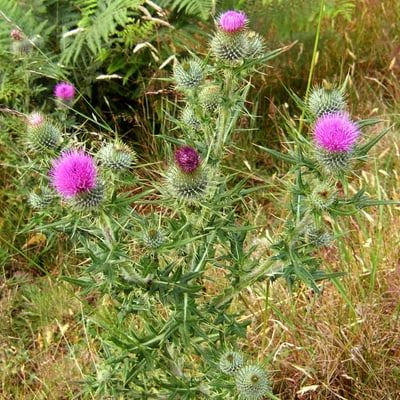
Spear thistle
Cirsium vulgare
Creeping thistle
Cirsium arvense
In the city
The welted thistle grows along field or forest margins and roadsides, on railway sites, rubble piles and in open, disturbed areas affected by nitrogen. It can thrive on fresh to moist, nutrient-rich, humusy to sandy loam or clay soils.
Fun Facts
The flowering period is from June to September.
It is a biennial plant. This means that a plant lives for two years, but flowers only once and dies after the seeds have ripened.
- Endangerment level Germany: not endangered
The welted thistle is native to Central Europe.
The genus name "Carduus" is the Latin name for thistle.
The leaves, the peeled stems and roots as well as the shoots are edible.
Sources
Blütenstand, Ivar Leidus, CC BY-SA 4.0, https://commons.wikimedia.org/wiki/File:Carduus_crispus_-_Keila.jpg

Habitus, George Chernilevsky, CC0, https://commons.wikimedia.org/wiki/File:Carduus_crispus_2009_G2.jpg

Habitus, Robert Flogaus-Faust, CC BY 4.0 , https://commons.wikimedia.org/wiki/File:Carduus_crispus_RF.jpg

Seitz, B., Ristow, M., Meißner, J., Machatzi, B. & Sukopp, H. (2018) Rote Liste und Gesamtartenliste der etablierten Farn- und Blütenpflanzen von Berlin. : Der Landesbeauftragte für Naturschutz und Landschaftspflege / Senatsverwaltung für Umwelt, Klima und Verkehr (eds.) Rote Listen der gefährdeten Pflanzen, Pilze und Tiere von Berlin, URL: https://www.berlin.de/sen/uvk/natur-und-gruen/naturschutz/artenschutz/artenlisten-rote-listen/farn-und-bluetenpflanzen/ (Accessed: 26.03.2021).
Page „Krause Ringdistel“. : Wikipedia, The Free Encyclopedia. Date of last revision: 16.03.2018, 20:40 UTC. URL: https://de.wikipedia.org/w/index.php?title=Krause_Ringdistel&oldid=175084672 (Accessed: 13.07.2018).
Rohkostwiki (2016) Distel, krause, URL: http://www.rohkostwiki.de/wiki/Distel,_krause (Accessed: 13.07.2018).
NatureGate (n.d.) Krause Ringdistel. Carduus crispus, URL: http://www.luontoportti.com/suomi/de/kukkakasvit/krause-distel (Accessed: 13.07.2018).