
Short Description
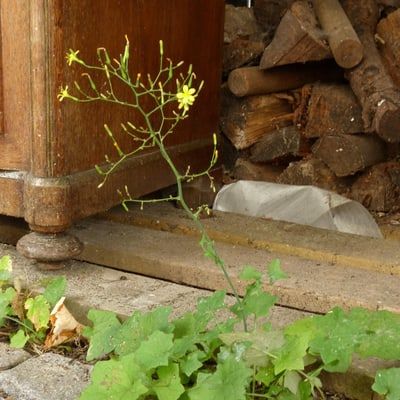
The nipplewort can grow up to one metre high.
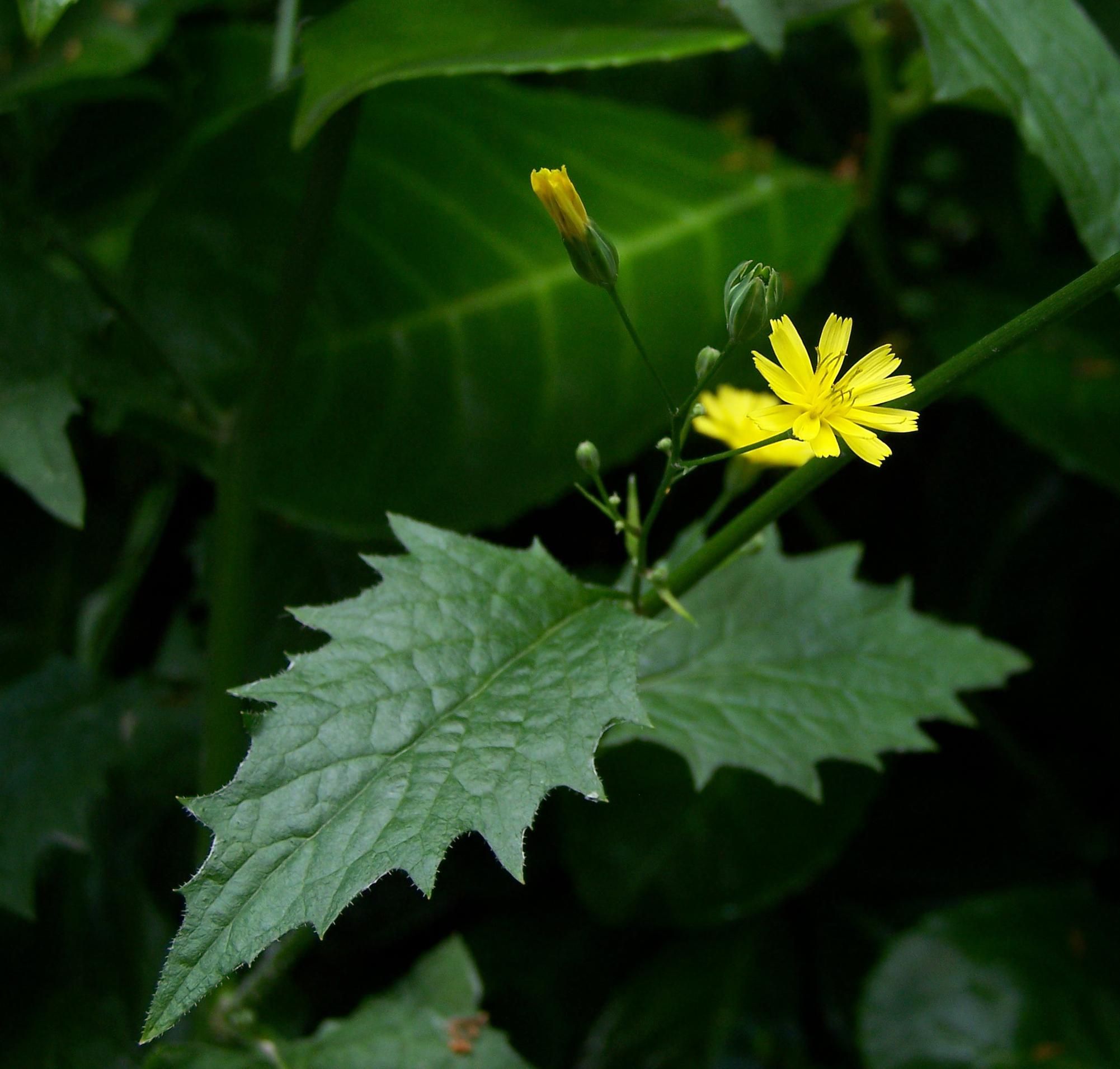
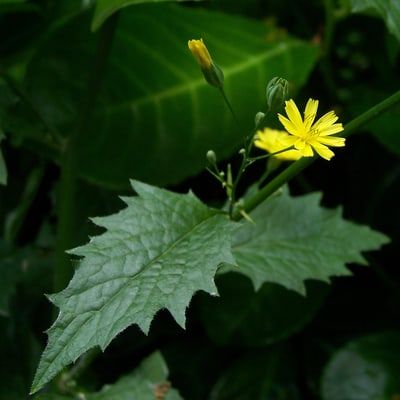
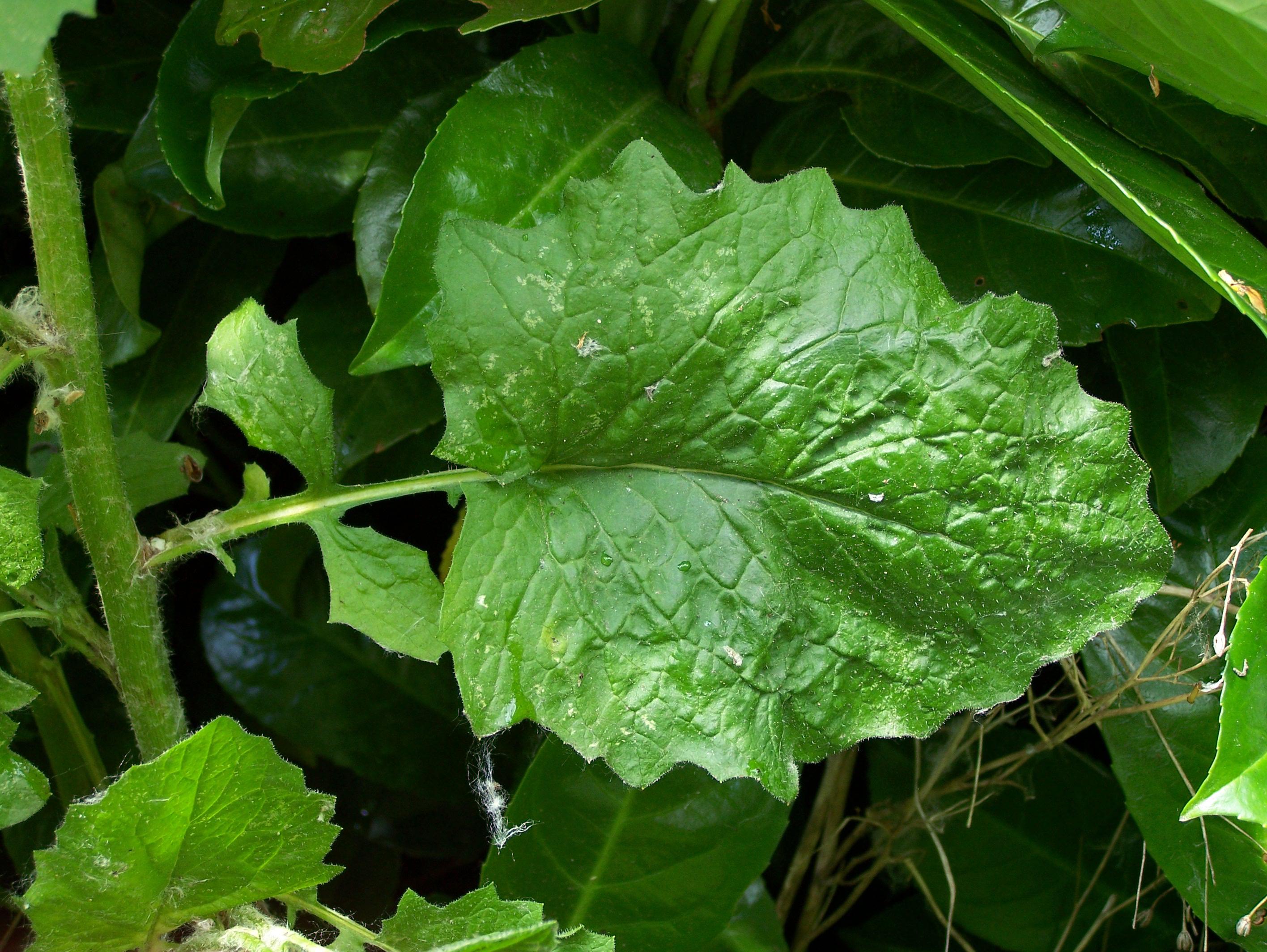
The lower leaves are divided into three sections. The lateral leaflets are very small and the terminal leaflet is very large. The upper leaves are ovate and undivided. The leaf margin of all leaves is toothed and wavy.
The stem grows erect and branched. It is glabrous or has scattered stiff hairs.
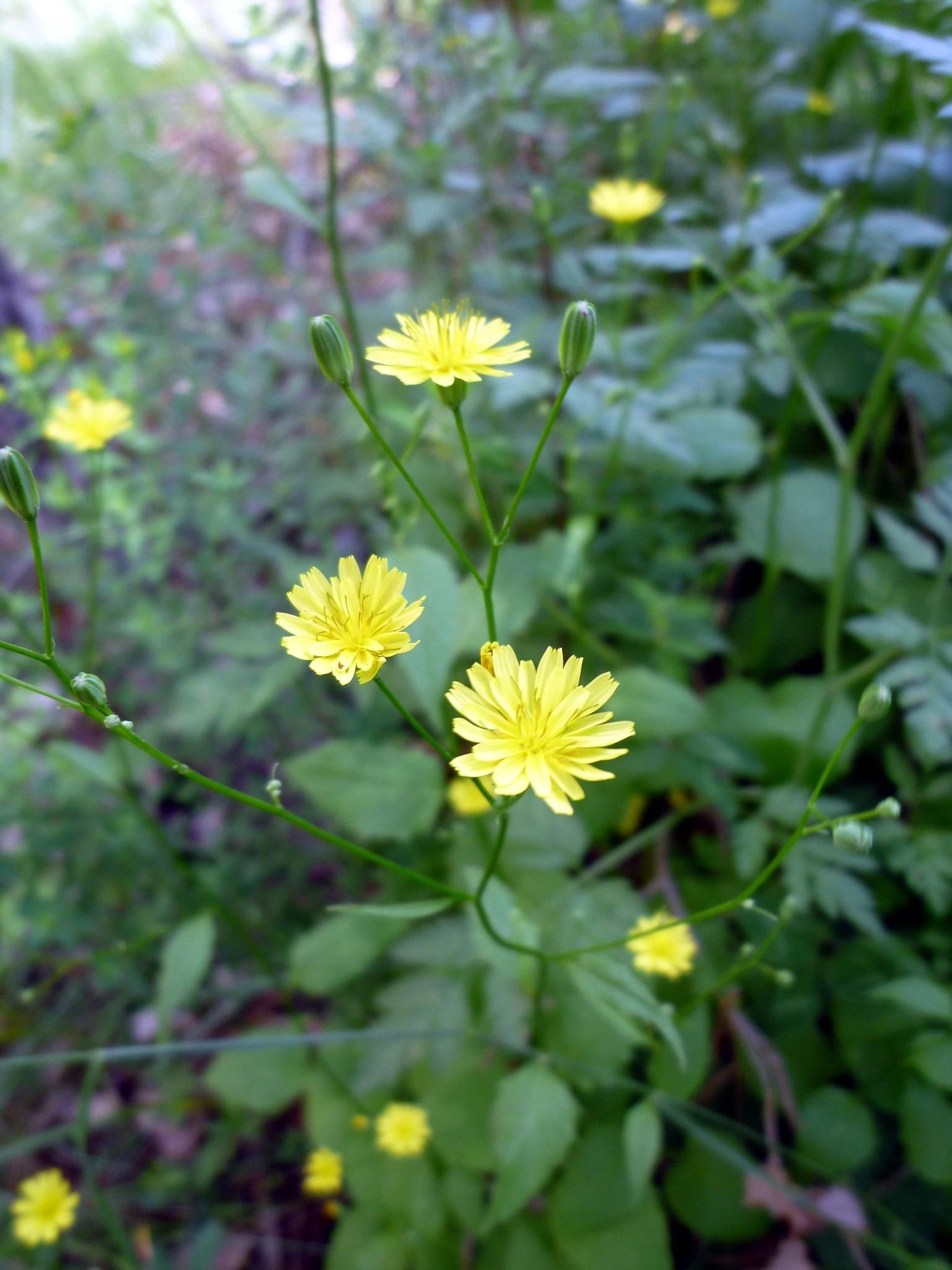
At first glance, the flower head can be mistaken for the flower. However, it is a false flower. It consists of relatively few, single yellow ray florets.
The rainy cabbage forms elongated, brown, nut-like fruits (achenes) without a ring of hairs (pappus).
Features
Nipplewort
Lapsana communis
milky sap
lower leaves with two small leaflets
In the city
In the city, the nipplewort often grows along hedges, fences, rubble areas and roadsides as well as in gardens and woods. It prefers moist, nutrient-rich and especially nitrogen-rich soils in more or less shady locations.
Fun Facts
The flowers are only sparsely visited by bees and hoverflies.
In bad weather they remain closed and can pollinate themselves.
The flowering period is from June to September.
- Endangerment level Germany: not endangered
- Usage:
The herb used to be placed on wounds. The fresh milky sap was supposed to speed up the healing of cuts.
The nipplewort is native to Germany. It has been a synanthropic species since the late Stone Age.
The young leaves can be eaten raw or cooked.
Sources
Habitus, T.Voekler, CC BY-SA 3.0, https://commons.wikimedia.org/wiki/File:Lapsana_communis_flower_and_leaf.jpg

Blütenkörbchen, Isidre blanc, CC BY-SA 4.0, https://commons.wikimedia.org/wiki/File:LAPSANA_COMMUNIS_-_LLANERA_-_IB-625_(Herba_de_les_mamelles).JPG
.JPG)
unteres Blatt, T.Voekler, CC BY-SA 3.0, https://commons.wikimedia.org/wiki/File:Lapsana_communis_lower_leaf.jpg

Kammer, P. M. (2016) Pflanzen einfach bestimmen. Schritt für Schritt einheimische Arten kennenlernen, Bern: Haupt Verlag.
Schauer, T., Caspari, C. & Caspari, S. (2015) Der illustrierte BLV-Pflanzenführer für unterwegs. 1150 Blumen, Gräser, Bäume und Sträucher, München: BLV.
Spohn, M., Golte-Bechtle, M. & Spohn, R. (2015) Was blüht denn da? Stuttgart: Franckh Kosmos Verlag.
Page „Gemeiner Rainkohl“. : Wikipedia, The Free Encyclopedia. Date of last revision: 23.06.2018, 16:54 UTC. URL: https://de.wikipedia.org/w/index.php?title=Gemeiner_Rainkohl&oldid=178571402 (Accessed: 08.08.2018).