
Short Description
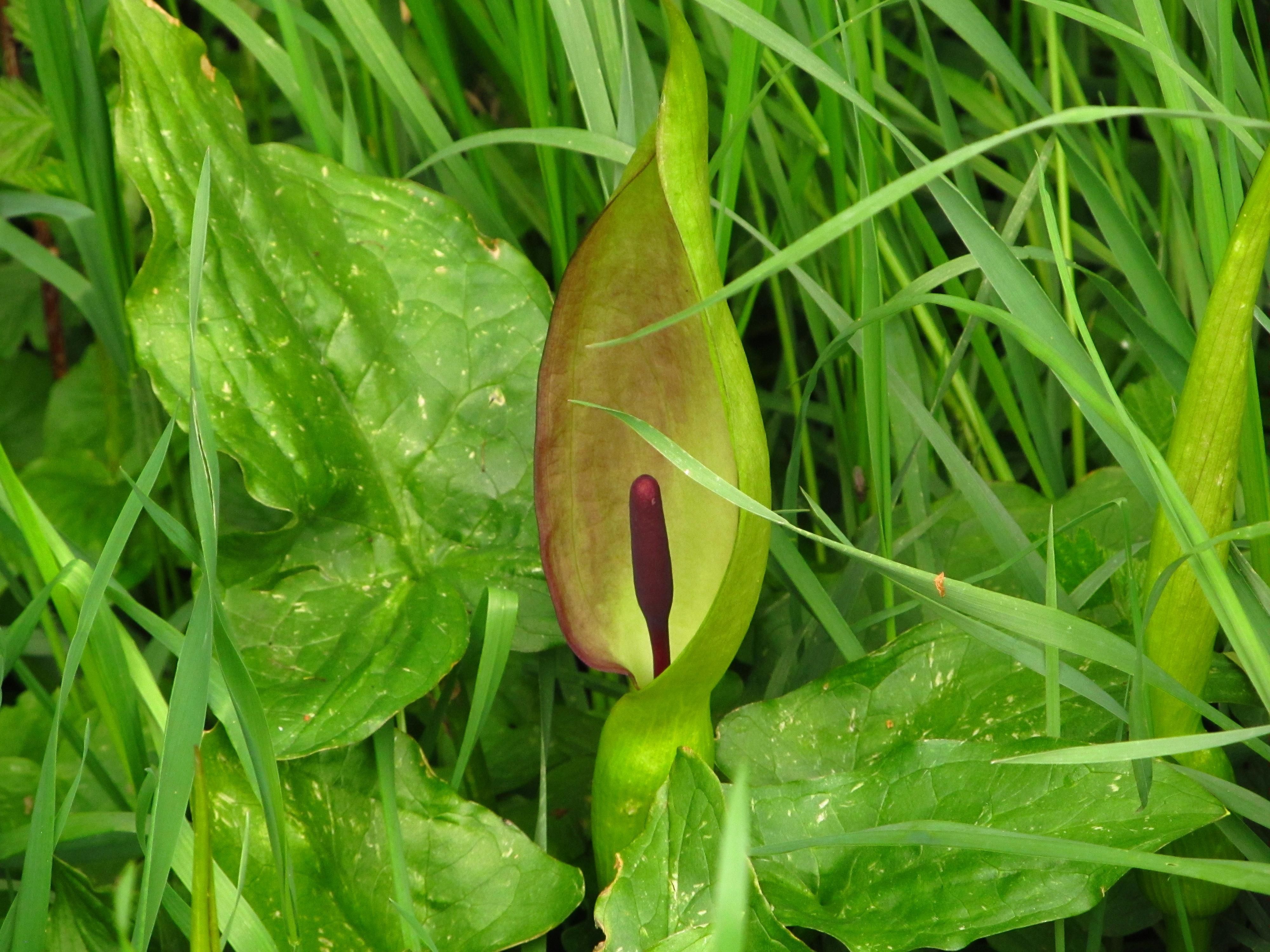
The cuckoopint can grow to a height of 40 cm.
The leaves seem to grow directly out of the ground (basal), growing out of the subterranean part of the stem (rhizome). They are generally marked with dark blotches, have a long stalk and a broad arrowhead shape.
The subterranean tuber is bulbous and reddish in colour.
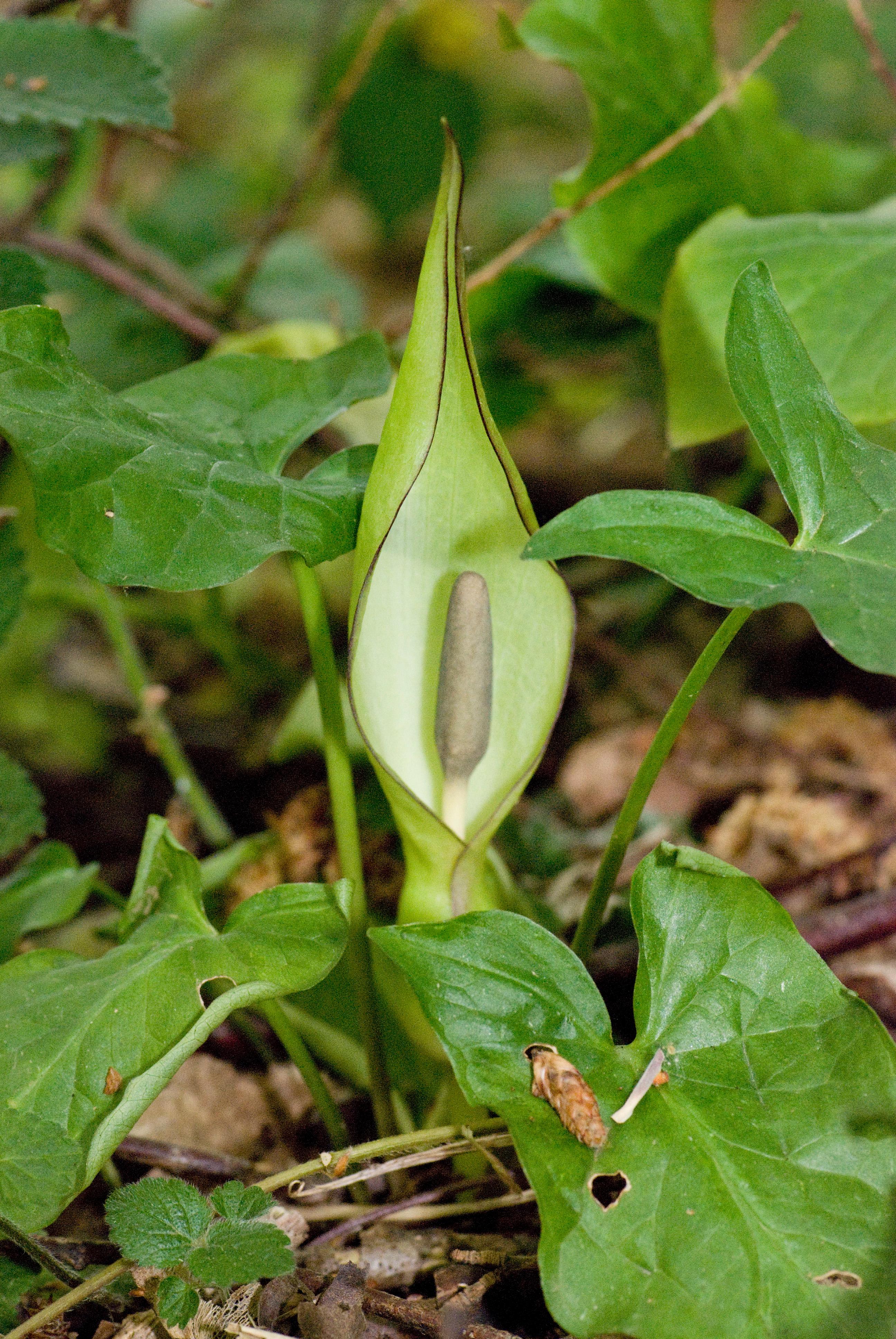
The flower head is poker-shaped (spadix) and enclosed by a light-coloured leaf-like hood (floral bract). The floral bract has a pointed top and is greenish-white. The margins may be more or less purple in colour. The female flowers are located at the base of the spadix, the male flowers above them.
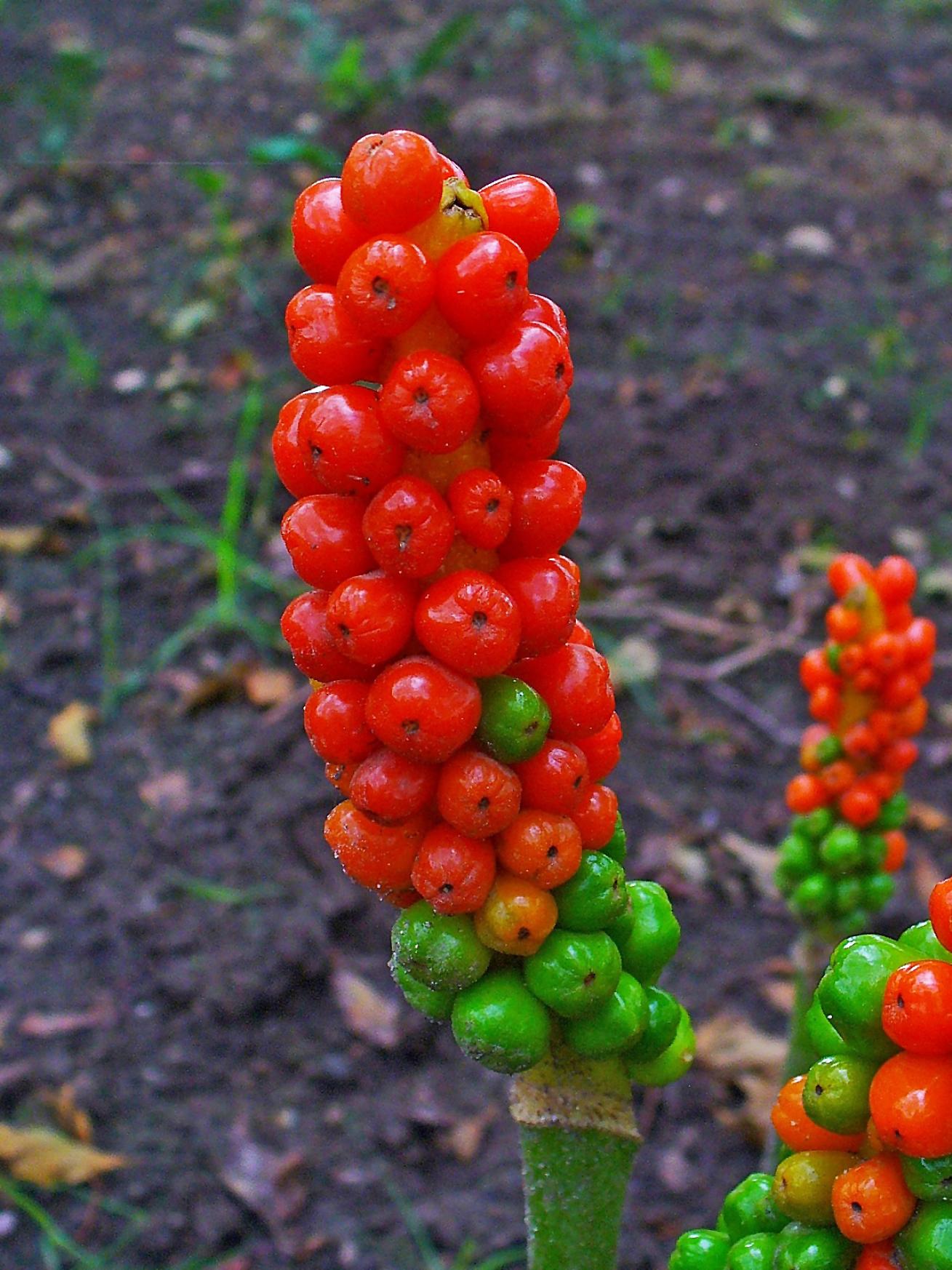
The fruits are berries that turn bright red when ripening.
Features
Cuckoopint
Arum maculatum
very poisonous
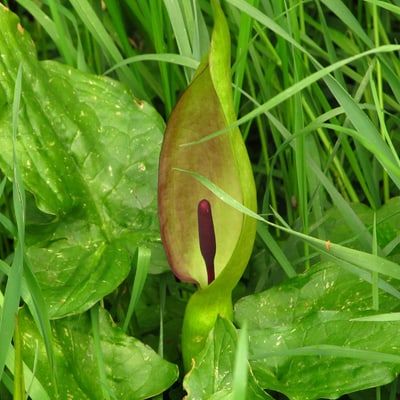
light-coloured leaf-like hood (floral bract) enclosing the floral head
arrowhead-shaped leaves with dark patches
In the city
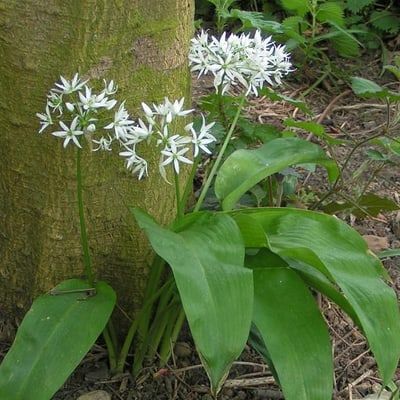
In town, the cuckoopint can often be found in deciduous or mixed forests. It prefers damp and shady sites with humus-rich soils.
Fun Facts
In homoeopathy, the cuckoopint is used in the treatment of upper respiratory tract infections and nasal polyps.
The flower head of the cuckoopint emits a fetid smell (of rotten meat). Its purpose is to attract pollinators, mainly small flies. Thanks to the special construction of the slippery-trap flower, the insects remain trapped until pollination has occurred.
It flowers from April to May.
It lives for several years and generally flowers and fruits annually (perennial plant).
- Endangerment level Germany: not endangered
All parts of the cuckoopint are highly poisonous.
Sources
Habitus, Hans-Martin Scheibner, CC BY-SA 3.0, https://commons.wikimedia.org/wiki/File:Aronstab_(Arum_maculatum),_Bl%C3%BCte_-_Photo_29.04.2012_-_hms(1).jpg
,_Bl%C3%BCte_-_Photo_29.04.2012_-_hms(1).jpg)
Früchte, H. Zell, CC BY-SA 3.0, https://commons.wikimedia.org/wiki/File:Arum_maculatum_003.JPG

Habitus, Olivier Pichard, CC BY-SA 3.0, https://commons.wikimedia.org/wiki/File:Arum_maculatum_fluy_80_05052007_3.jpg

Spohn, M., Golte-Bechtle, M. & Spohn, R. (2015) Was blüht denn da? Stuttgart: Franckh Kosmos Verlag.
Fleischhauer, S. G., Guthmann, J. & Spiegelberger, R. (2007) Essbare Wildpflanzen. 200 Arten bestimmen und verwenden, Baden und München: AT Verlag.
Lippert, W. & Podlech, D. (1993) GU Naturführer. Blumen: die wichtigen Blütenpflanzen Mitteleuropas erkennen und bestimmen, München: Gräfe und Unzer Verlag.
Needon, C. & Petermann, J. (1991) Urania-Naturführer Pflanzen, Leipzig, Jena, Berlin: Urania-Verlag.
Schauer, T., Caspari, C. & Caspari, S. (2015) Der illustrierte BLV-Pflanzenführer für unterwegs. 1150 Blumen, Gräser, Bäume und Sträucher, München: BLV.
Scherf, G. (2006) Wildpflanzen neu entdecken, München: BLV.
Page „Gefleckter Aronstab“. : Wikipedia, The Free Encyclopedia. Date of last revision: 27.09.2016, 16:53 UTC. URL: https://de.wikipedia.org/w/index.php?title=Gefleckter_Aronstab&oldid=158272944 (Accessed: 10.11.2016).
Offene Naturführer (2011) Grundständig, URL: https://offene-naturfuehrer.de/web/Grundst%C3%A4ndig (Accessed: 19.12.2016).
Bundesamt für Naturschutz (n.d.) Artensteckbriefe, URL: http://floraweb.de/pflanzenarten/artenhome.xsql?suchnr=625& (Accessed: 10.11.2016).