
Short Description
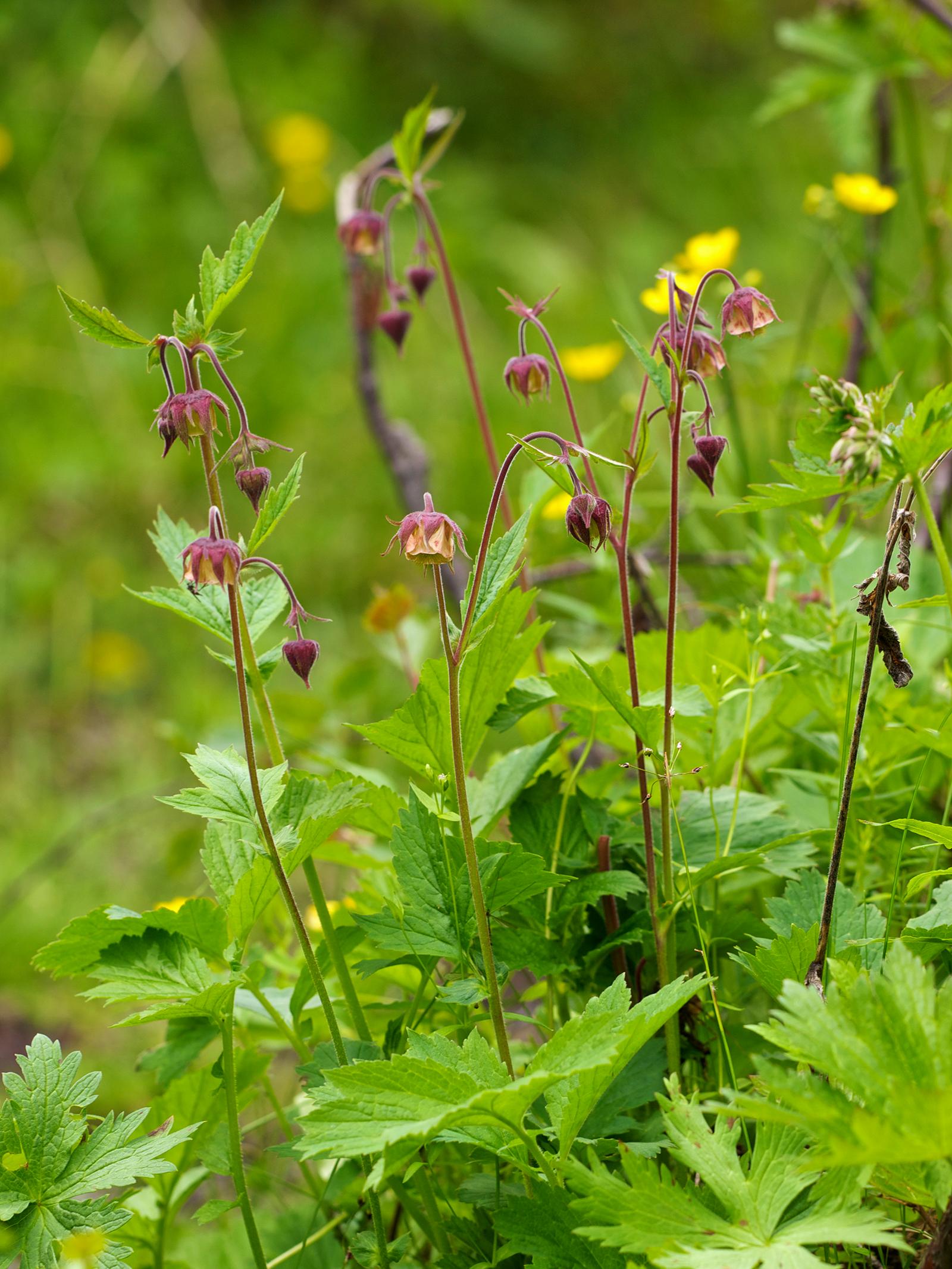
The water avens reaches a height of up to 70 centimetres.
The basal leaves are long-stalked. They are divided into several leaflets with one large terminal leaflet (imparipinnate). The leaves along the stem are cut into three parts. All leaves have a toothed (dentate) margin.
The ascending, loosely branched stem is reddish. Towards the top it is increasingly glandular-haired.
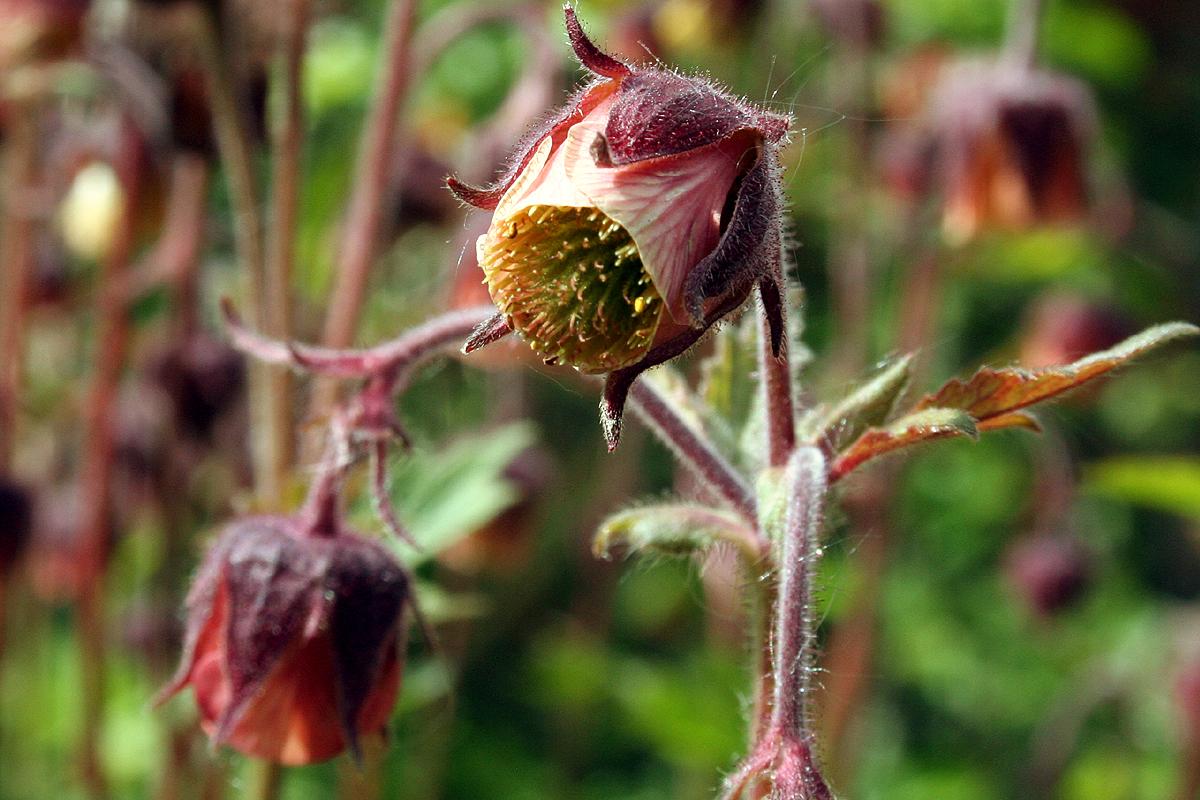
The pendulous, bell-shaped flowers have five petals. They are pink to yellowish and are surrounded by reddish-brown sepals.
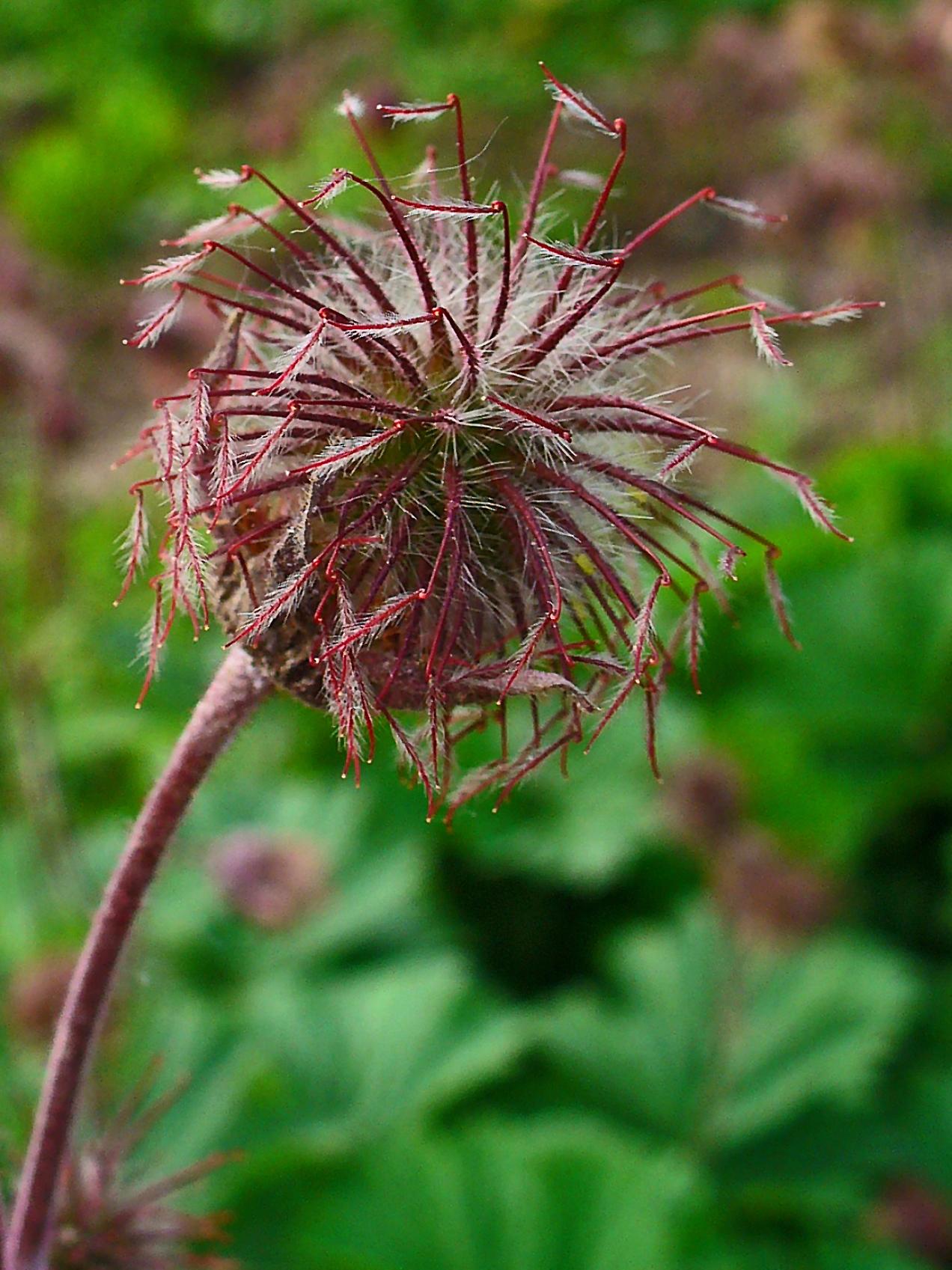
The fruits are small nuts with a hairy hook.
Features
Water avens
Geum rivale
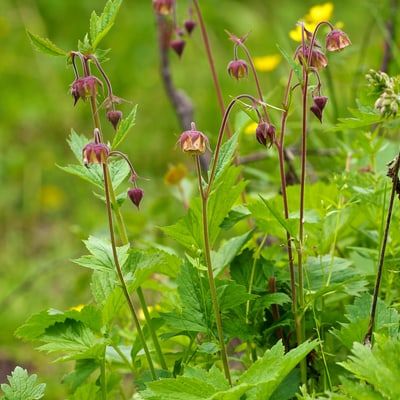
nodding, bell-shaped flower
glandular stem
In the city
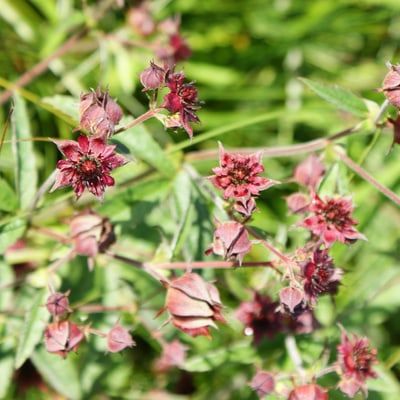
The water avens prefers cool and moist sites. It indicates nutrient richness. It often grows in wet meadows, moorland meadows, along ditches, streams and in floodplain forests.
Fun Facts
The fruitlets have an elongated pistil. It is feathery-haired and hooked, which is why the fruits stick to animals and are thus spread out.
Besides hermaphrodite plants, there are also purely male flowers and specimens.
Each flower produces up to 80 fruits.
The flowering period is from April to July.
Sie überwintert grün. Sie wird mehrere Jahre alt und blüht und fruchtet im Allgemeinen jährlich (ausdauernde Pflanze).
- Endangerment level Germany: not endangered
- Usage:
The root can be used as a substitute for cloves in cooking or to flavour liqueurs. The leaves can be used as an ingredient in wild herb salads.
The water avens is only absent from Europe in the Mediterranean region, as it avoids warm climates.
The species name rivale means brook and indicates frequent occurrences of the water avens near water.
Folk medicine recommends the roots against diarrhoea and inflammation of the mouth and throat.
Sources
Habitus, Jörg Hempel, CC BY-SA 3.0, https://commons.wikimedia.org/wiki/File:Geum_rivale_LC0328.jpg

Blüten, Maren Winter, CC BY-SA 3.0, https://commons.wikimedia.org/wiki/File:Geum.jpg

Fruchtstand, H. Zell, CC BY-SA 3.0, https://species-id.net/openmedia/File:Geum_rivale_004.JPG

Kammer, P. M. (2016) Pflanzen einfach bestimmen. Schritt für Schritt einheimische Arten kennenlernen, Bern: Haupt Verlag.
Schauer, T., Caspari, C. & Caspari, S. (2015) Der illustrierte BLV-Pflanzenführer für unterwegs. 1150 Blumen, Gräser, Bäume und Sträucher, München: BLV.
Spohn, M., Golte-Bechtle, M. & Spohn, R. (2015) Was blüht denn da? Stuttgart: Franckh Kosmos Verlag.
Page „Bach-Nelkenwurz“. : Wikipedia, The Free Encyclopedia. Date of last revision: 22.11.2017, 12:20 UTC. URL: https://de.wikipedia.org/w/index.php?title=Bach-Nelkenwurz&oldid=171255614 (Accessed: 31.07.2018).