
Short Description
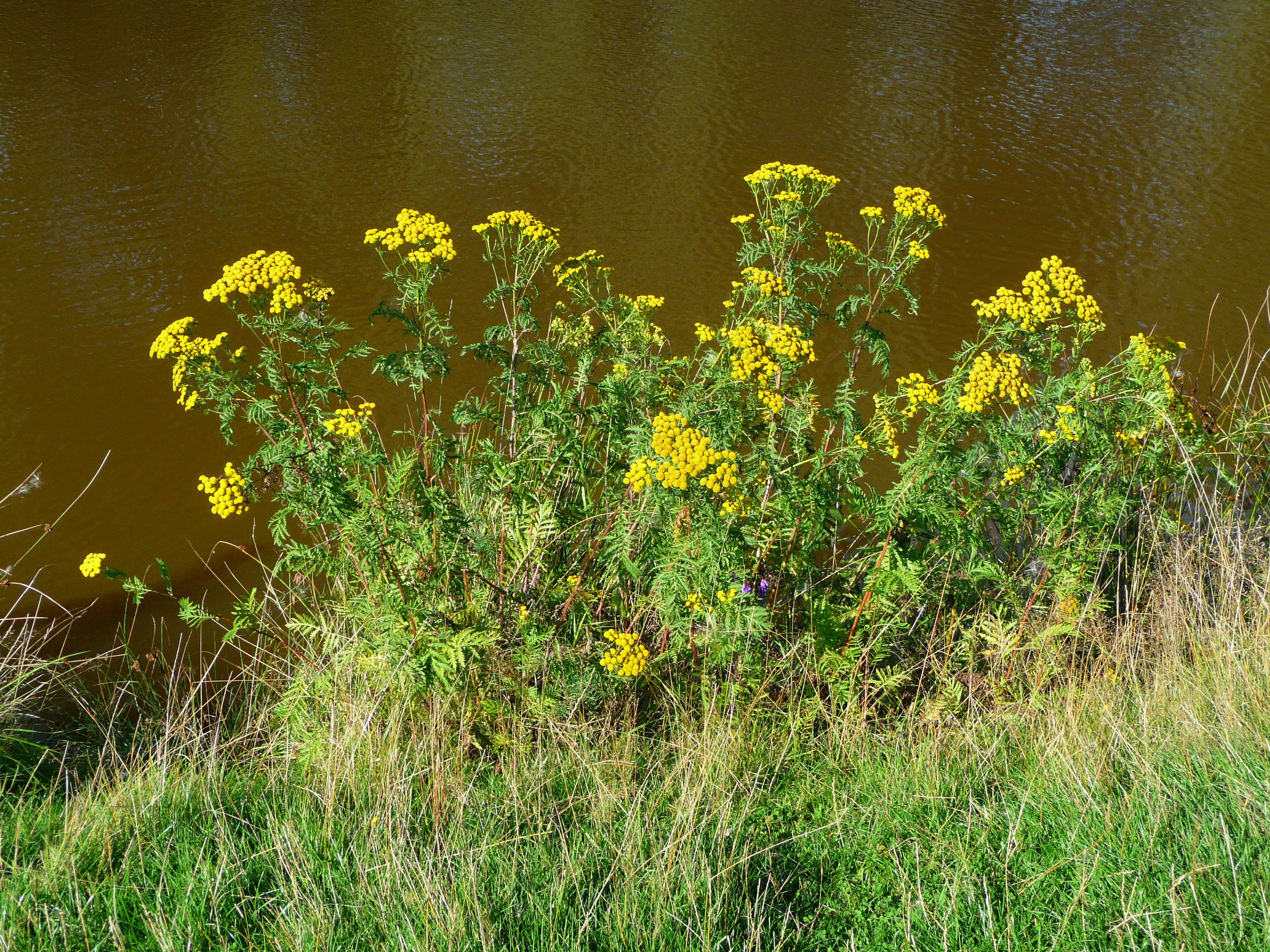
Tansy can grow up to 1.5 m in height.
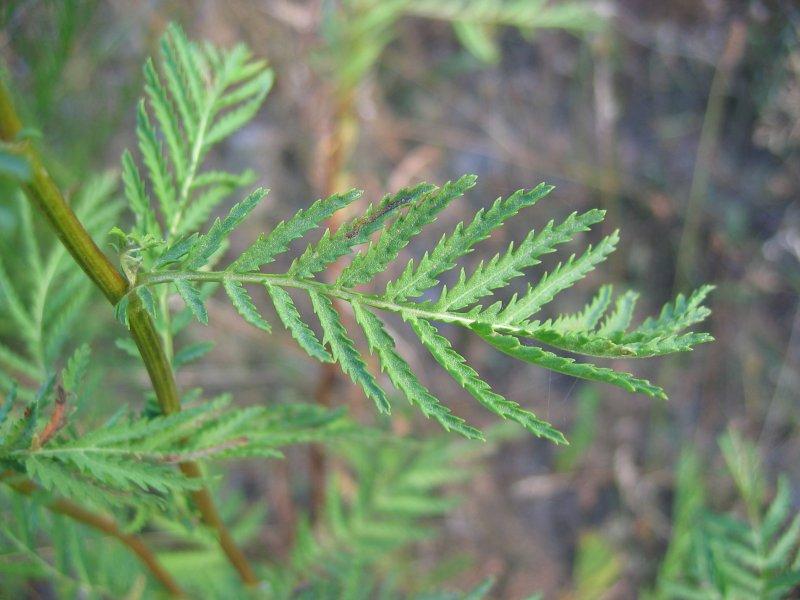
The leaves grow alternately on the stem. They are elongated and finely lobed (pinnate).
The stem is upright with many branches in the area of the flower heads.
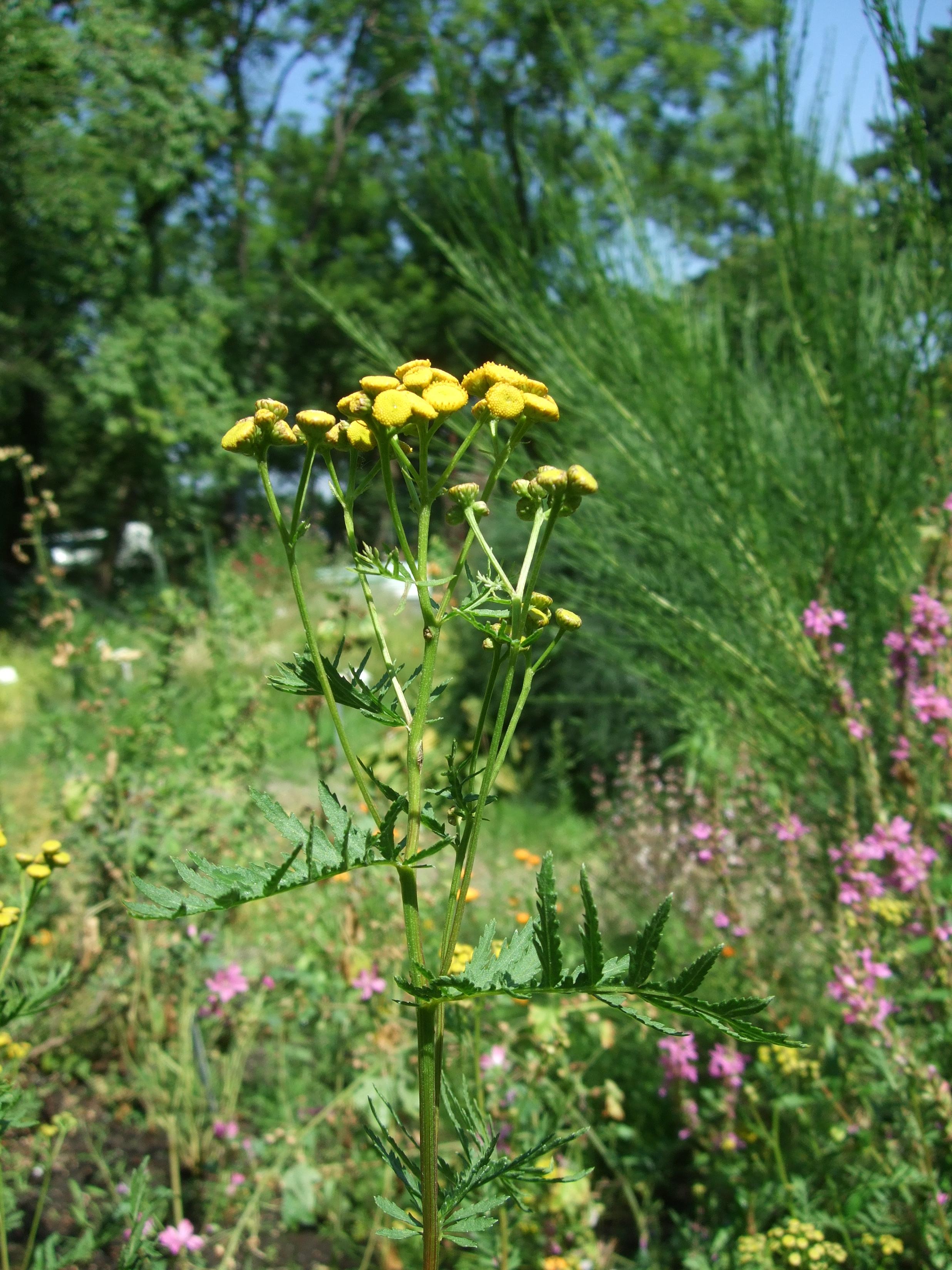
At first glance, the flower head can be mistaken for the flower itself. These pseudanthia (“false flowers”) are made up from numerous individual yellow tubular florets. The compound flower heads are highly branched (panicular), consisting of numerous individual inflorescences. The individual florets spread from the flower head base and are of the same height (corymb).
The fruits are small, ribbed nutlets.
Features
Tansy
Tanacetum vulgare
poisonous
distinctive smell
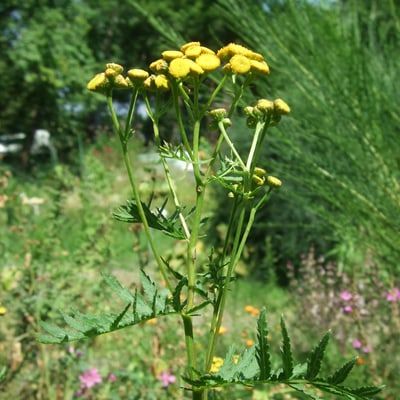
yellow button-shaped pseudanthia (“false flowers”)
In the city
In the city, tansy is often found in weed fields rich in herbaceous perennials, in verges, uncultivated land and near water. It prefers sunny, warm, moderately dry and nutrient-rich sites with humus-rich soil. As a food plant for numerous insects and caterpillars, tansy contributes towards biological diversity within the urban environment.
Some varieties are used as ornamental plants which often subsequently grow wild.
Fun Facts
Skin contact with tansy may cause an allergic reaction.
Tansy is a compass plant. In bright sunlight, its leaves are exactly vertically aligned to the south.
Tansy’s strongly scented essential oils have an insect-deterrent effect. Scattered, it can repel the Colorado beetle and considerably decrease insect infestation.
Beekeepers use dried tansy in their smokers.
Pollination is carried out by insects. The fruits are spread by the wind and by animals. Vegetative reproduction takes place through underground runners.
It flowers from June to September.
- Endangerment level Germany: not endangered
- Usage:
Tansy is used as a dye for wool.
Tansy originated from Europe and Asia and is a synanthropic plant.
Tansy was formerly used in the treatment of worm infestations and against fleas and head lice. Since it has become known that tansy is toxic for humans, this use has been advised against.
Sources
Habitus, 4028mdk09, CC BY-SA 3.0, https://commons.wikimedia.org/wiki/File:Pflanze_mit_gelben_Bl%C3%BCten.JPG

Blätter, Kristian Peters Fabelfroh, CC BY-SA 3.0, https://commons.wikimedia.org/wiki/File:Tanacetum_vulgare_blatt.jpeg

Habitus, Alice Kracht, CC BY-SA 4.0, https://species-id.net/openmedia/File:Tanacetum_vulgera.JPG

Page „Rainfarn“. : Wikipedia, The Free Encyclopedia. Date of last revision: 13.05.2016, 20:53 UTC. URL: https://de.wikipedia.org/w/index.php?title=Rainfarn&oldid=154352949 (Accessed: 20.09.2016).
Wisconsin State Herbarium, UW-Madison (n.d.) Flora Of Wisconsin. Consortium Of Wisconsin Herbaria. Tanacetum vulgare, URL: http://wisflora.herbarium.wisc.edu/taxa/index.php?taxon=5200 (Accessed: 20.09.2016).