
Short Description
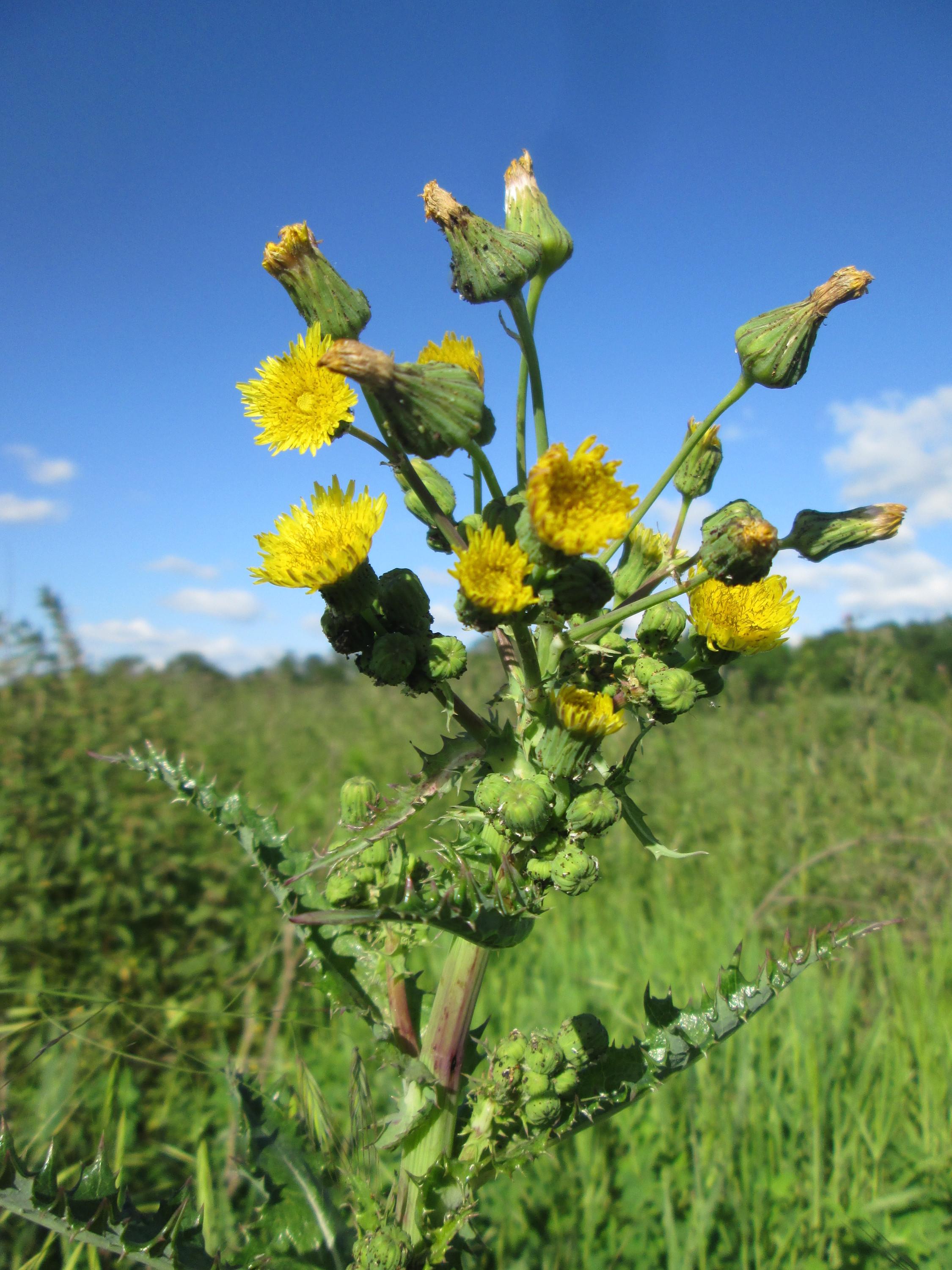
The common sow-thistle can grow up to one metre high. It produces milky sap.
The leaves are incised to different depths. They are soft and glabrous. The upper side is matt dark green. The underside is lighter blue-green.
The stem is hollow.
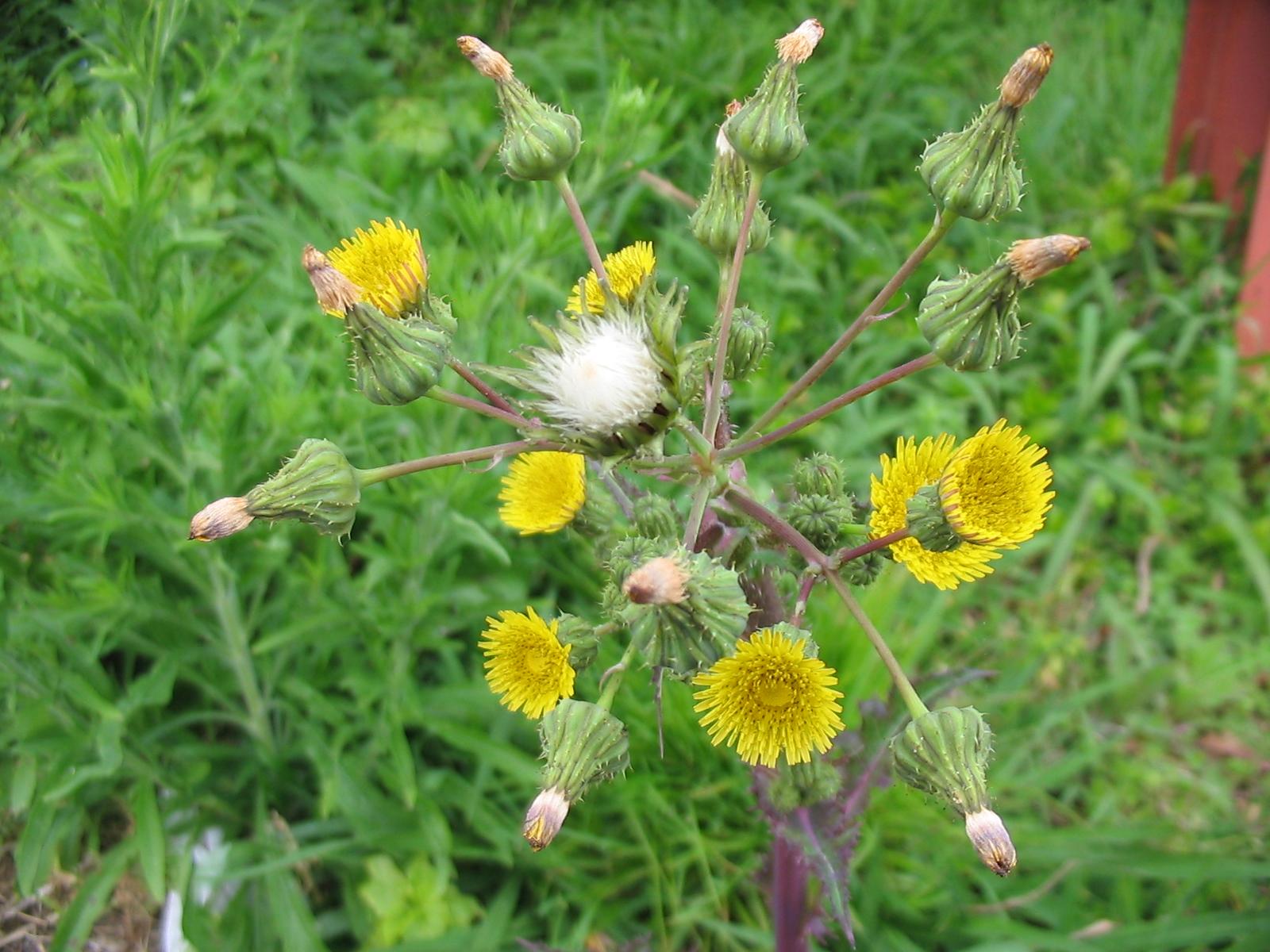
At first glance, the flower head can be mistaken for the flower. The false flower consists of numerous individual yellow ray florets.
The plant forms small, nut-like fruits. They have long, white hairs.
Features
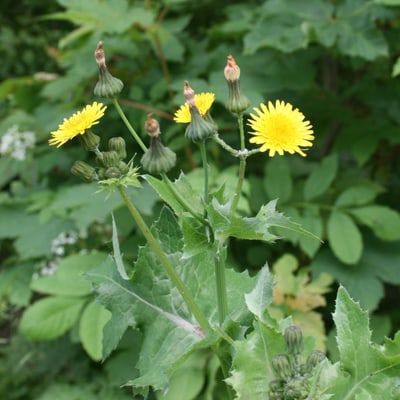
Common sow-thistle
Sonchus oleraceus
incised soft leaves
Similar species
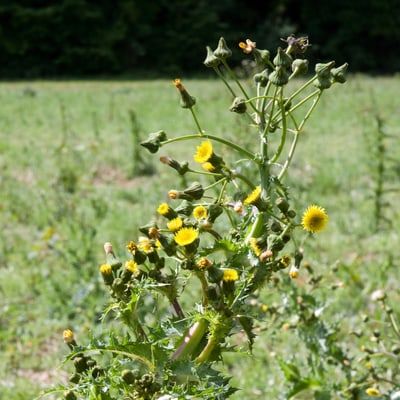
Prickly sow-thistle
Sonchus asper
In the city
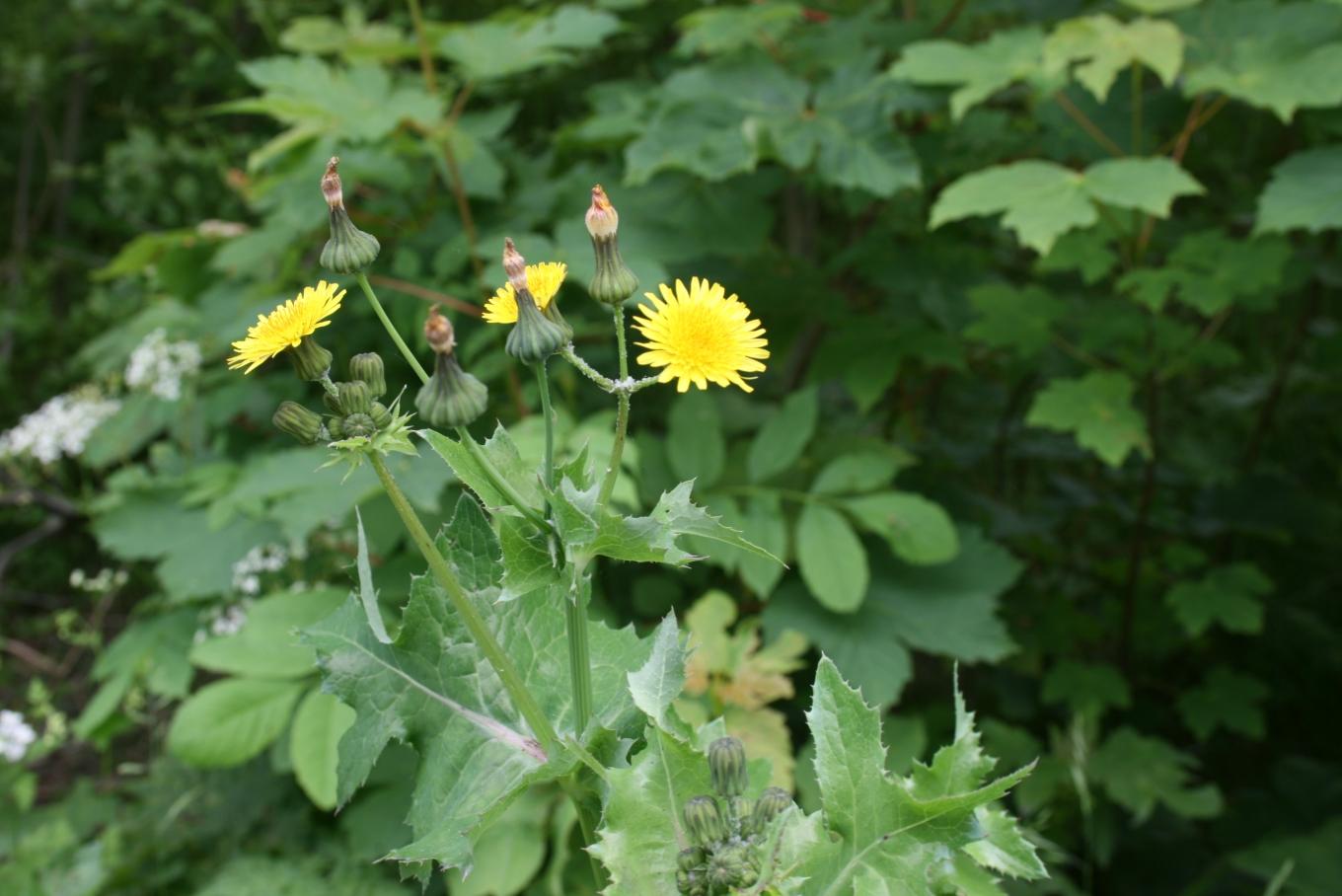
The common sow-thistle grows in fields, rubble and wastelands as well as along paths, walls and in gardens. It prefers nutrient-rich soils and warm locations. It can often prevail in competition with other species.
Fun Facts
The flowering period is from June to October.
In wet weather the inflorescences are closed.
The fruits are often spread with the wind and can reach flight distances of over 10 km. They can also be spread by water.
- Endangerment level Germany: not endangered
In the past, the young stems, leaves and roots were cooked into vegetables or as a soup ingredient. Farmers valued the plant as cattle feed.
Sources
Blütenstand, AnRo0002, CC0 1.0, https://commons.wikimedia.org/wiki/File:20190608Sonchus_oleraceus3.jpg

Habitus, Sten Porse, CC BY-SA 3.0, https://commons.wikimedia.org/wiki/File:Sonchus-oleraceus-flowers.JPG

Blütenstand, Ixitixel, CC BY-SA 3.0, https://commons.wikimedia.org/wiki/File:Sonchus_oleraceus_Bluetenstand.jpg

Spohn, M., Golte-Bechtle, M. & Spohn, R. (2015) Was blüht denn da? Stuttgart: Franckh Kosmos Verlag.
Schauer, T., Caspari, C. & Caspari, S. (2015) Der illustrierte BLV-Pflanzenführer für unterwegs. 1150 Blumen, Gräser, Bäume und Sträucher, München: BLV.
Kammer, P. M. (2016) Pflanzen einfach bestimmen. Schritt für Schritt einheimische Arten kennenlernen, Bern: Haupt Verlag.
Seitz, B., Ristow, M., Meißner, J., Machatzi, B. & Sukopp, H. (2018) Rote Liste und Gesamtartenliste der etablierten Farn- und Blütenpflanzen von Berlin. : Der Landesbeauftragte für Naturschutz und Landschaftspflege / Senatsverwaltung für Umwelt, Klima und Verkehr (eds.) Rote Listen der gefährdeten Pflanzen, Pilze und Tiere von Berlin, URL: https://www.berlin.de/sen/uvk/natur-und-gruen/naturschutz/artenschutz/artenlisten-rote-listen/farn-und-bluetenpflanzen/ (Accessed: 26.03.2021).
Bundesamt für Naturschutz (n.d.) Artensteckbriefe, URL: http://floraweb.de/pflanzenarten/artenhome.xsql?suchnr=5693& (Accessed: 10.09.2018).
Page „Gemüse-Gänsedistel“. : Wikipedia, The Free Encyclopedia. Date of last revision: 08.04.2018, 09:45 UTC. URL: https://de.wikipedia.org/w/index.php?title=Gem%C3%BCse-G%C3%A4nsedistel&oldid=176258074 (Accessed: 10.09.2018).