
Short Description
Sweet violet can grow to a height of 15 cm.
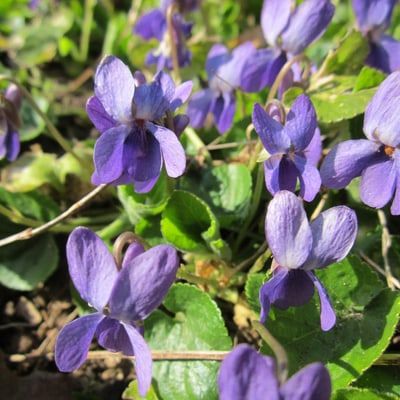
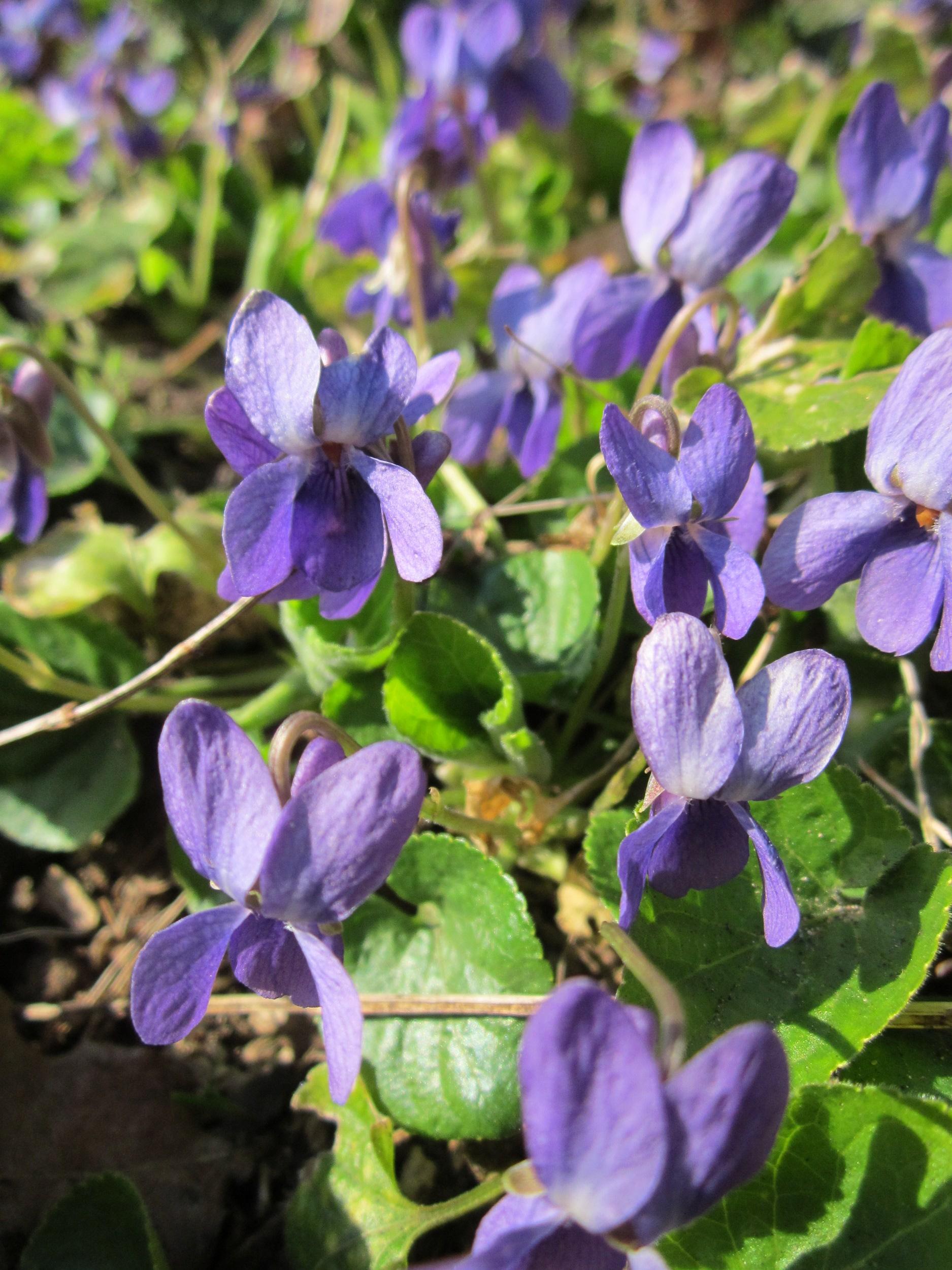
The leaves seem to grow directly out of the ground (basal) and grow in the form of a rosette. They are heart to kidney-shaped with a serrated margin.
The flowering stem is upright and unbranched. Two small opposite leaves grow on the stem.
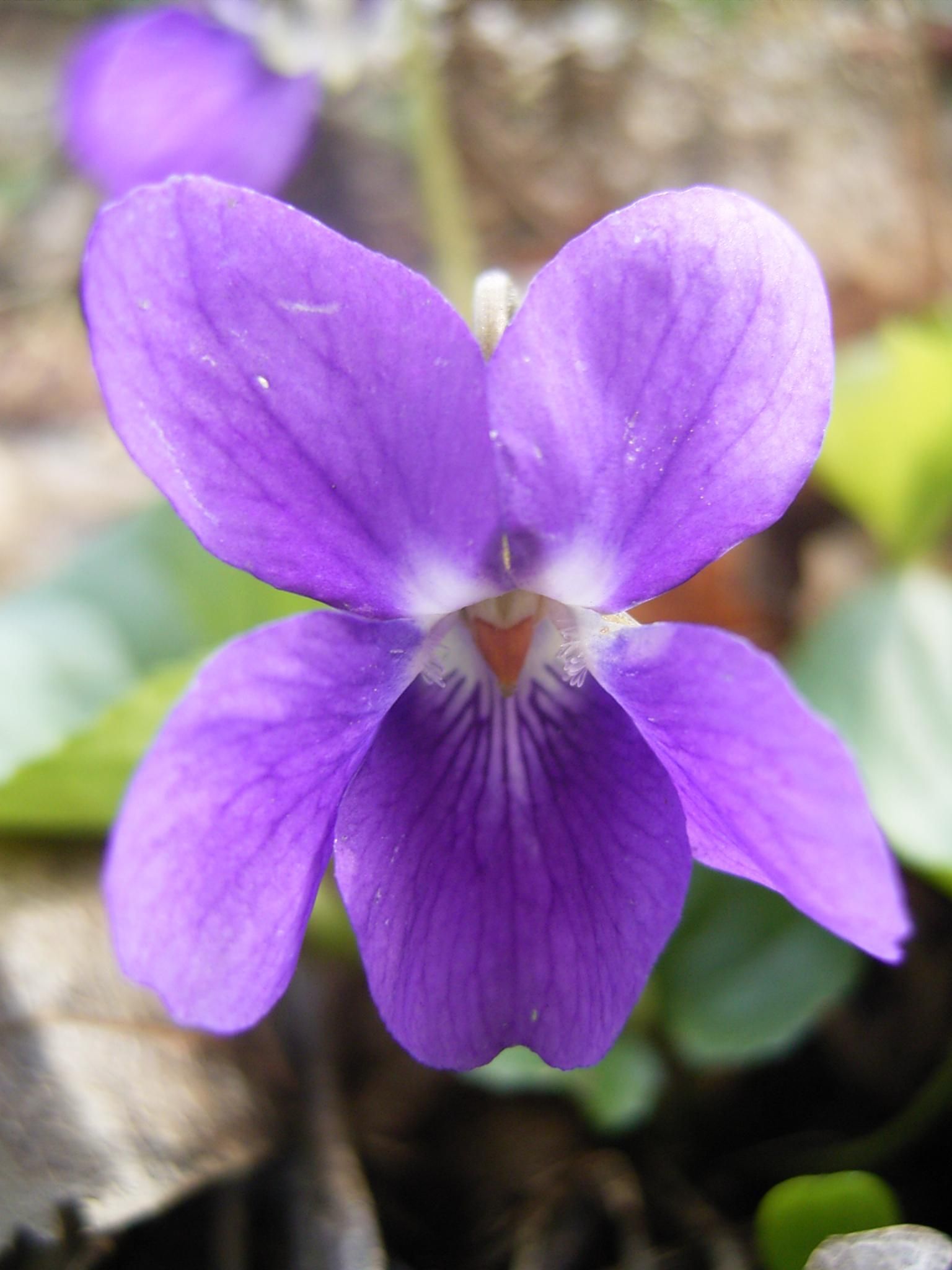
The flowers have five petals and only one mirror axis (zygomorphic). The petals are dark-violet, and the lower-most leaf has an emargination (spur). The flowers have a sweet pleasant scent.
The fruits are small oval capsules.
Features
Sweet violet
Viola odorata
dark violet flowers with a spur
sweet scent
In the city
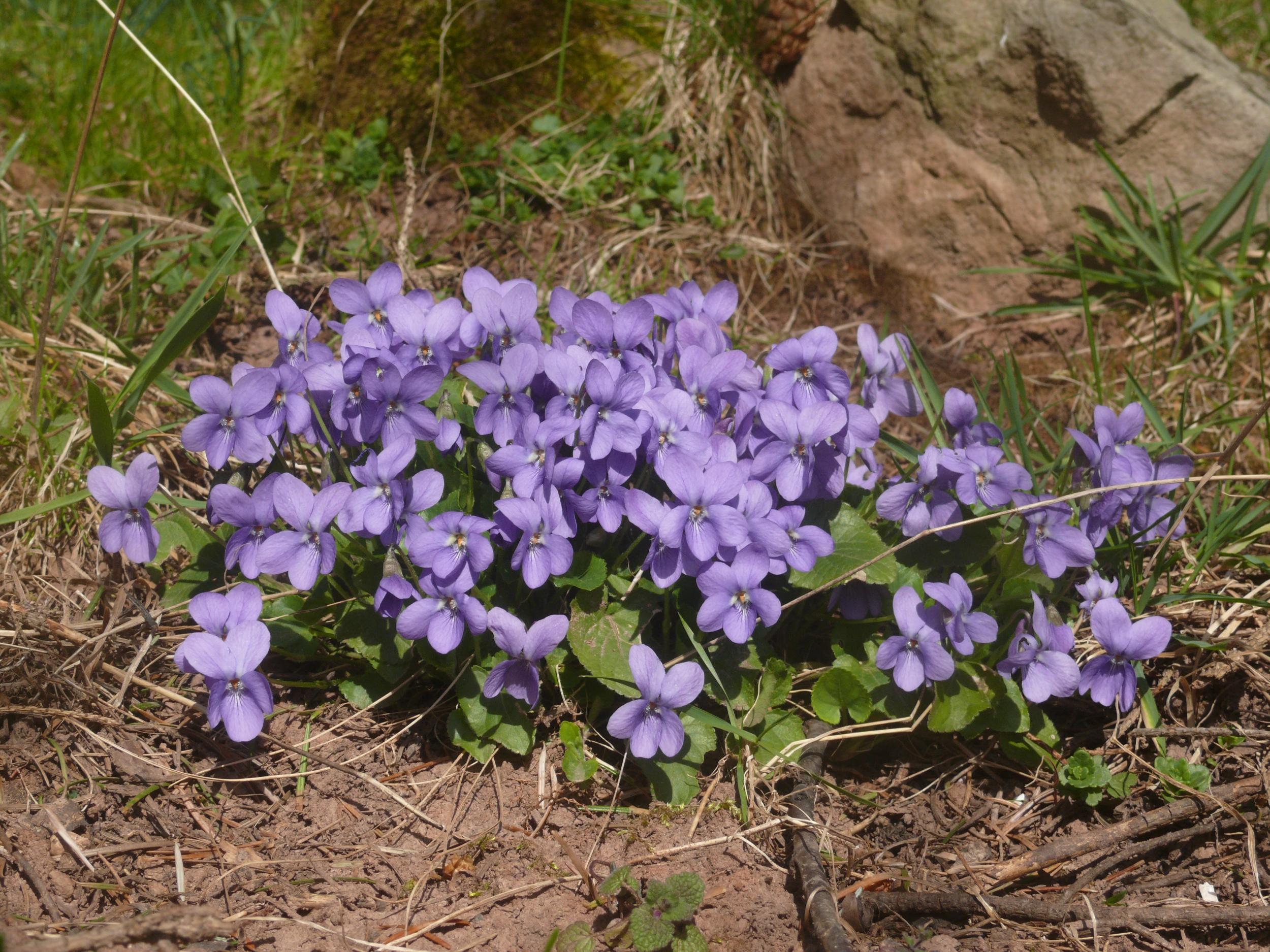
Sweet violet is quite common, particularly as a garden plant. Outside of gardens, it can be found on sunny forest verges, shrubberies and orchards. It prefers semi-shaded to shaded sites.
Fun Facts
In folk medicine, it is used as a remedy for respiratory tract inflammations.
Sweet violets are an important food plant for the violet fritillary butterfly.
It lives for several years and generally flowers and fruits annually (perennial plant).
Ants are amongst the animals that spread the fruits.
It flowers from March to April.
- Endangerment level Germany: not endangered
- Usage:
The flowers contain essential oils.
The flowers can be used to make a syrup or to flavour sweet dishes. They can also be eaten directly or candied in sugar.
Sources
Blüte, TeunSpaans, CC BY-SA 3.0, https://commons.wikimedia.org/wiki/File:Viola-odorata-closeup.jpg

Habitus, BerndH, CC BY-SA 3.0, https://commons.wikimedia.org/wiki/File:Viola_odorata_200311.JPG

Habitus, AnRo0002, CC0, https://commons.wikimedia.org/wiki/File:20130407Duftveilchen_Halberg4.jpg

Eggenberg, S. & Möhl, A. (2007) Flora Vegetativa: Ein Bestimmungsbuch für Pflanzen der Schweiz im blütenlosen Zustand, Bern, Stuttgart, Wien: Haupt Verlag.
Spohn, M., Golte-Bechtle, M. & Spohn, R. (2015) Was blüht denn da? Stuttgart: Franckh Kosmos Verlag.
Jäger, E. J. (2011) Rothmaler - Exkursionsflora von Deutschland. Gefäßpflanzen: Grundband, Heidelberg: Spektrum Akademischer Verlag.
Kammer, P. M. (2016) Pflanzen einfach bestimmen. Schritt für Schritt einheimische Arten kennenlernen, Bern: Haupt Verlag.
Lippert, W. & Podlech, D. (1993) GU Naturführer. Blumen: die wichtigen Blütenpflanzen Mitteleuropas erkennen und bestimmen, München: Gräfe und Unzer Verlag.
Schauer, T., Caspari, C. & Caspari, S. (2015) Der illustrierte BLV-Pflanzenführer für unterwegs. 1150 Blumen, Gräser, Bäume und Sträucher, München: BLV.
Page „Duftveilchen“. : Wikipedia, The Free Encyclopedia. Date of last revision: 02.06.2016, 06:46 UTC. URL: https://de.wikipedia.org/w/index.php?title=Duftveilchen&oldid=154915454 (Accessed: 27.01.2017).