
Short Description
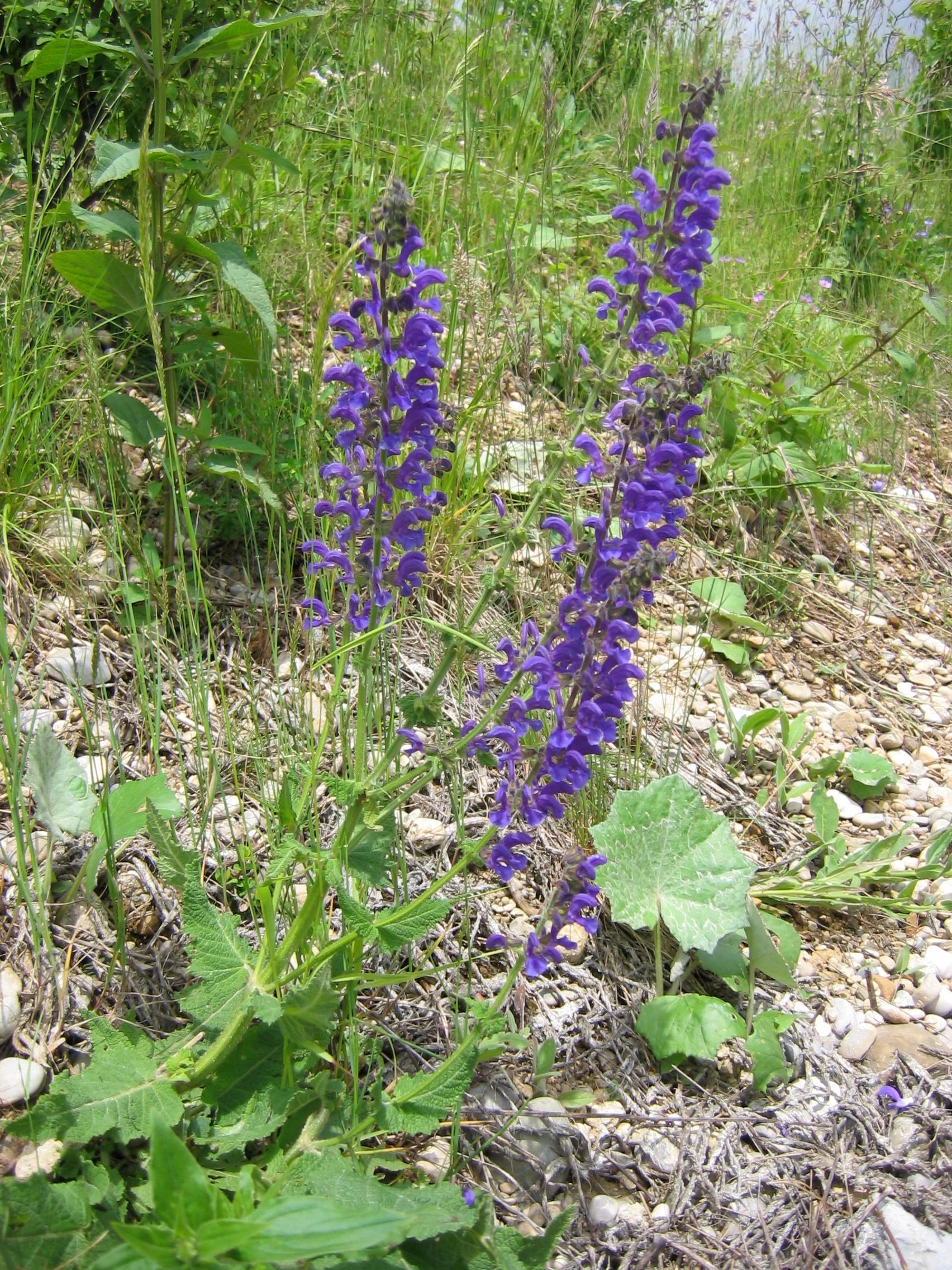
Meadow sage can grow to a height of 60 cm.
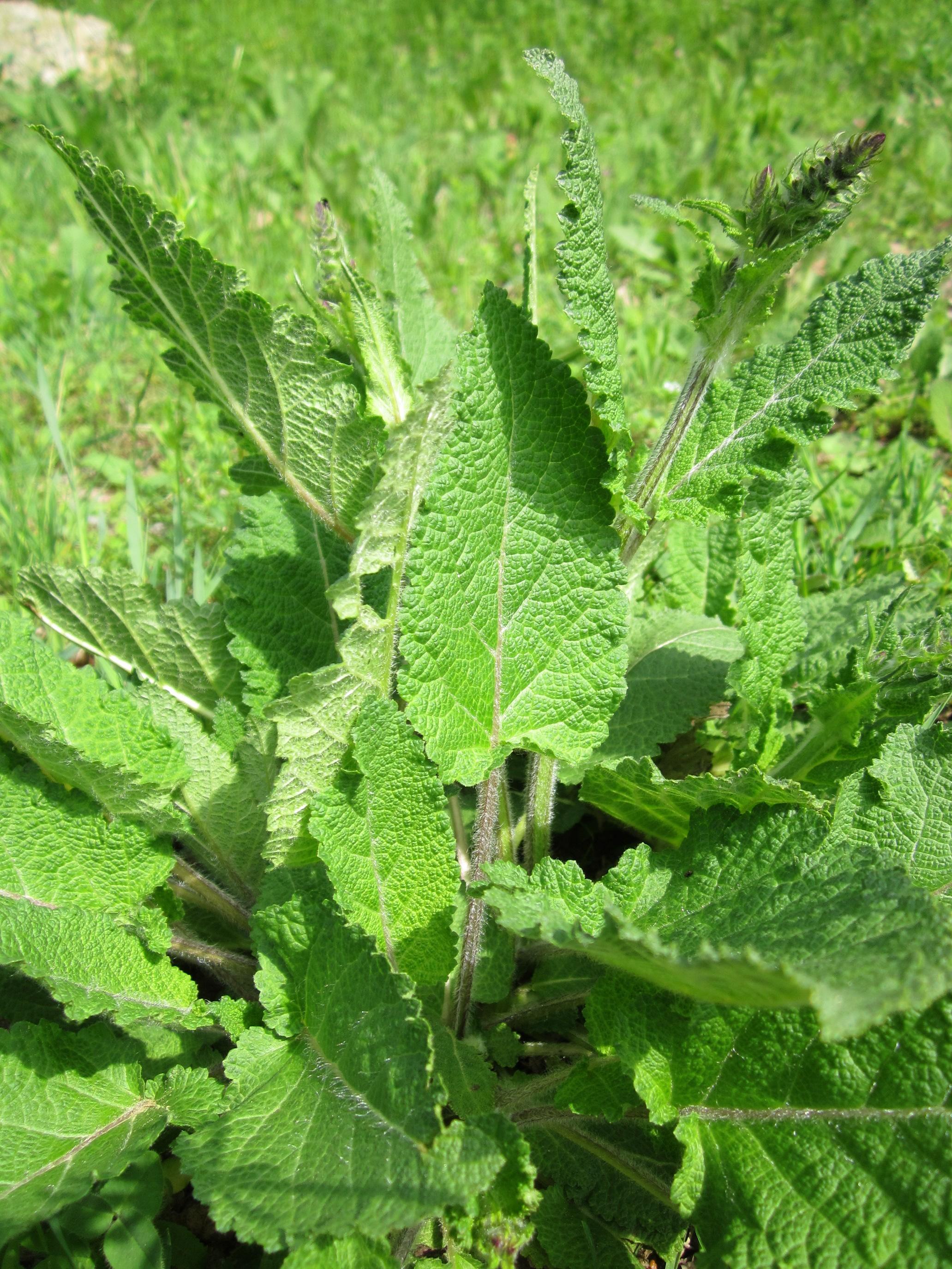
The leaves are oval and irregularly notched with a wrinkled surface (rugose). When rubbed, they emit an aromatic smell. Most of the leaves form a rosette close to the ground.
The stem is erect, square and very sparsely leafed.
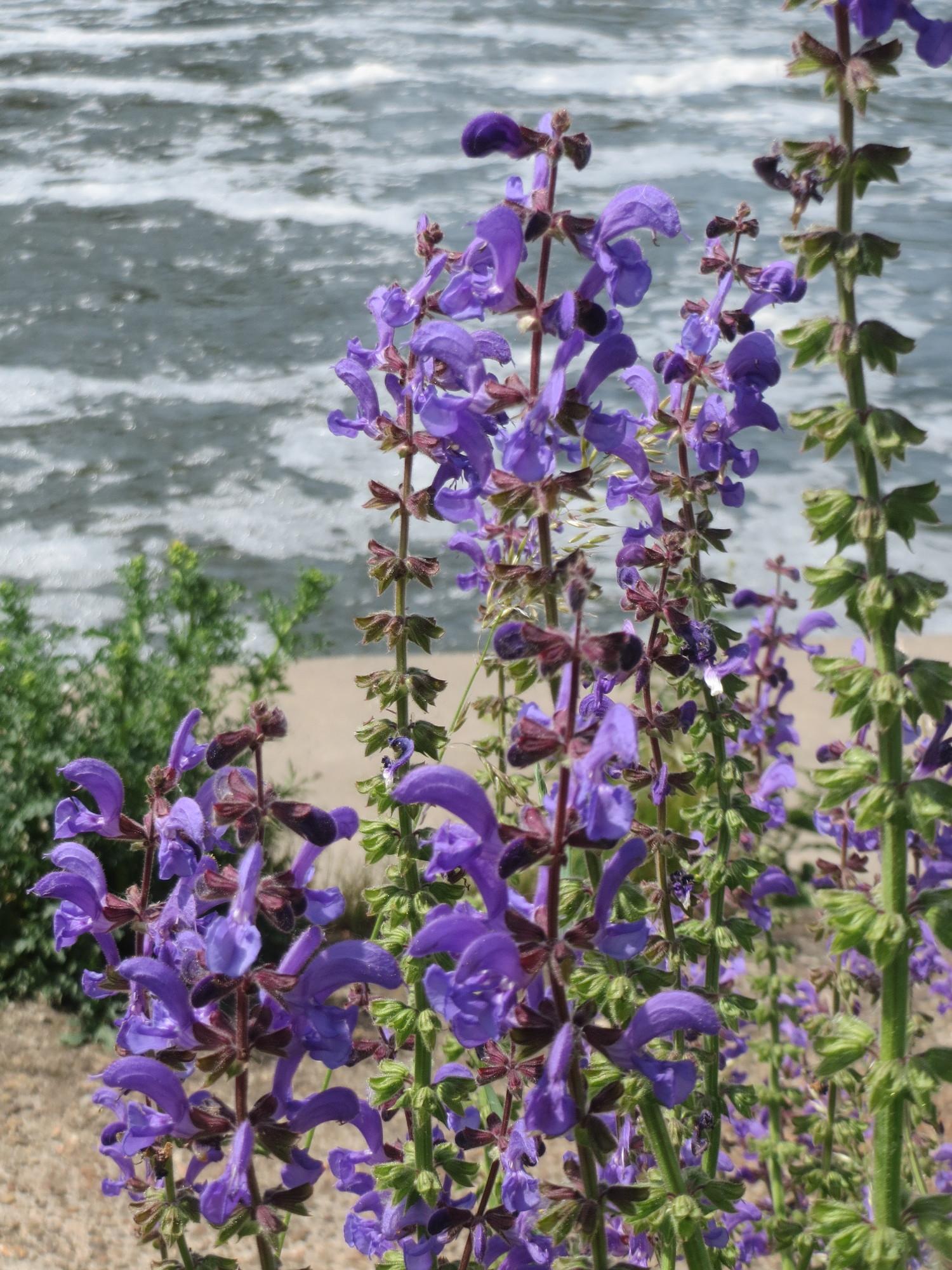
The flowers are blue to dark-purple and finely haired. The corolla is curved like a sickle.
The fruits are schizocarp that split into four mericarps.
Features
Meadow sage
Salvia pratensis
numerous blue to dark-purple flowers
square stem
In the city
In an urban environment, meadow sage often grows in meadows and verges. It prefers dry and sunny sites with chalky soil.
It is often used in urban planning.
Fun Facts
The medicinal effect of meadow sage is markedly weaker than that of garden sage. But the plant has a similar anti-inflammatory or digestion-regulating effect.
Insects visiting these flowers (mainly bumble bees) trigger a special mechanism. As soon as the insect reaches the centre of the flower, the stamens fold onto its back through a lever action. When the insect visits the next flower, it wipes the pollen onto the stigma, thus fertilising the flower.
It flowers from May to August.
- Endangerment level Germany: Warning list
Leaves and flowers can be used as flavouring or tea.
Sources
Habitus, Harald Süpfle, CC BY-SA 2.5, https://commons.wikimedia.org/wiki/File:Wiesensalbei_(Salvia_pratensis)_03.jpg
_03.jpg)
Blüten, AnRo0002, CC0, https://commons.wikimedia.org/wiki/File:20170525Salvia_pratensis2.jpg

Blätter, AnRo0002, CC0, https://commons.wikimedia.org/wiki/File:20130502Wiesensalbei_Hockenheim1.jpg

Spohn, M., Golte-Bechtle, M. & Spohn, R. (2015) Was blüht denn da? Stuttgart: Franckh Kosmos Verlag.
Fleischhauer, S. G., Guthmann, J. & Spiegelberger, R. (2007) Essbare Wildpflanzen. 200 Arten bestimmen und verwenden, Baden und München: AT Verlag.
Lippert, W. & Podlech, D. (1993) GU Naturführer. Blumen: die wichtigen Blütenpflanzen Mitteleuropas erkennen und bestimmen, München: Gräfe und Unzer Verlag.
Needon, C. & Petermann, J. (1991) Urania-Naturführer Pflanzen, Leipzig, Jena, Berlin: Urania-Verlag.
Schauer, T., Caspari, C. & Caspari, S. (2015) Der illustrierte BLV-Pflanzenführer für unterwegs. 1150 Blumen, Gräser, Bäume und Sträucher, München: BLV.
Page „Wiesensalbei“. : Wikipedia, The Free Encyclopedia. Date of last revision: 11.10.2016, 17:57 UTC. URL: https://de.wikipedia.org/w/index.php?title=Wiesensalbei&oldid=158670704 (Accessed: 08.12.2016).