
Short Description
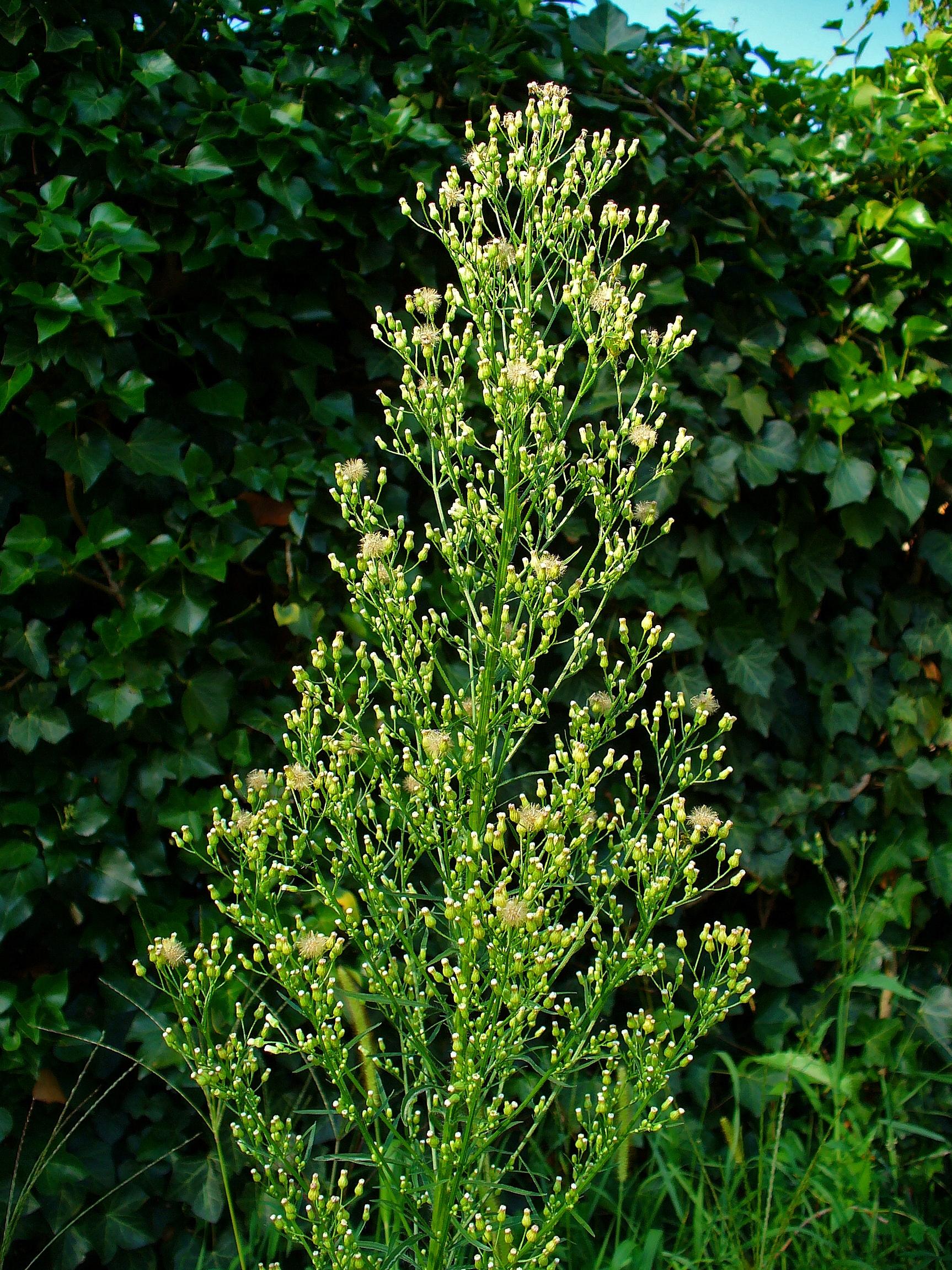
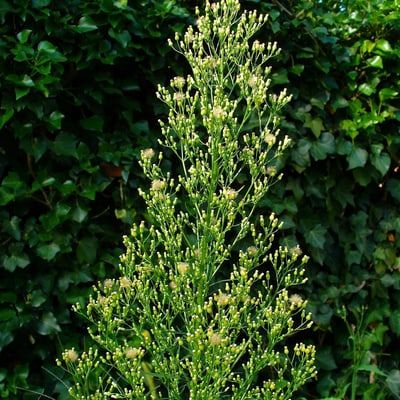
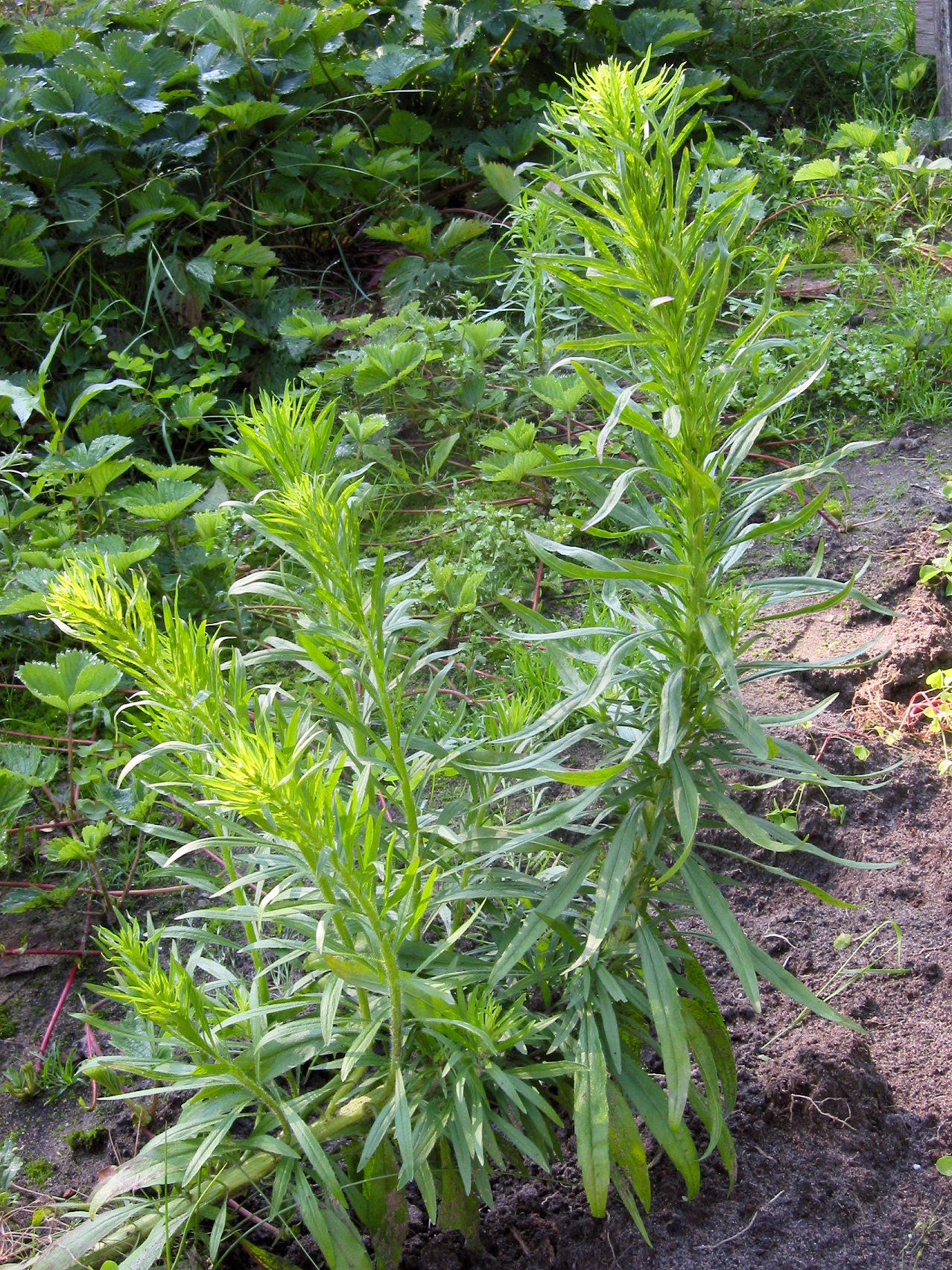
Canadian horseweed can grow to up to 1 metre in height.
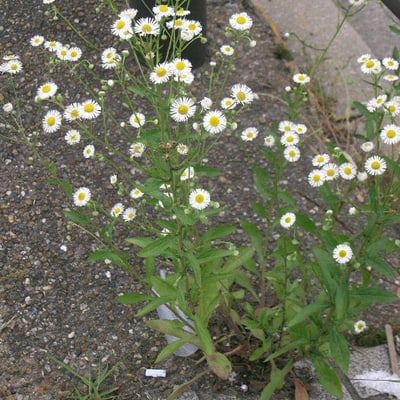
The leaves are narrow (linear) to lance-shaped and grow alternately on the stem. They are sparsely haired.
The stem is upright, sparsely haired and highly branched in its upper half.
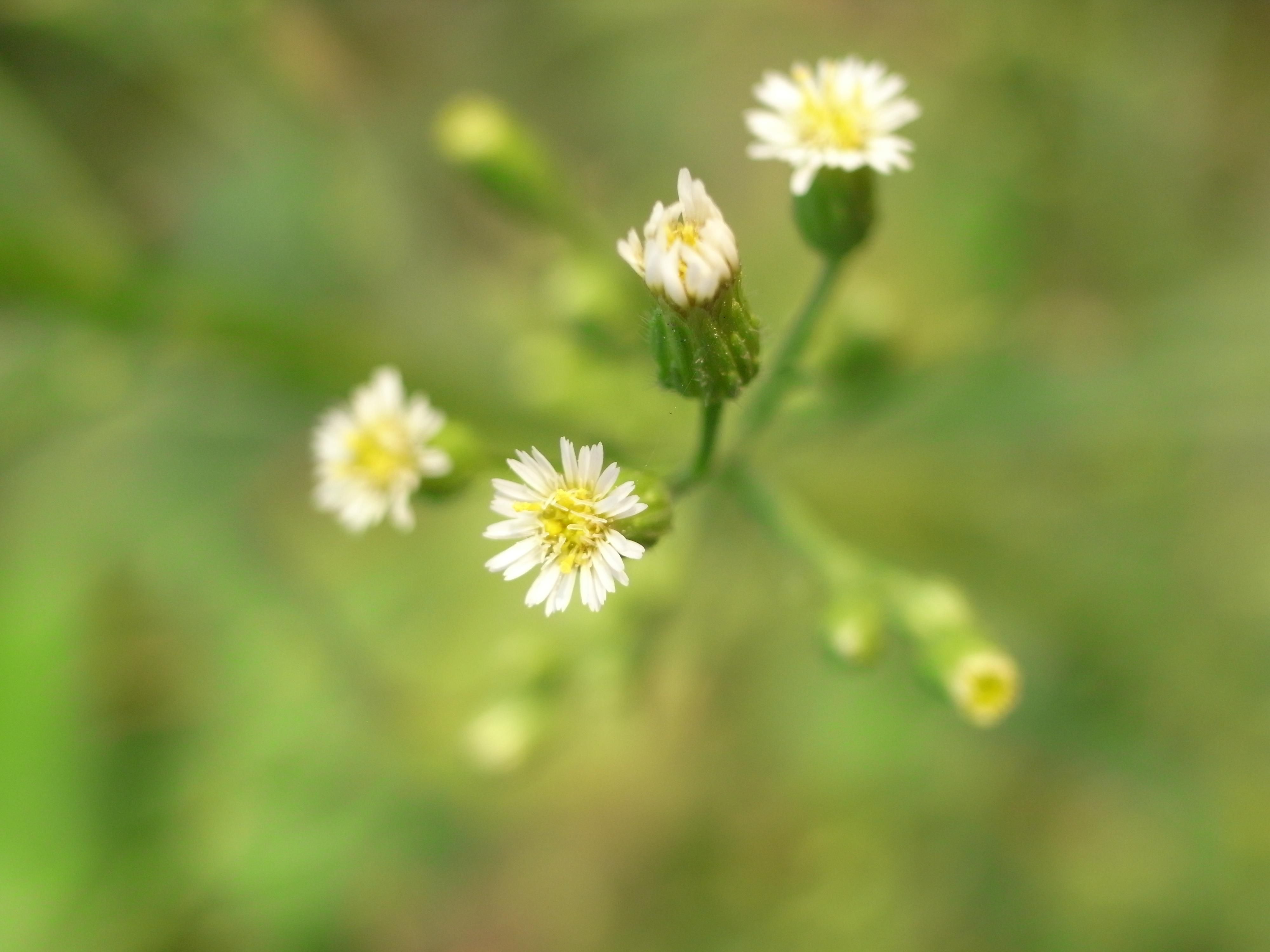
At first glance, the flower head can be mistaken for the flower itself. The pseudanthium (“false flower”) consists of numerous individual white ray florets at the margin and yellow tubular florets in the middle. The compound flower head is highly branched (panicular) and consists of numerous individual flower heads.
The seeds are small nut fruits with a ring of feathery hairs.
Features
Canadian horseweed
Erigeron canadensis
upwardly leaves
hairy
In the city
In town, Canadian horseweed is frequently found in the cracks of pavements, in wasteland and waysides. It prefers moderately nutrient-rich, sunny and warm sites with sandy soil. As a pioneer plant, it is often found in the first years of wasteland recolonisation.
Fun Facts
Its leaves have a tangy, slightly bitter taste and are used in herb mixtures or to flavour dishes.
Canadian horseweed is the first species proven in the USA to have developed resistance to glyphosate (broad-spectrum herbicide).
A large individual plant of this species can produce up to 250,000 fruits.
It flowers from July to October.
Pollination is carried out by the wind or by self-pollination.
The fruits are spread out with the wind.
- Endangerment level Germany: not evaluated
It was used as a remedy against bewitchment.
Canadian horseweed originates from North America. It was introduced to Europe in the 17th century and belongs to the non-native plants (neophytes).
In natural medicine, horseweed is considered a diuretic and anti-inflammatory agent.
Sources
Habitus, H. Zell, CC BY-SA 3.0, https://commons.wikimedia.org/wiki/File:Conyza_canadense_002.JPG

Blütenstand, Dalgial, CC BY-SA 3.0, https://commons.wikimedia.org/wiki/File:Conyza_canadensis_6.JPG

Blätter, Rasbak, CC BY-SA 3.0, https://commons.wikimedia.org/wiki/File:Canadese_fijnstraal_plant_Conyza_canadensis.jpg

Schauer, T., Caspari, C. & Caspari, S. (2015) Der illustrierte BLV-Pflanzenführer für unterwegs. 1150 Blumen, Gräser, Bäume und Sträucher, München: BLV.
Schönfelder, I. & Schönfelder, P. (2010) Der Kosmos-Heilpflanzenführer. Über 600 Heil- und Giftpflanzen Europas, Stuttgart: Franckh Kosmos Verlag.
Page „Kanadisches Berufkraut“. : Wikipedia, The Free Encyclopedia. Date of last revision: 18.04.2016, 15:31 UTC. URL: https://de.wikipedia.org/w/index.php?title=Kanadisches_Berufkraut&oldid=153590537 (Accessed: 14.09.2016).
Bundesamt für Naturschutz (n.d.) Artensteckbriefe, URL: http://floraweb.de/pflanzenarten/artenhome.xsql?suchnr=21687& (Accessed: 14.09.2016).