
Short Description
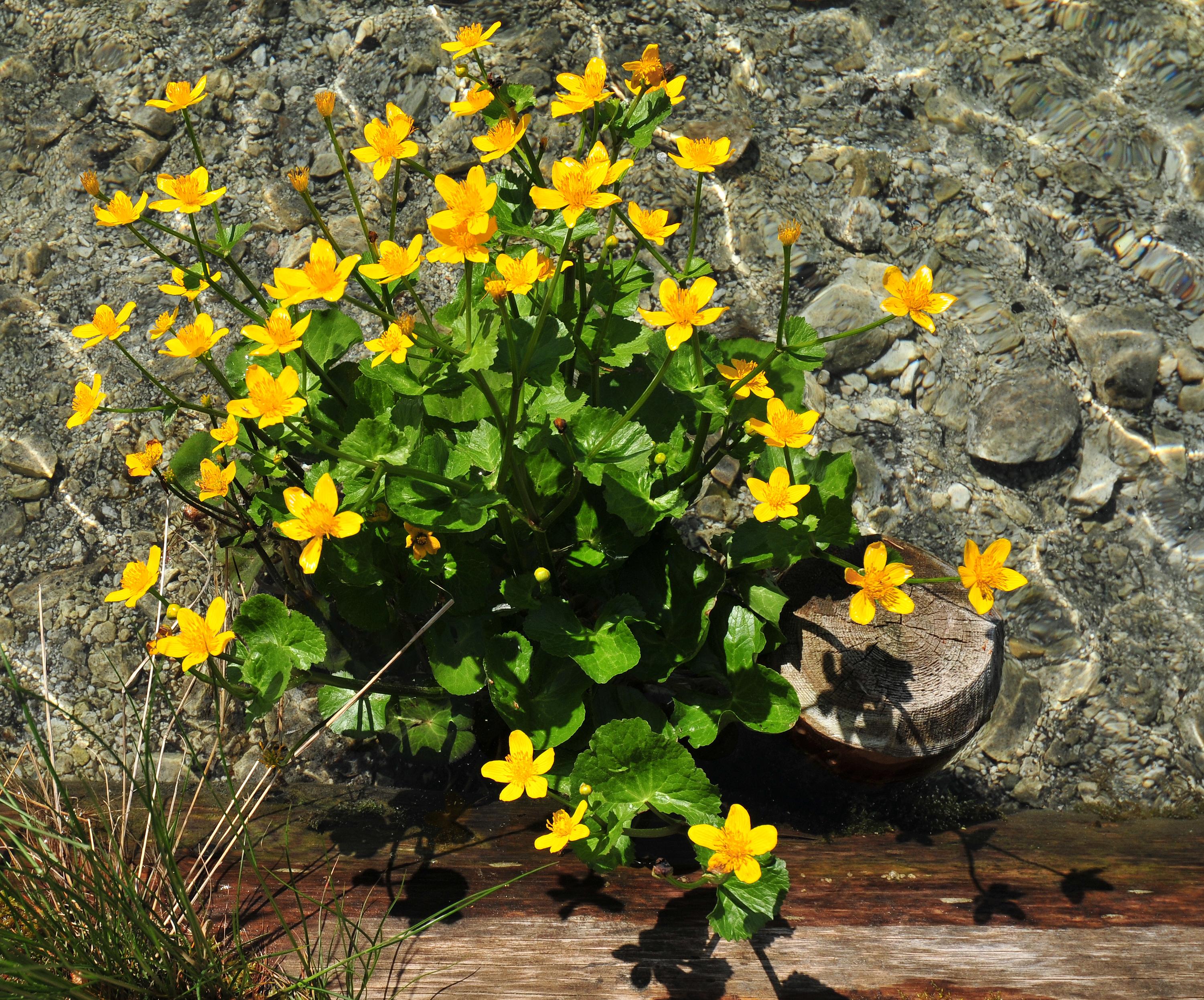
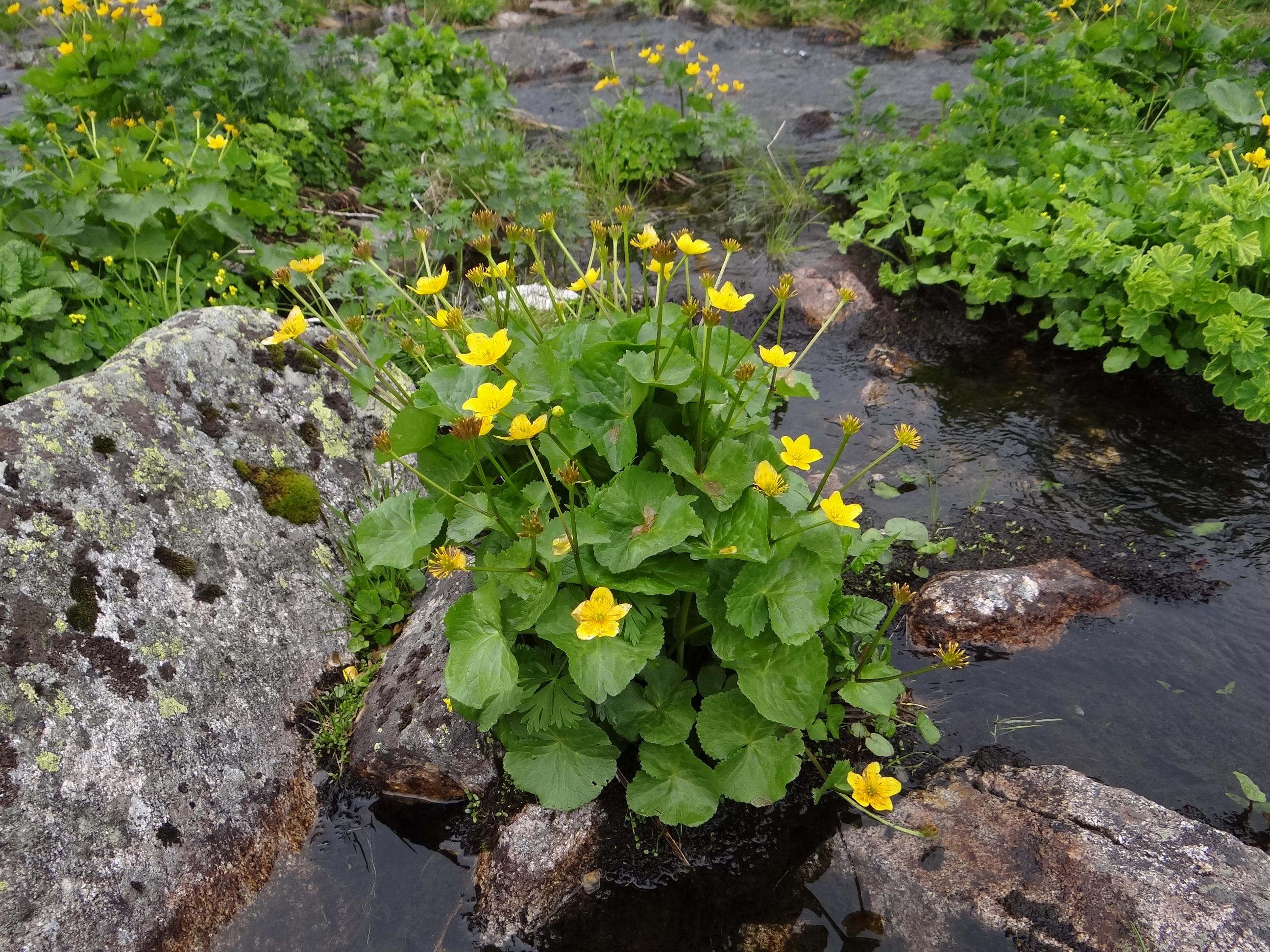
Marsh marigold can grow to a height of 60 cm.
The leaves are round to kidney-shaped, with a glossy surface and finely serrated margins. They grow alternately on the stem.
The stem is arched upright to prostrate and hollow inside. In its upper sections, it is generally branched.
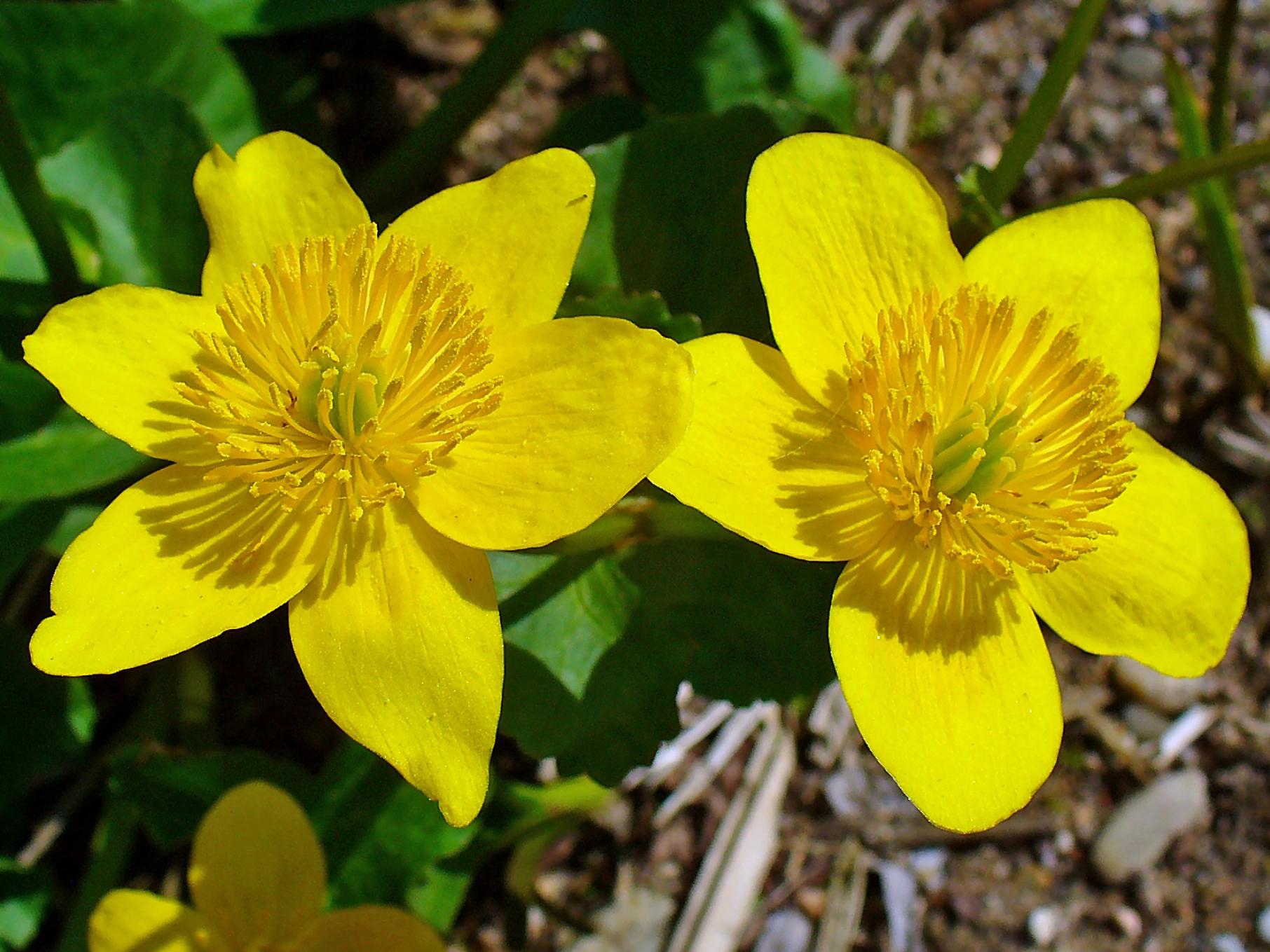
The flowers are yellow with numerous stamens at the centre.
Mericarps are arranged in a star pattern and form a globular fruit head.
Features
Marsh marigold
Caltha palustris
poisonous
large yellow flowers
rounded leaves
In the city
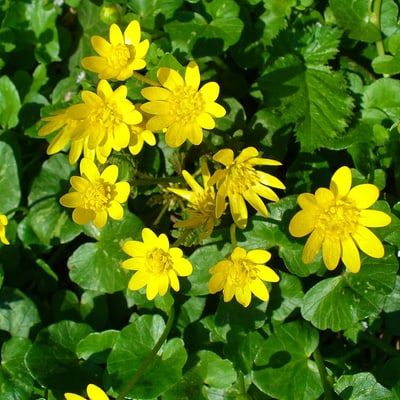
In an urban environment, marsh marigold mainly grows in gardens as a deliberately planted ornamental plant. In nature, it grows in marshy meadows, watering holes and riverside forests. It prefers damp to wet sites with nutrient-rich soil.
Fun Facts
The flowers were formerly used to colour butter.
A number of marsh marigold cultivars are commercially available.
Medieval folk medicine knew of a number of medicinal applications for marsh marigold. The dried plant is said to be no longer poisonous, as the toxic anemonin disperses.
It flowers from March to May.
It lives for several years and generally flowers and fruits annually (perennial plant).
- Endangerment level Germany: Warning list
The entire plant is poisonous.
Sources
Habitus, Michael Gäbler, CC BY-SA 3.0, https://commons.wikimedia.org/wiki/File:Caltha_palustris_(Carl_von_Linn%C3%A9_1753).jpg
.jpg)
Blüten, H. Zell, CC BY-SA 3.0, https://commons.wikimedia.org/wiki/File:Caltha_palustris_003.JPG

Habitus, Jerzy Opioła, CC BY-SA 4.0, https://commons.wikimedia.org/wiki/File:Caltha_palustris_subsp._laeta_T89.JPG

Eggenberg, S. & Möhl, A. (2007) Flora Vegetativa: Ein Bestimmungsbuch für Pflanzen der Schweiz im blütenlosen Zustand, Bern, Stuttgart, Wien: Haupt Verlag.
Spohn, M., Golte-Bechtle, M. & Spohn, R. (2015) Was blüht denn da? Stuttgart: Franckh Kosmos Verlag.
Jäger, E. J. (2011) Rothmaler - Exkursionsflora von Deutschland. Gefäßpflanzen: Grundband, Heidelberg: Spektrum Akademischer Verlag.
Kammer, P. M. (2016) Pflanzen einfach bestimmen. Schritt für Schritt einheimische Arten kennenlernen, Bern: Haupt Verlag.
Lippert, W. & Podlech, D. (1993) GU Naturführer. Blumen: die wichtigen Blütenpflanzen Mitteleuropas erkennen und bestimmen, München: Gräfe und Unzer Verlag.
Schauer, T., Caspari, C. & Caspari, S. (2015) Der illustrierte BLV-Pflanzenführer für unterwegs. 1150 Blumen, Gräser, Bäume und Sträucher, München: BLV.
Page „Sumpfdotterblume“. : Wikipedia, The Free Encyclopedia. Date of last revision: 05.02.2017, 08:42 UTC. URL: https://de.wikipedia.org/w/index.php?title=Sumpfdotterblume&oldid=162333511 (Accessed: 17.02.2017).