
Short Description
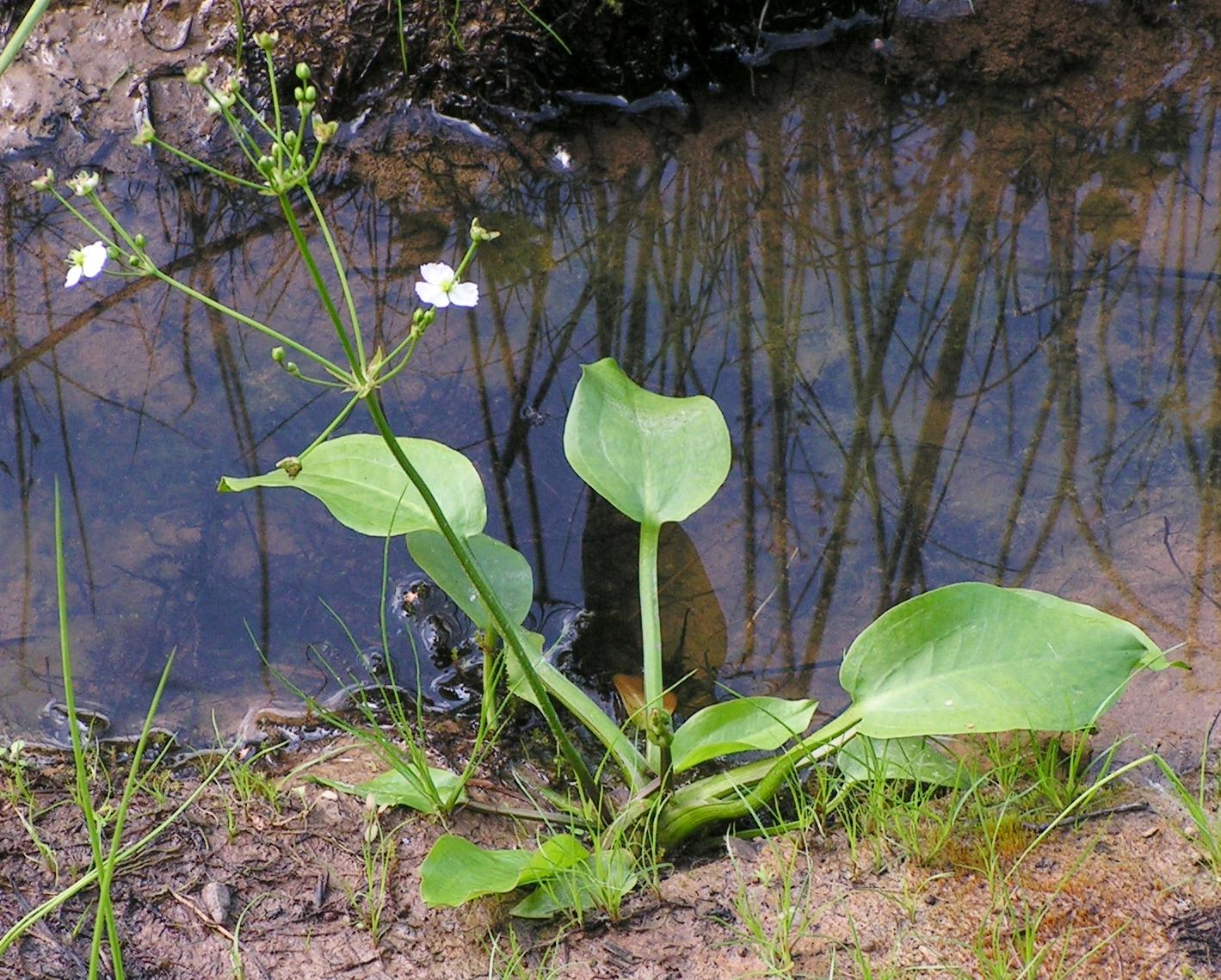
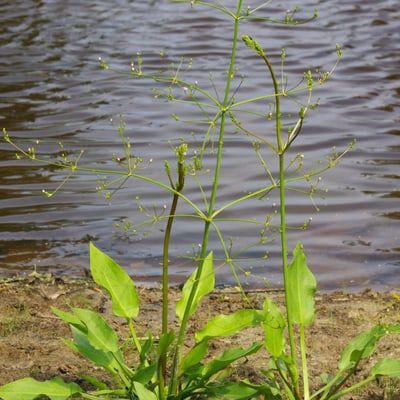
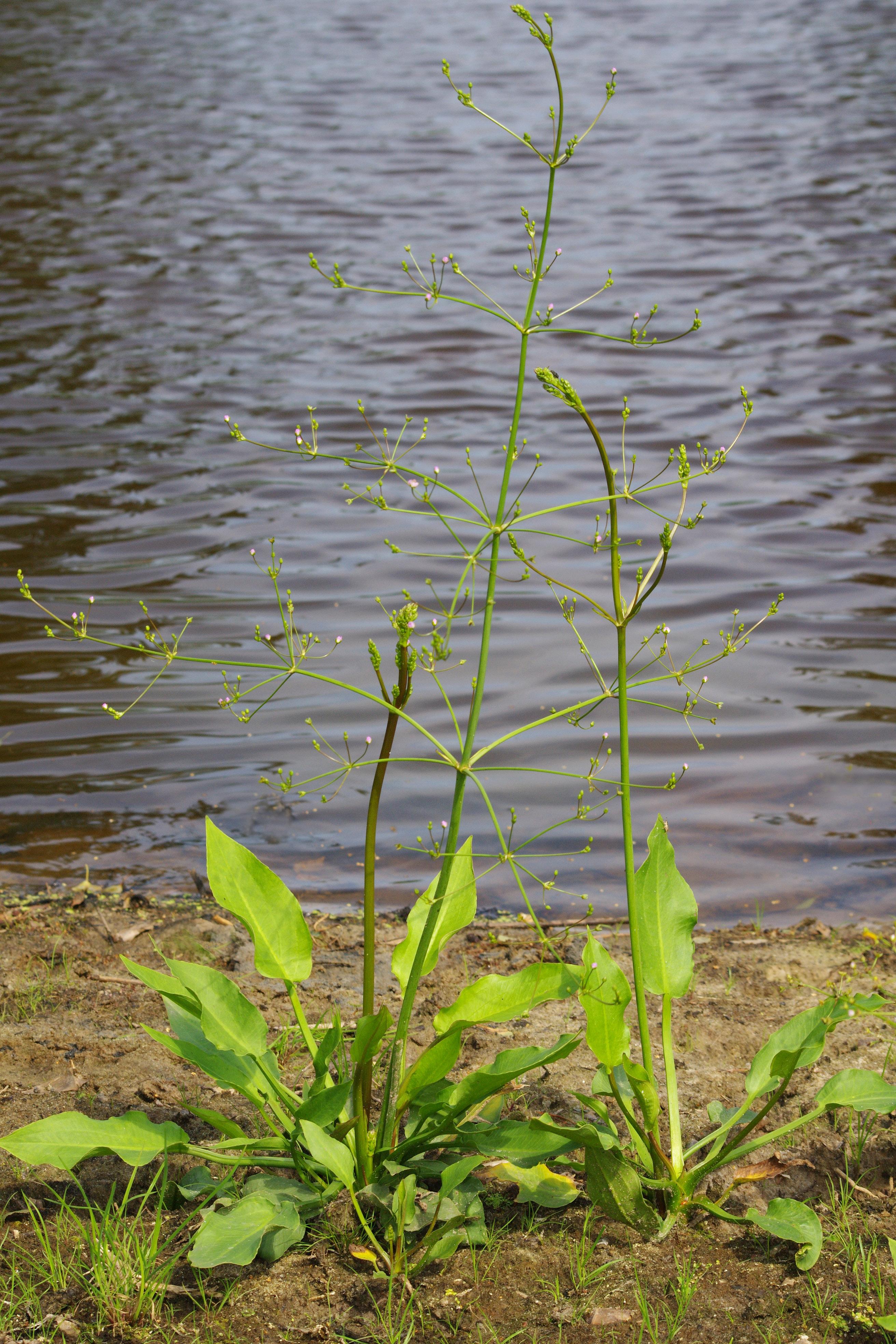
The common water-plantain is a marsh and water plant. It can grow up to 90 centimetres high.
There are two types of leaves. The lower leaves are narrow and elongated. They float under water at high water levels. The upper leaves are broad ovate to heart-shaped (cordiform) and protrude from the water. Depending on the location, the transitions can be fluid. The leaves are in a basal leaf rosette.
The stem is leafless and grows erect.
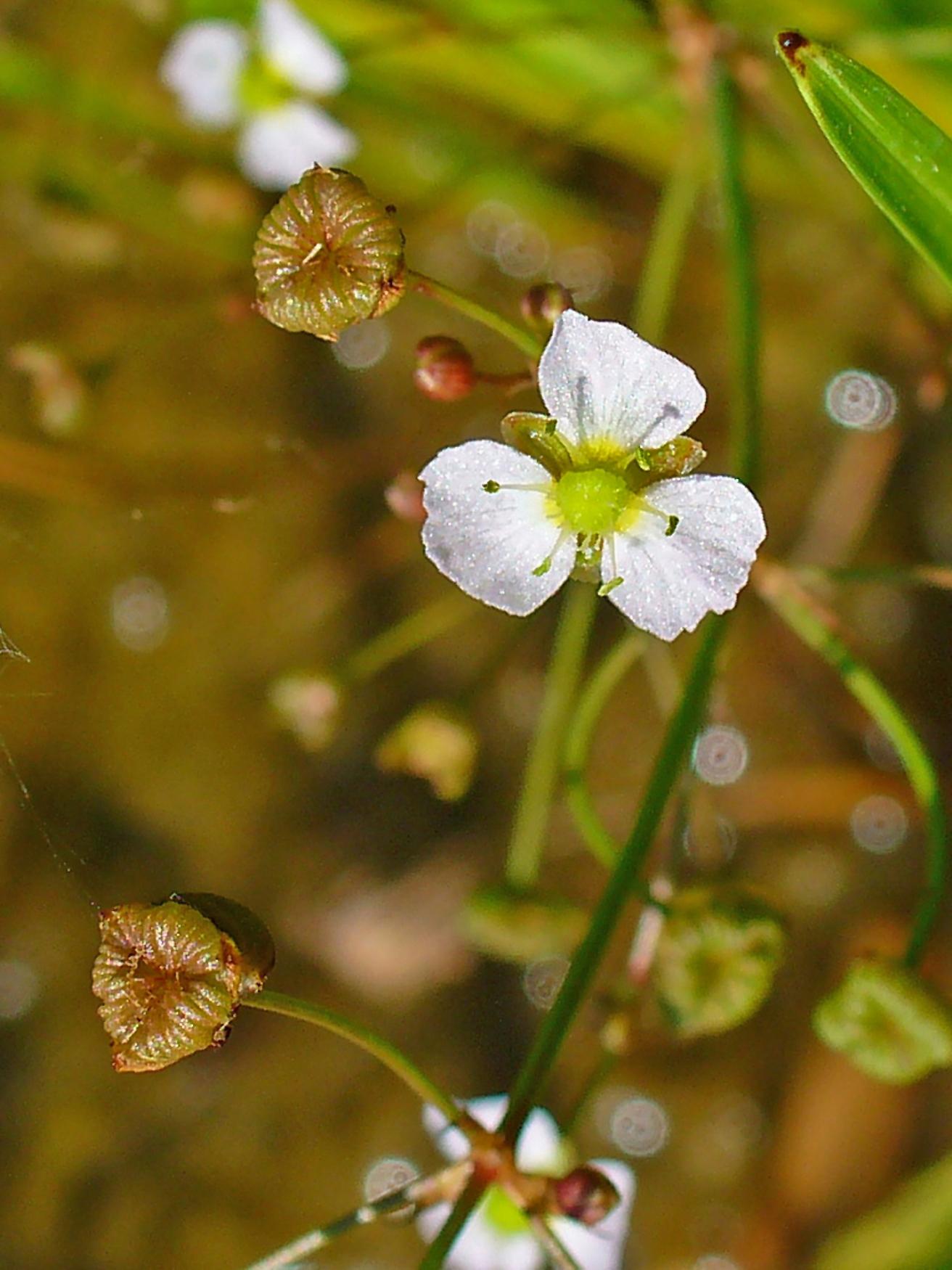
The small flowers have three white or pink petals. They sit in richly branched, loose inflorescences at the top of the stem.
The fruits are thin, egg-shaped nutlets. They are numerous and arranged in a circle in the flowers.
Features
European water-plantain
Alisma plantago-aquatica
slightly poisonous
three, white petals
water plant
In the city
The common water-plantain grows on shallowly flooded shores of nutrient-rich lakes and ponds as well as on slow-flowing waters, ditches and in reeds. It prefers shallow, sun-exposed sites and nutrient-rich, muddy soils.
Fun Facts
The flowers only open in the afternoon.
The seeds are surrounded by a floating tissue and can float for up to 15 months. However, they can also be spread by water birds.
The flowering period is from July to August.
It lives for several years and generally flowers and fruits annually (perennial plant).
Its pollinators are mainly hoverflies, whose larvae live in the water.
- Endangerment level Germany: not endangered
It is found almost all over the world and is a native plant in Europe.
It is slightly poisonous to humans. The burning pungent sap irritates the skin and can cause blisters.
Sources
Habitus, Bff, CC BY-SA 3.0, https://commons.wikimedia.org/wiki/File:Alisma_plantago-aquatica20090812_259.jpg

Habitus, Christian Fischer, CC BY-SA 3.0 , https://commons.wikimedia.org/wiki/File:AlismaPlant1.jpg

Blüte und Früchte, H. Zell, CC BY-SA 3.0, https://commons.wikimedia.org/wiki/File:Alisma_plantago-aquatica_002.JPG

Kammer, P. M. (2016) Pflanzen einfach bestimmen. Schritt für Schritt einheimische Arten kennenlernen, Bern: Haupt Verlag.
Schauer, T., Caspari, C. & Caspari, S. (2015) Der illustrierte BLV-Pflanzenführer für unterwegs. 1150 Blumen, Gräser, Bäume und Sträucher, München: BLV.
Spohn, M., Golte-Bechtle, M. & Spohn, R. (2015) Was blüht denn da? Stuttgart: Franckh Kosmos Verlag.
Page „Gewöhnlicher Froschlöffel“. : Wikipedia, The Free Encyclopedia. Date of last revision: 27.03.2018, 11:03 UTC. URL: https://de.wikipedia.org/w/index.php?title=Gew%C3%B6hnlicher_Froschl%C3%B6ffel&oldid=175457605 (Accessed: 17.04.2018).
Bundesamt für Naturschutz (n.d.) Artensteckbriefe, URL: http://floraweb.de/pflanzenarten/artenhome.xsql?suchnr=278& (Accessed: 17.04.2018).