
Short Description
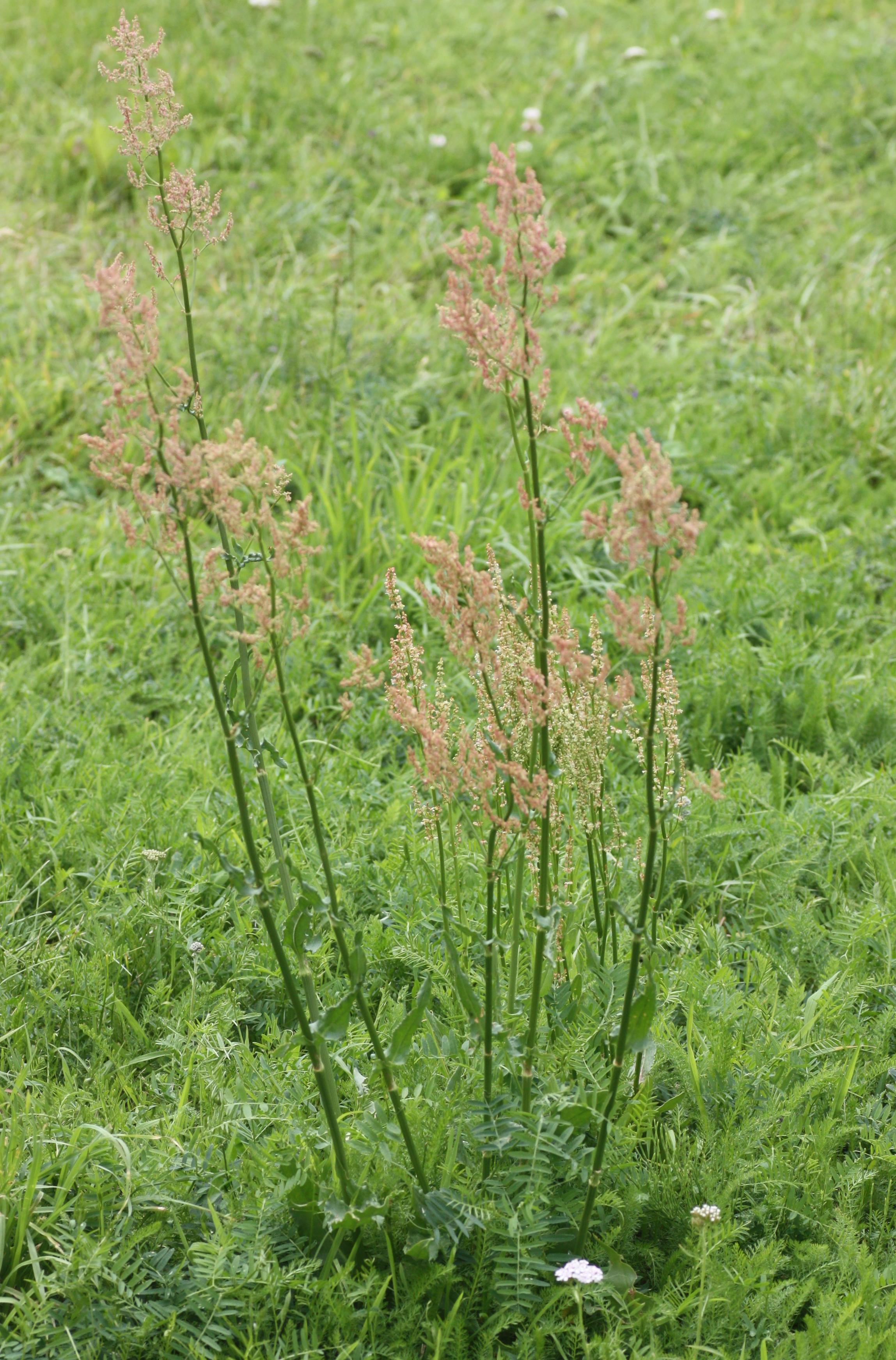
Common sorrel can grow up to one metre high.
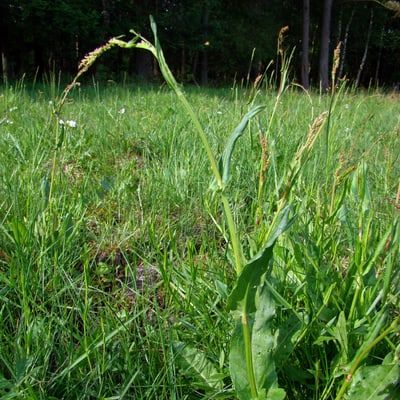
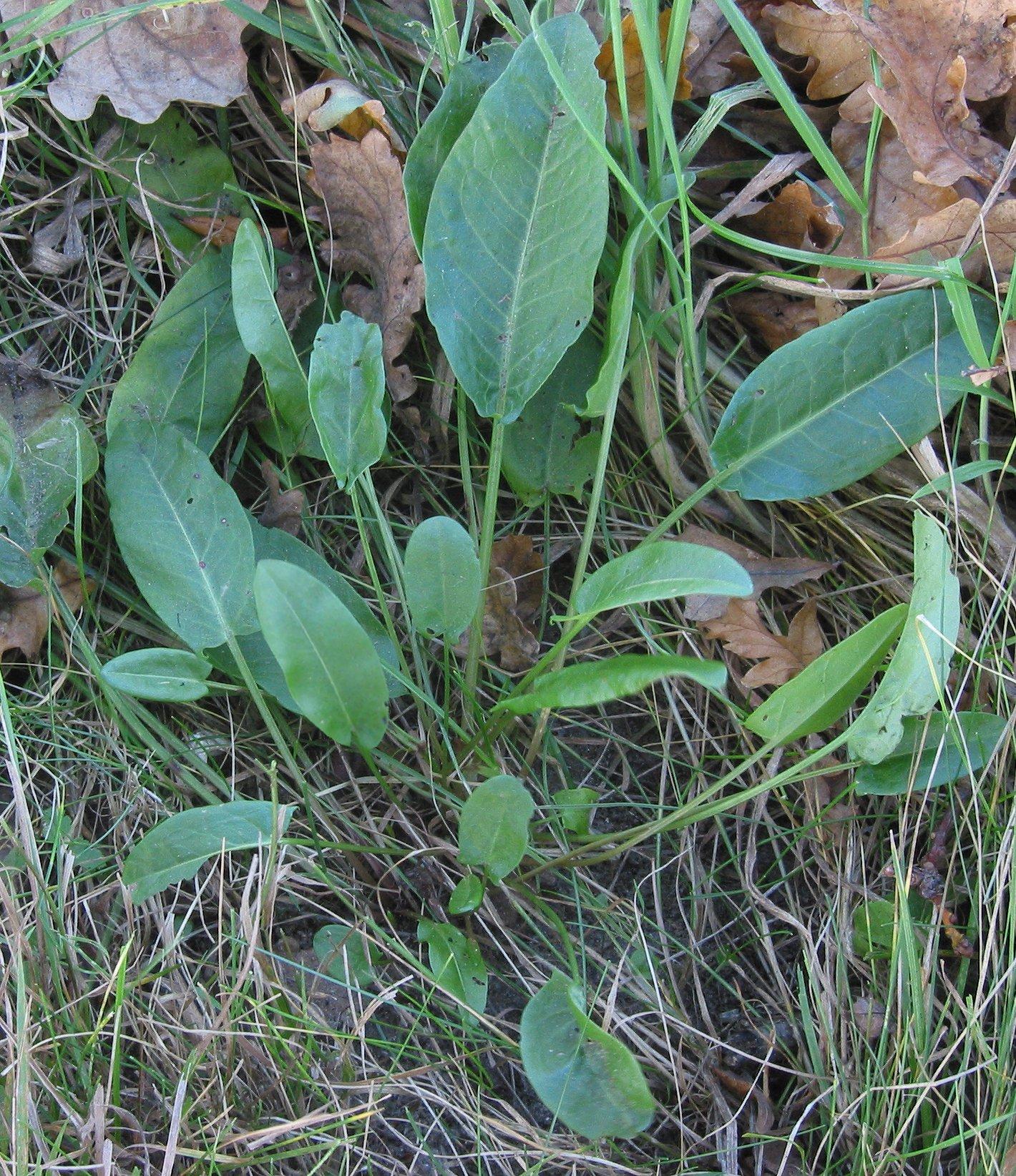
The plant forms many long-stalked basal leaves at the base of the stem. They are generally broad and arrow-shaped, but can also be oblong-elliptical. The upper leaves are more narrow arrow-shaped.
The stem is comparatively thick, upright and angular. The roots are more than one metre long.
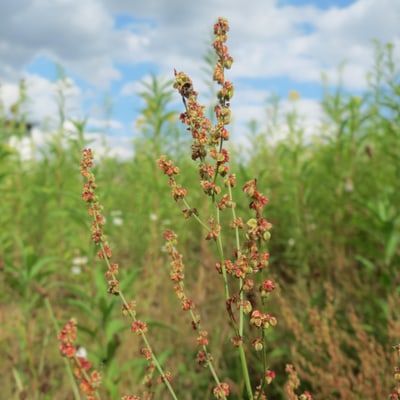
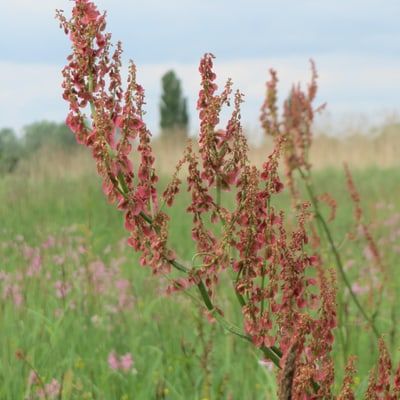
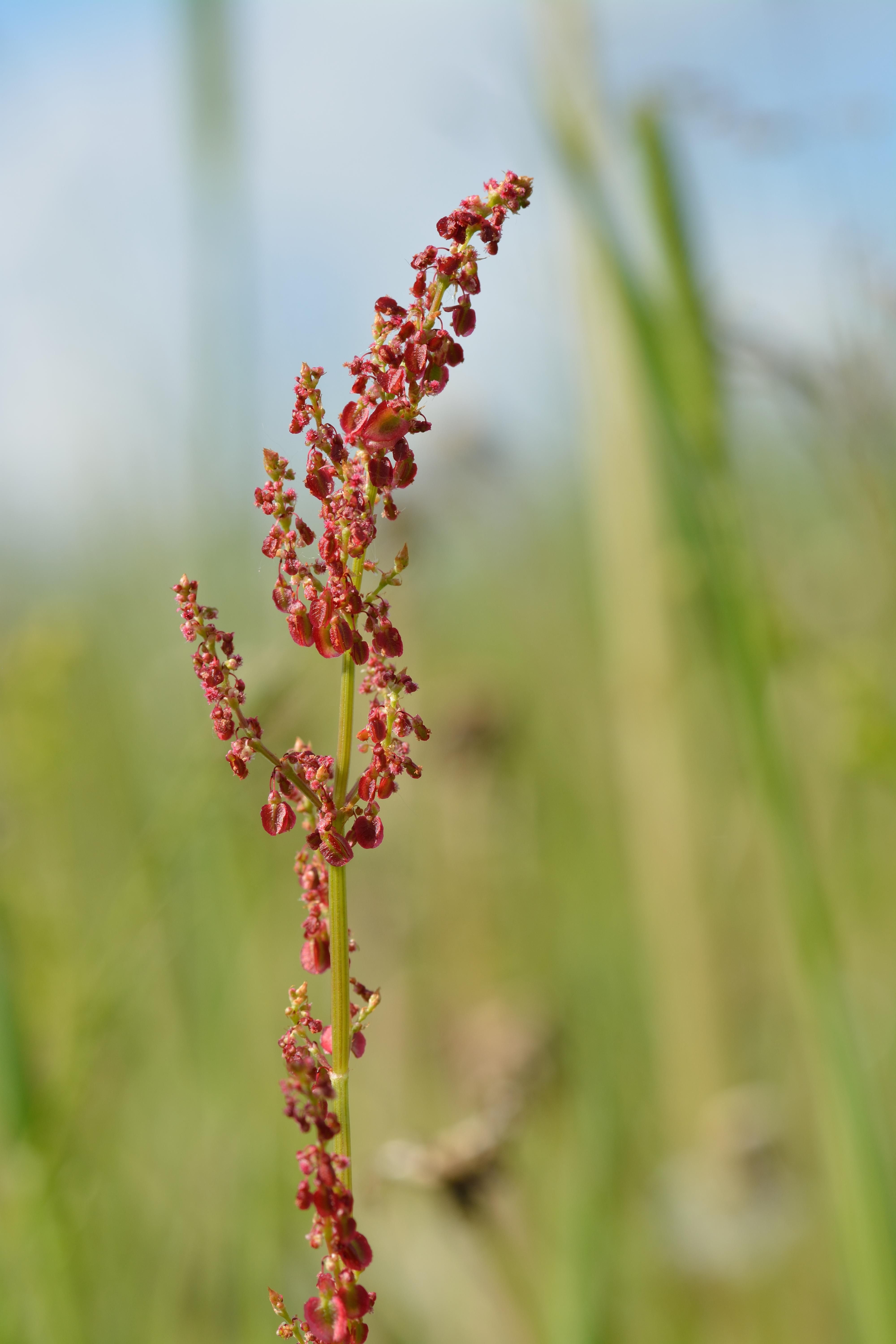
From May onwards, the flower spikes grow rapidly, easily reaching a height of one metre. Male and female flowers are found on different plants (dioecious). Flowers are reddish-brown and close together.
The small hard fruits are triangular. They are initially green, then reddish-brown.
Features
Common sorrel
Rumex acetosa
arrowhead-shaped leaves
up to 1 metre high
Similar species
In the city
Common sorrel grows almost anywhere, but prefers damp nutrient-rich sites. In cities, it often grows in verges and meadows.
Fun Facts
It used to be eaten a lot. When the leaves are picked young, they have a pleasantly sour taste.
It flowers from May to August.
In folk medicine, common sorrel is used for blood purification and boosting the immune defence.
The pollen is highly allergenic.
The plant is an important forage plant for the caterpillars of the purple-edged copper.
It is a perennial plant. This means the plant lives for more than two years, but flowers only once and dies after the seeds have ripened.
- Endangerment level Germany: not endangered
- Usage:
The tops of shoots and budding flower heads can be cooked and added to a wide range of vegetable dishes. The seeds can be used to make a herbal tea.
Common sorrel is edible. However, like all Rumex plants, it contains a lot of oxalic acid and should not be consumed in great quantities.
Sources
Habitus, Wohlert Wohlers, CC BY-SA 3.0, https://commons.wikimedia.org/wiki/File:Rumex_acetosa_1_Pflanze_IMG_2518_Wohlers.JPG

Blätter, Rasbak, CC BY-SA 3.0, https://commons.wikimedia.org/wiki/File:Veldzuring_Rumex_acetosa.jpg

Blüten & Früchte, Ivar Leidus, CC BY-SA 3.0, https://commons.wikimedia.org/wiki/File:Rumex_acetosa_-_Hapu_oblikas.jpg

Fleischhauer, S. G., Guthmann, J. & Spiegelberger, R. (2007) Essbare Wildpflanzen. 200 Arten bestimmen und verwenden, Baden und München: AT Verlag.
Wohlers, W. (2016) Rumex acetosa - Großer Sauerampfer (JKI-Pflanzenportraits), URL: https://offene-naturfuehrer.de/web/Rumex_acetosa_-_Gro%C3%9Fer_Sauerampfer_(JKI-Pflanzenportraits) (Accessed: 20.07.2016).
Schauer, T., Caspari, C. & Caspari, S. (2015) Der illustrierte BLV-Pflanzenführer für unterwegs. 1150 Blumen, Gräser, Bäume und Sträucher, München: BLV.
Schönfelder, I. & Schönfelder, P. (2010) Der Kosmos-Heilpflanzenführer. Über 600 Heil- und Giftpflanzen Europas, Stuttgart: Franckh Kosmos Verlag.
Page „Wiesen-Sauerampfer“. : Wikipedia, The Free Encyclopedia. Date of last revision: 03.05.2016, 16:52 UTC. URL: https://de.wikipedia.org/w/index.php?title=Wiesen-Sauerampfer&oldid=154068117 (Accessed: 20.07.2016).
Bundesamt für Naturschutz (n.d.) Artensteckbriefe, URL: http://floraweb.de/pflanzenarten/artenhome.xsql?suchnr=5073& (Accessed: 20.07.2016).