
Short Description
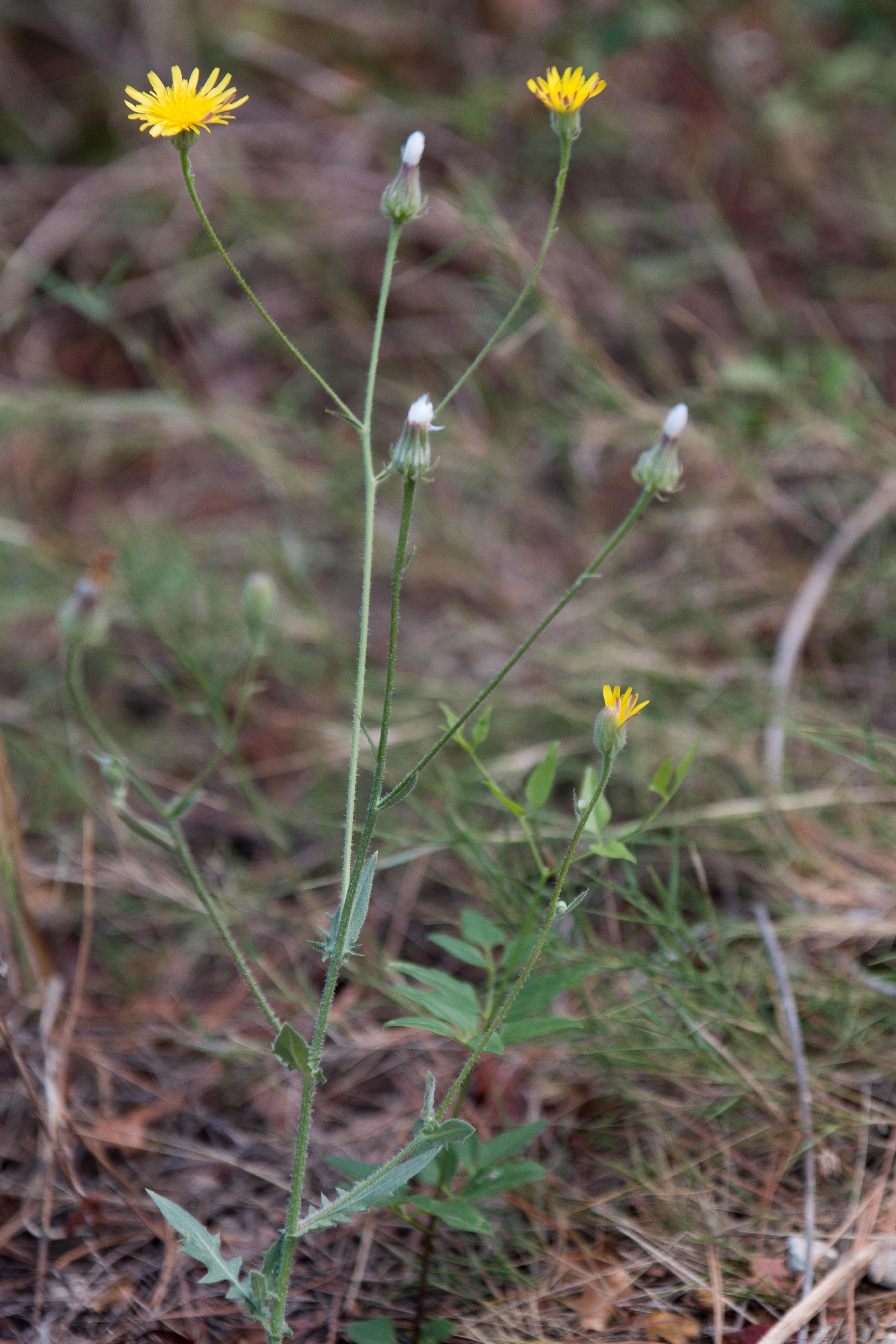
The common hawkweed can grow to a height of 50 cm. All parts of the plant produce a milky sap when broken.
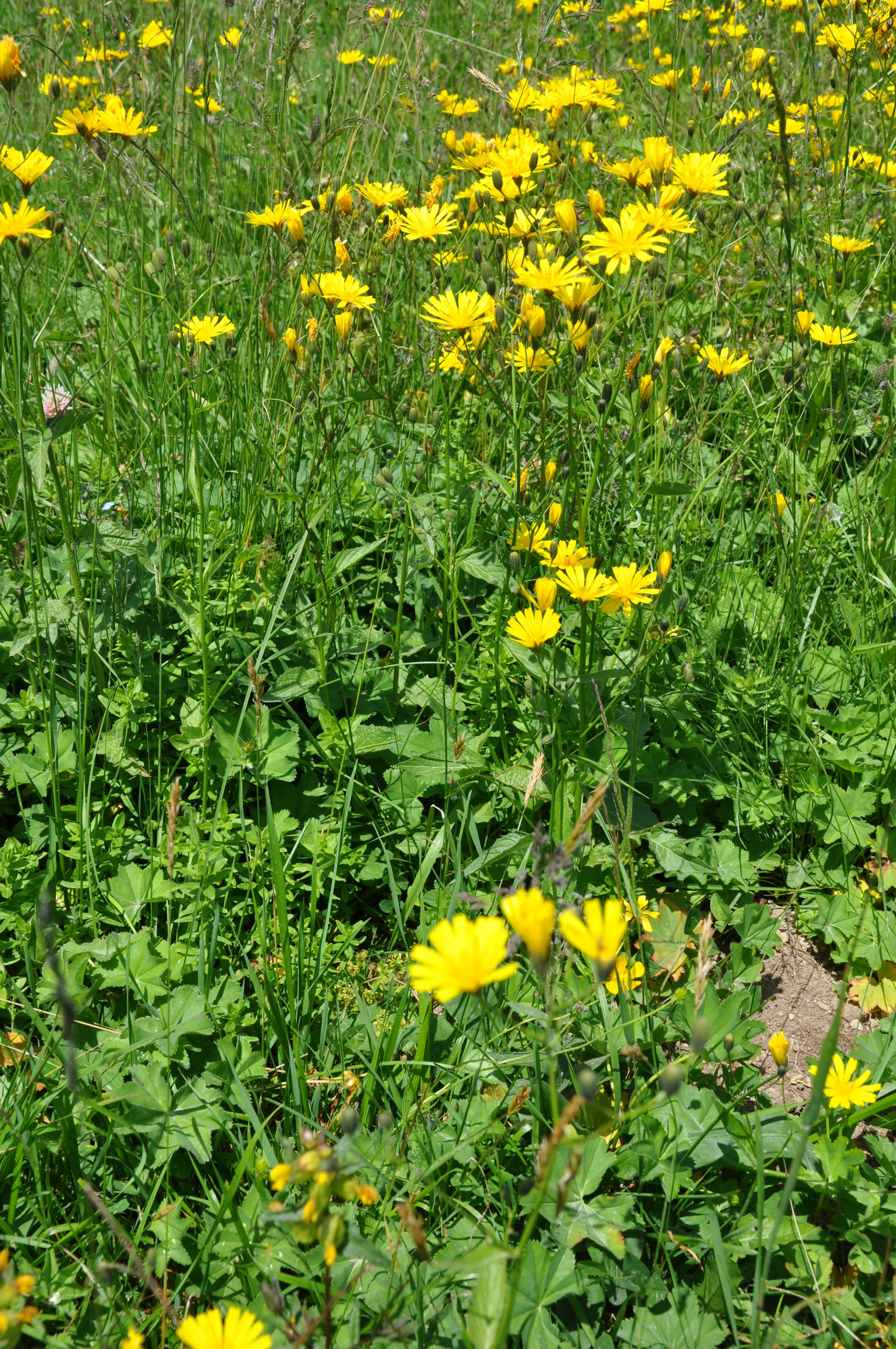
The leaves seem to grow directly out of the ground (basal) and grow in the form of a rosette. The stem leaves are alternate. Its leaves are lance-shaped and with a roughly serrated margin. On the underside, they are often tinged with red.
The stem is stout covered with short hairs and contains a milky sap. The upper half of the stem is generally greyish with gland-tipped dark hairs.
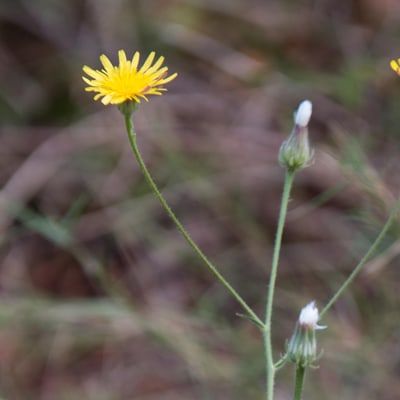
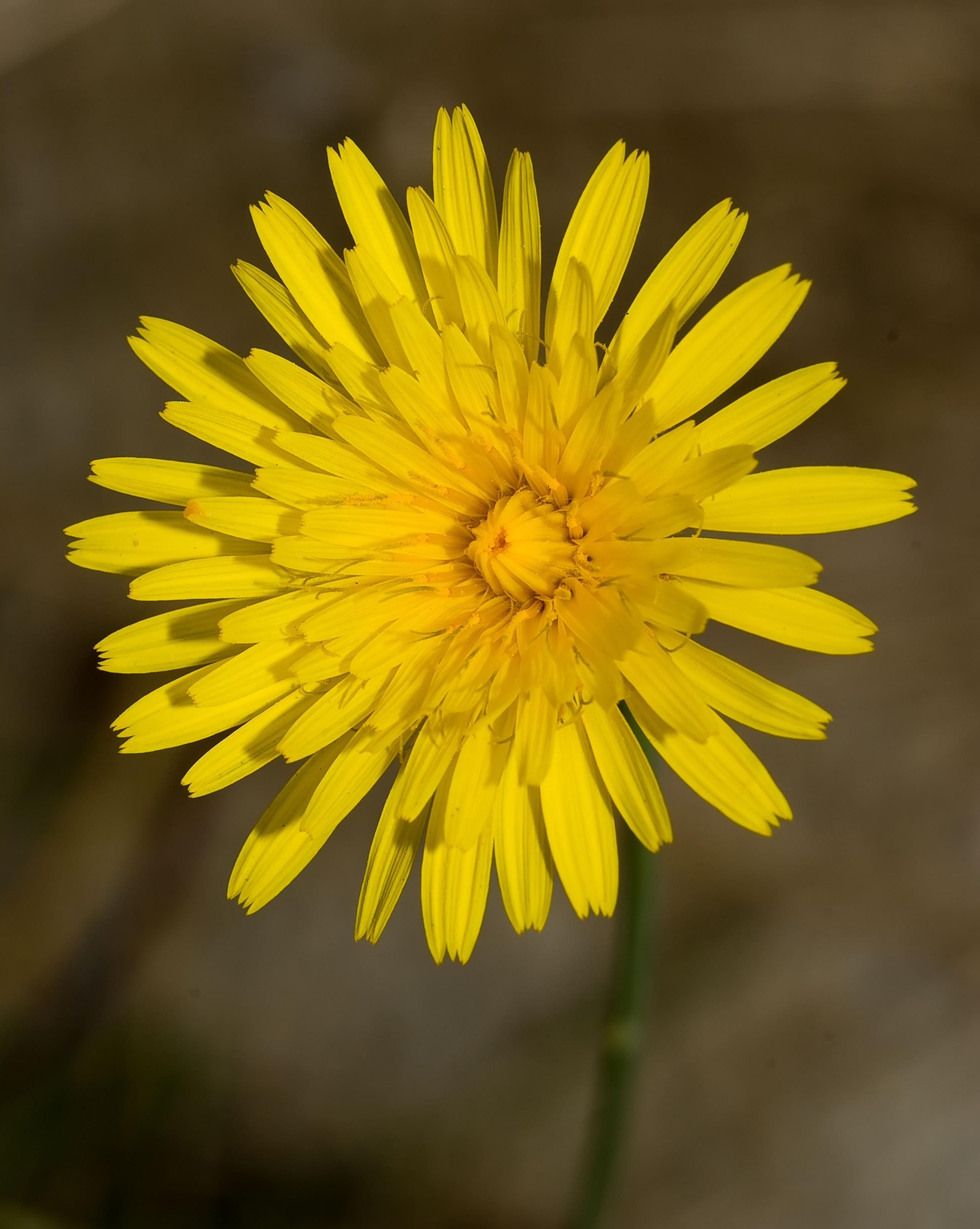
Numerous small yellow to yellow-orange flowers are bunched together in a flower head which at first glance could be mistaken for the flower itself. The individual ray florets become longer towards the margins.
The fruit is a small ribbed nutlet with a ring of hairs at the tip.
Features
Common hawkweed
Hieracium lachenalii
milky sap
gland-tipped dark hairs on the upper half of the stem
In the city
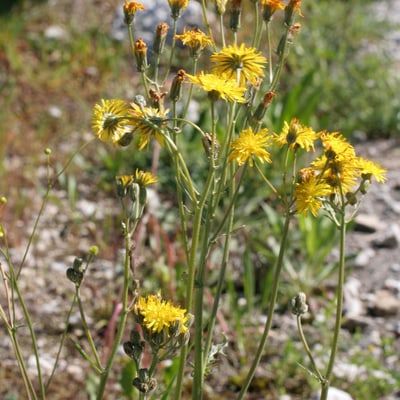
In an urban environment, common hawkweed can be found at the verges of deciduous or coniferous forests and in nutrient-poor grassland. It can adapt very well to habitats created by humans such as road verges and railway lands. It prefers light to semi-shaded, fresh to dry sites with acid loamy soils.
Fun Facts
The Latin name of the genus "Hieracium" means hawk or falcon and explains the origins of its popular name.
It flowers from June to August.
- Endangerment level Germany: not endangered
Sources
Habitus, Daniel VILLAFRUELA, CC BY-SA 4.0, https://fr.wikipedia.org/wiki/Creative_Commons
Blütenstand, Alvesgaspar, CC BY-SA 3.0, https://commons.wikimedia.org/wiki/File:Hawkweed_2007-5.jpg

Habitus, Lazaregagnidze, CC BY-SA 4.0, https://commons.wikimedia.org/wiki/File:Hieracium_lachenalii_Common_Hawkweed_%E1%83%A9%E1%83%95%E1%83%94%E1%83%A3%E1%83%9A%E1%83%94%E1%83%91%E1%83%A0%E1%83%98%E1%83%95%E1%83%98_%E1%83%AE%E1%83%90%E1%83%A0%E1%83%9C%E1%83%A3%E1%83%A7%E1%83%90.JPG

Kammer, P. M. (2016) Pflanzen einfach bestimmen. Schritt für Schritt einheimische Arten kennenlernen, Bern: Haupt Verlag.
Lippert, W. & Podlech, D. (1993) GU Naturführer. Blumen: die wichtigen Blütenpflanzen Mitteleuropas erkennen und bestimmen, München: Gräfe und Unzer Verlag.
Schauer, T., Caspari, C. & Caspari, S. (2015) Der illustrierte BLV-Pflanzenführer für unterwegs. 1150 Blumen, Gräser, Bäume und Sträucher, München: BLV.
Page „Gewöhnliches Habichtskraut“. : Wikipedia, The Free Encyclopedia. Date of last revision: 12.07.2016, 08:00 UTC. URL: https://de.wikipedia.org/w/index.php?title=Gew%C3%B6hnliches_Habichtskraut&oldid=156067751 (Accessed: 04.10.2016).
Bundesamt für Naturschutz (n.d.) Artensteckbriefe, URL: http://floraweb.de/pflanzenarten/artenhome.xsql?suchnr=2898& (Accessed: 04.10.2016).