
Short Description
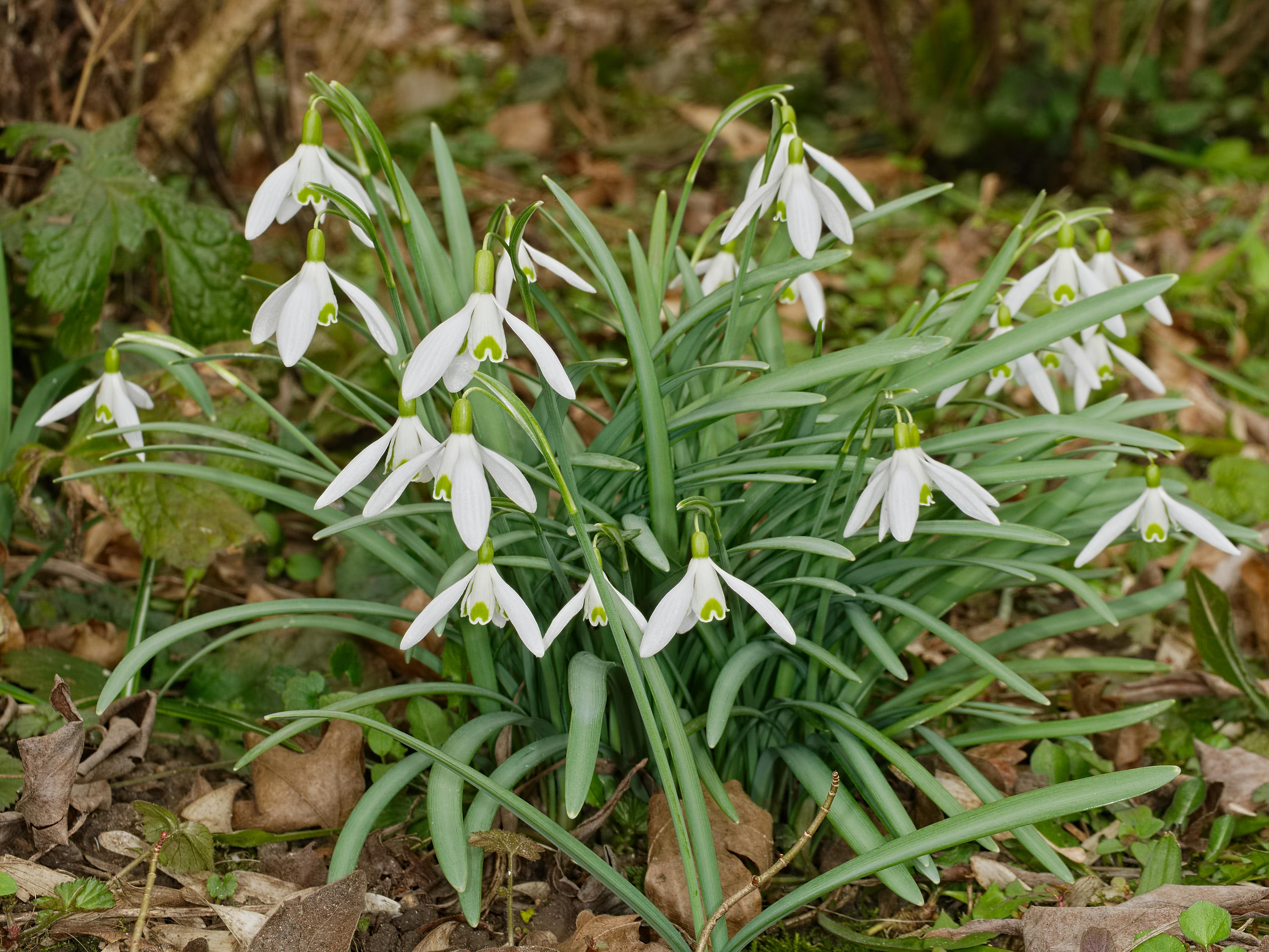
The common snowdrop can grow up to 20 cm high.
The two leaves arise from an underground bulb and seem to come directly from the ground (basal). They are elongated, narrow and blue-green pruinose.
The stem grows upright and is blue-green.
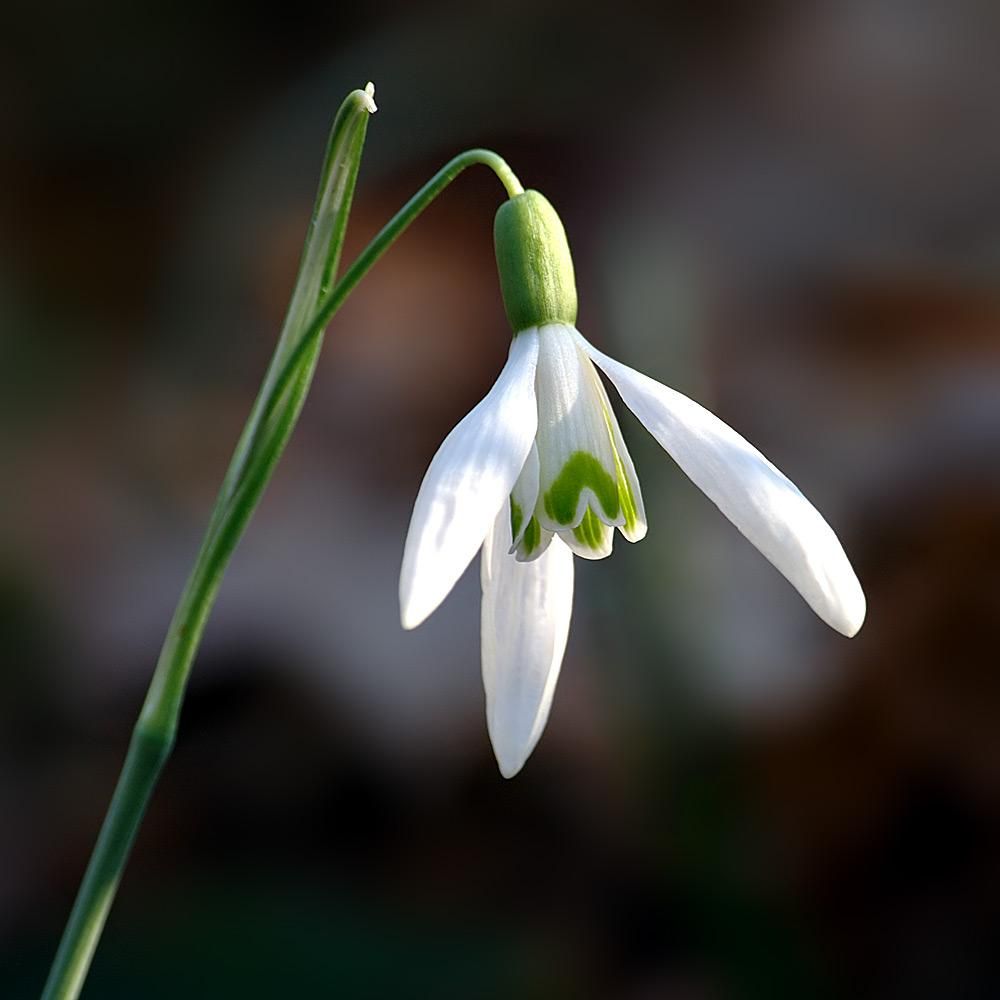
The white flower is composed of three outer and three inner petals. The inner petals are shorter and have a green spot at the tip. The flower hangs on a flower stalk which bears a bract above it.
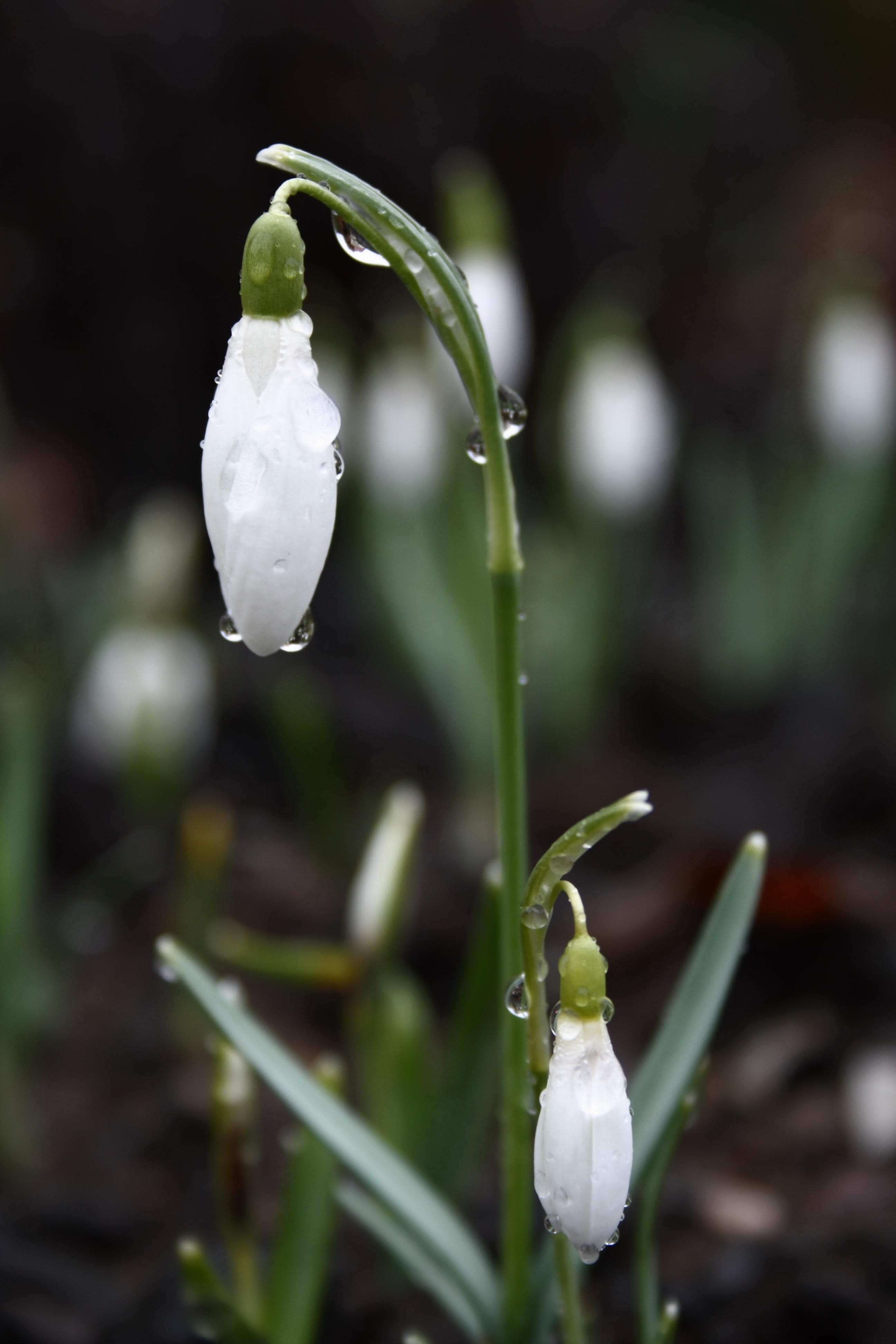
The fruits are green, oval to spherical capsules.
Features
Common snowdrop
Galanthus nivalis
poisonous
single, nodding flower
flower surmounted by bract
In the city
The snowdrop is often planted as an ornamental plant in gardens and parks. It has grown wild and naturalised especially in old orchards and churchyards. However, it also grows in floodplain and deciduous forests and under bushes. It prefers nutrient-rich and moist soils. It is a semi-shade plant.
Fun Facts
It is under nature protection.
The flowers tolerate frost and often push their way through the snow cover to the light.
Insects can also see them well in the snow because they reflect UV light strongly.
The flowering period is from February to March. It lives for several years and generally flowers and fruits annually (perennial plant).
The pollinators are mainly honey bees and butterflies. The pollen trickles down to the clinging bees and butterflies. Before end of flowering, self-pollination takes place.
The seeds are spread by ants.
- Endangerment level Germany: Warning list
- Usage:
Constituents isolated from the plant are used in medicines to treat Alzheimer's disease.
The Lesser Snowdrop occurs wild in southern Germany. In Berlin it was introduced as an ornamental plant and escaped. Here it belongs to the non-native species (neophytes).
The whole plant is poisonous. Symptoms of poisoning include nausea, vomiting and diarrhoea.
Sources
Habitus, Andreas Eichler, CC BY-SA 4.0, https://commons.wikimedia.org/wiki/File:2015.03.08.-01-Mannheim_Vogelstang--Kleines_Schneegloeckchen.jpg

Blüte, André Karwath, CC BY-SA 2.0, https://commons.wikimedia.org/wiki/File:Galanthus_nivalis_close-up_aka.jpg

Blüte, Matthias Graf aka Storke, CC BY-SA 3.0, https://commons.wikimedia.org/wiki/File:Snowdrop_Galanthus_nivalis.JPG

Kammer, P. M. (2016) Pflanzen einfach bestimmen. Schritt für Schritt einheimische Arten kennenlernen, Bern: Haupt Verlag.
Schauer, T., Caspari, C. & Caspari, S. (2015) Der illustrierte BLV-Pflanzenführer für unterwegs. 1150 Blumen, Gräser, Bäume und Sträucher, München: BLV.
Spohn, M., Golte-Bechtle, M. & Spohn, R. (2015) Was blüht denn da? Stuttgart: Franckh Kosmos Verlag.
Page „Kleines Schneeglöckchen“. : Wikipedia, The Free Encyclopedia. Date of last revision: 11.12.2017, 08:20 UTC. URL: https://de.wikipedia.org/w/index.php?title=Kleines_Schneegl%C3%B6ckchen&oldid=171878823 (Accessed: 08.02.2018).
Bundesamt für Naturschutz (n.d.) Artensteckbriefe, URL: http://floraweb.de/pflanzenarten/artenhome.xsql?suchnr=2518& (Accessed: 08.02.2018).