
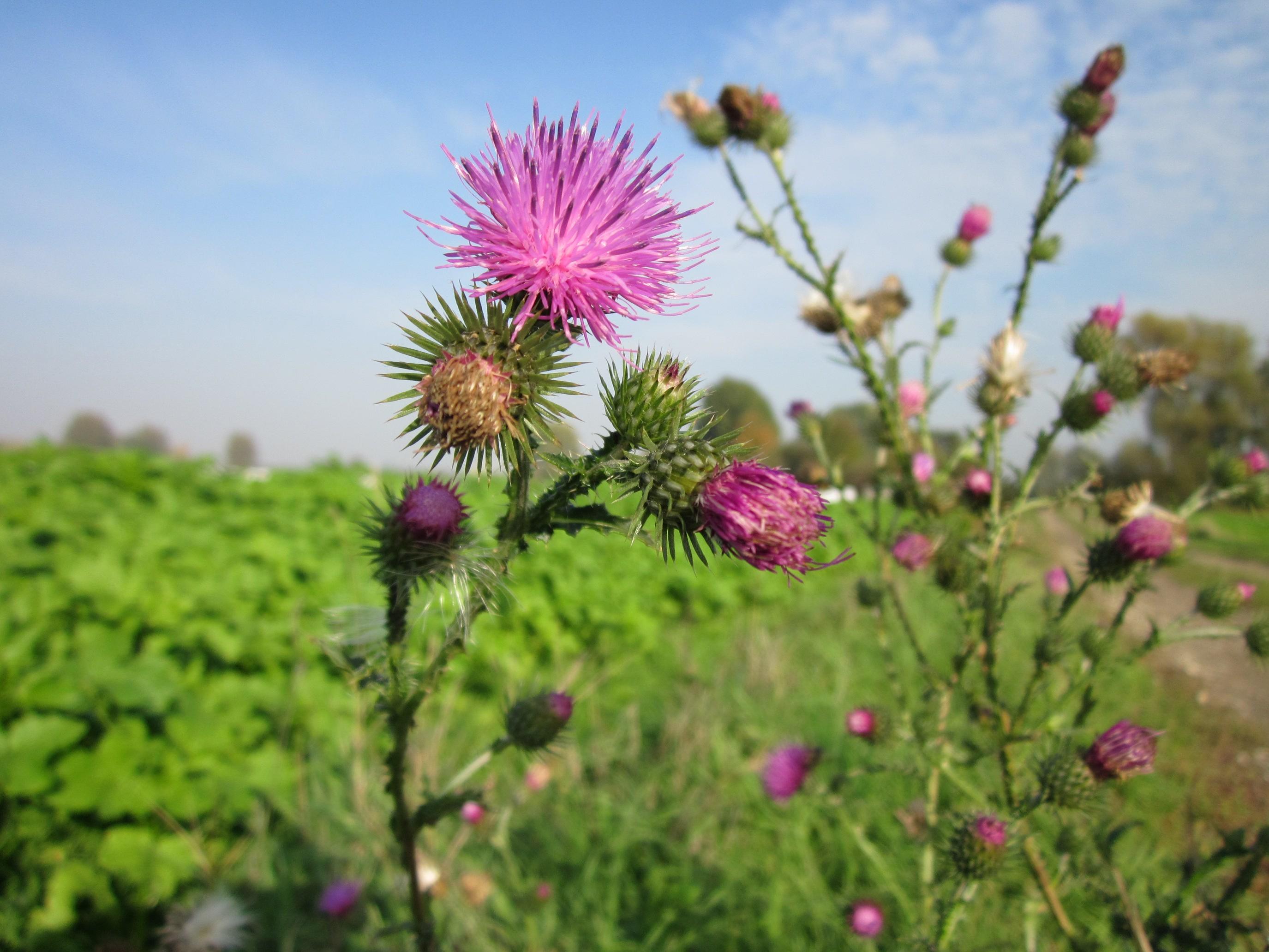
Short Description
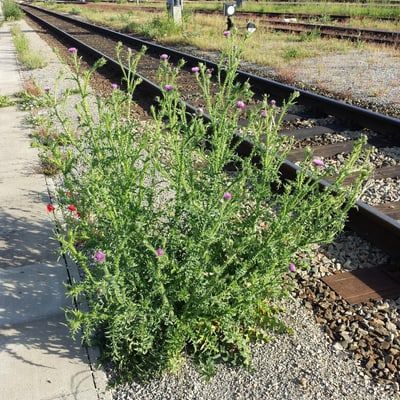
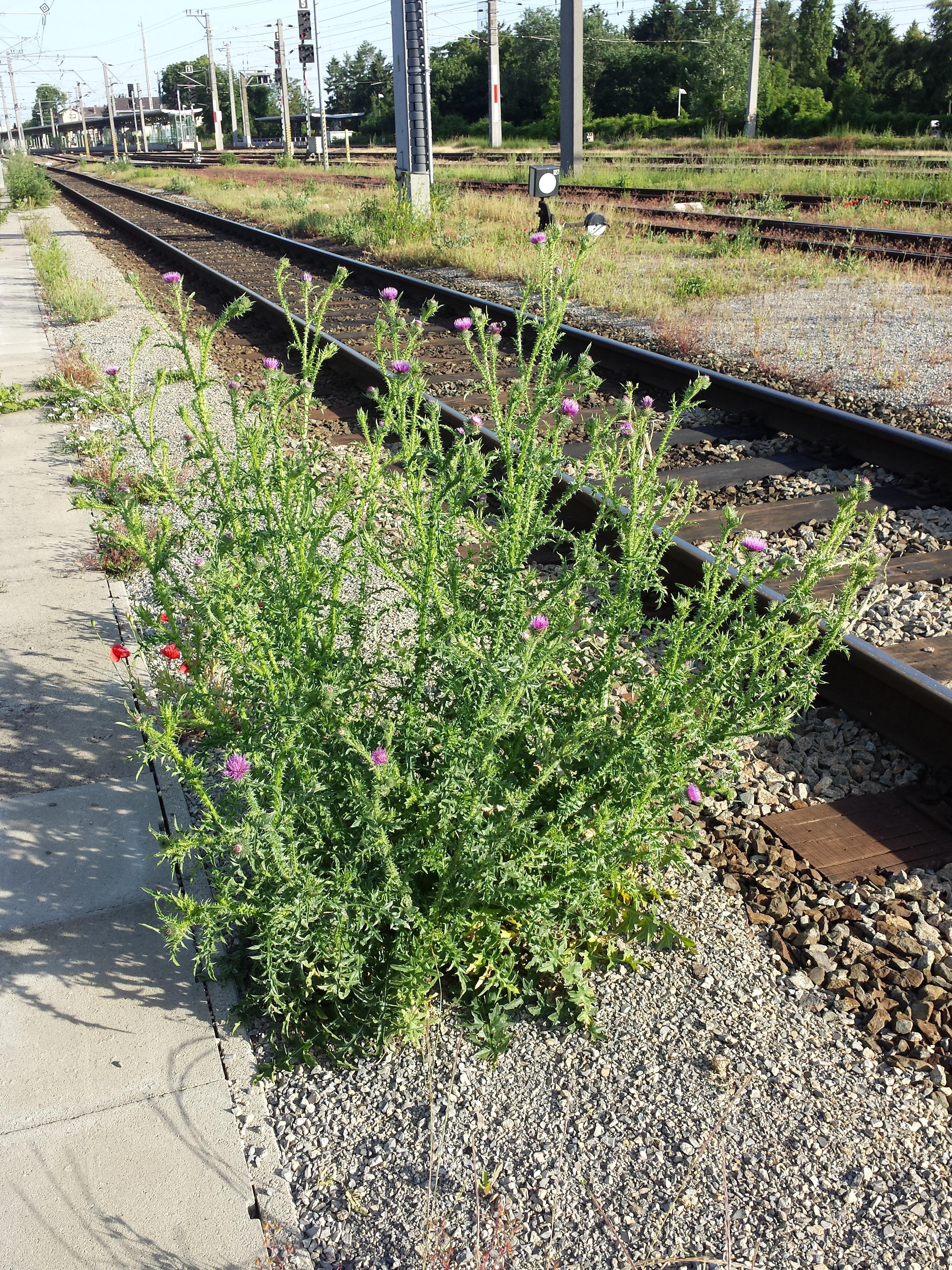
The plumeless thistle can grow up to 1.2 m tall.
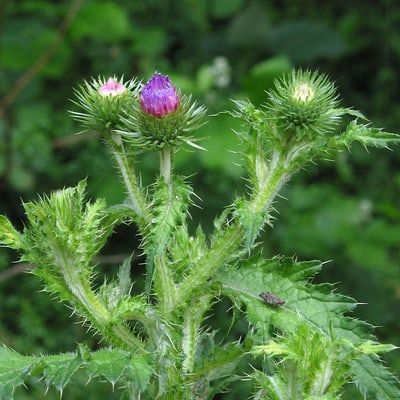
The leaves are deeply pinnate (feather-like appearance) and spiny.
The upright stem is generally highly branched and twisted with spiny wings.
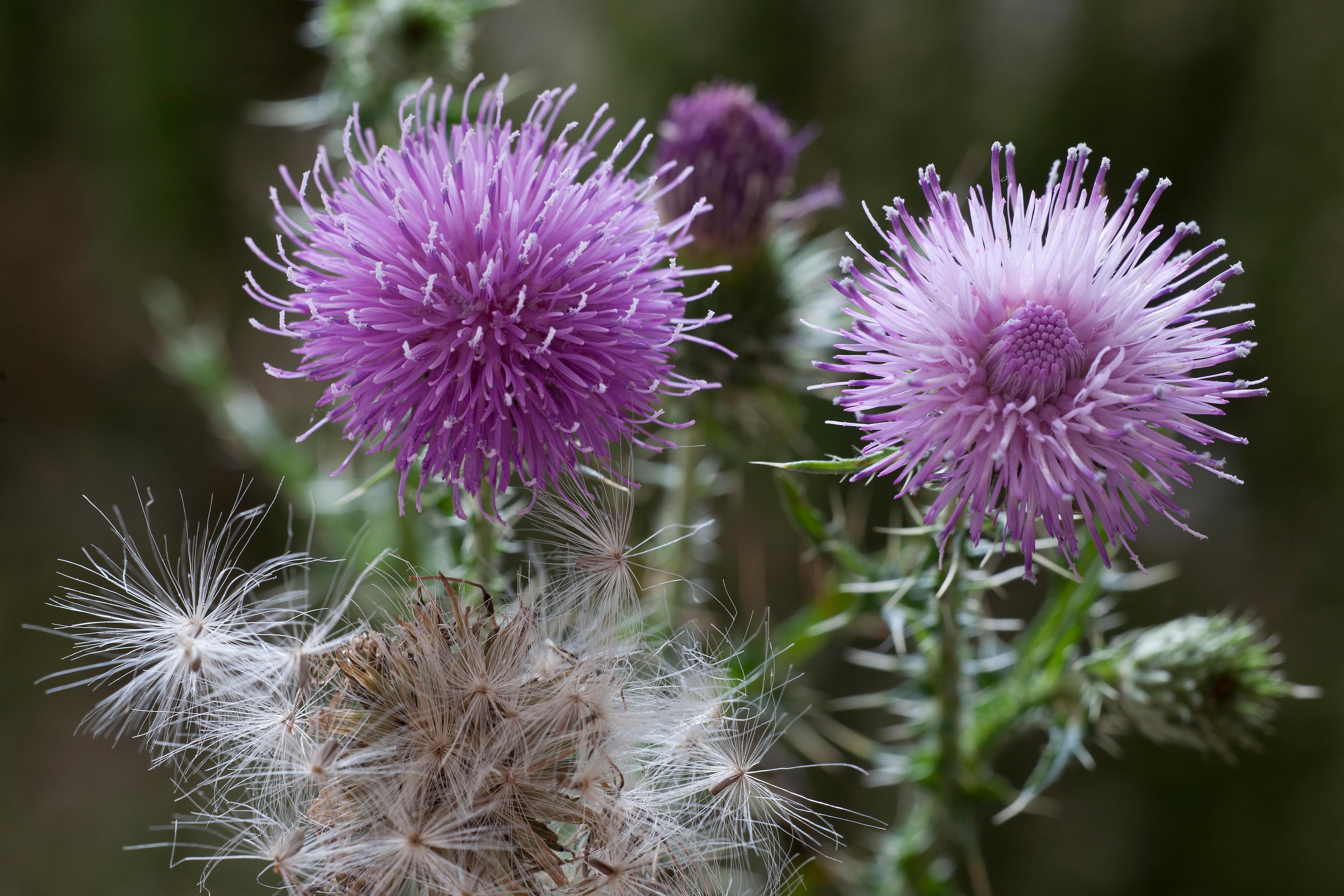
At first glance, the flower head can be mistaken for the flower itself. But it is a pseudanthium (“false flower”). It consists of numerous individual light-purple tubular florets.
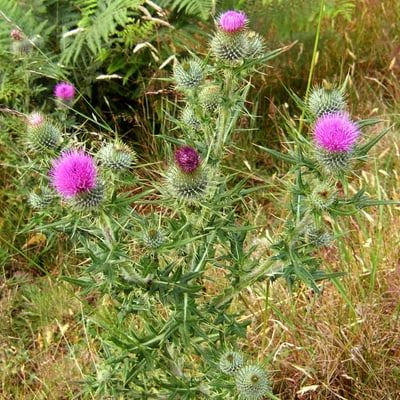
The seeds are small nut fruits with a ring of feathery hairs.
Features
Plumeless thistle
Carduus acanthoides
purple-red flowers
spiny stem
In the city
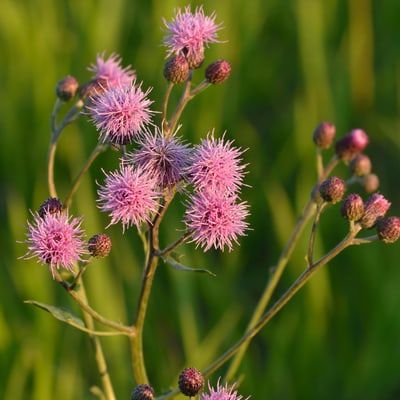
In an urban environment, the plumeless thistle is often found in open weed fields, paths, rubble or loading sites.
It is a synanthrope (ecologically associated with humans). Sites newly created by humans such as cultivated fields and paths were beneficial to its proliferation.
Fun Facts
The peeled root is edible in the first year.
It flowers from June to October.
Pollination is carried out by bees and bumblebees.
The fruits are spread by the wind.
- Endangerment level Germany: not endangered
The thistle is considered a symbol of fortitude.
Its young shoots and peeled stalks can be eaten raw.
Sources
Blütenstand, AnRo0002, CC0 1.0, https://commons.wikimedia.org/wiki/File:29121022Wegdistel_Hockenheimer_Rheinbogen3.jpg?uselang=de

Habitus, Stefan.lefnaer, CC BY-SA 4.0, https://commons.wikimedia.org/wiki/File:Carduus_acanthoides_sl2.jpg

Blütenkörbchen und Früchte, David Bauer, CC BY-SA 3.0, https://commons.wikimedia.org/wiki/File:Weg-Distel,_Carduus_acanthoides.jpg

Page „Weg-Distel“. : Wikipedia, The Free Encyclopedia. Date of last revision: 13.06.2016, 14:28 UTC. URL: https://de.wikipedia.org/w/index.php?title=Weg-Distel&oldid=155259151 (Accessed: 02.08.2016).
Lippert, W. & Podlech, D. (1993) GU Naturführer. Blumen: die wichtigen Blütenpflanzen Mitteleuropas erkennen und bestimmen, München: Gräfe und Unzer Verlag.
Fitter, R., Fitter, A. & Blamey, M. (1986) Pareys Blumenbuch. Wildblühende Pflanzen Deutschlands und Nordwesteuropas, London: Verlag Collins Publishers.
Schauer, T., Caspari, C. & Caspari, S. (2015) Der illustrierte BLV-Pflanzenführer für unterwegs. 1150 Blumen, Gräser, Bäume und Sträucher, München: BLV.