
Short Description
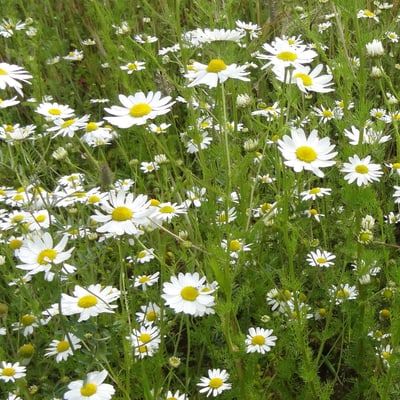
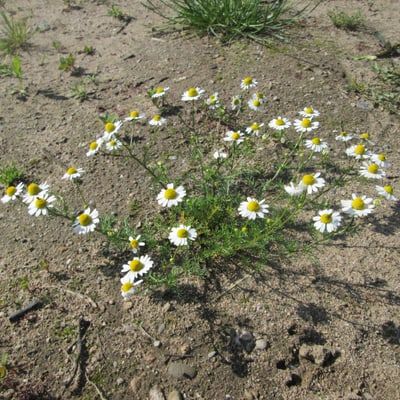
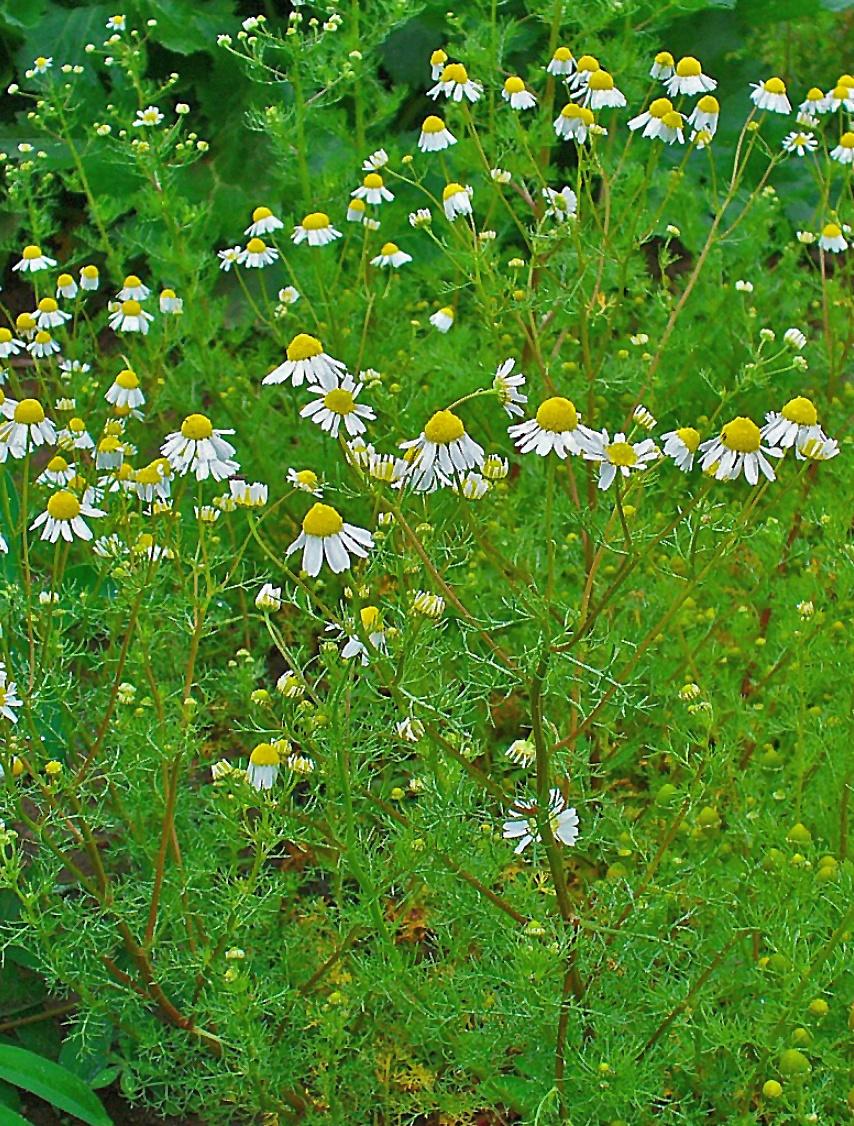
Chamomile can grow to a height of 50 cm. It has an easily recognisable and characteristic scent.
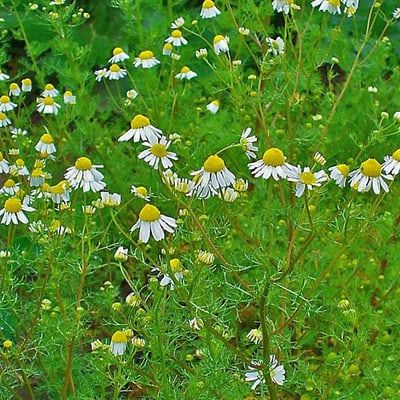
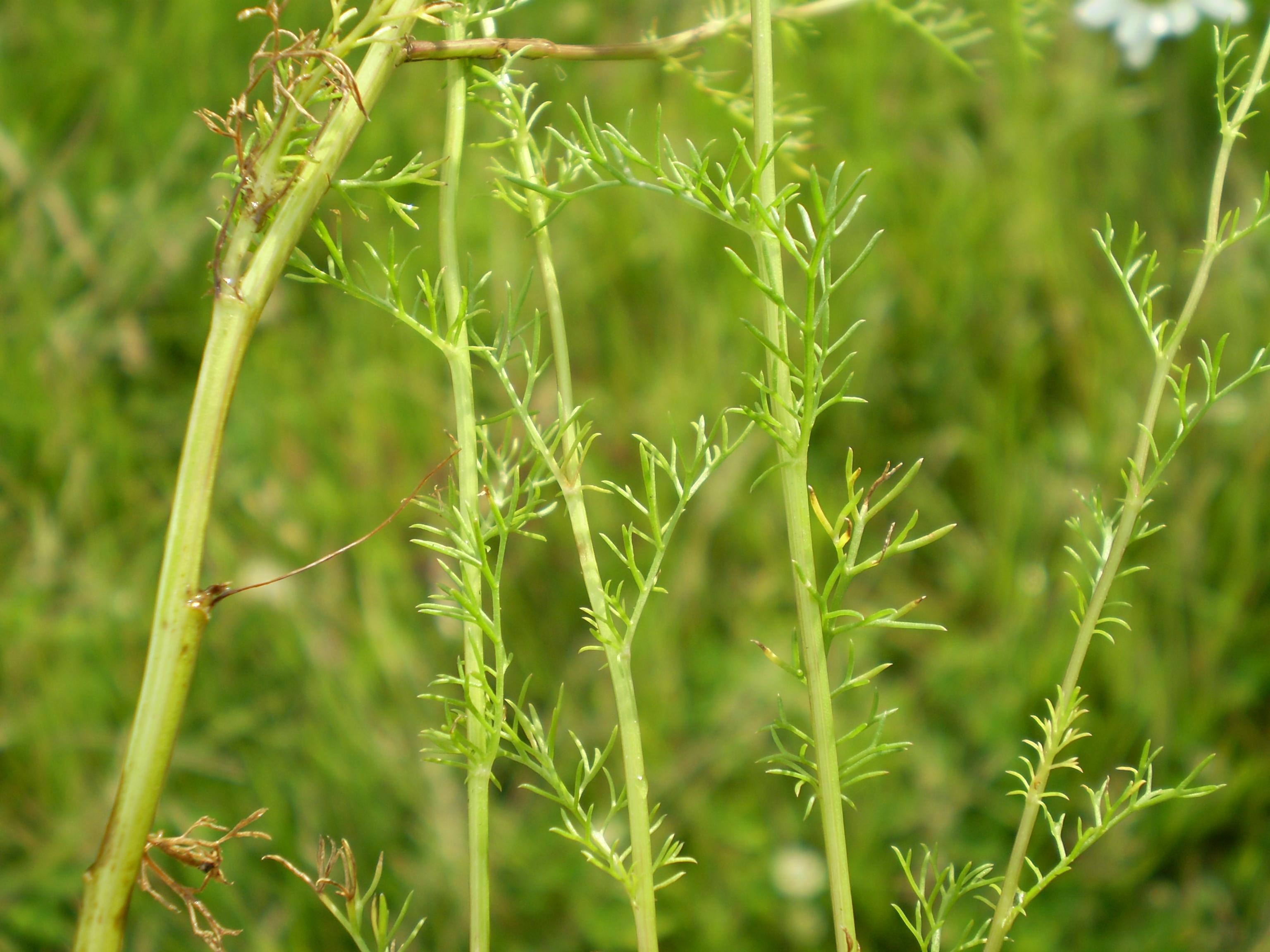
The leaves are 4-7 cm long. They are pinnate, i.e. they are split into several narrow leaflets.
The stem is generally upright and leafed and highly branched in its upper section.
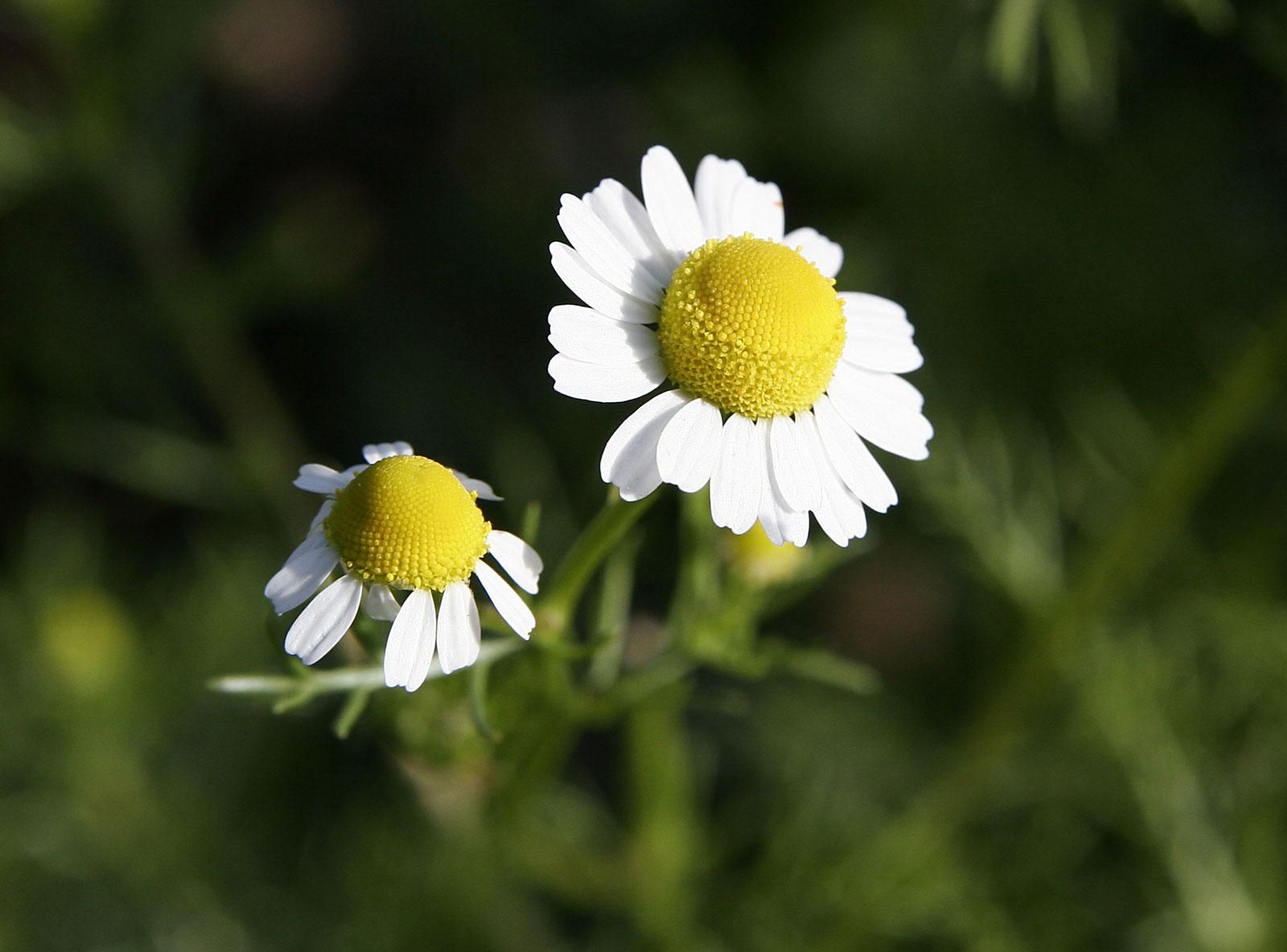
At first glance, the flower head can be mistaken for the flower itself. The pseudanthium (“false flower”) consists of numerous individual white ray florets at the margin and yellow tubular florets in the middle. The flower head is conical and hollow on the inside.
The fruits are small, pale ribbed nutlets.
Features
Chamomile
Matricaria chamomilla
strong characteristic scent
hollow flower head
In the city
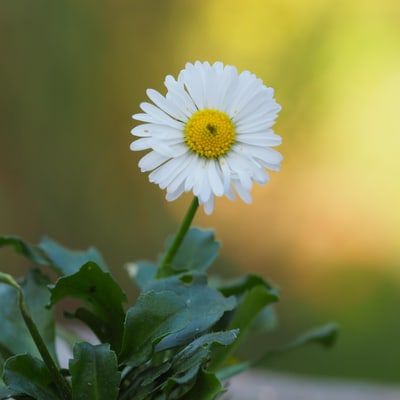
In an urban environment, chamomile can be found mainly near roads and in fields. It prefers fresh sites rich in nutrients.
It is treated as a weed in agriculture. In an urban environment, though, it is often collected and used by people with knowledge of herbs (caution: do not collect close to roads!). The plant can also be grown from seed, but not all soils are ideal.
Fun Facts
Chamomile products are used in skin and hair care.
Essential chamomile oil is dark blue. The colour is the result of certain ingredients in the flower heads.
The flowers have the highest active substance content.
It flowers from May to September.
- Endangerment level Germany: not endangered
- Usage:
Dried flower heads (“chamomile blossom”) are prepared as a tea (infusion) and used as an anti-inflammatory and antispasmodic agent and in the treatment of digestive disorders.
In ancient Egypt, chamomile was worshipped as the flower of the sun god Ra.
In Germanic mythology, chamomile is a symbol of Baldur, the god of light.
Chamomile originates from the Middle East and southern and eastern Europe. It is now found all over Europe.
The essential component of chamomile is chamomile oil mainly produced from the flower heads.
Sources
Blütenstand, fir0002 flagstaffotos.com.au, GFDL 1.2, https://commons.wikimedia.org/wiki/File:Chamomile_flowers.jpg

Blätter, Rob Hille, Gemeinfrei, https://commons.wikimedia.org/wiki/File:Matricaria_recutita_0.3_R.jpg

Habitus, H. Zell, CC BY-SA 3.0, https://commons.wikimedia.org/wiki/File:Matricaria_recutita_001_cropped.jpg

Fleischhauer, S. G., Guthmann, J. & Spiegelberger, R. (2007) Essbare Wildpflanzen. 200 Arten bestimmen und verwenden, Baden und München: AT Verlag.
Schauer, T., Caspari, C. & Caspari, S. (2015) Der illustrierte BLV-Pflanzenführer für unterwegs. 1150 Blumen, Gräser, Bäume und Sträucher, München: BLV.
Scherf, G. (2006) Wildpflanzen neu entdecken, München: BLV.
Schönfelder, I. & Schönfelder, P. (2010) Der Kosmos-Heilpflanzenführer. Über 600 Heil- und Giftpflanzen Europas, Stuttgart: Franckh Kosmos Verlag.
Weymar, H. (1988) Lernt Pflanzen kennen, Leipzig, Radebeul: Neumann Verlag.
Page „Echte Kamille“. : Wikipedia, The Free Encyclopedia. Date of last revision: 20.08.2016, 20:24 UTC. URL: https://de.wikipedia.org/w/index.php?title=Echte_Kamille&oldid=157216243 (Accessed: 23.08.2016).