
Short Description
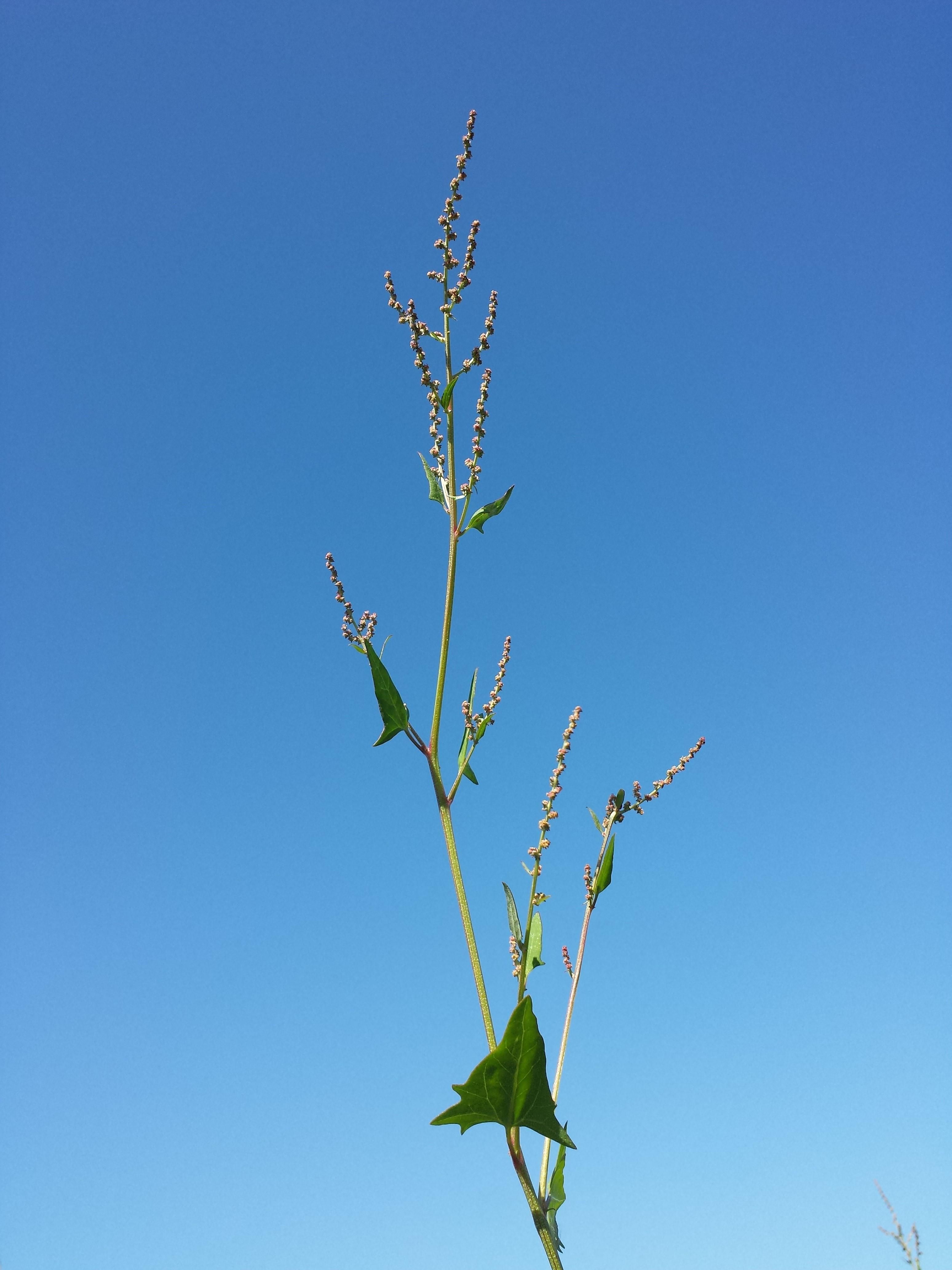
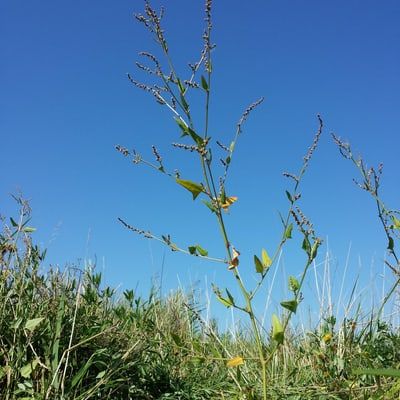
The creeping saltbush can grow up to 90 cm high.
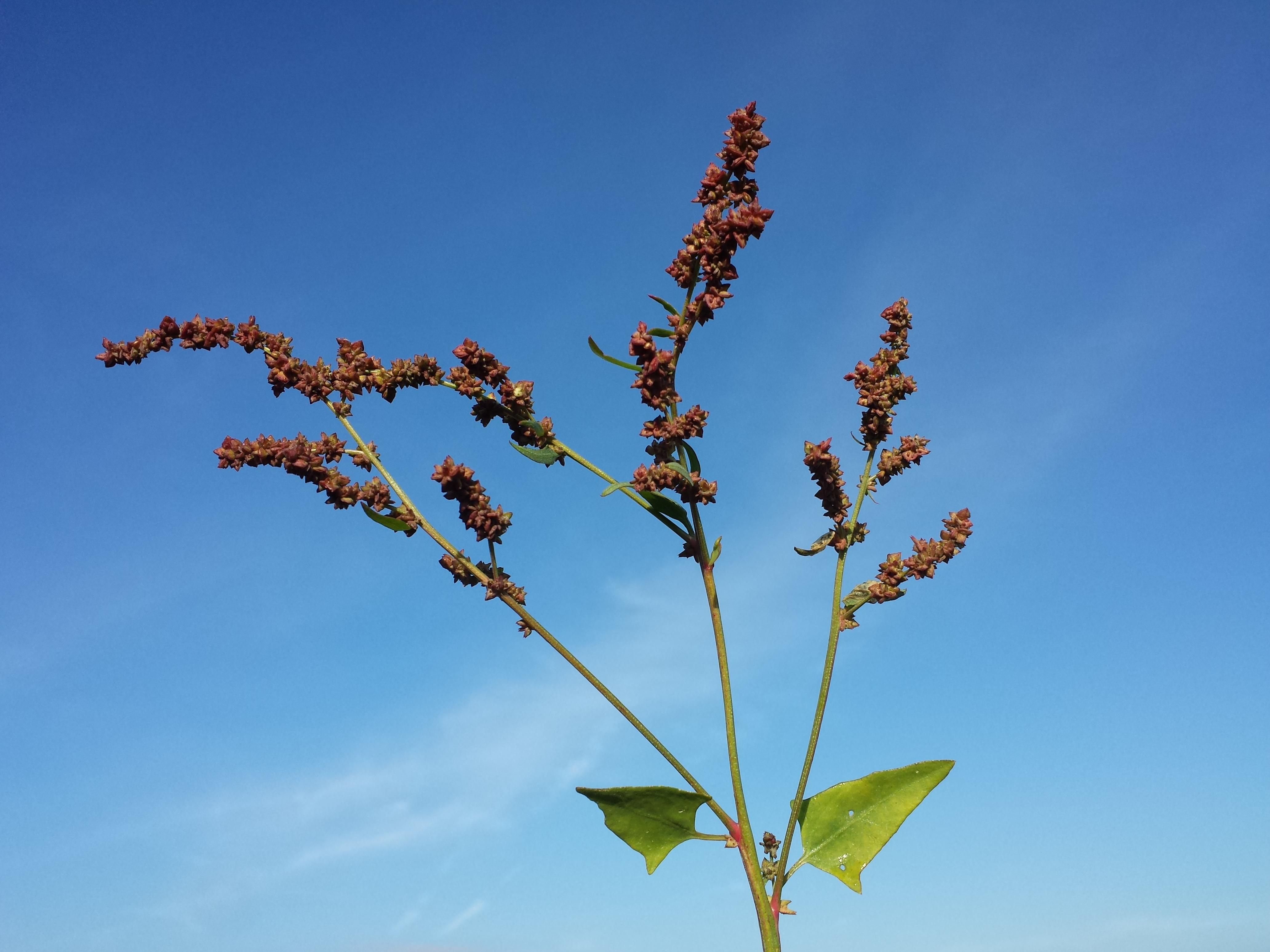
The light to dark green leaves are arrow-shaped. They have a light mealy coating on the underside. They are usually solitary and alternate on the stem. The lowest leaves are opposite each other.
The erect stem is green and ribbed or striped. It is branched in the lower and middle part. The branches have a mealy coating.
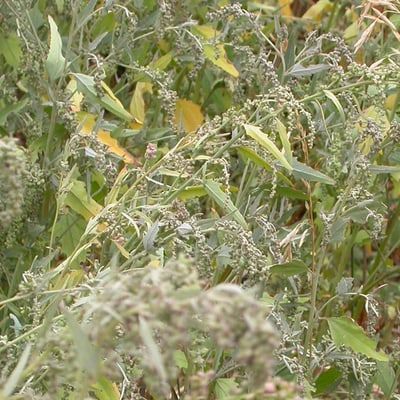
The inconspicuous flowers are in clusters in dense or interrupted spikes on the stem. There are male and female flowers.
The round nut fruits are light brown or reddish-black. They are enclosed by two triangular green bracts. The bracts can turn black when the fruit ripens.
Features
Creeping saltbush
Atriplex prostrata
arrow-shaped leaves
mealy coating on leaf undersides and branches
In the city
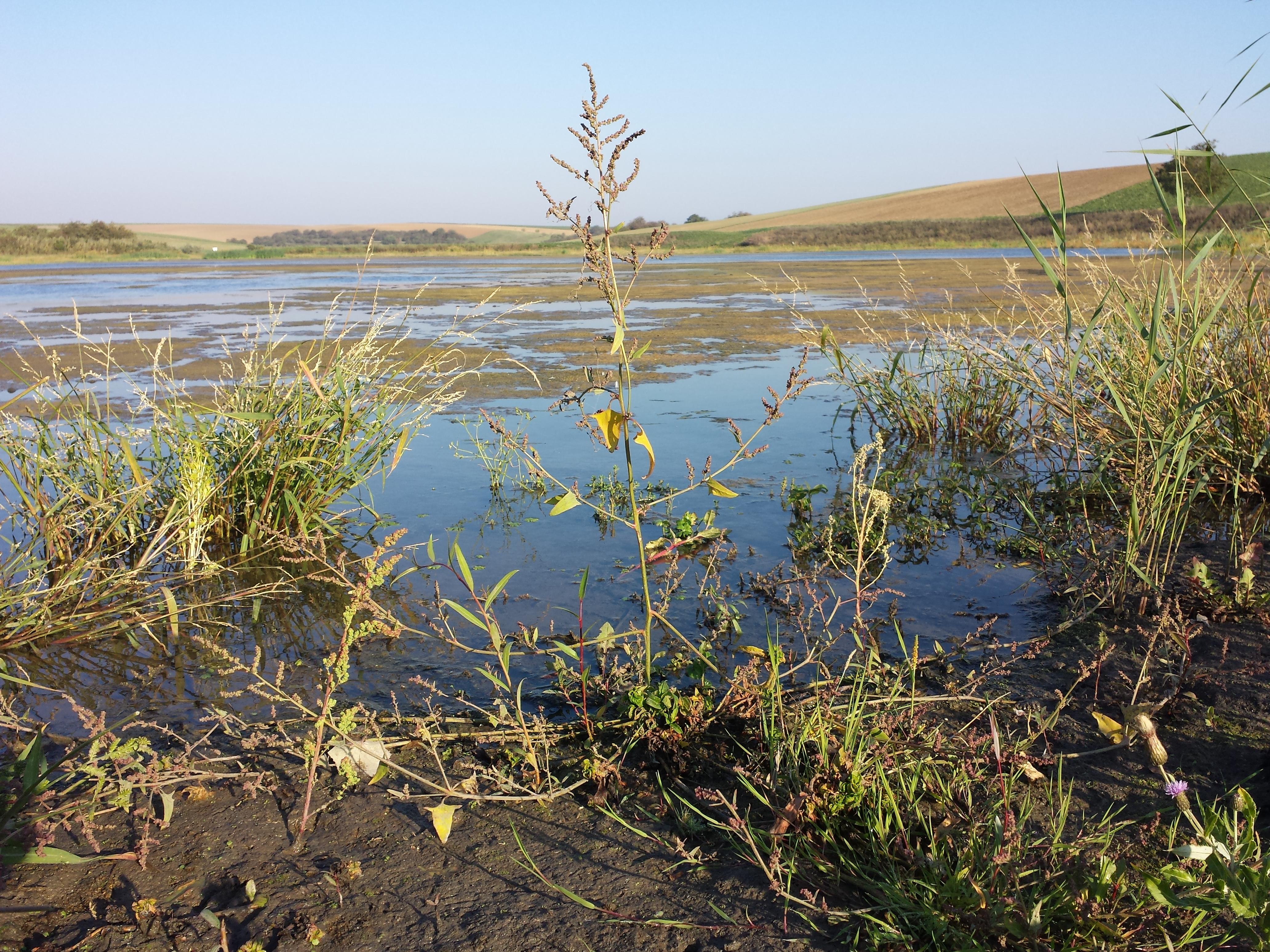
It tolerates high levels of nutrients in the soil and can therefore grow in the city near garbage and debris sites, on roadsides and along ditches. It prefers moist, very nutrient-rich, loose clay and loam soils.
Fun Facts
The seeds can be eaten cooked. When milled, they are suitable for thickening dishes or as a flour additive for bread.
The mealy coating comes from bladder hairs and serves as protection against intense sunlight.
The flowering period is from July to September.
It is an annual plant. This means the plant dies in the first year after the maturation of the seeds.
Pollination is usually by wind, rarely by self-pollination or by insects.
- Endangerment level Germany: not endangered
It spread throughout Europe as a weed in the late Stone Age.
The leaves are edible when cooked and can be prepared like spinach.
Sources
Habitus, Stefan.lefnaer, CC BY-SA 4.0, https://commons.wikimedia.org/wiki/File:Atriplex_prostrata_sl3.jpg

Habitus, Stefan.lefnaer, CC BY-SA 4.0, https://commons.wikimedia.org/wiki/File:Atriplex_prostrata_(s._lat.)_sl39.jpg
_sl39.jpg)
Blüten, Stefan.lefnaer, CC BY-SA 4.0, https://commons.wikimedia.org/wiki/File:Atriplex_prostrata_(s._lat.)_sl34.jpg
_sl34.jpg)
Kammer, P. M. (2016) Pflanzen einfach bestimmen. Schritt für Schritt einheimische Arten kennenlernen, Bern: Haupt Verlag.
Schauer, T., Caspari, C. & Caspari, S. (2015) Der illustrierte BLV-Pflanzenführer für unterwegs. 1150 Blumen, Gräser, Bäume und Sträucher, München: BLV.
Spohn, M., Golte-Bechtle, M. & Spohn, R. (2015) Was blüht denn da? Stuttgart: Franckh Kosmos Verlag.
Page „Spieß-Melde“. : Wikipedia, The Free Encyclopedia. Date of last revision: 08.12.2017, 15:25 UTC. URL: https://de.wikipedia.org/w/index.php?title=Spie%C3%9F-Melde&oldid=171781991 (Accessed: 02.01.2018).