
Short Description
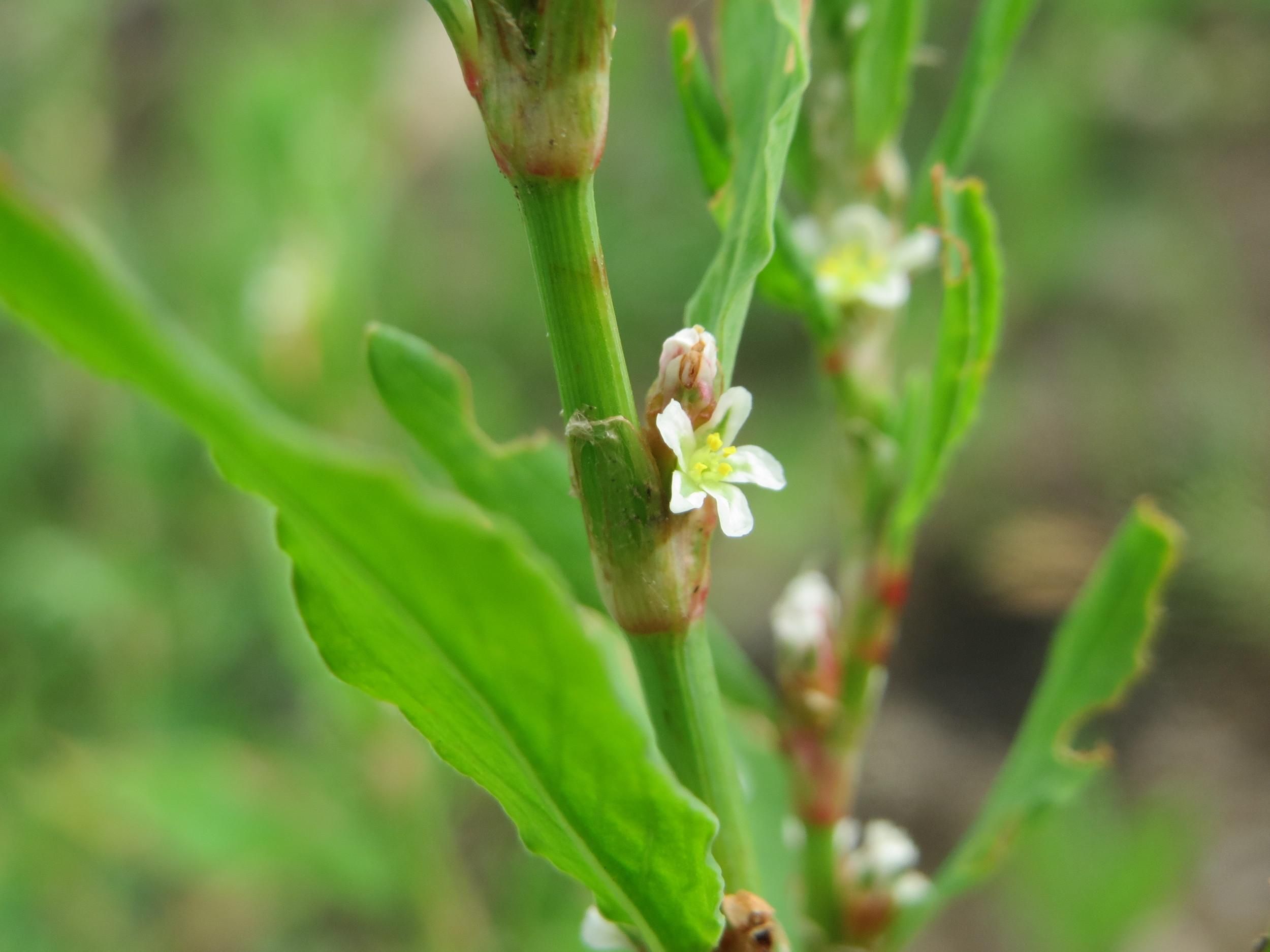
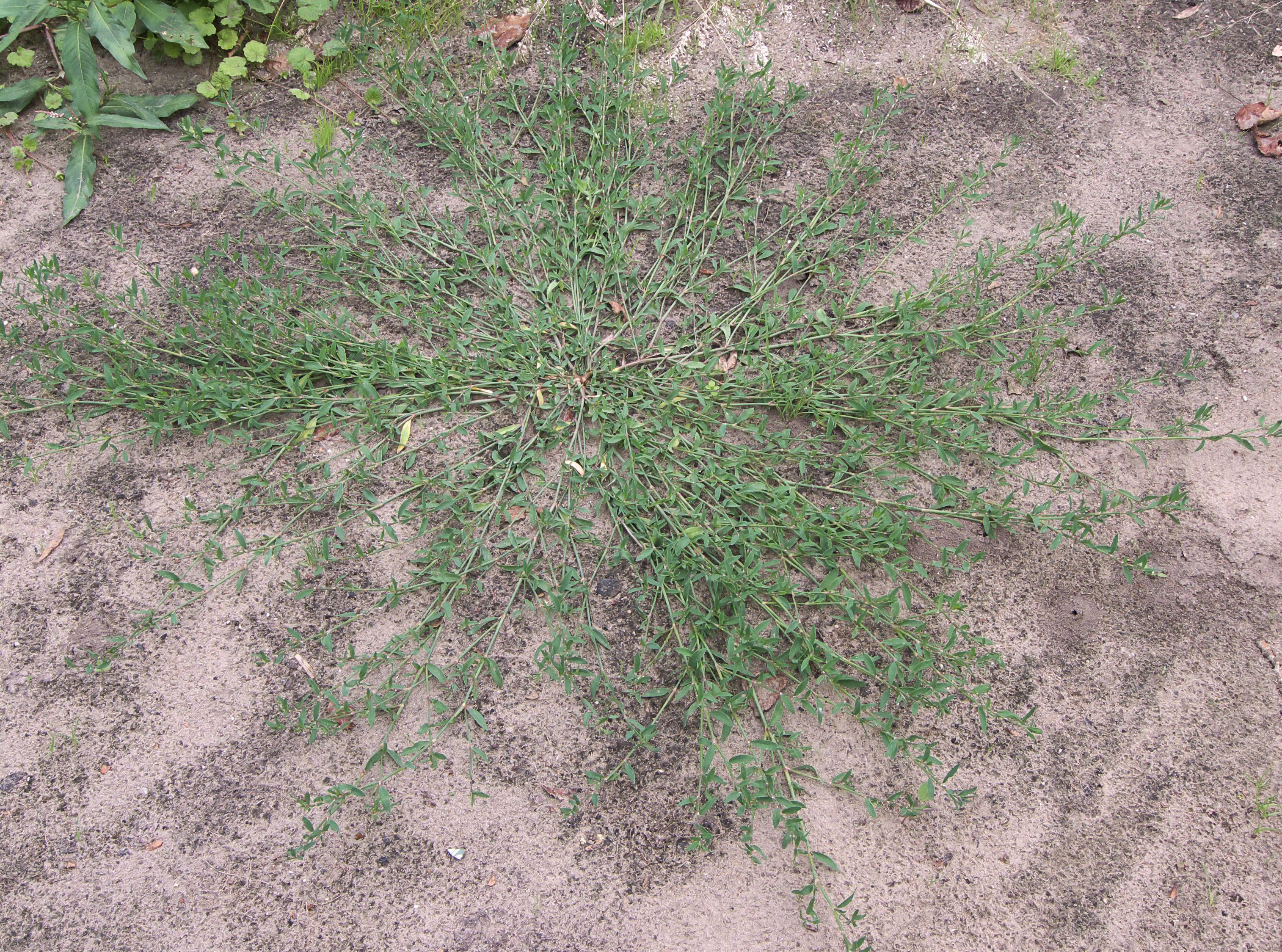
The prostrate knotweed can grow up to one metre tall. It is very diverse.
The leaves are oval to elongated. They grow stalkless on the stem or with a short stalk.
The stem grows prostrate or ascending. It is dark striped.
There are one to three flowers at the base of each leaf, usually with five pink or greenish petals.
The fruits are small, triangular nuts.
Features
Prostrate knotweed
Polygonum aviculare
pink to greenish flowers
dark striped stem
In the city
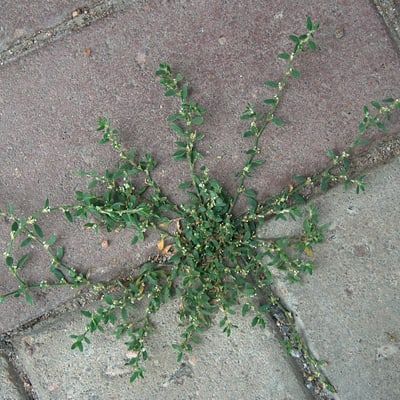
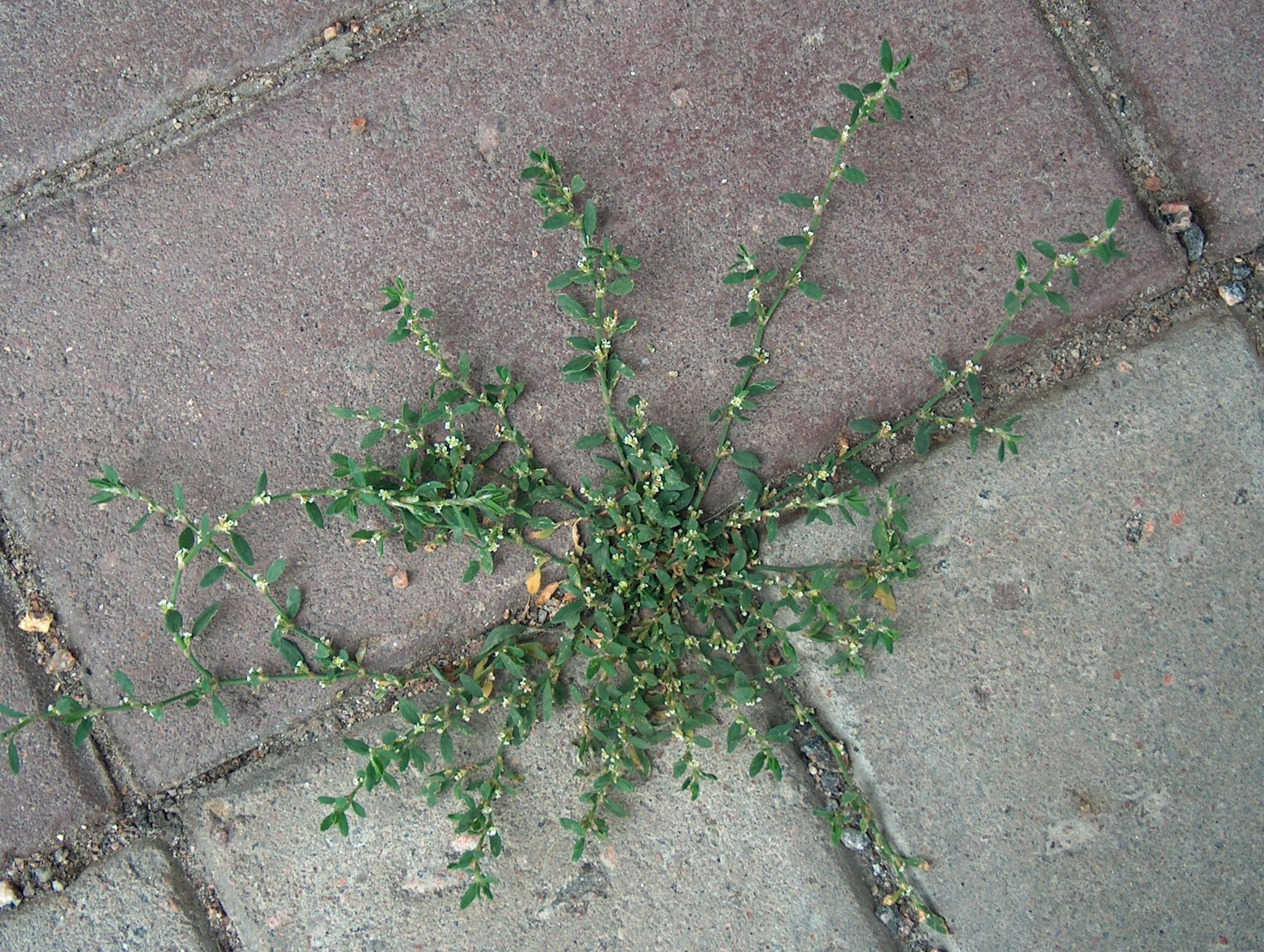
It grows on dry meadows, pastures, lawns and roadsides. It also makes its way through cracks in asphalt and paved areas. It prefers rather dry, nutrient-rich soils and is common.
Fun Facts
The flowering period is from May to November.
It is very tread-resistant.
The fruits are readily eaten by sparrows. They adhere to shoe soles and are thus spread along paths.
It is an annual plant. This means the plant dies after the seeds have ripened.
- Endangerment level Germany: not endangered
At the end of the 19th century, fraudsters praised the silicic acid-containing prostrate knotweed as a secret remedy against tuberculosis. Today it is still occasionally used against respiratory catarrh.
Sources
Blüte, AnRo0002, CC0 1.0, https://commons.wikimedia.org/wiki/File:20160622Polygonum_aviculare2.jpg

Habitus, Anneli Salo, CC BY-SA 3.0, https://commons.wikimedia.org/wiki/File:Polygonum_aviculare_Pihatatar_C_H7247.jpg

Habitus, Rasbak, CC BY-SA 3.0, https://commons.wikimedia.org/wiki/File:Polygonum_aviculare,_Gewoon_varkensgras_plant.jpg

Kammer, P. M. (2016) Pflanzen einfach bestimmen. Schritt für Schritt einheimische Arten kennenlernen, Bern: Haupt Verlag.
Schauer, T., Caspari, C. & Caspari, S. (2015) Der illustrierte BLV-Pflanzenführer für unterwegs. 1150 Blumen, Gräser, Bäume und Sträucher, München: BLV.
Seitz, B., Ristow, M., Meißner, J., Machatzi, B. & Sukopp, H. (2018) Rote Liste und Gesamtartenliste der etablierten Farn- und Blütenpflanzen von Berlin. : Der Landesbeauftragte für Naturschutz und Landschaftspflege / Senatsverwaltung für Umwelt, Klima und Verkehr (eds.) Rote Listen der gefährdeten Pflanzen, Pilze und Tiere von Berlin, URL: https://www.berlin.de/sen/uvk/natur-und-gruen/naturschutz/artenschutz/artenlisten-rote-listen/farn-und-bluetenpflanzen/ (Accessed: 26.03.2021).
Spohn, M., Golte-Bechtle, M. & Spohn, R. (2015) Was blüht denn da? Stuttgart: Franckh Kosmos Verlag.
Bundesamt für Naturschutz (n.d.) Artensteckbriefe, URL: http://floraweb.de/pflanzenarten/artenhome.xsql?suchnr=11776& (Accessed: 20.08.2018).
Page „Vogelknöterich“. : Wikipedia, The Free Encyclopedia. Date of last revision: 04.03.2018, 12:17 UTC. URL: https://de.wikipedia.org/w/index.php?title=Vogelkn%C3%B6terich&oldid=174679269 (Accessed: 20.08.2018).