
Short Description
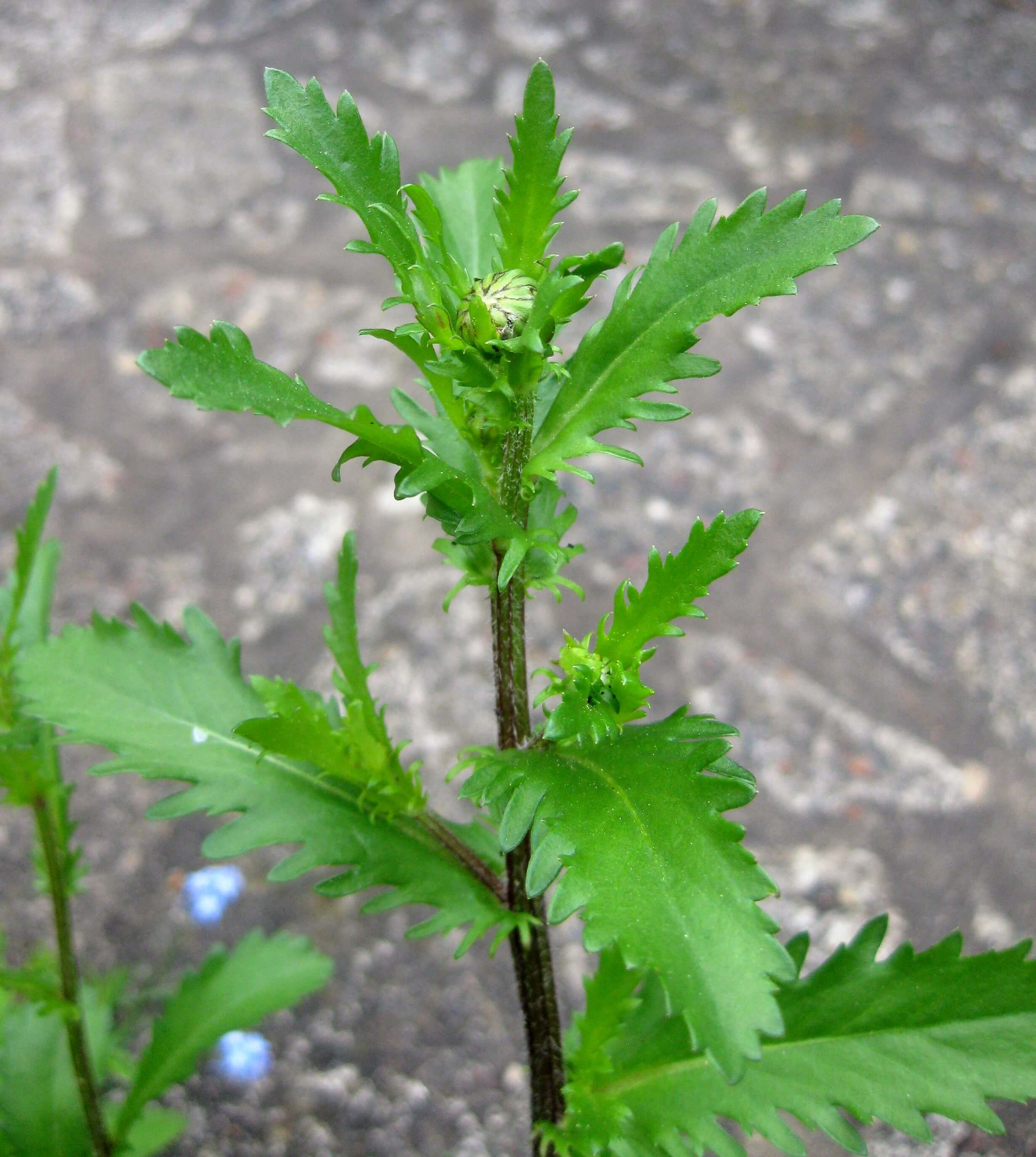
The oxeye daisy can grow up to 80 cm high.
The elongated leaves are usually roughly toothed or lobed. They grow in a basal rosette as well as singly and loosely alternating on the stem.
The erect stem is angular and mostly unbranched.
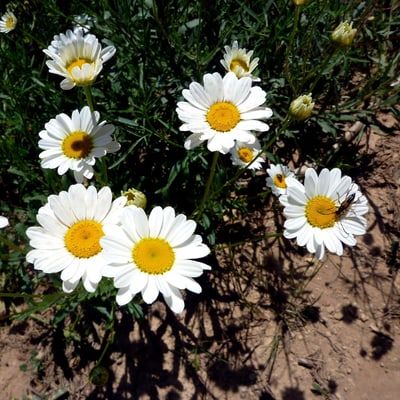
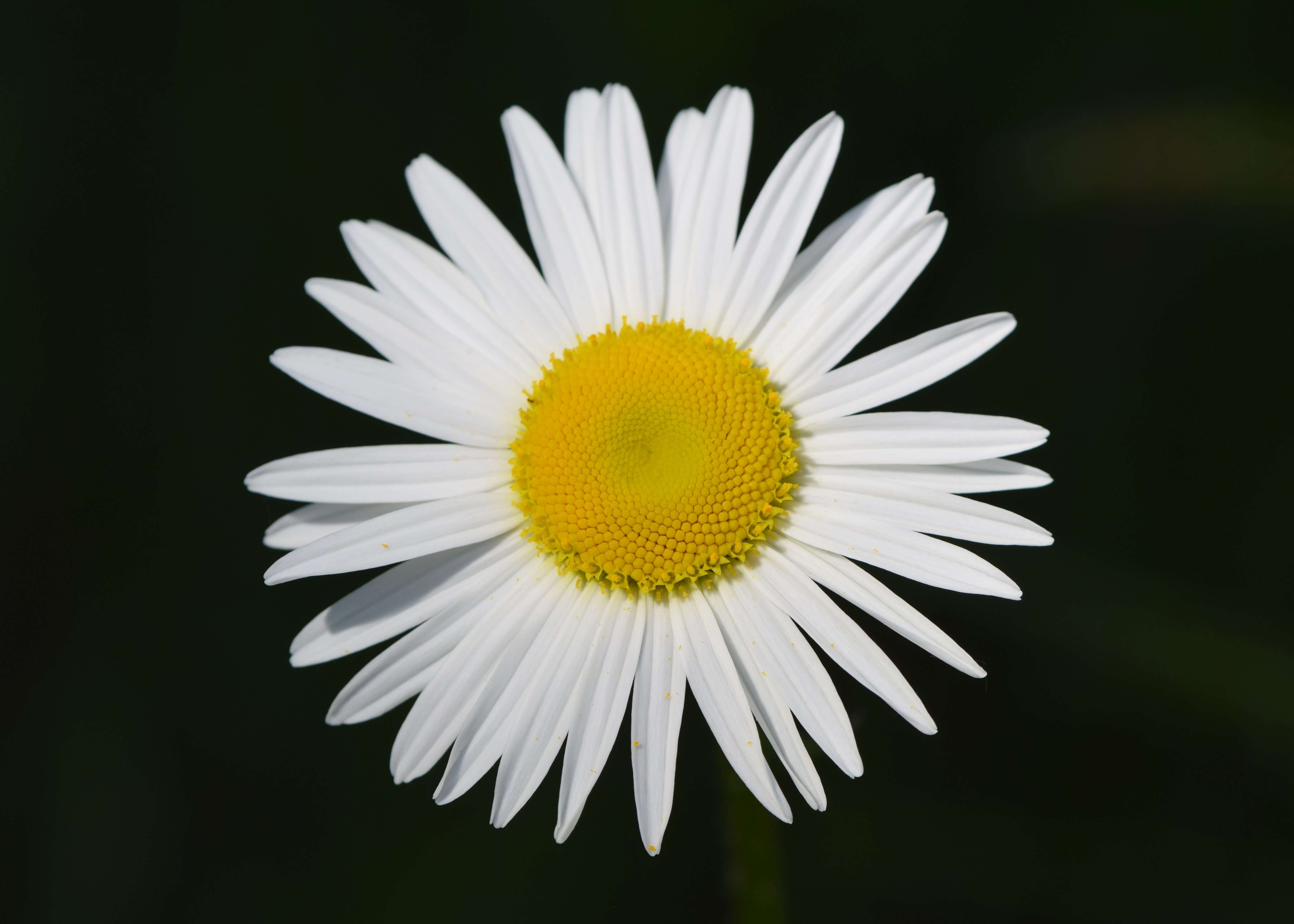
At first glance, the flower head can be mistaken for the flower. The false flower consists of numerous individual white ray florets at the edge and yellow tubular florets in the centre. The flower head is flat.
The plant develops small, ribbed, nut-like fruits.
Features
Oxeye daisy
Leucanthemum vulgare
white flower head with yellow centre
single flower head at the end of the stem
In the city
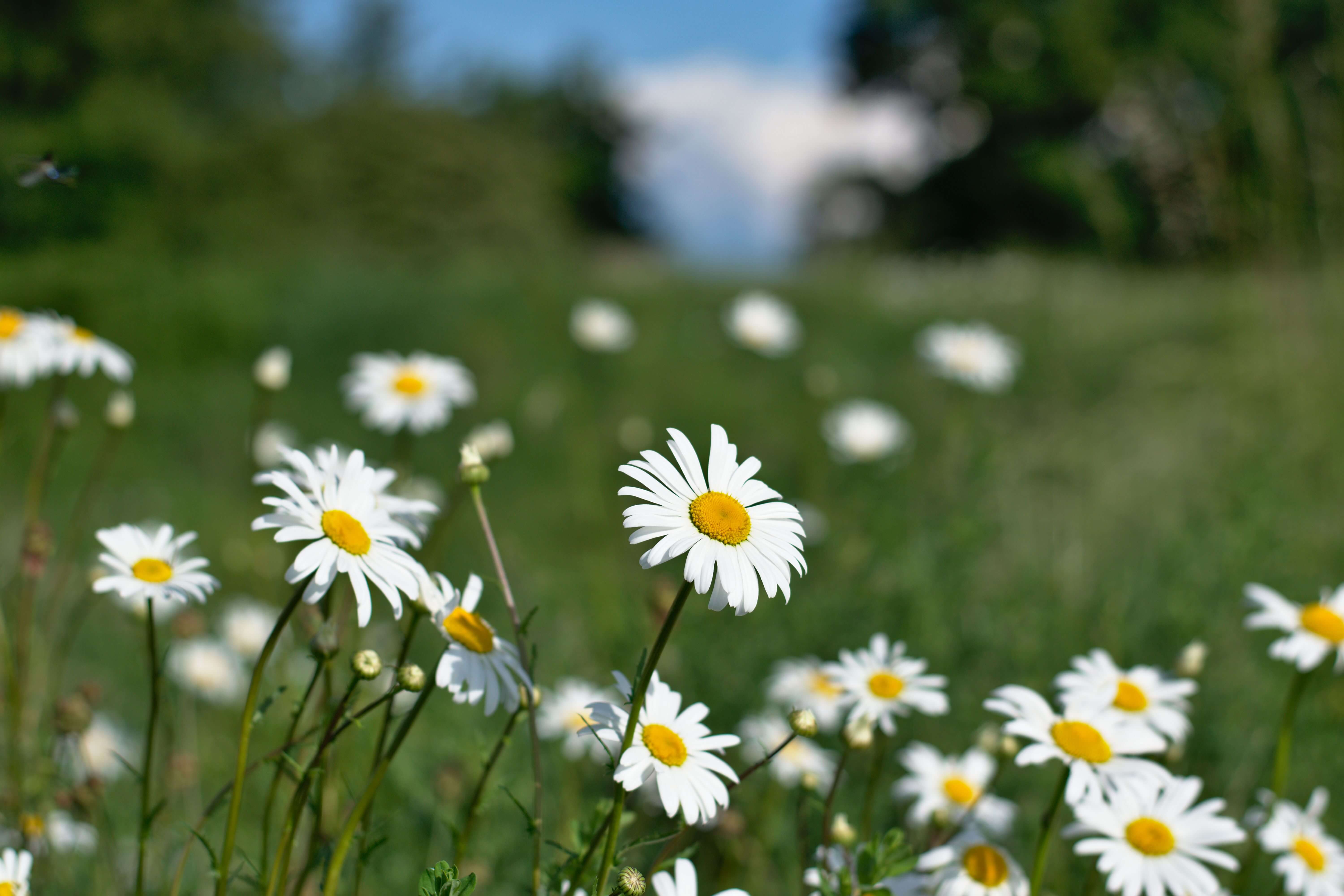
It grows preferentially in meadows, pastures and semi-arid grasslands. It is also a popular ornamental plant and is often used as a garden or pot plant. It can grow in all types of soil, but is not found in very nutrient-rich or cool, wet places.
Fun Facts
On mown lawns it tends to spread over a large area and become rampant.
At the beginning of the 20th century, the so-called daisy days were held to collect donations for charitable purposes. The streets were festively decorated with daisies.
The flowering period is from June to October.
It lives for several years and generally flowers and fruits annually (perennial plant).
The flower head attracts flower visitors such as wild bees, wasps, flies, beetles and butterflies. However, spontaneous self-pollination can also take place.
- Endangerment level Germany: not endangered
- Usage:
The young leaves can be eaten raw as a salad garnish. The young shoots and flower buds can be prepared like vegetables.
It is native and widespread throughout Europe.
It is not poisonous. However, almost all parts of the plant can cause contact allergies.
Sources
Habitus, Wilhelm Zimmerling PAR, , CC BY-SA 4.0, https://upload.wikimedia.org/wikipedia/commons/f/fe/Ruhland%2C_Grenzstr._3%2C_Wiesen-Margerite%2C_Bl%C3%BCtenknospe%2C_Sp%C3%A4tfr%C3%BChling%2C_03.jpg

Habitus, David Rasp, CC BY-SA 4.0, https://upload.wikimedia.org/wikipedia/commons/3/31/20180525Leucanthemum_vulgare.jpg

Blossom, Krzysztof Ziarnek, Kenraiz, CC BY-SA 4.0, https://upload.wikimedia.org/wikipedia/commons/c/ce/Leucanthemum_vulgare_kz05.jpg

Kammer, P. M. (2016) Pflanzen einfach bestimmen. Schritt für Schritt einheimische Arten kennenlernen, Bern: Haupt Verlag.
Schauer, T., Caspari, C. & Caspari, S. (2015) Der illustrierte BLV-Pflanzenführer für unterwegs. 1150 Blumen, Gräser, Bäume und Sträucher, München: BLV.
Spohn, M., Golte-Bechtle, M. & Spohn, R. (2015) Was blüht denn da? Stuttgart: Franckh Kosmos Verlag.
Page „Magerwiesen-Margerite“. : Wikipedia, The Free Encyclopedia. Date of last revision: 19.02.2018, 20:29 UTC. URL: https://de.wikipedia.org/w/index.php?title=Magerwiesen-Margerite&oldid=174198313 (Accessed: 13.03.2018).