
Short Description
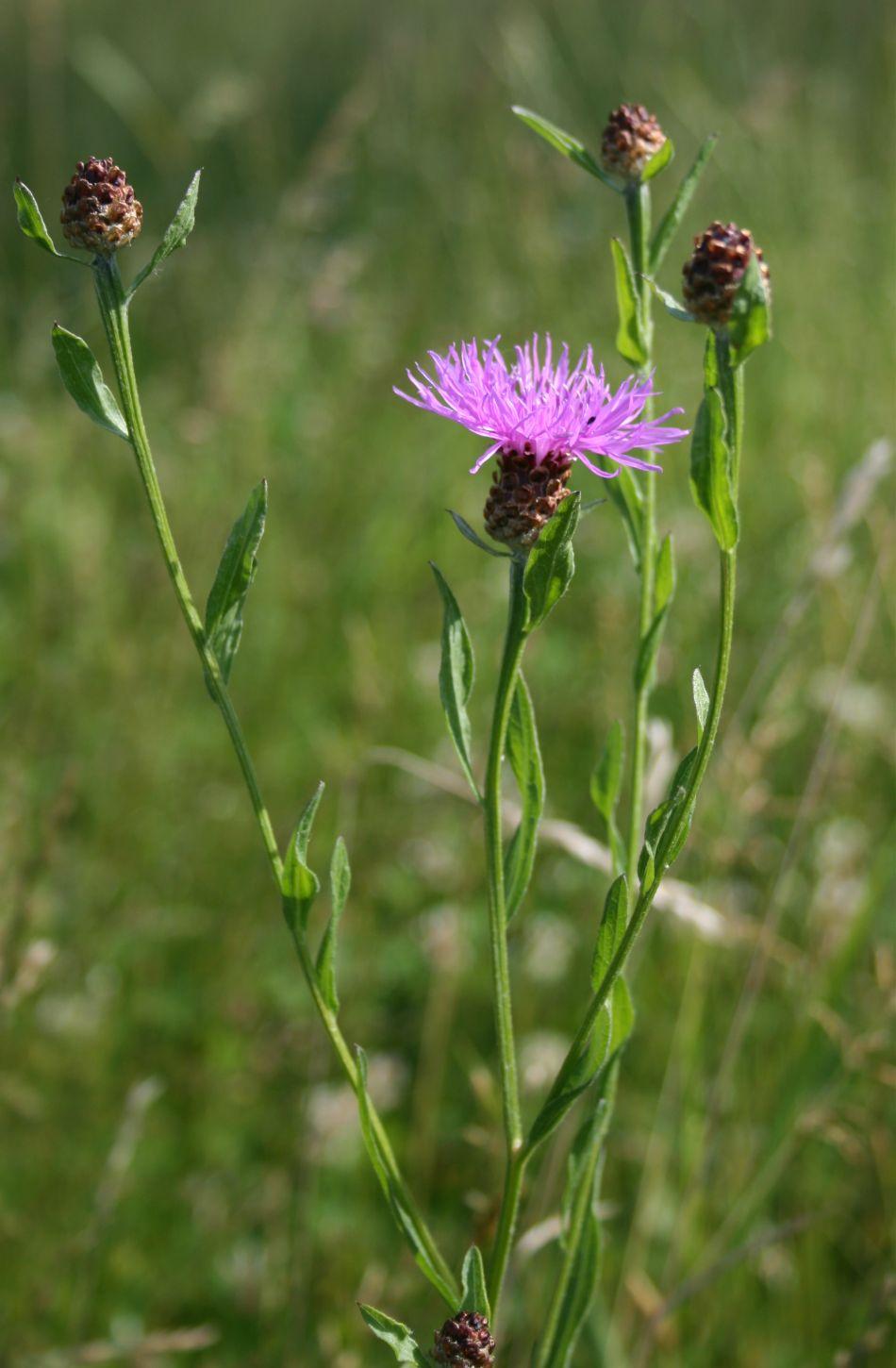
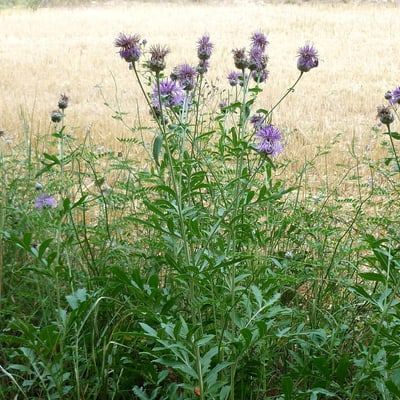
Brown knapweed can grow up to 1.2 m tall.
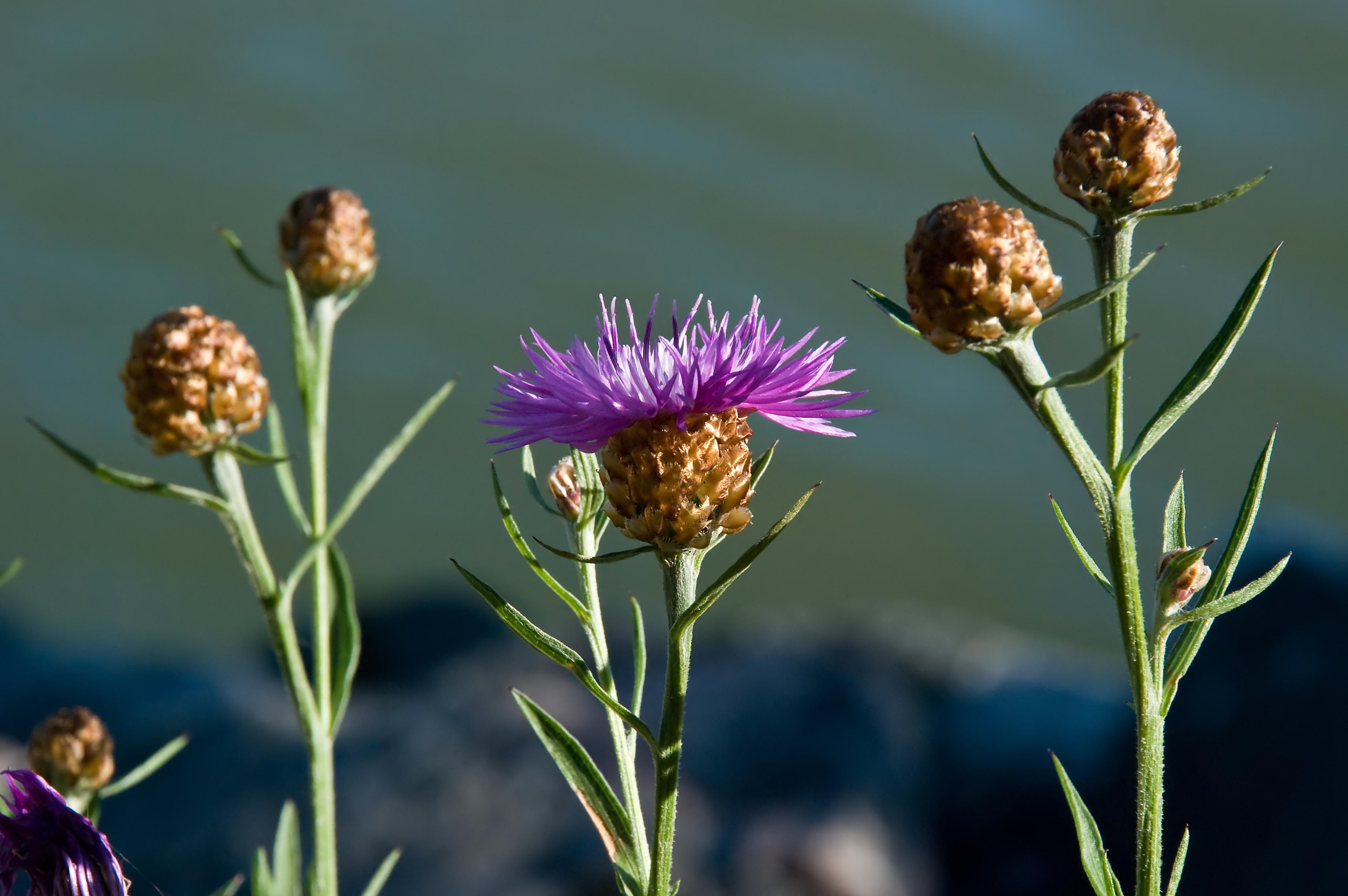
Its leaves are lance-shaped and sometimes divided into individual leaflets (pinnate). The upper leaves grow on the stem.
The stem is angular and rough.
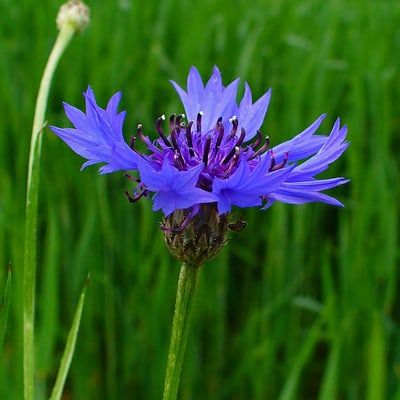
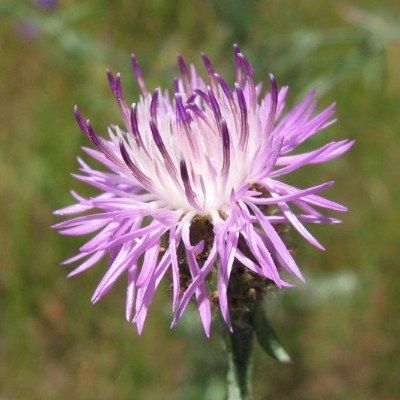
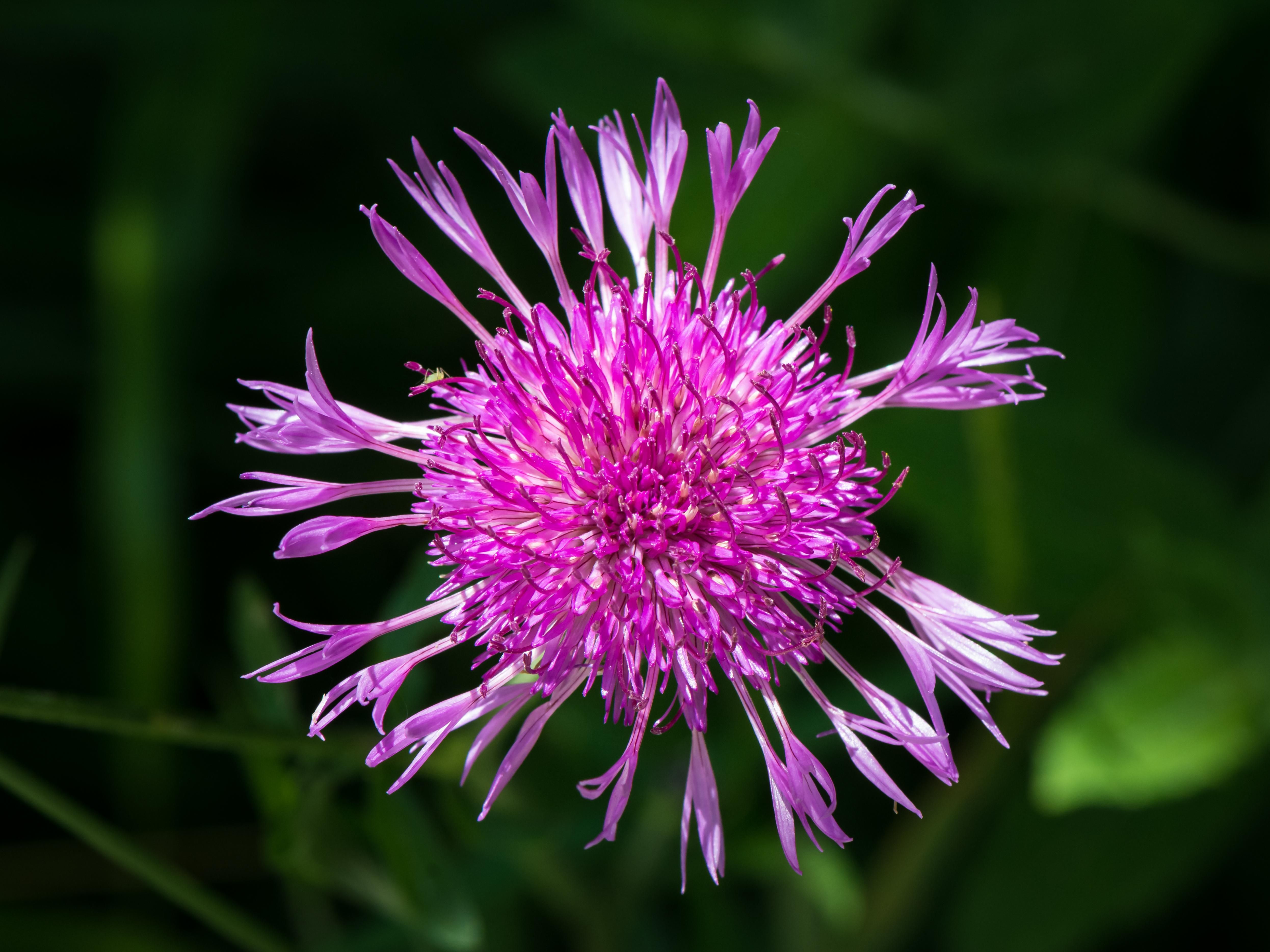
At first glance, the flower head can be mistaken for the flower itself. But it is a pseudanthium (“false flower”). This pseudanthium (“false flower”) is made up from numerous individual purple tubular florets. The marginal florets are larger.
The fruits are small nutlets.
Features
Brown knapweed
Centaurea jacea
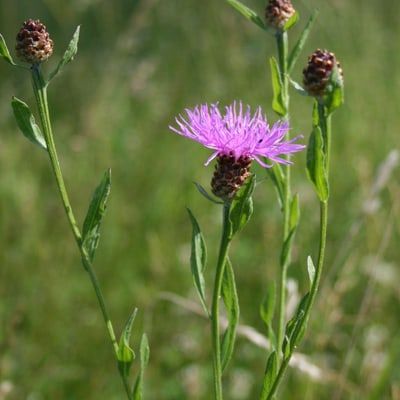
reddish-purple flower heads
eaves entirely or partially divided
In the city
Brown knapweed is rarely seen in an urban environment. Individual specimens may be found in nutrient-poor grassland.
Fun Facts
Brown knapweed can be used as a yellow dye for natural fibres.
It flowers from June to October.
It lives for several years and generally flowers and fruits annually (perennial plant).
Pollination is carried out by insects.
- Endangerment level Germany: not endangered
- Usage:
The leaves were formerly used as a hop substitute in beer brewing.
Flowers are used as tea to treat digestive disorders or conjunctivitis.
Sources
Habitus, Franz Xaver, CC BY-SA 3.0, https://commons.wikimedia.org/wiki/File:Centaurea_jacea_1.jpg

Blütenstand, Uoaei1, CC BY-SA 3.0, https://commons.wikimedia.org/wiki/File:Centaurea_jacea_01.JPG

weibliche Blüten, Markus Koljonen, CC BY-SA 3.0, https://commons.wikimedia.org/wiki/File:Centaurea_jacea_Ruissalo.jpg

Page „Wiesen-Flockenblume“. : Wikipedia, The Free Encyclopedia. Date of last revision: 19.06.2016, 08:58 UTC. URL: https://de.wikipedia.org/w/index.php?title=Wiesen-Flockenblume&oldid=155433955 (Accessed: 05.08.2016).
Fitter, R., Fitter, A. & Blamey, M. (1986) Pareys Blumenbuch. Wildblühende Pflanzen Deutschlands und Nordwesteuropas, London: Verlag Collins Publishers.
Fleischhauer, S. G., Guthmann, J. & Spiegelberger, R. (2007) Essbare Wildpflanzen. 200 Arten bestimmen und verwenden, Baden und München: AT Verlag.
Lippert, W. & Podlech, D. (1993) GU Naturführer. Blumen: die wichtigen Blütenpflanzen Mitteleuropas erkennen und bestimmen, München: Gräfe und Unzer Verlag.
Needon, C. & Petermann, J. (1991) Urania-Naturführer Pflanzen, Leipzig, Jena, Berlin: Urania-Verlag.
Schauer, T., Caspari, C. & Caspari, S. (2015) Der illustrierte BLV-Pflanzenführer für unterwegs. 1150 Blumen, Gräser, Bäume und Sträucher, München: BLV.
Weymar, H. (1988) Lernt Pflanzen kennen, Leipzig, Radebeul: Neumann Verlag.