
Short Description
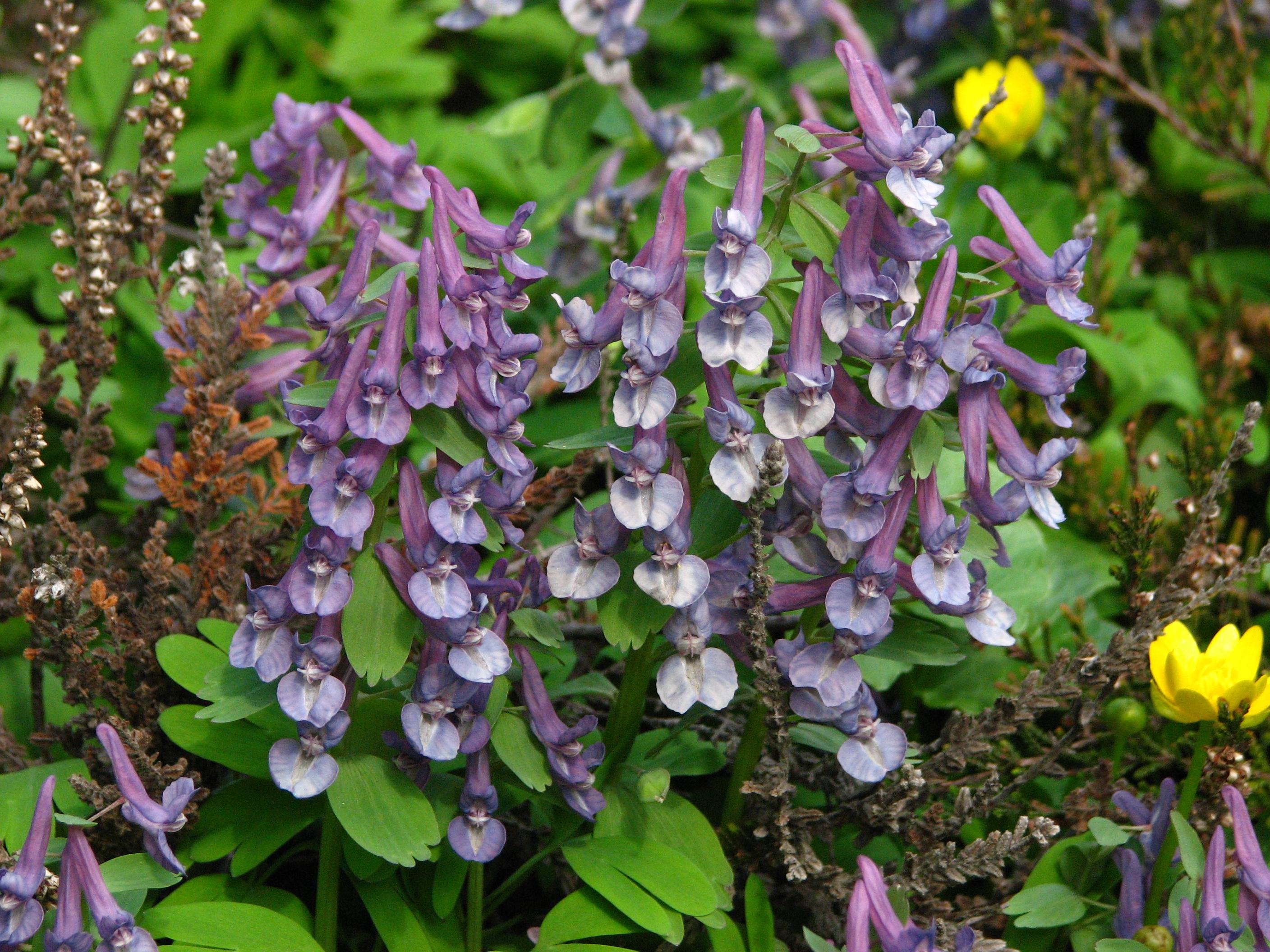
The bird-in-a-bush forms many shoots that are close together. It has brown, spherical root tubers that are never hollow.
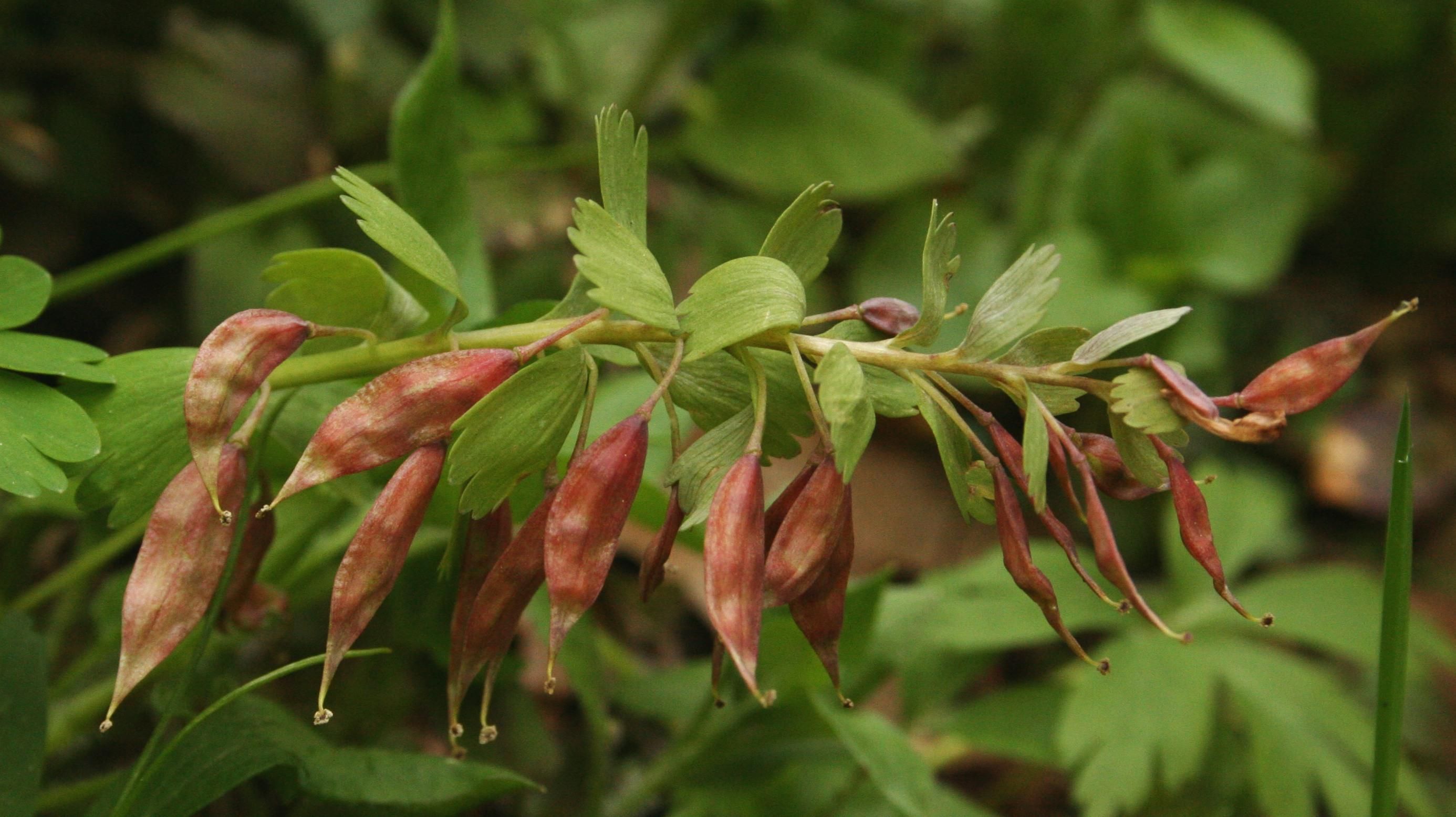
The leaves are blue-green and consist of three deeply incised leaflets. The bracts under the flowers are also incised several times and appear hand-shaped (palmate).
The relatively short, glabrous stem grows erect and unbranched.
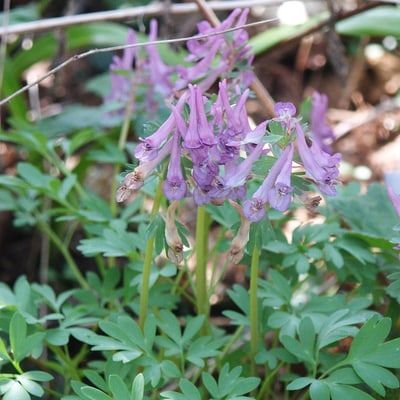
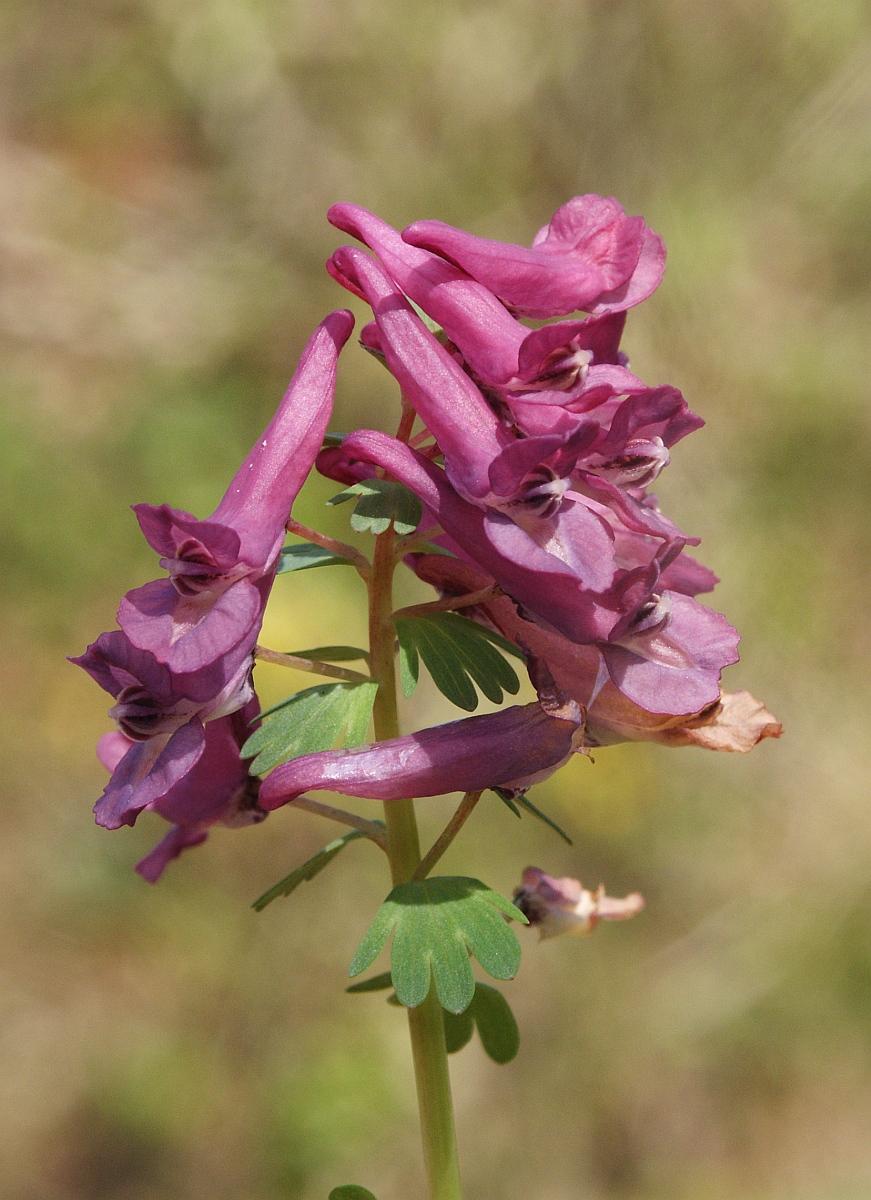
At the end of the stem there is a raceme of up to 20 densely packed flowers that overhang slightly on older plants. The flowers are zygomorphic, are spurred and usually have purple or violet petals that are fused into a tube.
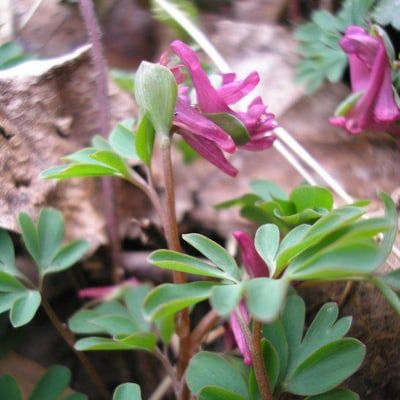
The fruit is an ovoid, septumless pod containing several black seeds. It often has a reddish tinge.
Features
Bird-in-a-bush
Corydalis solida
poisonous
incised bracts
raceme inflorescences of up to 20 flowers
In the city
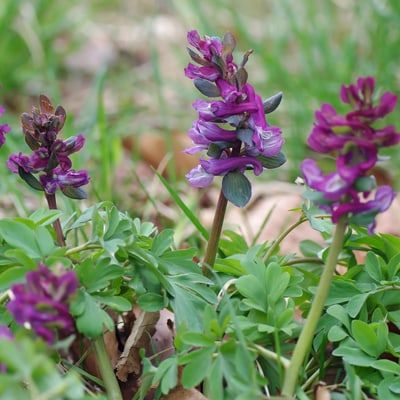
The bird-in-a-bush prefers loose, light and moist loamy soils with a high gauze and low lime content. It grows mainly in dense mixed deciduous forests, forest edges, bushes and in forests near water. It thrives best in partial shade, where it often occurs in larger groups. In the eastern part of southern Germany it is absent in large areas.
Fun Facts
As soon as the seeds fall out, the plant wilts and survives as a tuber.
It is very fragrant in the sun.
The flowers are pollinated by insects. However, only long-trunked insects can reach the nectar. Short-nosed bumblebees therefore often bite the spur from the outside.
The seeds are spread by ants, which drag them into their burrow and consume the oil bodies tagged to the seeds. Afterwards, the seeds are removed from the burrow again and can germinate if conditions are favourable.
Its flowering time is from March to the beginning of May. It usually takes several years before it flowers for the first time.
- Endangerment level Germany: not endangered
The genus name Corydalis is derived from the Greek word korydallos = crested lark. The flower is said to be reminiscent of the special head shape of this bird.
The fingered larkspur contains poisonous alkaloids, which are mainly found in the tuber.
Sources
Blütenstand, Kor!An (Андрей Корзун), CC BY-SA 3.0, https://commons.wikimedia.org/wiki/File:Corydalis_solida_04.JPG

Früchte, Pleple2000, CC BY-SA 3.0, https://commons.wikimedia.org/wiki/File:Ro%C5%9Blina_zielna_001.jpg

Blütenstand, Bernd Haynold, CC BY 2.5, https://commons.wikimedia.org/wiki/File:Corydalis_solida_240406a.jpg

Spohn, M., Golte-Bechtle, M. & Spohn, R. (2015) Was blüht denn da? Stuttgart: Franckh Kosmos Verlag.
Page „Gefingerter Lerchensporn“. : Wikipedia, The Free Encyclopedia. Date of last revision: 16.05.2018, 18:51 UTC. URL: https://de.wikipedia.org/w/index.php?title=Gefingerter_Lerchensporn&oldid=177488469 (Accessed: 16.07.2018).
Seitz, B., Ristow, M., Meißner, J., Machatzi, B. & Sukopp, H. (2018) Rote Liste und Gesamtartenliste der etablierten Farn- und Blütenpflanzen von Berlin. : Der Landesbeauftragte für Naturschutz und Landschaftspflege / Senatsverwaltung für Umwelt, Klima und Verkehr (eds.) Rote Listen der gefährdeten Pflanzen, Pilze und Tiere von Berlin, URL: https://www.berlin.de/sen/uvk/natur-und-gruen/naturschutz/artenschutz/artenlisten-rote-listen/farn-und-bluetenpflanzen/ (Accessed: 26.03.2021).
Page „Horst (Botanik)“. : Wikipedia, The Free Encyclopedia. Date of last revision: 12.05.2019, 08:59 UTC. URL: https://de.wikipedia.org/w/index.php?title=Horst_(Botanik)&oldid=188486015 (Accessed: 26.03.2021).
Bundesamt für Naturschutz (n.d.) Artensteckbriefe, URL: http://floraweb.de/pflanzenarten/artenhome.xsql?suchnr=1675& (Accessed: 16.07.2018).