
Short Description
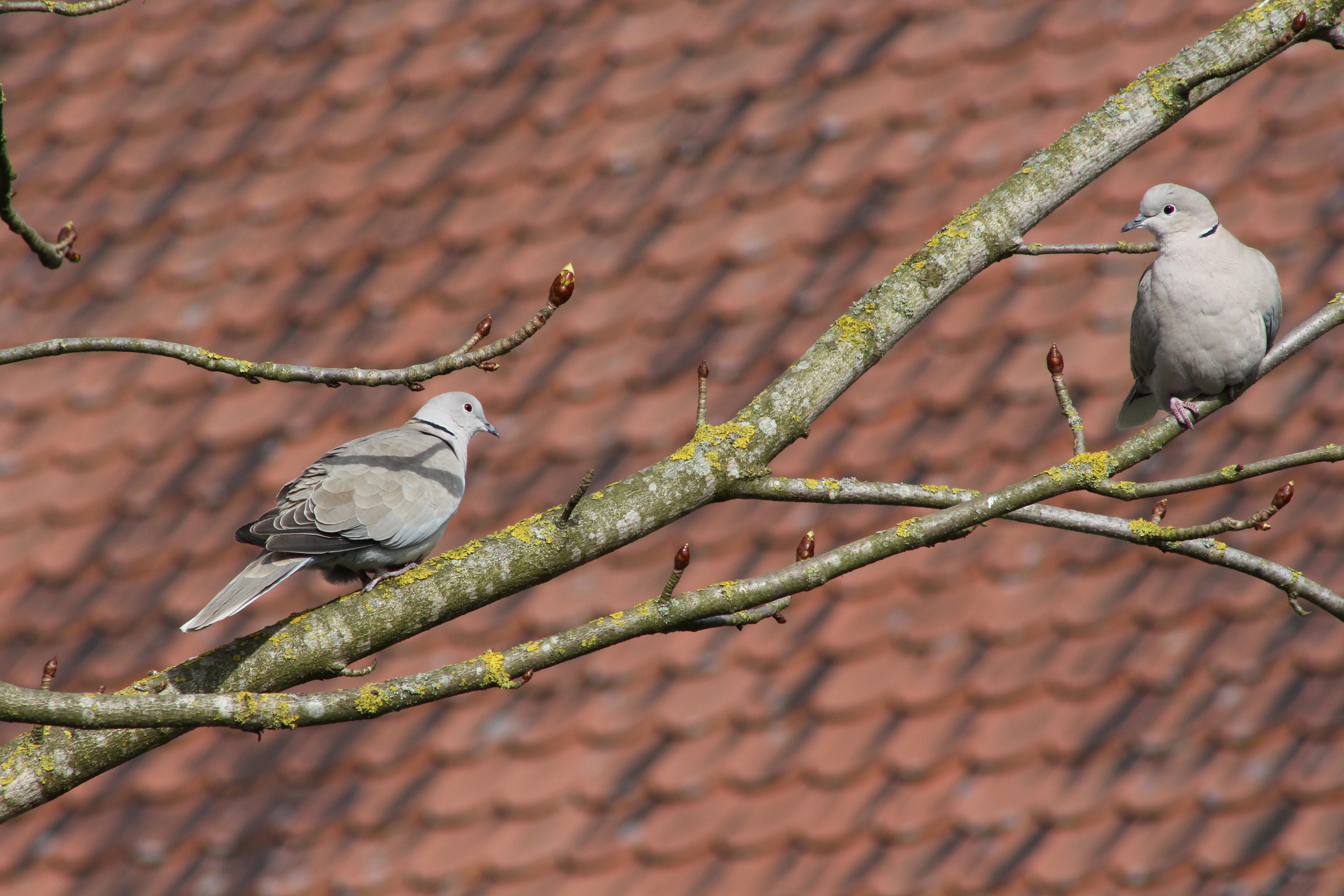
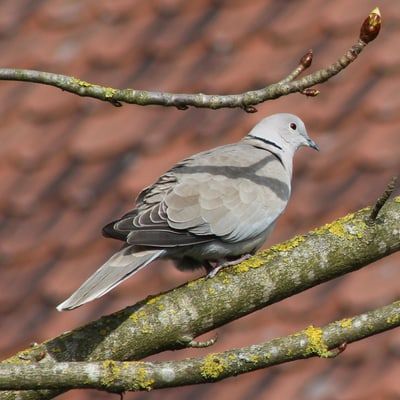
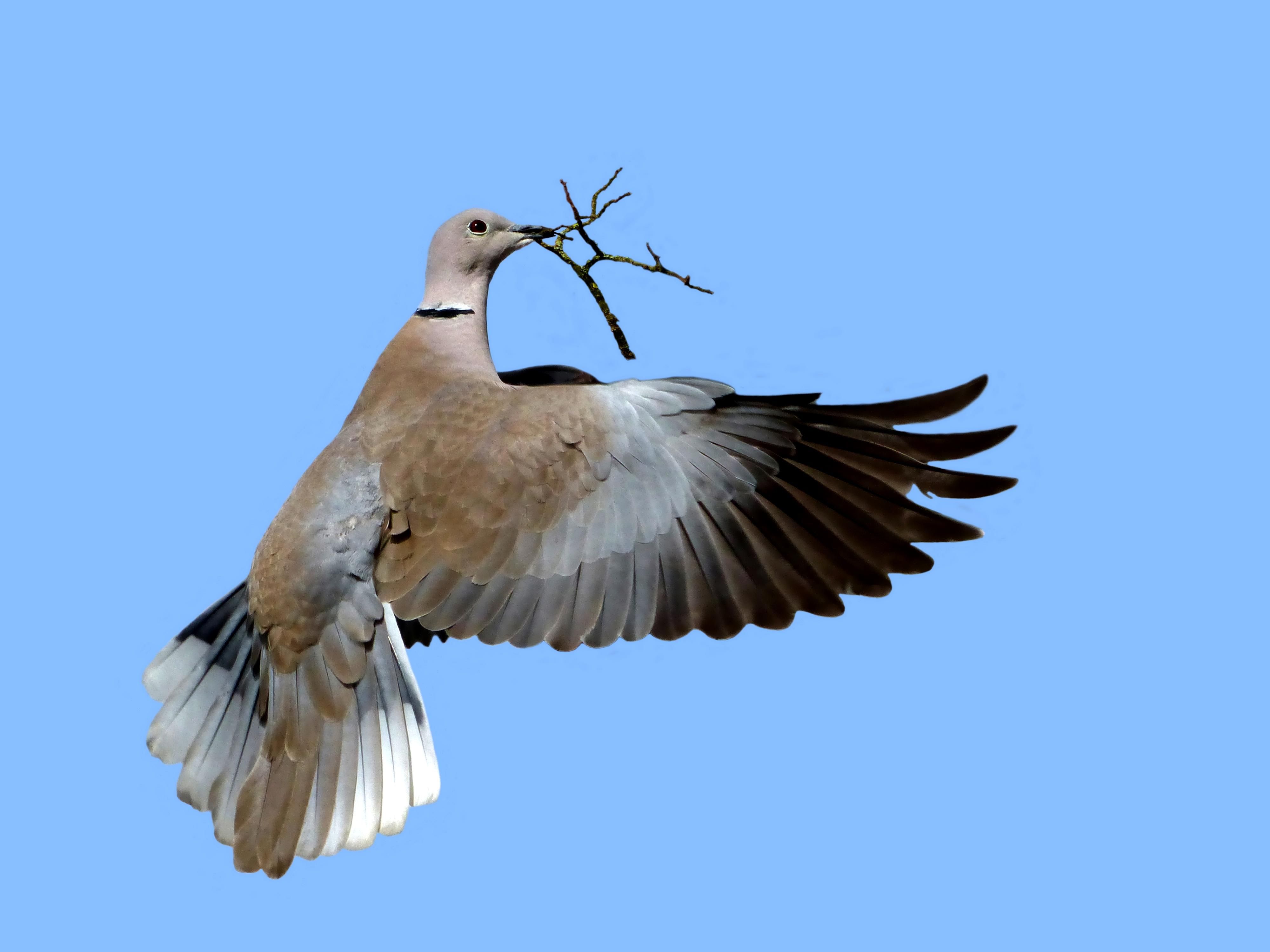
The collared dove is easily identifiable by its light-beige to brown plumage and the black half-collar around its nape. Its wing tips are dark. In flight, its white tail feathers are visible.
Juveniles lack the black collar or it is not very distinctive. Their tail feathers and primary feathers are matte and beige-brown.
Features
Eurasian collared dove
Streptopelia decaocto
black half-collar around the nape
red eyes
Rufe
Frommolt, CC BY-SA 3.0

Similar species
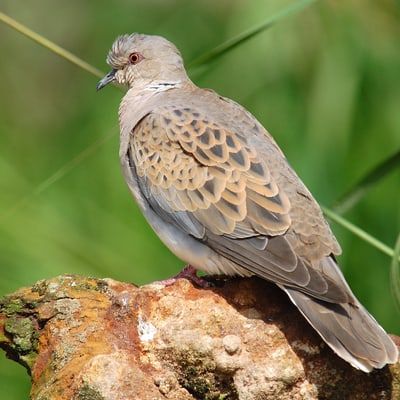
European turtle dove
Streptopelia turtur
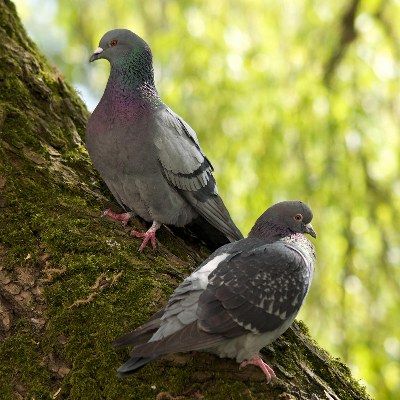
Street pigeon
Columba livia domestica
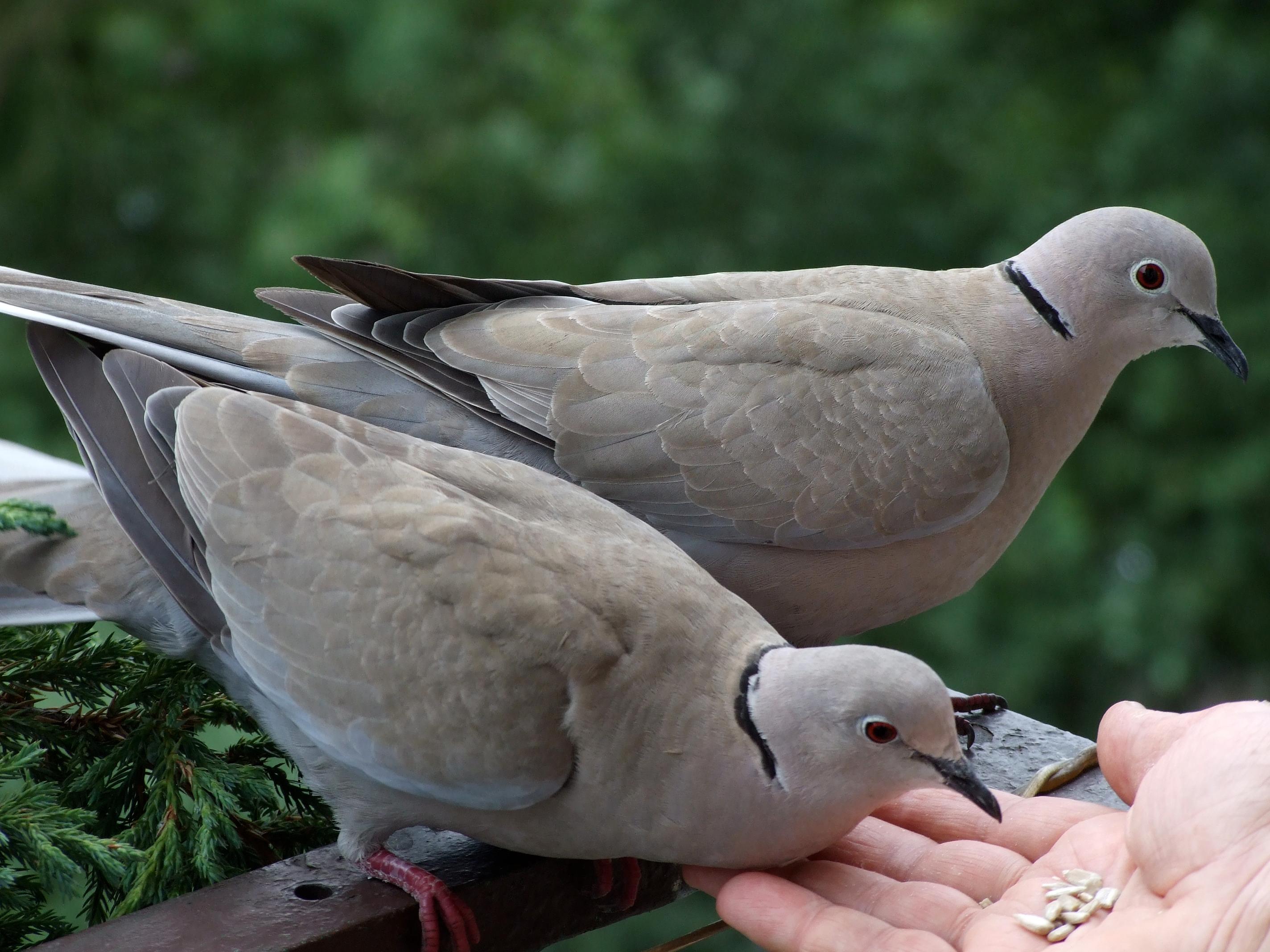
In the city
Collared doves are true synanthropic birds (ecologically associated with humans) and live by preference in areas of human habitation. They require open spaces to look for food and prefer conifers for nesting and roosting. These habitats are predominantly found in parks.
Collared doves are not very shy and like to visit bird feeders, particularly in winter.
Fun Facts
Collared doves are one of the few species of doves that have spread throughout Europe without human input. They can be seen all year round.
100 years ago, there were no collared doves in Europe. Their geographic range extended from Japan to Turkey. Since then they have spread continuously, and by 2005 they colonised the entire continent of Europe.
The German name "Türkentaube" (“Turkish pigeon”) refers to its main distribution area a century ago, namely Turkey.
- Endangerment level Germany: not endangered
Sources
Paar, Harald wehner, CC-BY-SA 4.0, https://commons.wikimedia.org/wiki/File:2015-04-13-Tuerkentauben-Paar4.JPG

Paar, Rovdyr, CC BY-SA 3.0, https://commons.wikimedia.org/wiki/File:Streptopelia_decaocto%3B_Szczecin%2C_Poland_3.JPG

im Flug, Joefrei, CC BY-SA 3.0, https://commons.wikimedia.org/wiki/File:T%C3%BCrkentaube_im_Flug_beim_Nestbau.jpg

Witt, K. & Steiof, K. (2013) Rote Liste und Liste der Brutvögel von Berlin, 3. version, 15.11.2013. : Berliner Ornithologische Arbeitsgemeinschaft e.V. (eds.) Berliner Ornithologischer Bericht, volume 23, Berlin: Berliner Ornithologische Arbeitsgemeinschaft e.V., 1-23.
Page „Türkentaube“. : Wikipedia, The Free Encyclopedia. Date of last revision: 26.01.2016, 14:50 UTC. URL: https://de.wikipedia.org/w/index.php?title=T%C3%BCrkentaube&oldid=150710251 (Accessed: 18.02.2016).
Artenfinder (2016) Streptopelia decaocto (Türkentaube), URL: https://arteninfo.net/elearning/voegel/speciesportrait/3017 (Accessed: 24.04.2016).
NABU – Naturschutzbund Deutschland e.V. (n.d.) Stunde der Wintervögel. Die Türkentaube, URL:https://www.nabu.de/tiere-und-pflanzen/aktionen-und-projekte/stunde-der-wintervoegel/vogelportraets/13059.html (Accessed: 24.04.2016).