
Short Description
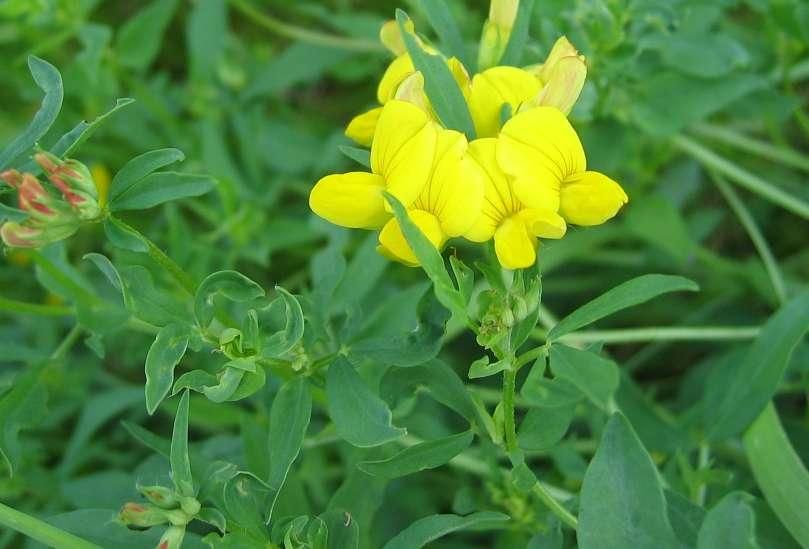
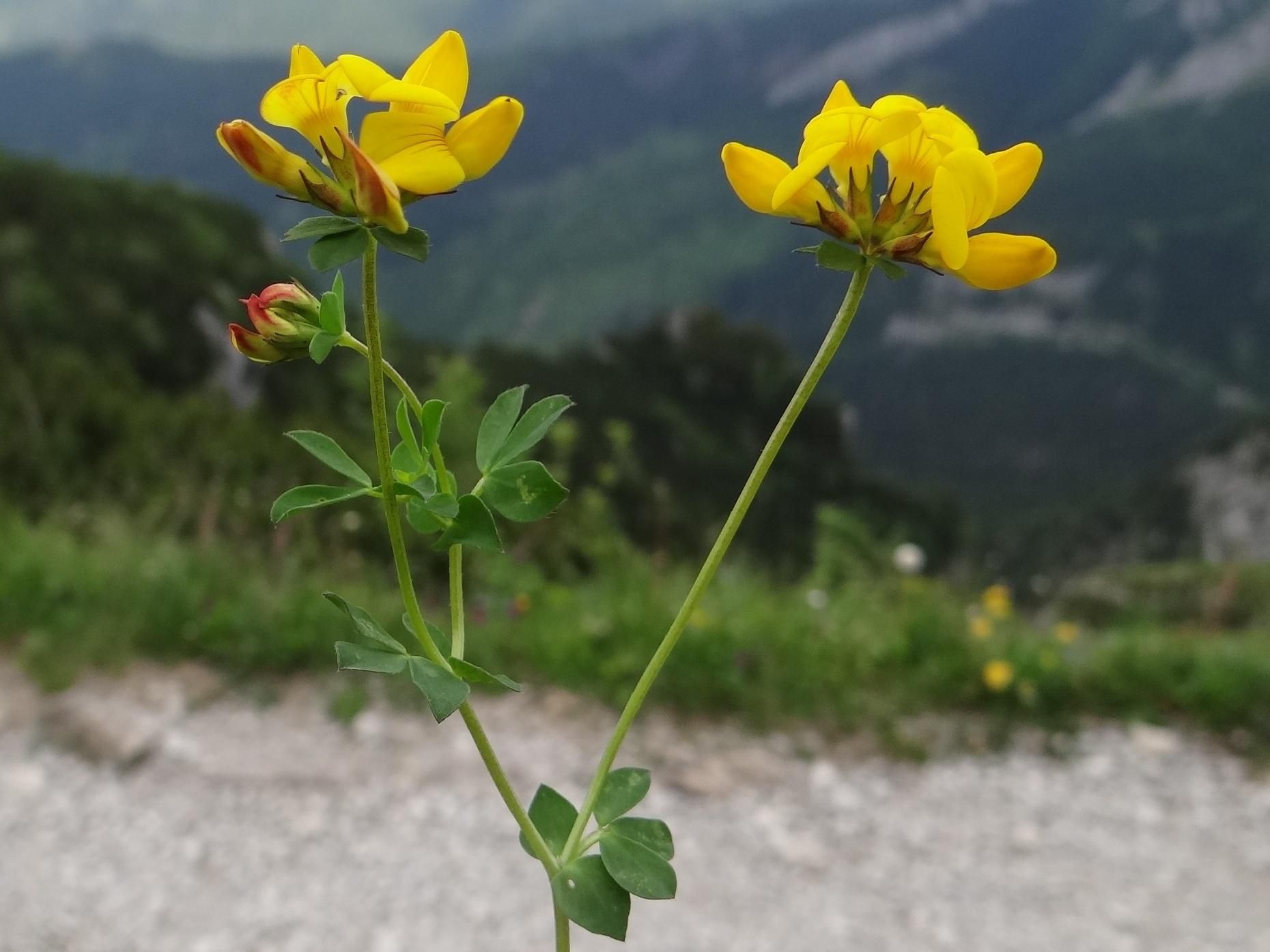
Bird’s foot trefoil can grow to a height of 40 cm.
The leaves consist of five leaflets each. Three leaflets have a stalk and two grow from the stem. The individual leaflets are oval and pointed.
The stem is generally upright and arched upwards.
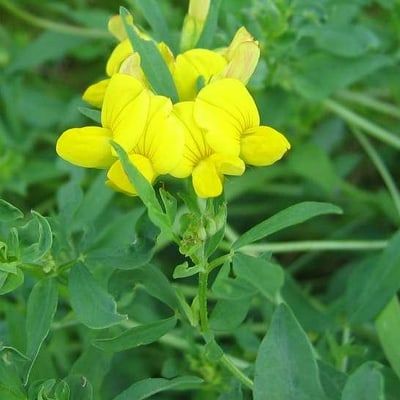
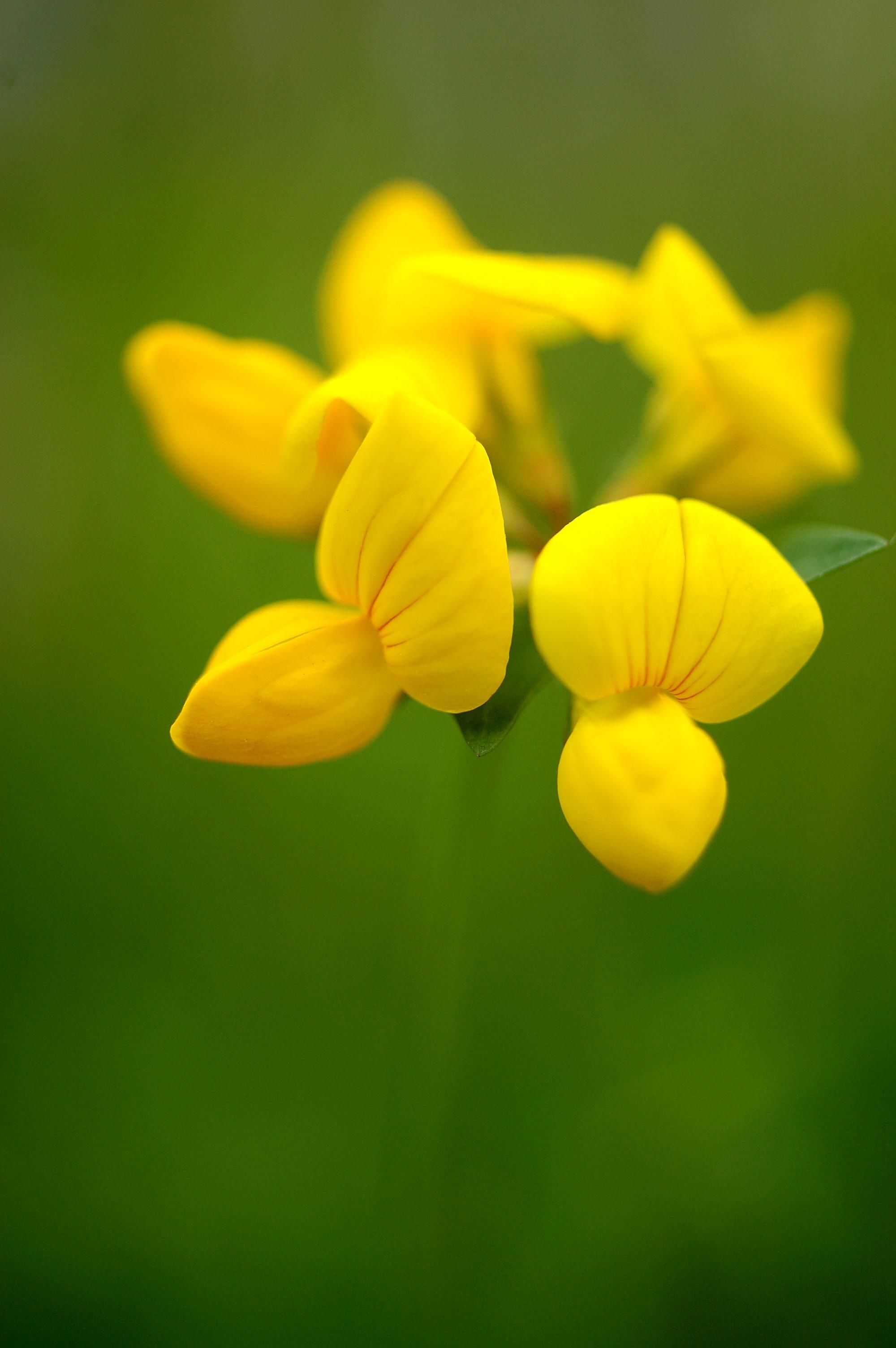
The flower heads are bright yellow and umbellate, i.e. the individual florets spread from a common point and are of the same height. Each flower has only a single mirror axis (mirror-symmetric). It consists of five petals. The large upper petal forms the banner and protrudes upright. The two smaller petals on the side form the wings. The two fused lower petals at the bottom form a hollow boat-like shape (keel) that surrounds anthers and pistils.
The fruit is a pod that turns brown as it ripens. When bursting open, the two halves of the pod twist like a bird’s foot.
Features
Bird's-foot trefoil
Lotus corniculatus
gelbe Blüten
fünf Teilblättchen
Similar species
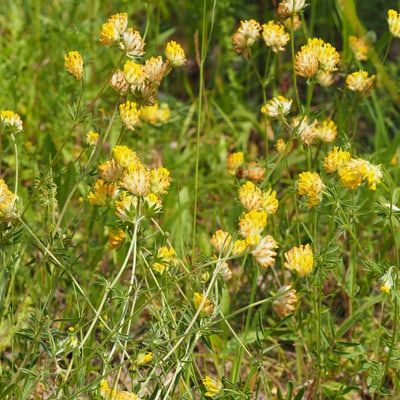
Common kidney vetch
Anthyllis vulneraria
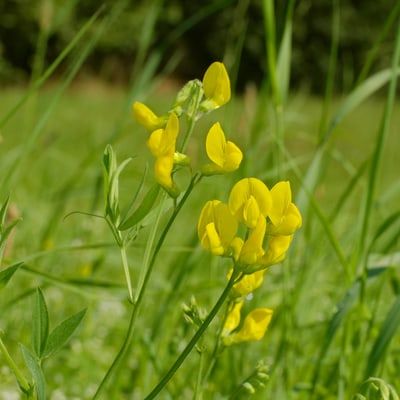
Meadow vetchling
Lathyrus pratensis
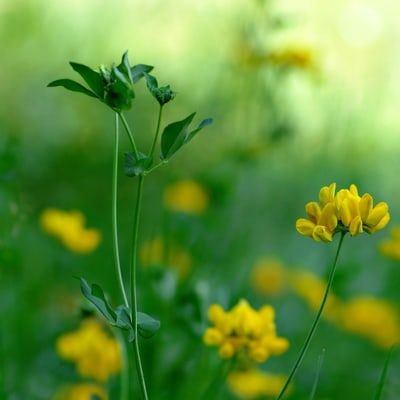
Greater bird's-foot-trefoil
Lotus pedunculatus
In the city
In town, bird’s foot trefoil often grows in verges, meadows and pastures. It prefers moderately dry to fresh sites with nutrient-rich loamy soil.
Fun Facts
Symbiosis with root-nodulation bacteria is typical for members of the papilionaceae family. The bacteria supply the plant with nitrogen. As the bacteria require a plant to fix nitrogen, this biological interaction is beneficial to both species (symbiosis).
A papilionaceous flower is a form of flower typical for most members of the legume family.
It flowers from May to September.
- Endangerment level Germany: not endangered
Bird’s foot trefoil is a common forage plant or intermediate crop.
Sources
Habitus, Tigerente, GNU-FDL, https://commons.wikimedia.org/wiki/File:Hornklee.jpg

Blüten, Johannes Kühne, GFDL, https://commons.wikimedia.org/wiki/File:Lotus_corniculatus-Bluetenstand.jpg

Habitus, Jerzy Opioła, CC BY-SA 4.0, https://commons.wikimedia.org/wiki/File:Lotus_corniculatus_T69.1.jpg

Spohn, M., Golte-Bechtle, M. & Spohn, R. (2015) Was blüht denn da? Stuttgart: Franckh Kosmos Verlag.
Lippert, W. & Podlech, D. (1993) GU Naturführer. Blumen: die wichtigen Blütenpflanzen Mitteleuropas erkennen und bestimmen, München: Gräfe und Unzer Verlag.
Needon, C. & Petermann, J. (1991) Urania-Naturführer Pflanzen, Leipzig, Jena, Berlin: Urania-Verlag.
Schauer, T., Caspari, C. & Caspari, S. (2015) Der illustrierte BLV-Pflanzenführer für unterwegs. 1150 Blumen, Gräser, Bäume und Sträucher, München: BLV.
Page „Gewöhnlicher Hornklee“. : Wikipedia, The Free Encyclopedia. Date of last revision: 11.09.2016, 18:23 UTC. URL: https://de.wikipedia.org/w/index.php?title=Gew%C3%B6hnlicher_Hornklee&oldid=157846432 (Accessed: 10.11.2016).
Bundesamt für Naturschutz (n.d.) Artensteckbriefe, URL: http://floraweb.de/pflanzenarten/artenhome.xsql?suchnr=3508& (Accessed: 10.11.2016).