
Short Description
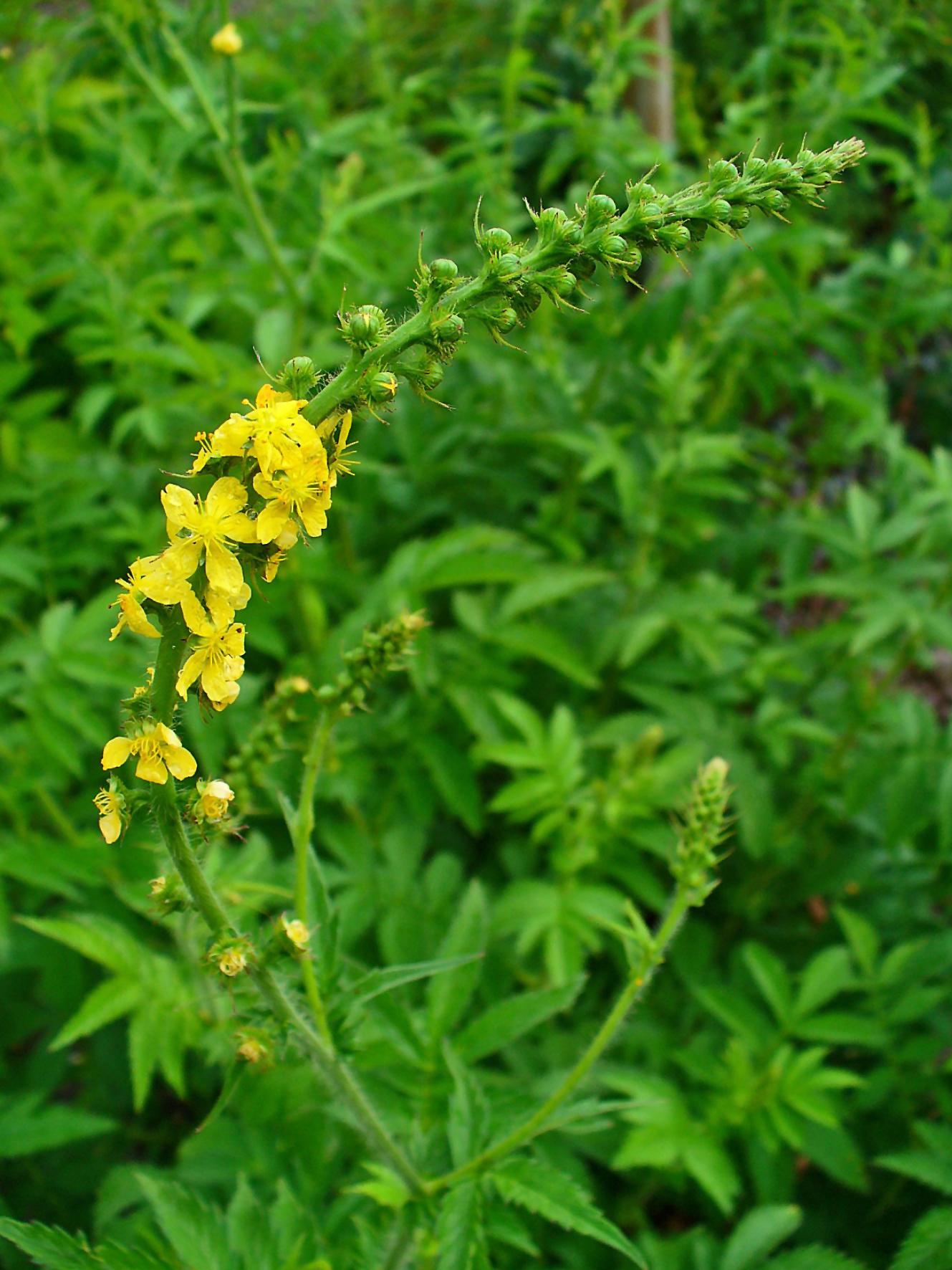
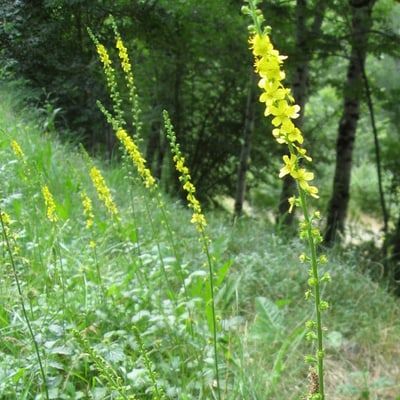
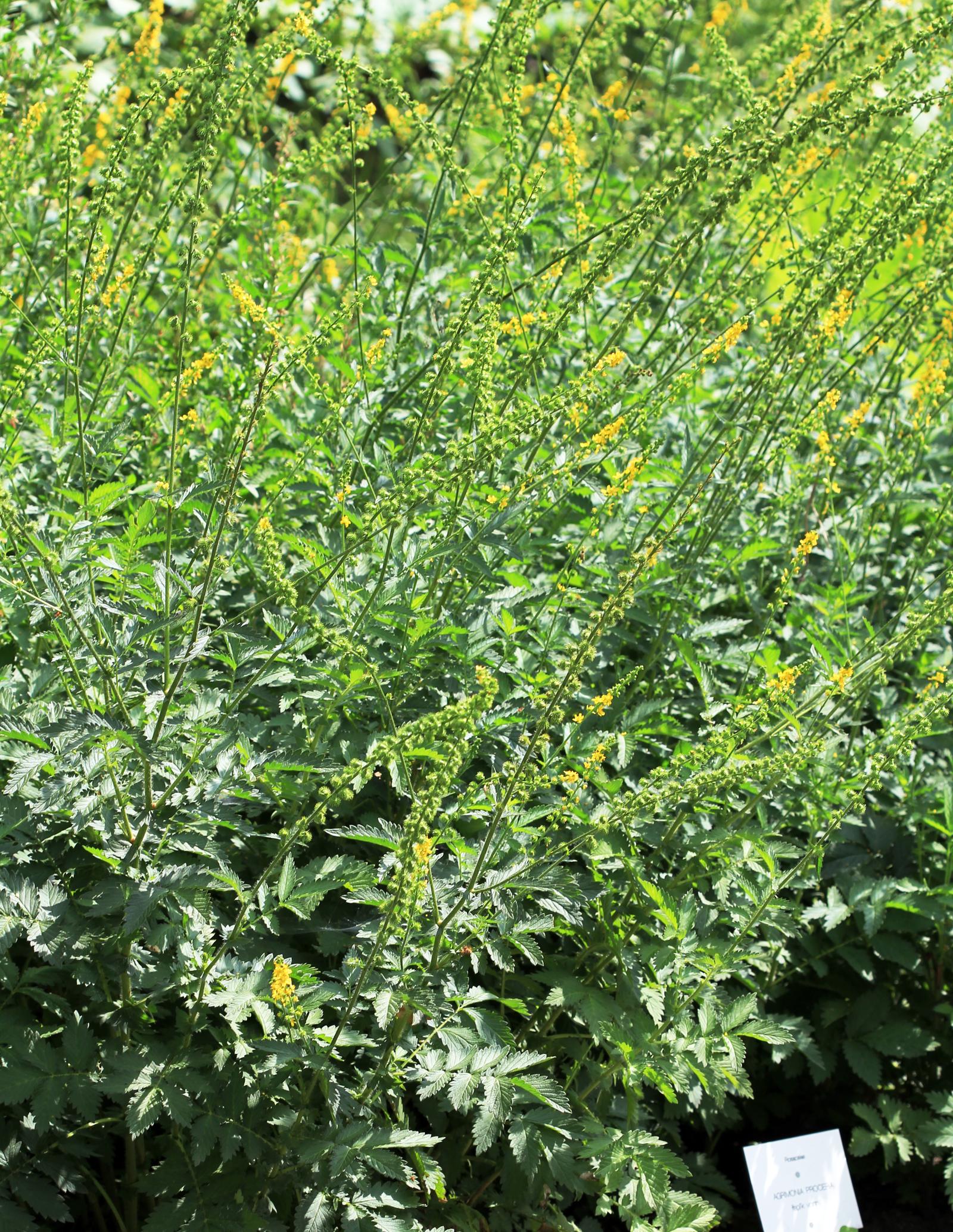
The fragrant agrimony can grow up to 1.8 metres high.
The deciduous leaves are arranged singly and alternately on the stem. Each leaf is divided into 5 to 9 leaf segments (pinnate). The undersides of the leaves are green to grey-green, slightly hairy and never tomentose. There are also glandular hairs that smell of lemon.
The stem is round and slightly hairy.
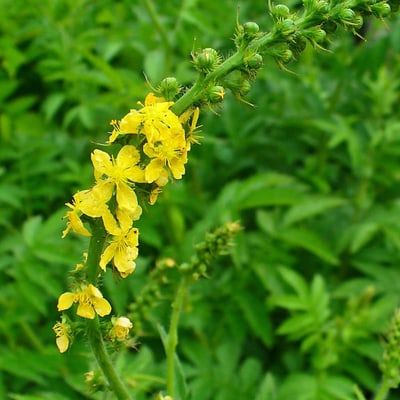
The flowers have five circularly arranged, yellow petals. They are all grouped in an elongated, leafless inflorescence at the tip of the stem (raceme).
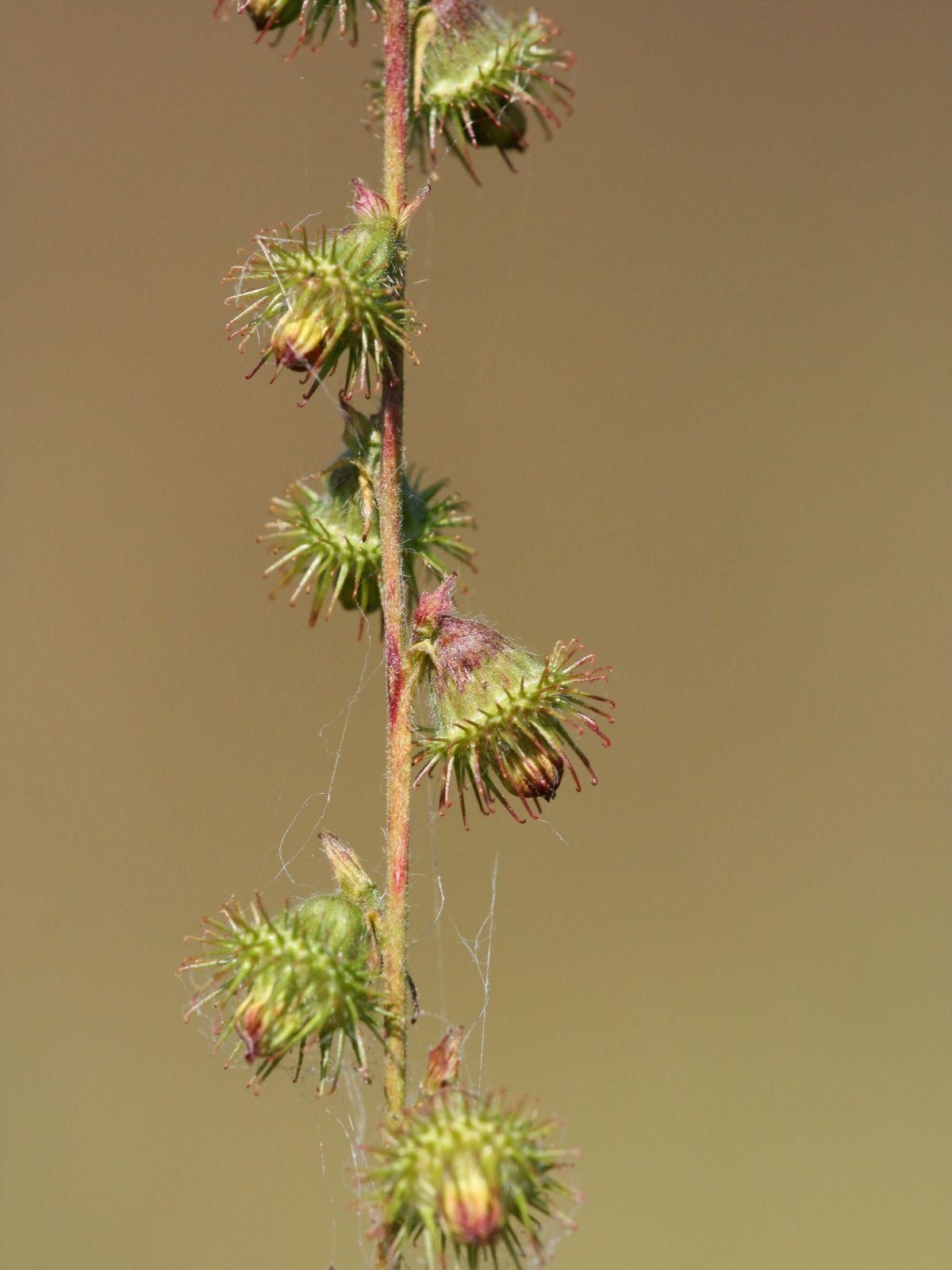
The fruit consists of a bell-shaped calyx with hook-like bristles on the edge. The calyx is slightly or not at all grooved.
Features
Fragrant agrimony
Agrimonia procera
sticky stem
lemony fragrance
In the city
In the city, the fragrant agrimony grows mainly along forest paths and on ruderal sites such as roadsides or railway lines.
Fun Facts
The flowering period is from June to August.
The fruits act like burdocks and spread by adhering to fur or clothing.
It lives for several years and generally flowers and fruits annually (perennial plant).
Pollination takes place by insects or self-pollination.
- Endangerment level Germany: not endangered
The fragrant agrimony is native to the whole of Europe. In Germany, however, it is only widespread in the North.
Parts of the plant harvested and dried during flowering can help with mild diarrhoea, inflammation of the mucous membranes of the throat and mouth or superficial inflammation of the skin.
Sources
Blüten und Knospen, H. Zell, CC BY-SA 3.0, https://commons.wikimedia.org/wiki/Agrimonia_procera#/media/File:Agrimonia_procera_002.JPG

Habitus, Karelj, CC BY-SA 3.0, https://commons.wikimedia.org/wiki/File:Agrimonia_procera_Prague_2011_1.jpg

Früchte, Kristian Peters, CC BY-SA 3.0, https://commons.wikimedia.org/wiki/File:Agrimonia_procera_frucht.jpeg

Schönfelder, I. & Schönfelder, P. (2010) Der Kosmos-Heilpflanzenführer. Über 600 Heil- und Giftpflanzen Europas, Stuttgart: Franckh Kosmos Verlag.
Page „Großer Odermennig“. : Wikipedia, The Free Encyclopedia. Date of last revision: 12.04.2017, 22:15 UTC. URL: https://de.wikipedia.org/w/index.php?title=Gro%C3%9Fer_Odermennig&oldid=164502387 (Accessed: 05.12.2017).
Bundesamt für Naturschutz (n.d.) Artensteckbriefe, URL: http://floraweb.de/pflanzenarten/artenhome.xsql?suchnr=102& (Accessed: 05.12.2017).