
Short Description
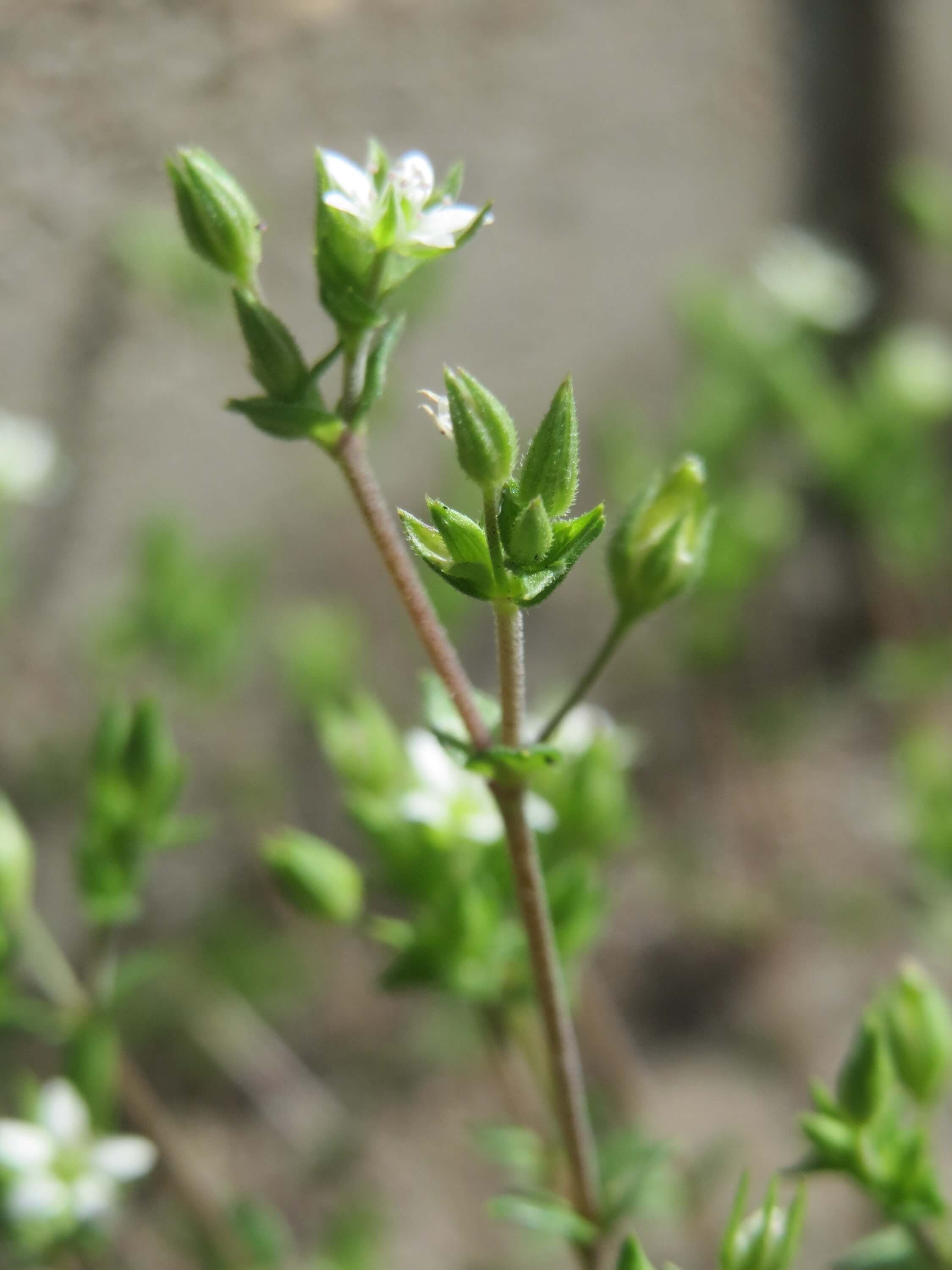
The thyme-leaved sandwort can grow up to 30 cm high.
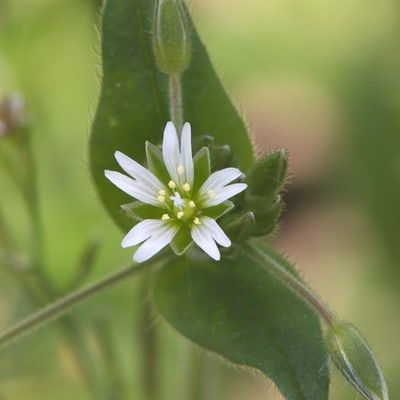
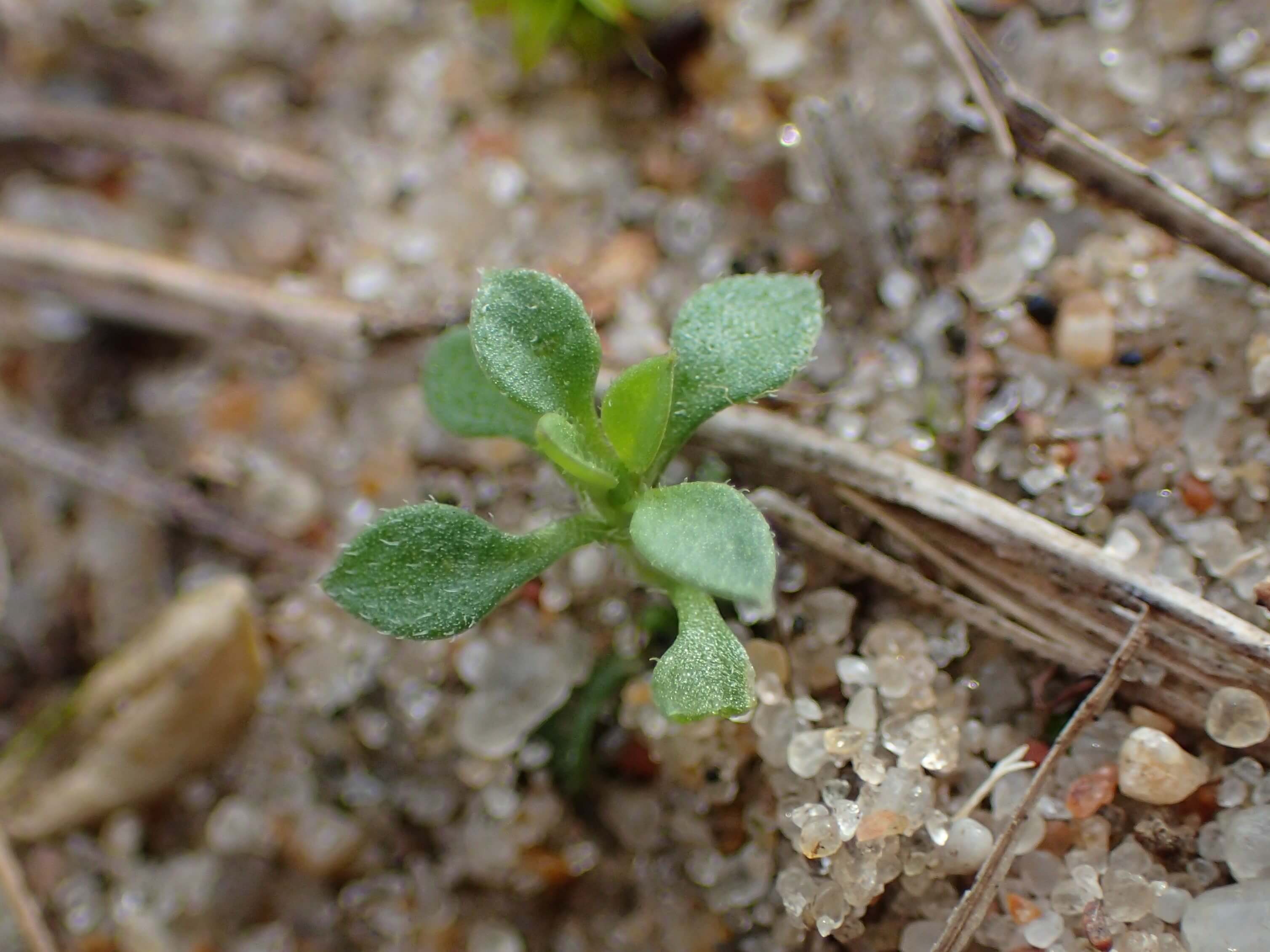
The leaves are arranged opposite each other on the stem. They are ovate and shortly tapering point at the tip. There are short and rough hairs on the leaf surface.
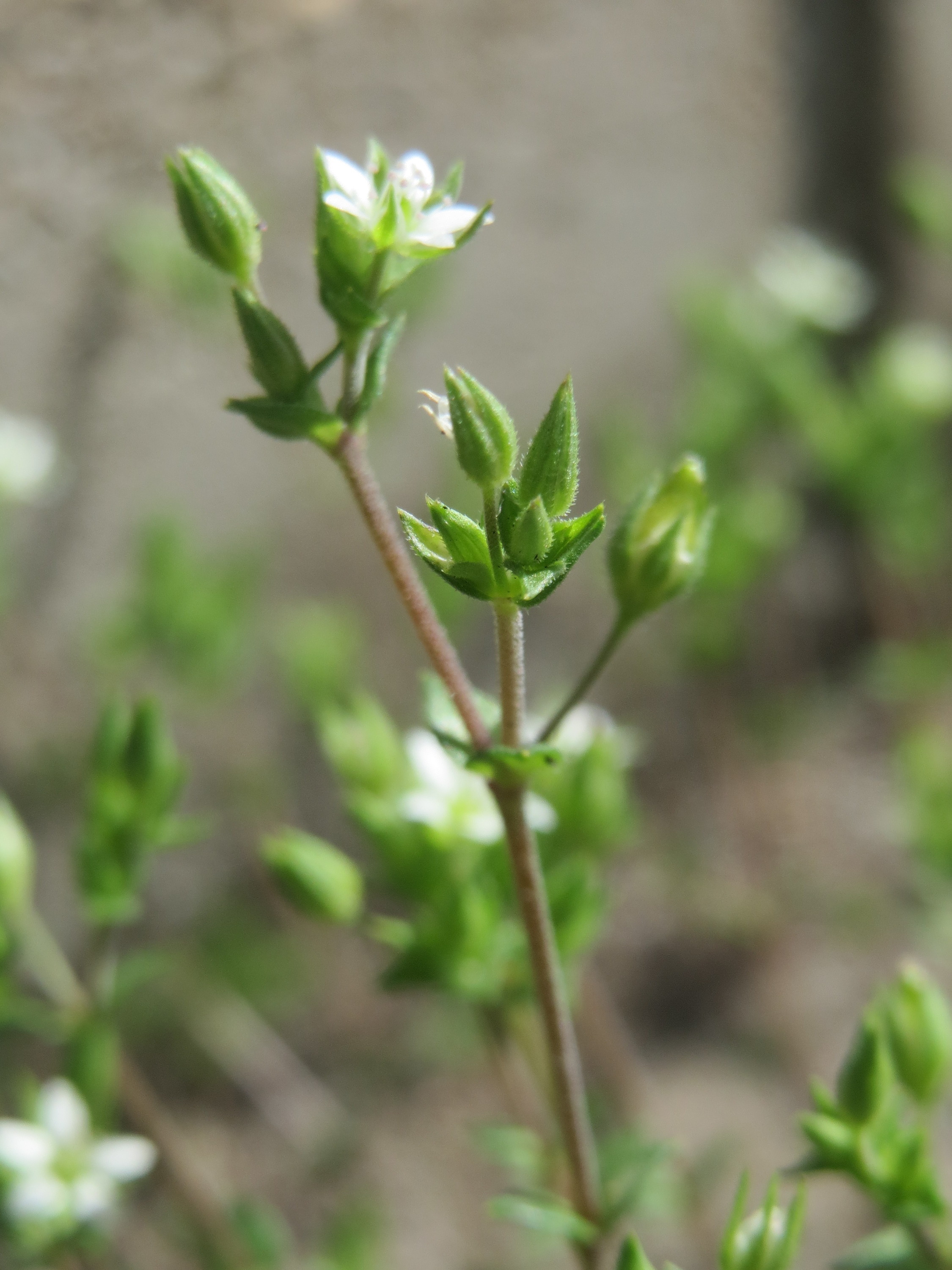
The stem is highly branched from the base.
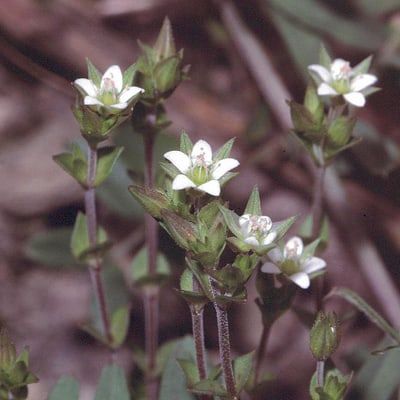
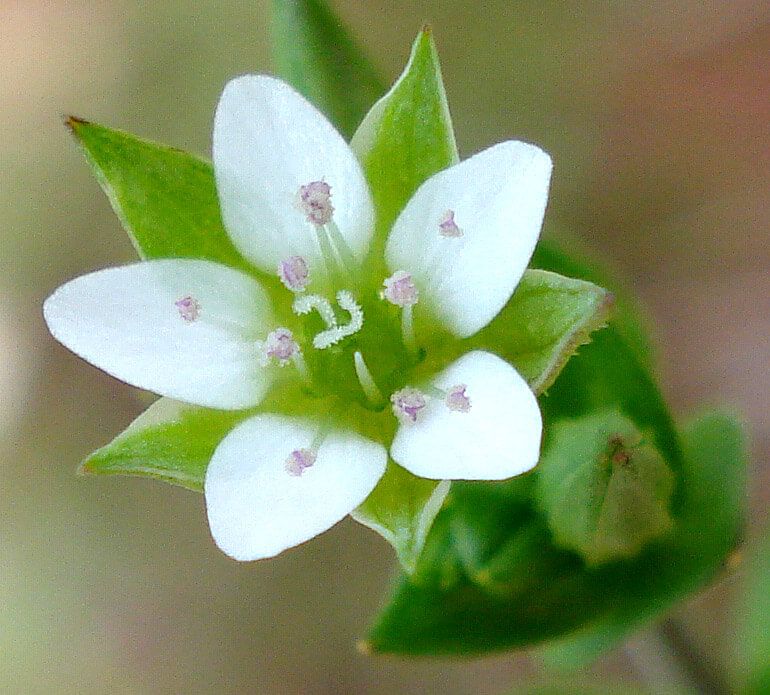
The flowers have five small, white petals.
The fruit is a small toothed capsule.
Features
Thyme-leaved sandwort
Arenaria serpyllifolia
highly branched stem
short haired
In the city
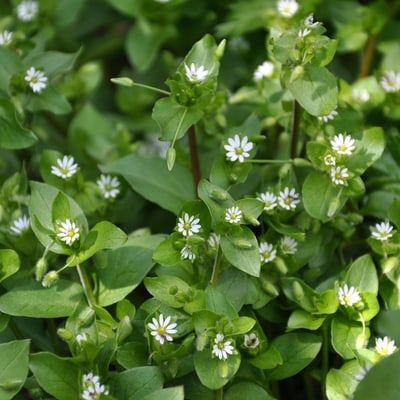
In the city, the thyme-leaved sandwort is common, especially along roadsides, on gravel areas and in sandy places.
Man-made new sites such as fallow fields and sandy roadsides encourage occurrence in the urban environment.
Fun Facts
The flowering period is from May to September.
The thyme-leaved sandwort usually grows in groups.
The flowers only open in sunshine.
It is a one to two year old plant. This means that a plant lives for one or two years, but flowers only once and dies after the seeds have matured.
- Endangerment level Germany: not endangered
The genus name "Arenaria" is derived from the Latin "arena" = "sand". The English name of the plant also refers to this.
Sources
Habitus, AnRo0002, CC0, https://upload.wikimedia.org/wikipedia/commons/f/f8/20170424Arenaria_serpyllifolia15.jpg
Blossom, Fornax, CC BY-SA 3.0, https://upload.wikimedia.org/wikipedia/commons/f/f2/Arenaria_serpyllifolia_W.jpg

Leaves, Krzysztof Ziarnek, Kenraiz, CC BY-SA 4.0, https://upload.wikimedia.org/wikipedia/commons/5/59/Arenaria_serpyllifolia_kz03.jpg

Page „Quendel-Sandkraut“. : Wikipedia, The Free Encyclopedia. Date of last revision: 12.03.2017, 18:49 UTC. URL: https://de.wikipedia.org/w/index.php?title=Quendel-Sandkraut&oldid=163522743 (Accessed:15.06.2017).
Eggenberg, S. & Möhl, A. (2007) Flora Vegetativa: Ein Bestimmungsbuch für Pflanzen der Schweiz im blütenlosen Zustand, Bern, Stuttgart, Wien: Haupt Verlag.
Spohn, M., Golte-Bechtle, M. & Spohn, R. (2015) Was blüht denn da? Stuttgart: Franckh Kosmos Verlag.
Jäger, E. J. (2011) Rothmaler - Exkursionsflora von Deutschland. Gefäßpflanzen: Grundband, Heidelberg: Spektrum Akademischer Verlag.
Kammer, P. M. (2016) Pflanzen einfach bestimmen. Schritt für Schritt einheimische Arten kennenlernen, Bern: Haupt Verlag.
Schauer, T., Caspari, C. & Caspari, S. (2015) Der illustrierte BLV-Pflanzenführer für unterwegs. 1150 Blumen, Gräser, Bäume und Sträucher, München: BLV.