
Short Description
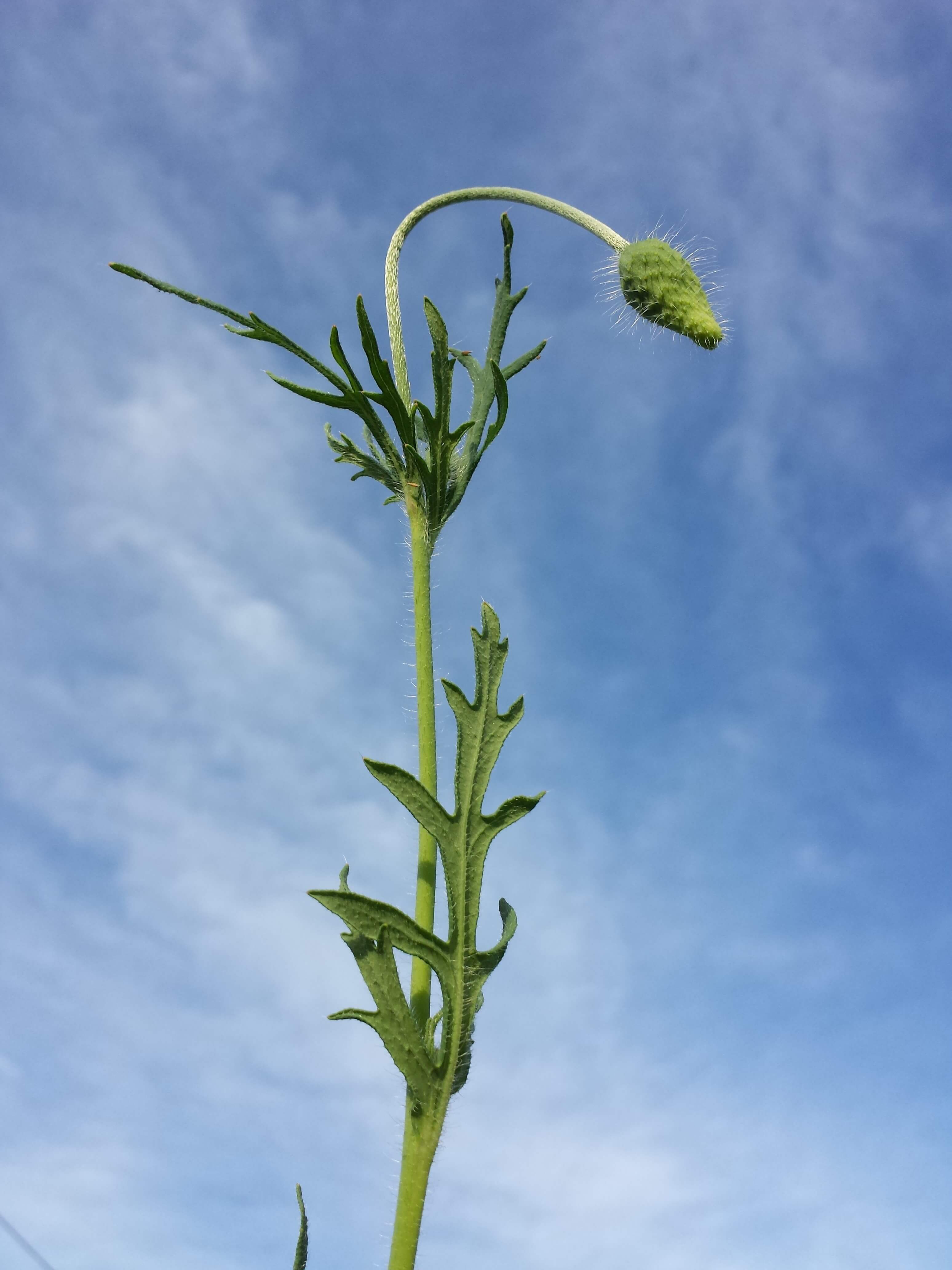
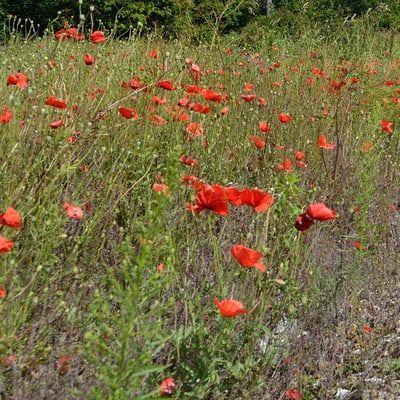
The long-headed poppy can grow over half a meter high. It has milky sap.
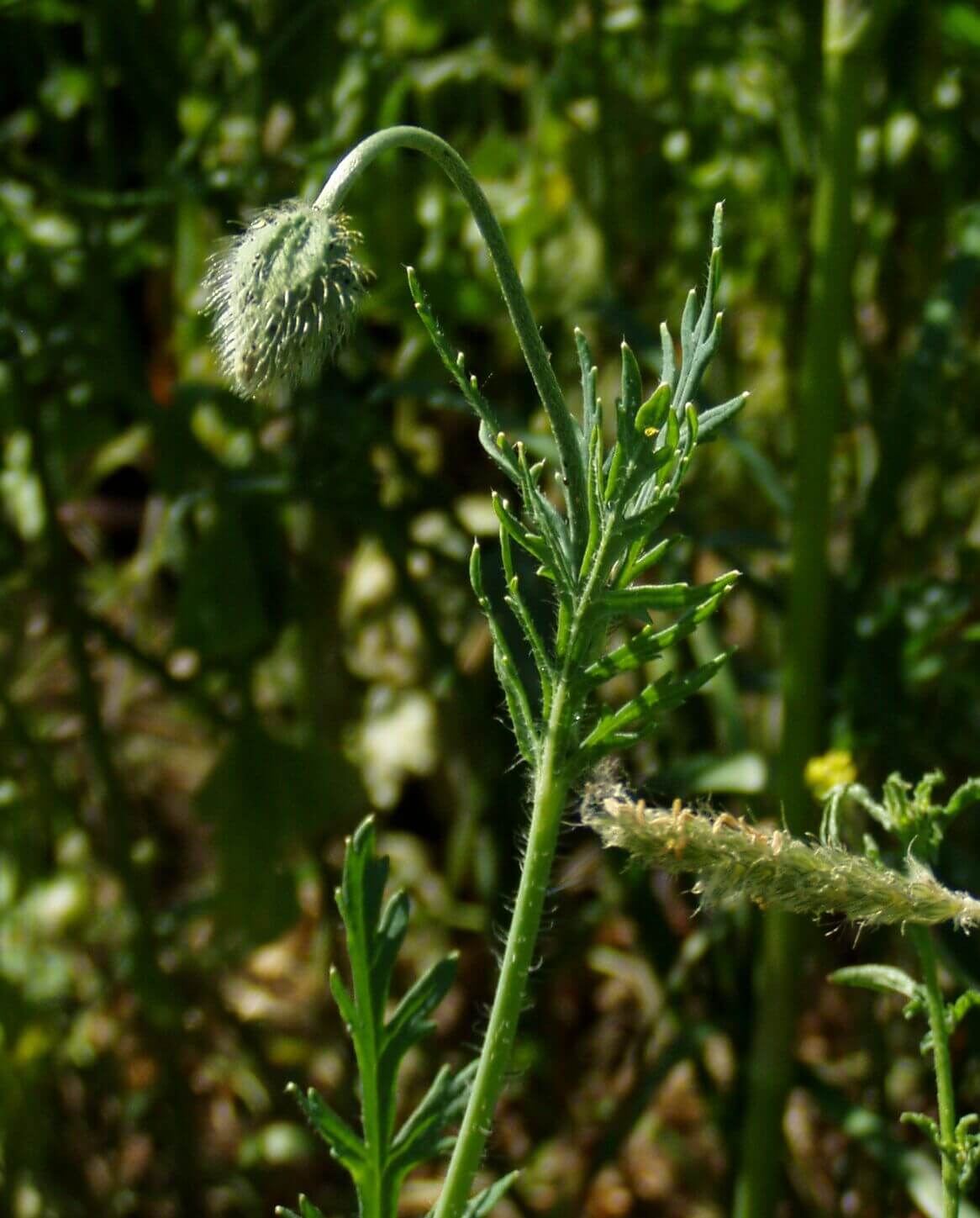
The leaves are deeply lobed and hairy. They can have toothed segments.
The stem is hairy and mostly branched.
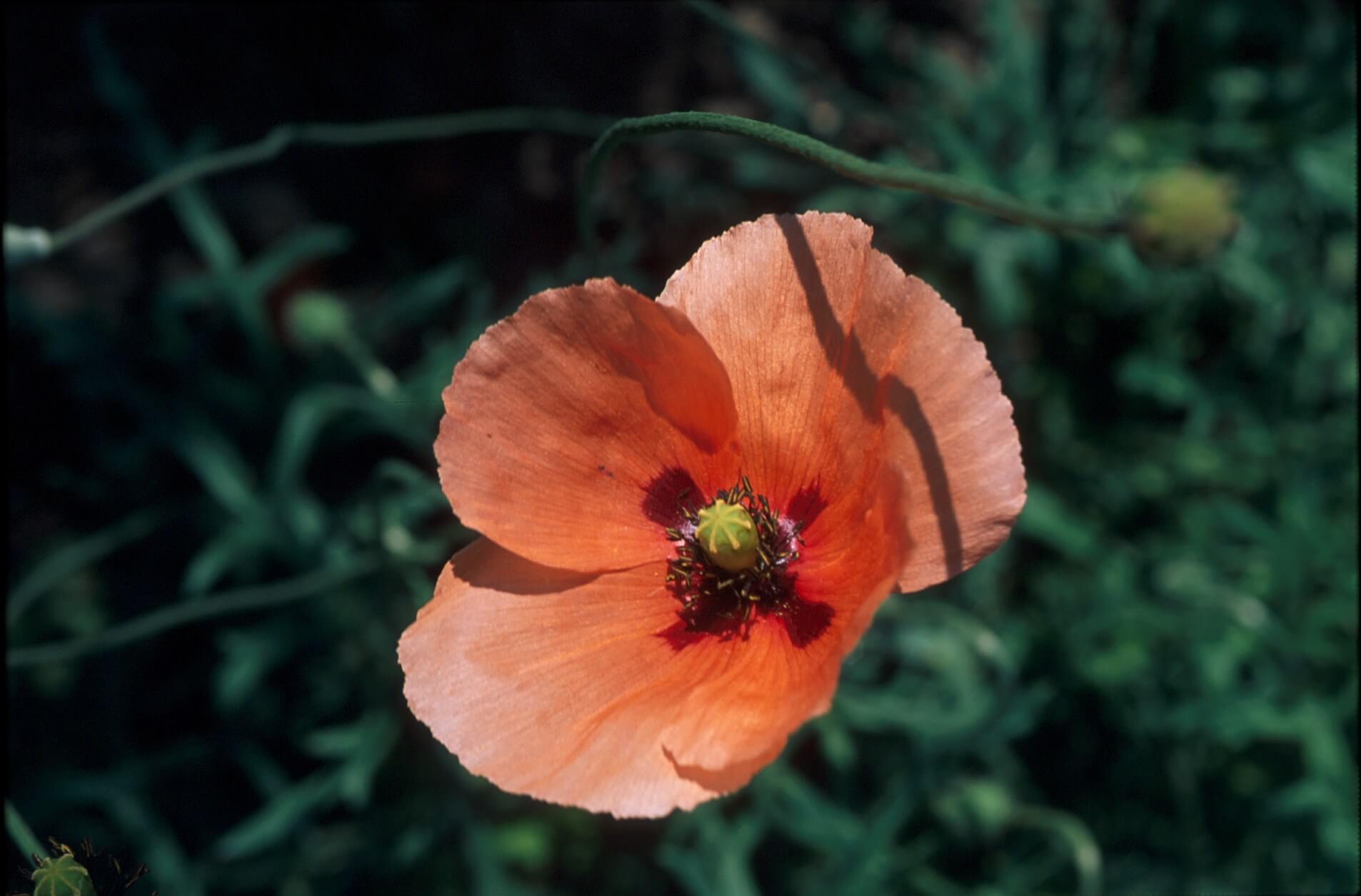
The flowers consist of four red petals. They sometimes have a black spot at the base. They stand singly at the end of the stem. The many stamens and their bluish anthers are clearly visible.
The plant forms a many-seeded capsule fruit. It is clavate, glabrous and has pores to release the seeds.
Features
Long-headed poppy
Papaver dubium
poisonous
bluish anthers
glabrous clavate capsule fruit
Similar species
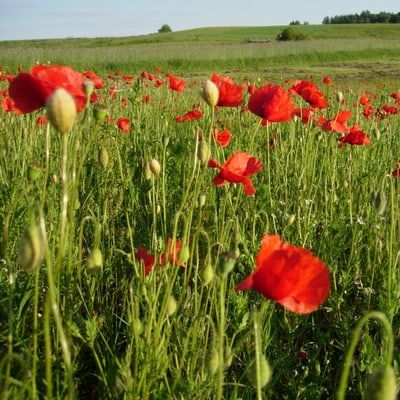
Common poppy
Papaver rhoeas
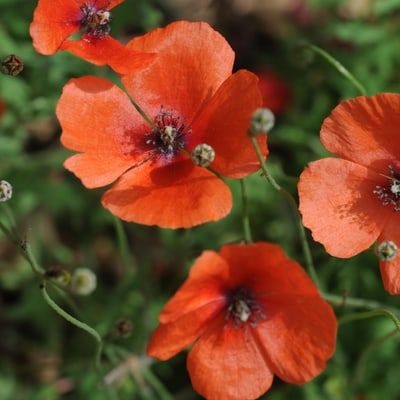
Roemeria argemone
In the city
The long-headed poppy grows in cereal fields and wasteland, on roadsides, mounds and rubble. It prefers dry, nutrient-rich, mostly calcareous soils.
Fun Facts
The flowering period is from May to July.
It grows particularly frequently in the company of crops, e.g. rye.
Due to effective weed killers and today's seed control technology, the long-headed poppy has become rare in cereal fields.
Long-headed poppy is an annual to biennial plant. It lives for one or two years, but flowers only once and dies after the seeds have matured.
- Endangerment level Germany: not endangered
All parts of the plant are poisonous.
Sources
Habitus, Stefan.lefnaer, CC BY-SA 4.0 , https://upload.wikimedia.org/wikipedia/commons/9/94/Papaver_dubium_subsp._dubium_sl9.jpg

Blossom, Peter Eisenburger, CC BY-SA 3.0, https://upload.wikimedia.org/wikipedia/commons/e/ef/Papaver_dubium_L_1.jpg

Habitus, Griensteidl, CC BY-SA 3.0, https://upload.wikimedia.org/wikipedia/commons/8/8c/Papaver_dubium3.jpg

Kammer, P. M. (2016) Pflanzen einfach bestimmen. Schritt für Schritt einheimische Arten kennenlernen, Bern: Haupt Verlag.
Schauer, T., Caspari, C. & Caspari, S. (2015) Der illustrierte BLV-Pflanzenführer für unterwegs. 1150 Blumen, Gräser, Bäume und Sträucher, München: BLV.
Seitz, B., Ristow, M., Meißner, J., Machatzi, B. & Sukopp, H. (2018) Rote Liste und Gesamtartenliste der etablierten Farn- und Blütenpflanzen von Berlin. : Der Landesbeauftragte für Naturschutz und Landschaftspflege / Senatsverwaltung für Umwelt, Klima und Verkehr (eds.) Rote Listen der gefährdeten Pflanzen, Pilze und Tiere von Berlin, URL: https://www.berlin.de/sen/uvk/natur-und-gruen/naturschutz/artenschutz/artenlisten-rote-listen/farn-und-bluetenpflanzen/ (Accessed: 26.03.2021).
Bundesamt für Naturschutz (n.d.) Artensteckbriefe, URL: http://floraweb.de/pflanzenarten/artenhome.xsql?suchnr=7201& (Accessed: 20.08.2018).
NatureGate (n.d.) Saat-Mohn. Papaver dubium, URL: http://www.luontoportti.com/suomi/de/kukkakasvit/saatmohn (Accessed: 20.08.2018).
Page „Saat-Mohn“. : Wikipedia, The Free Encyclopedia. Date of last revision: 16.01.2018, 19:55 UTC. URL: https://de.wikipedia.org/w/index.php?title=Saat-Mohn&oldid=173000834 (Accessed: 20.08.2018).