
Short Description
Parsnip can grow to a height of 1.5 metre.
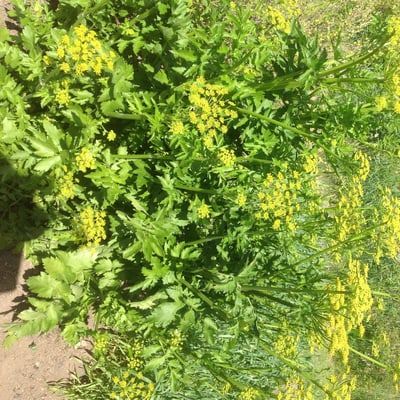
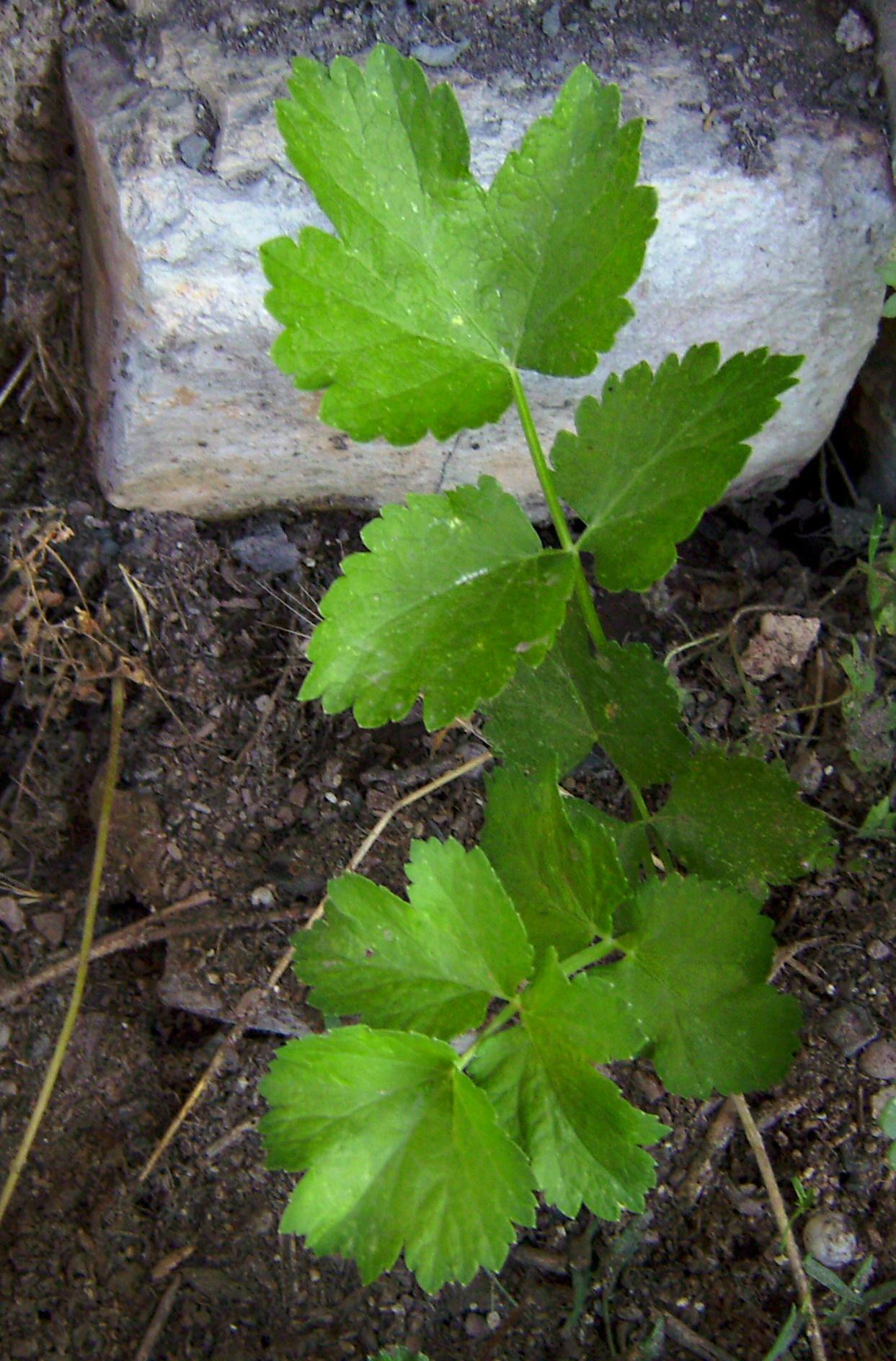
The leaves are yellowish-green and simply pinnate (lobed). When rubbed, they emit an aromatic carrot smell.
The stem is grooved and covered in bristly hairs.
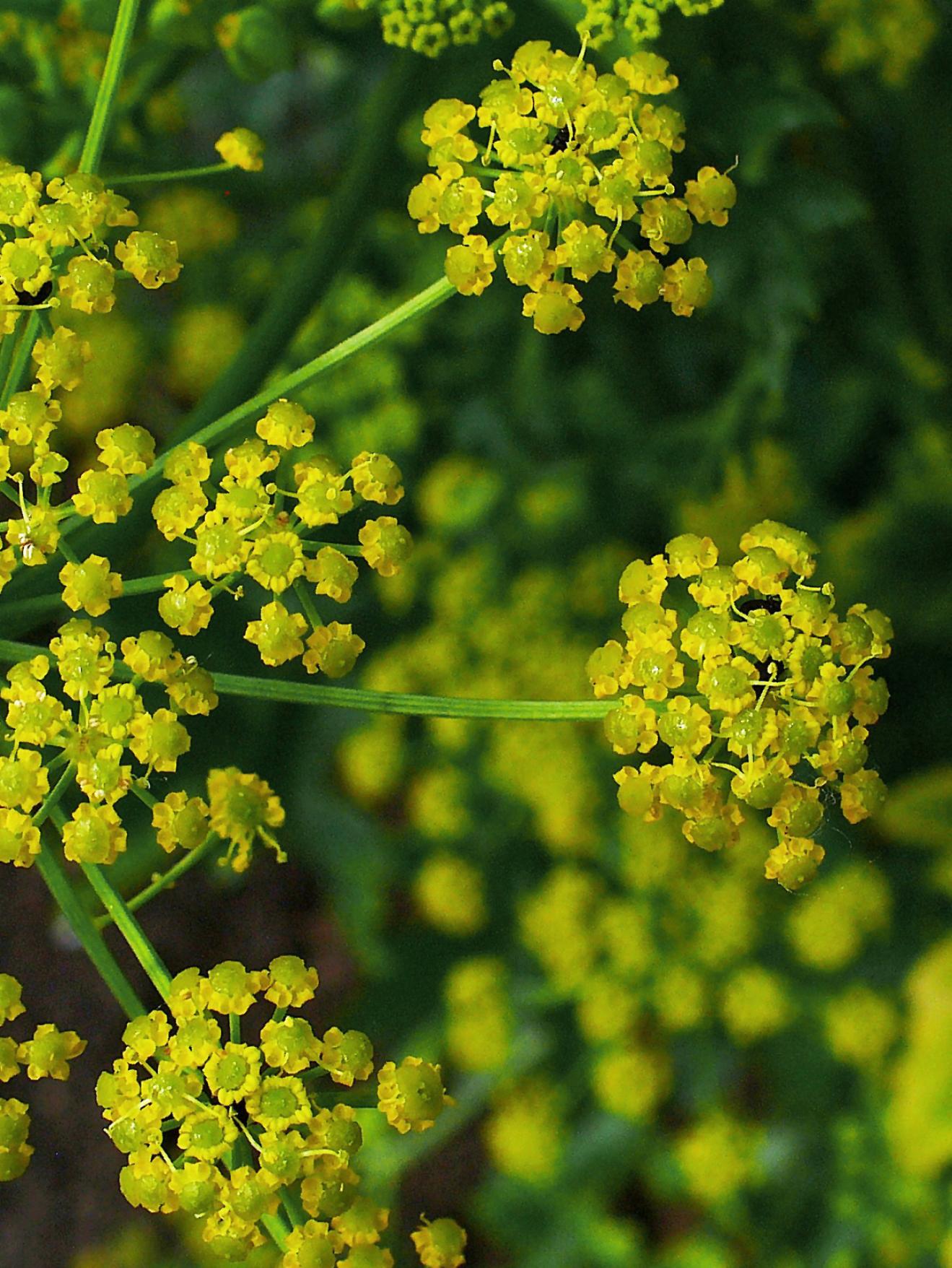
The individual small yellow flowers are clustered in double umbels (flower heads). This means that each branch of the umbel (like ribs of an umbrella) is again tipped with a smaller umbellule.
It consists of two mericarps, squashed into a lentil-shape.
Features
Parsnip
Pastinaca sativa
yellow flowers in umbels
oval leaflets
In the city
In town, parsnip often grows in meadows, verges or on railway land. It prefers light and sunny sites with nutrient-rich chalky clay soil.
Fun Facts
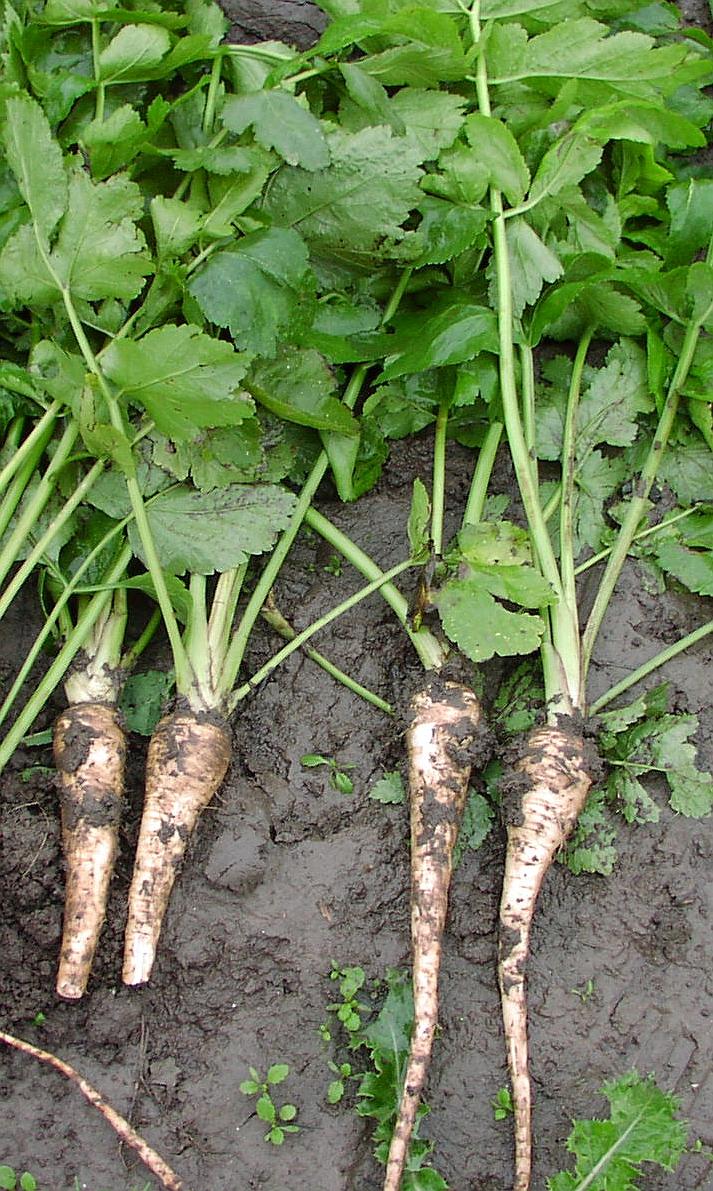
Into the 18th century, parsnip roots were an important staple food; they were subsequently increasingly displaced by potatoes.
It flowers from July to August.
The pale parsnip root has significantly fewer pigments (carotenes) than garden carrots.
There are various parsnip cultivars and a number of subspecies.
At the time of the Black Death in the 14th century, parsnip juice was administered as medicine.
It is a biennial plant. This means that a plant lives for two years, but flowers only once and dies after the seeds have ripened.
- Endangerment level Germany: not endangered
The roots of the plant are edible. However, there is disagreement as to whether they taste utterly boring or whether they are a taste bud revelation.
Sources
Blüten, H. Zell, CC BY-SA 3.0, https://commons.wikimedia.org/wiki/File:Pastinaca_sativa_003.JPG

Rüben, Goldlocki, CC BY-SA 3.0, https://commons.wikimedia.org/wiki/File:PastinakePflanzegeerntet.jpg

Blätter, Victor M. Vicente Selvas, Gemeinfrei, https://commons.wikimedia.org/wiki/File:Pastinaca_sativa_11.JPG

Eggenberg, S. & Möhl, A. (2007) Flora Vegetativa: Ein Bestimmungsbuch für Pflanzen der Schweiz im blütenlosen Zustand, Bern, Stuttgart, Wien: Haupt Verlag.
Spohn, M., Golte-Bechtle, M. & Spohn, R. (2015) Was blüht denn da? Stuttgart: Franckh Kosmos Verlag.
Jäger, E. J. (2011) Rothmaler - Exkursionsflora von Deutschland. Gefäßpflanzen: Grundband, Heidelberg: Spektrum Akademischer Verlag.
Kammer, P. M. (2016) Pflanzen einfach bestimmen. Schritt für Schritt einheimische Arten kennenlernen, Bern: Haupt Verlag.
Lippert, W. & Podlech, D. (1993) GU Naturführer. Blumen: die wichtigen Blütenpflanzen Mitteleuropas erkennen und bestimmen, München: Gräfe und Unzer Verlag.
Schauer, T., Caspari, C. & Caspari, S. (2015) Der illustrierte BLV-Pflanzenführer für unterwegs. 1150 Blumen, Gräser, Bäume und Sträucher, München: BLV.
Page „Pastinak“. : Wikipedia, The Free Encyclopedia. Date of last revision: 11.02.2017, 19:35 UTC. URL: https://de.wikipedia.org/w/index.php?title=Pastinak&oldid=162542493 (Accessed: 15.03.2017).