
Short Description
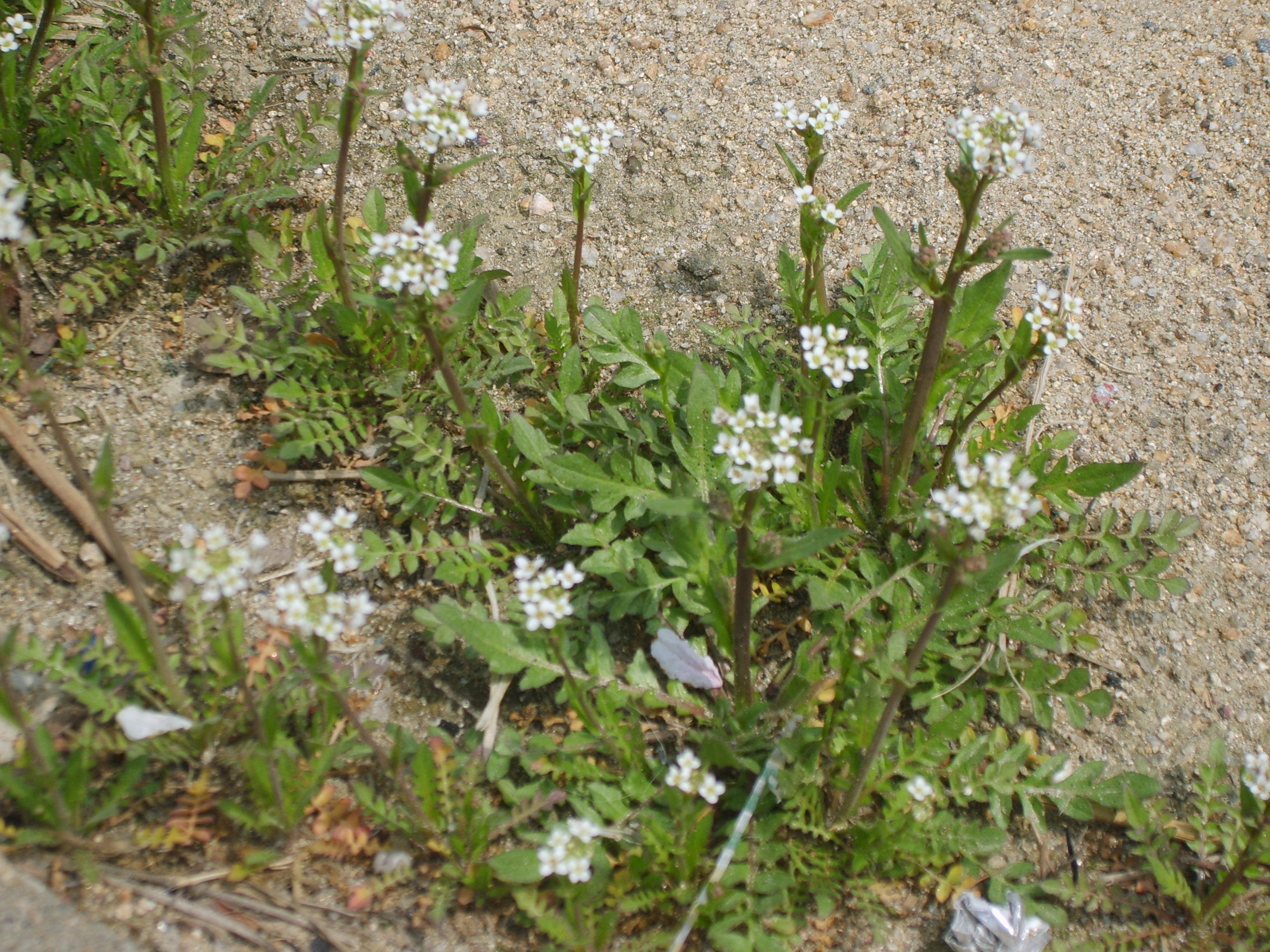
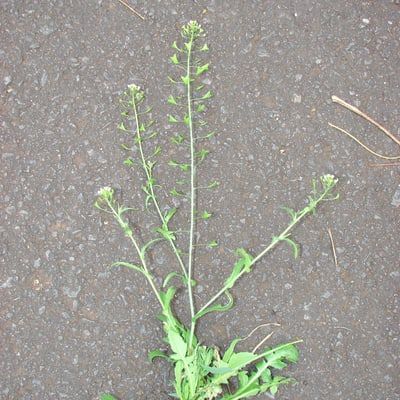
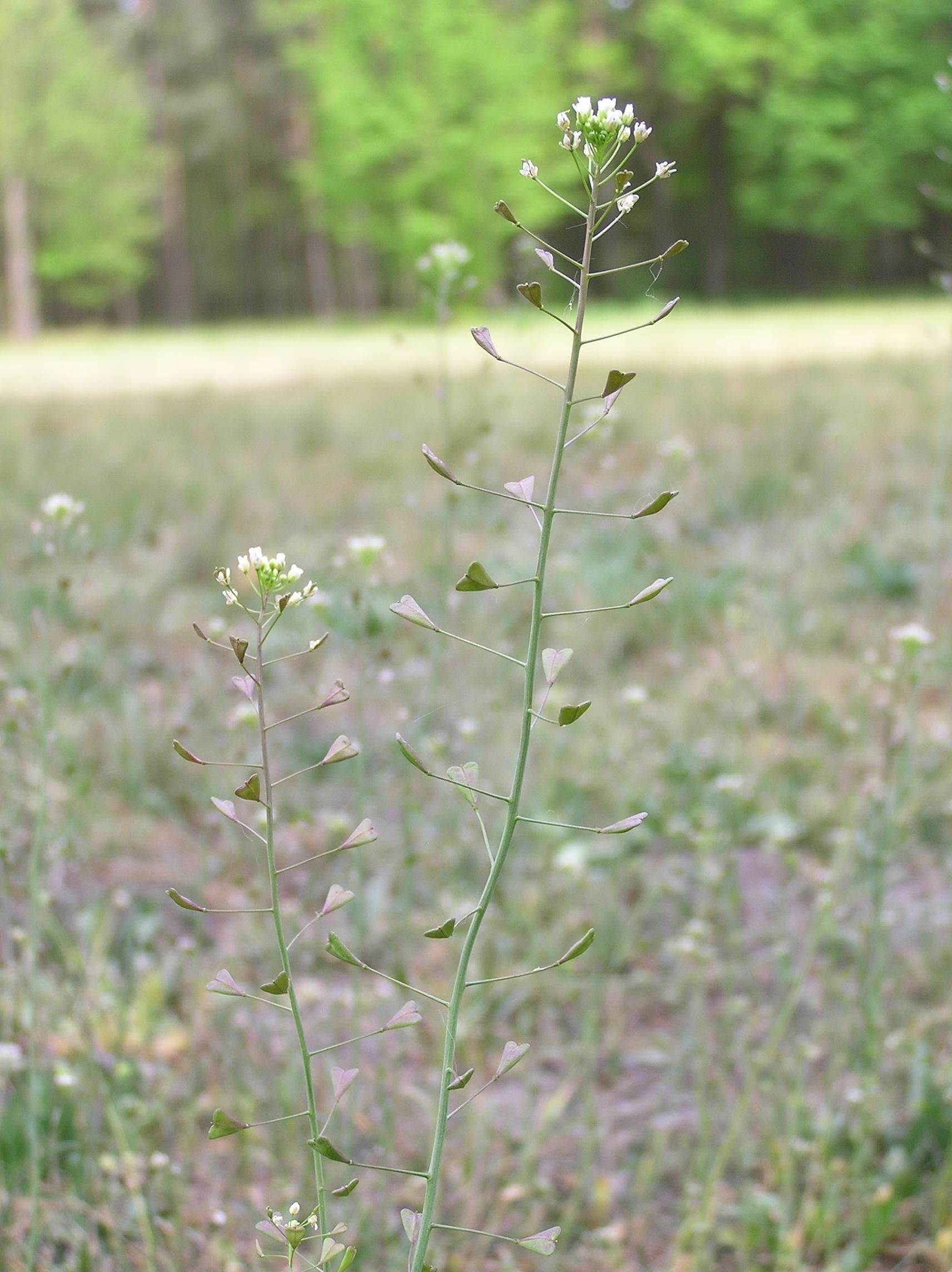
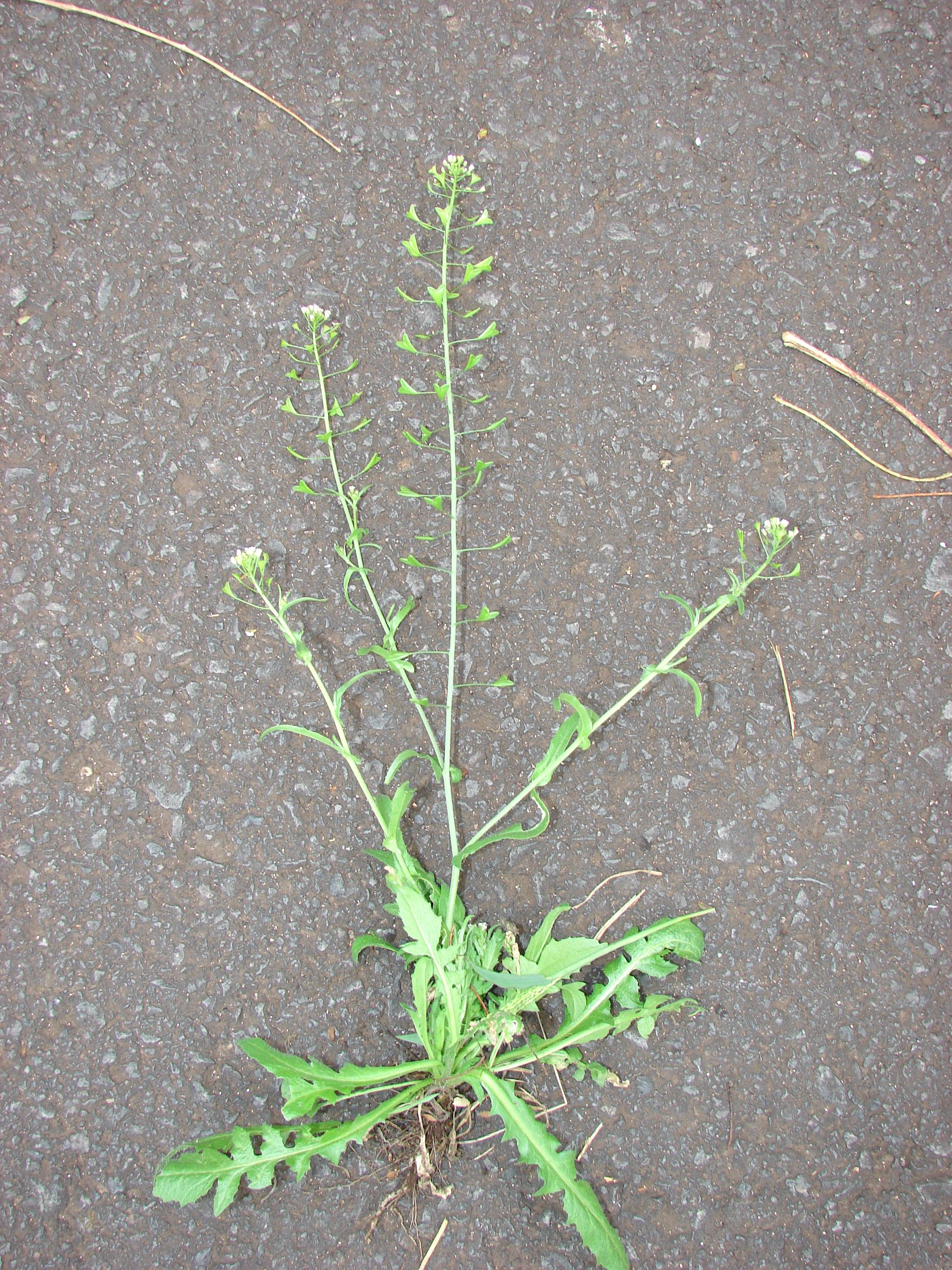
Shepherd’s purse is an annual to biennial plant that can grow to a height of 60 cm.
Most of the leaves form a basal rosette. They are generally elongated and serrated to incised (pinnate). The upper stem leaves are lance-shaped.
The stem is upright and can be simple or branched.
In the upper part of the stem, numerous small flowers are clustered in a botryoidal (shaped like a bunch of grapes) flower head. Each individual floret has four white petals. At the centre of each flower are four long and two shorter stamens.
The fruits are heart-shaped to triangular small pods.
Features
Shepherd's purse
Capsella bursa-pastoris
small triangular fruits
white flowers with four petals
In the city
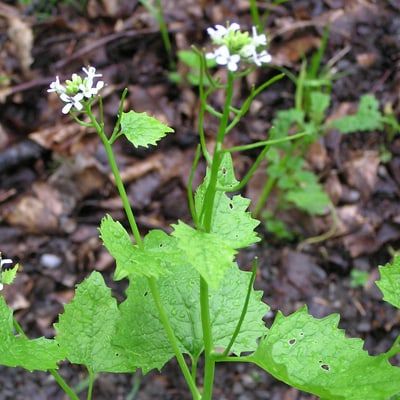
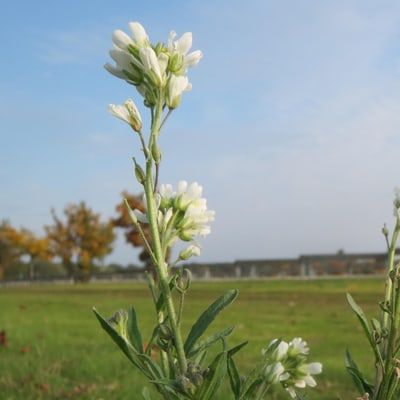
In an urban environment, shepherd’s purse can commonly be found in gardens, along verges and on wasteland. Nutrient-rich urban soils provide it with good habitat conditions. It prefers moderately dry to fresh sites with nutrient-rich soils.
Fun Facts
Shepherd’s purse belongs to the same family of plants as mustard, rucola and cabbage.
Shepherd’s purse develops flowers all year round.
Four alternating petals, seed pods and four longer and two shorter stamens are typical of the crucifer or cabbage plant family.
- Endangerment level Germany: not endangered
The Latin name Capsella bursa-pastoris is composed of "capsa" = capsule, "bursa" = pocket and "pastor" = shepherd and refers to the shape of the fruits of the plant.
Shepherd’s purse promotes blood coagulation. For that reason, it is used in natural medicine for the treatment of external and internal bleeding.
Sources
Habitus, Dalgial, CC BY 3.0, https://commons.wikimedia.org/wiki/File:Capsella_bursa-pastoris_1.JPG

Blütenstand, Conrad Nutschan, CC BY-SA 3.0, https://commons.wikimedia.org/wiki/File:Hirtent%C3%A4schel_in_Trebus_2007.JPG

Habitus, Forest & Kim Starr, CC BY 3.0, https://commons.wikimedia.org/wiki/File:Starr_070308-5329_Capsella_bursa-pastoris.jpg

Eggenberg, S. & Möhl, A. (2007) Flora Vegetativa: Ein Bestimmungsbuch für Pflanzen der Schweiz im blütenlosen Zustand, Bern, Stuttgart, Wien: Haupt Verlag.
Spohn, M., Golte-Bechtle, M. & Spohn, R. (2015) Was blüht denn da? Stuttgart: Franckh Kosmos Verlag.
Jäger, E. J. (2011) Rothmaler - Exkursionsflora von Deutschland. Gefäßpflanzen: Grundband, Heidelberg: Spektrum Akademischer Verlag.
Kammer, P. M. (2016) Pflanzen einfach bestimmen. Schritt für Schritt einheimische Arten kennenlernen, Bern: Haupt Verlag.
Lippert, W. & Podlech, D. (1993) GU Naturführer. Blumen: die wichtigen Blütenpflanzen Mitteleuropas erkennen und bestimmen, München: Gräfe und Unzer Verlag.
Schauer, T., Caspari, C. & Caspari, S. (2015) Der illustrierte BLV-Pflanzenführer für unterwegs. 1150 Blumen, Gräser, Bäume und Sträucher, München: BLV.
Page „Gewöhnliches Hirtentäschel“. : Wikipedia, The Free Encyclopedia. Date of last revision: 28.12.2016, 19:04 UTC. URL: https://de.wikipedia.org/w/index.php?title=Gew%C3%B6hnliches_Hirtent%C3%A4schel&oldid=161046738 (Accessed: 24.01.2017).
Bundesamt für Naturschutz (n.d.) Artensteckbriefe, URL: http://floraweb.de/pflanzenarten/artenhome.xsql?suchnr=1091& (Accessed: 24.01.2017).