
Short Description
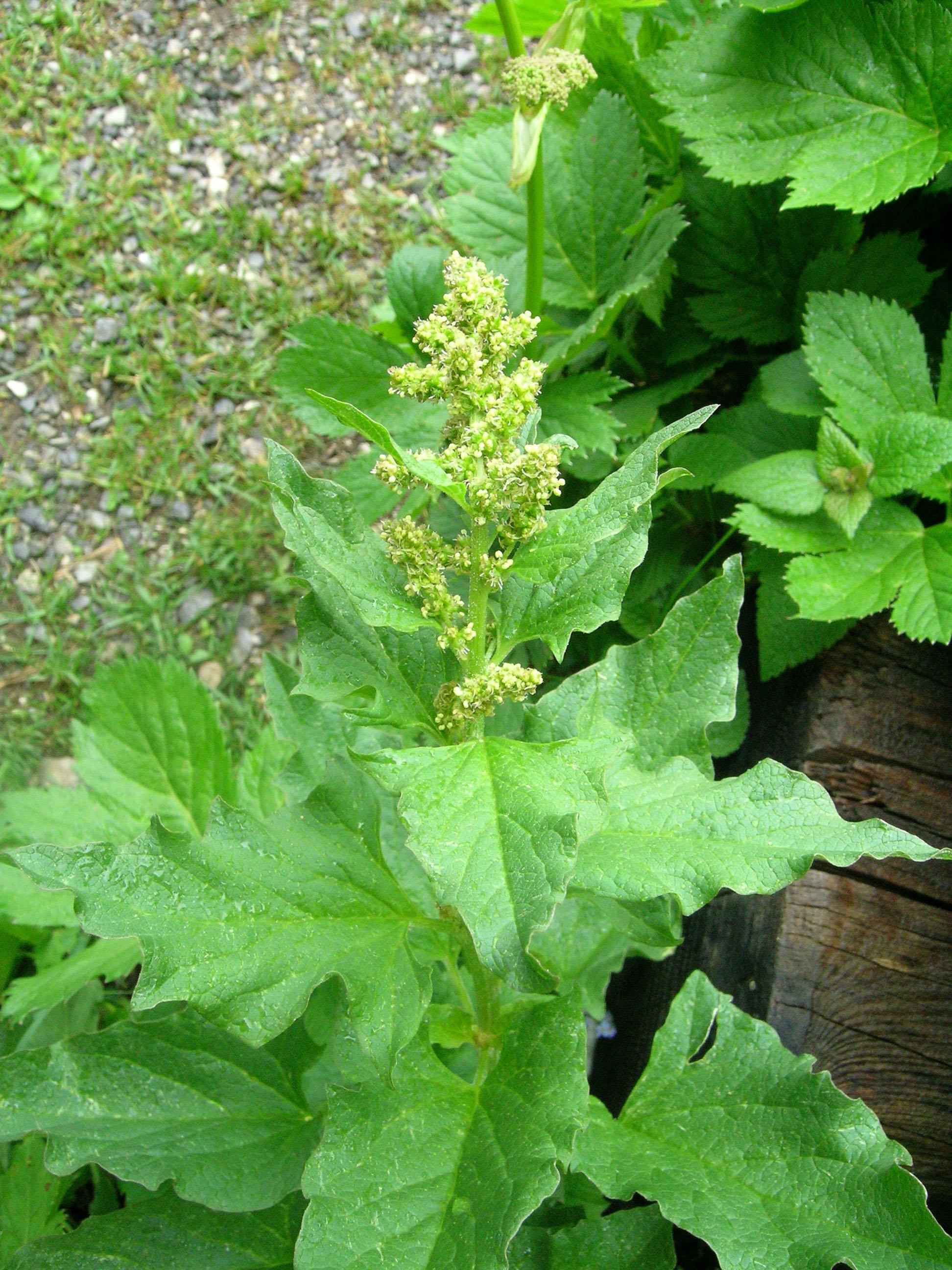
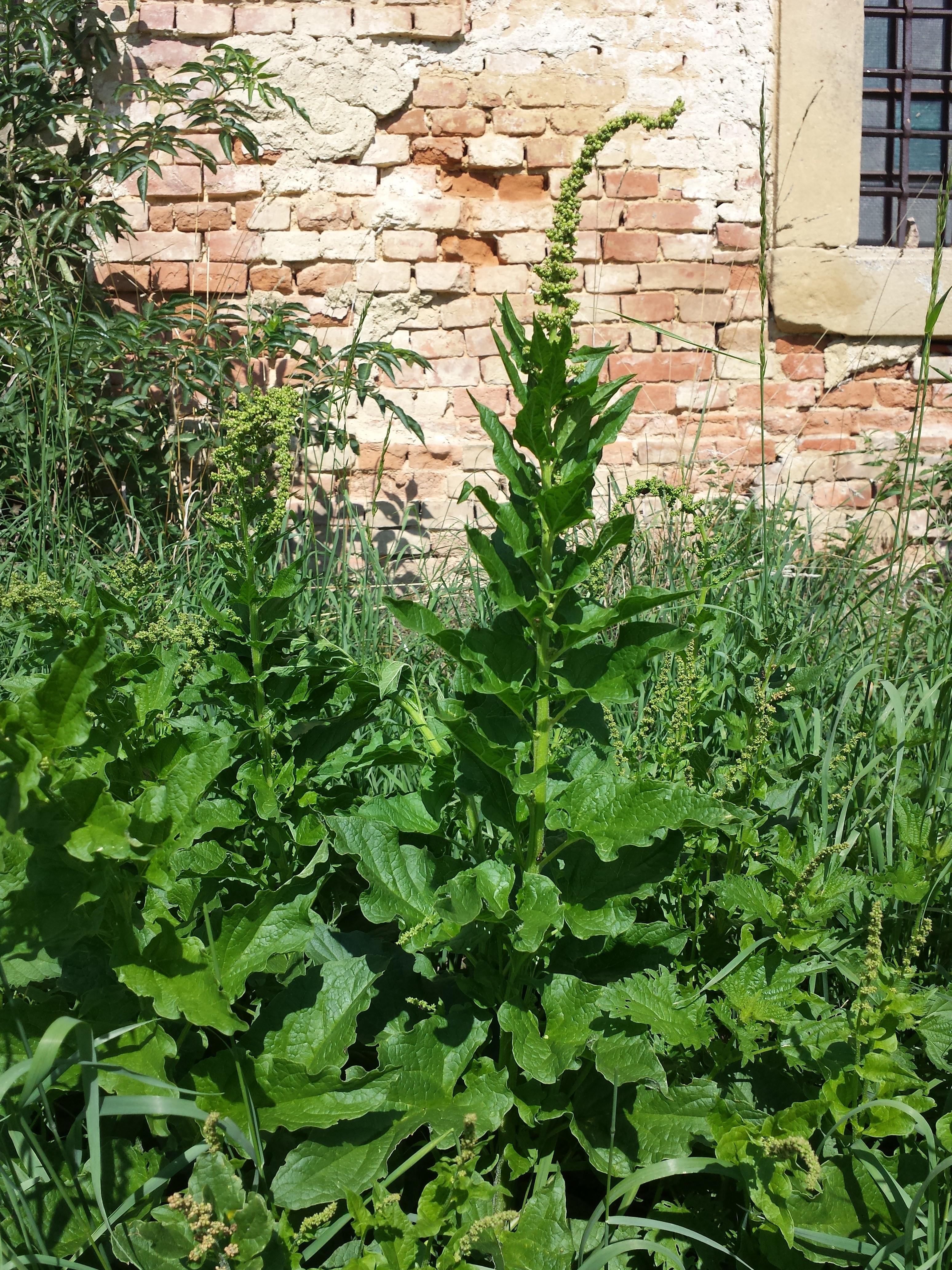
The Good King Henry can grow up to 80 centimetres high.
The leaves are very large and triangular to arrow-shaped. The underside is slightly mealy dusted. They have almost entire margins and are matt green.
The stem grows erect and unbranched. It is grooved and slightly mealy dusted.
The inconspicuous flowers sit in dense clusters as a conical inflorescence at the top of the stem. They are slightly mealy powdered.
The lenticular fruits are dark brown to black and matt.
Features
Good king henry
Blitum bonus-henricus
triangular or arrow-shaped leaves
dense, terminal panicle
In the city
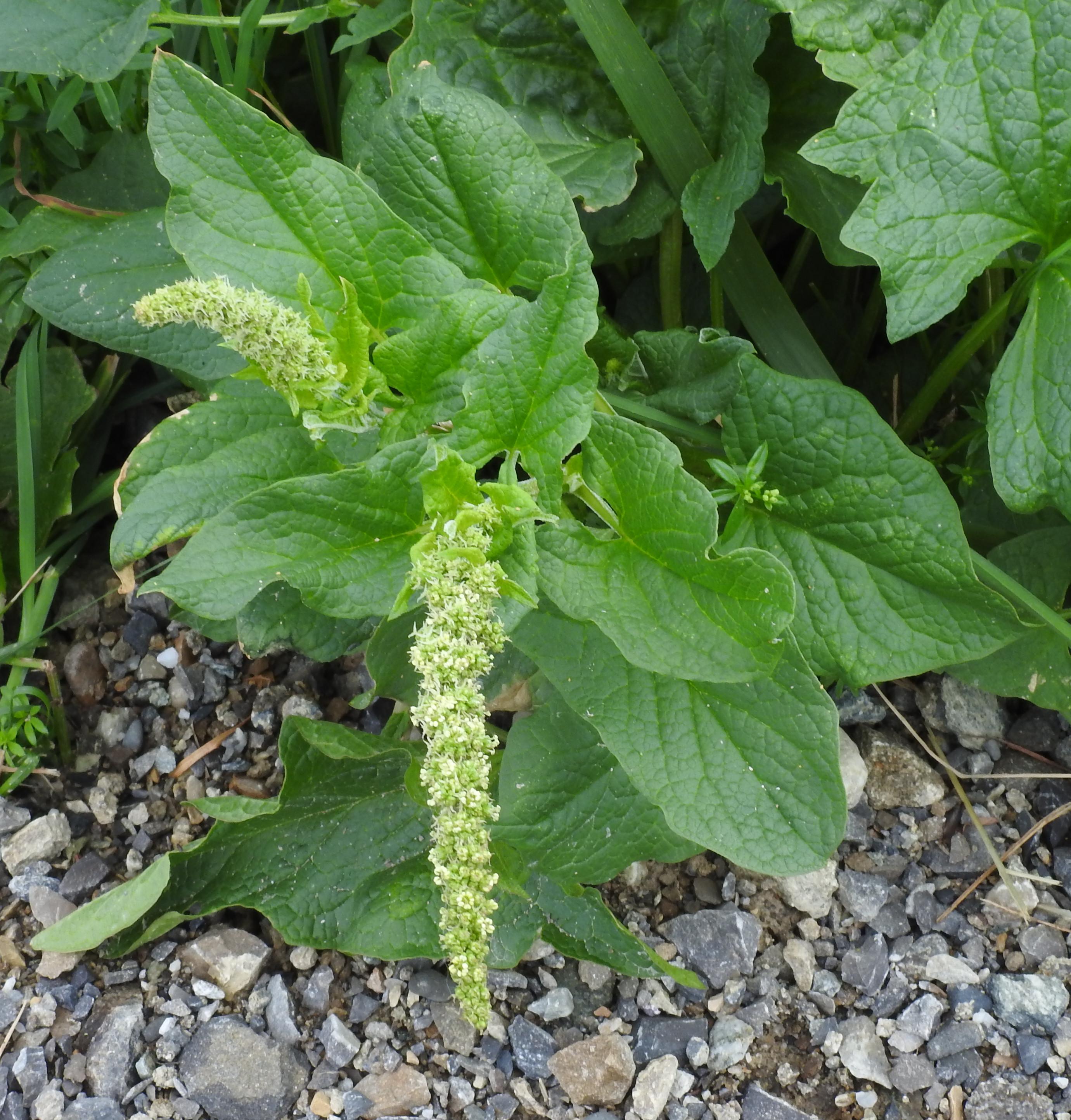
The Good King Henry prefers very nutrient- and ammonia-rich soils and therefore grows mainly near settlements and farms. However, it can also be found along paths, roads and fences. As the size of the city increases, the Good King Heinrich finds fewer suitable sites and its occurrence declines.
Fun Facts
Healers used to apply crushed leaves and roots to heal wounds.
The flowering period is from June to September.
Good King Henry is a perennial plant. It lives for more than two years, but flowers only once and dies after the seeds have ripened.
The flowers are pollinated by the wind.
The seeds are spread by attachment to animals or humans and by digestive dispersal from animals.
- Endangerment level Germany: endangered
It has its origin in Central Europe. However, it was already introduced to eastern North America as a non-native plant (neophyte).
The leaves can be prepared and eaten like spinach. They contain plenty of vitamin C and iron. Young shoots resemble asparagus and are also suitable for consumption.
Sources
Habitus, Thomas Mathis, CC BY-SA 3.0, https://commons.wikimedia.org/wiki/File:Chenopodium_bonus-henricus.JPG

Blütenstand, Robert Flogaus-Faust, CC BY-SA 4.0 , https://commons.wikimedia.org/wiki/File:Blitum_bonus-henricus_RF.jpg

Habitus, Stefan.lefnaer, CC BY-SA 4.0, https://commons.wikimedia.org/wiki/File:Chenopodium_bonus-henricus_sl11.jpg

Kammer, P. M. (2016) Pflanzen einfach bestimmen. Schritt für Schritt einheimische Arten kennenlernen, Bern: Haupt Verlag.
Schauer, T., Caspari, C. & Caspari, S. (2015) Der illustrierte BLV-Pflanzenführer für unterwegs. 1150 Blumen, Gräser, Bäume und Sträucher, München: BLV.
Spohn, M., Golte-Bechtle, M. & Spohn, R. (2015) Was blüht denn da? Stuttgart: Franckh Kosmos Verlag.
Page „Guter Heinrich“. : Wikipedia, The Free Encyclopedia. Date of last revision: 13.09.2017, 08:32 UTC. URL: https://de.wikipedia.org/w/index.php?title=Guter_Heinrich&oldid=169039027 (Accessed: 11.01.2018).