
Short Description
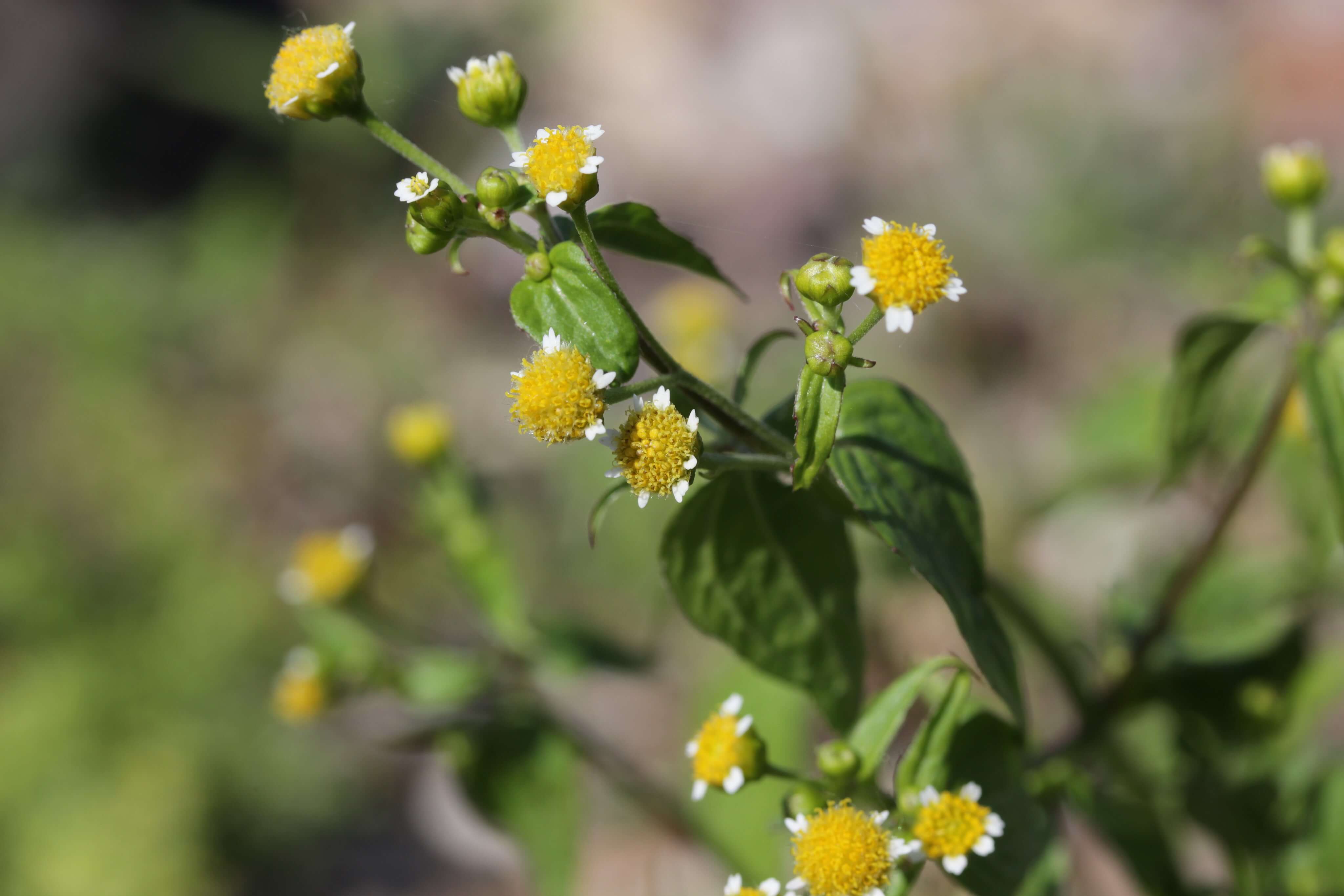
Gallant soldier can grow to a height of 25 cm.
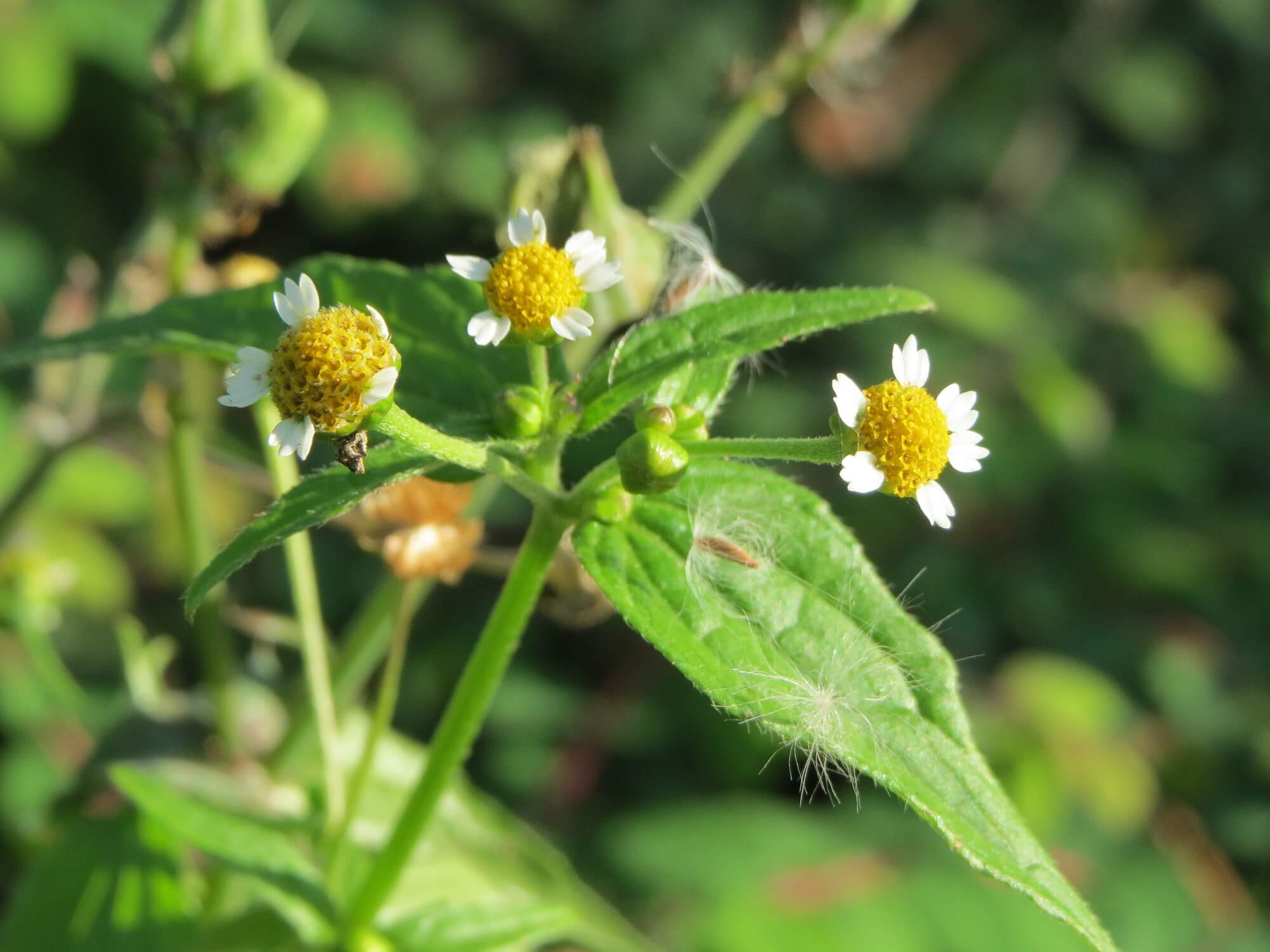
The leaves are solitary and grow opposite each other on the stem. Their margins are finely toothed.
The stem is upright and hairless. It can also be sparsely haired with close-lying hairs.
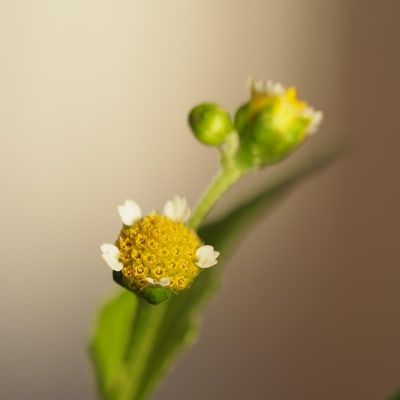
At first glance, the flower head can be mistaken for the flower itself. This pseudanthium (“false flower”) consists of five individual white ray florets at the margins and yellow disc florets in the middle.
The fruits are small nutlets.
Features
Gallant soldier
Galinsoga parviflora
five marginal white ray florets
opposite leaves
Similar species
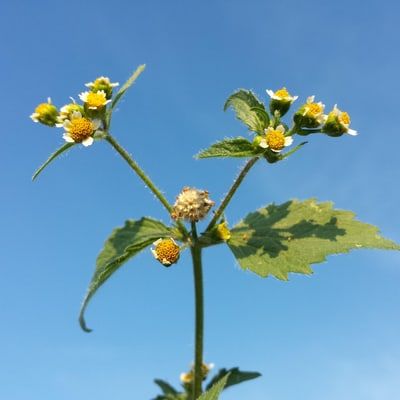
Galinsoga quadriradiata
In the city
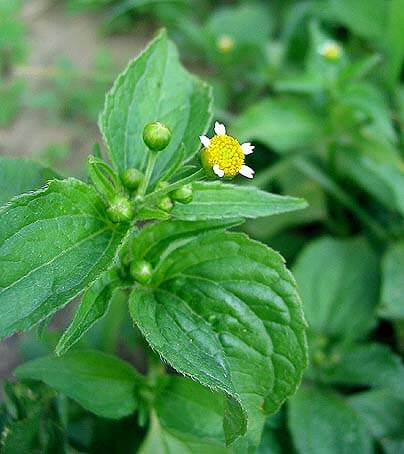
In the city, gallant soldier can often be found in gardens or roadsides. It prefers nutrient-rich light sites on sandy to loamy soil.
The plant is well suited to use in wild herb salads or as a vegetable. In agriculture and gardens, though, gallant soldier is combatted as a weed.
Fun Facts
The plant is rich in vitamins and minerals.
Gallant soldier has an antihypertensive effect (to reduce blood pressure).
It flowers from June to October.
It ran wild and at the time of the Napoleonic wars spread across all of Germany. This explains its German name “Franzosenkraut” (Frenchman’s herb).
- Endangerment level Germany: not evaluated
Gallant soldier originates from South America. It is a non-native plant (neophyte).
Young leaves and flowers taste particularly nice.
Sources
Habitus, Björn S..., CC BY-SA 2.0 , https://upload.wikimedia.org/wikipedia/commons/9/92/Galinsoga_parviflora_%2830140381428%29.jpg
.jpg)
Habitus, Jeantosti, CC BY-SA 3.0 , https://upload.wikimedia.org/wikipedia/commons/5/57/Galinsoga1.jpg

Habitus, AnRo0002, CC0, https://upload.wikimedia.org/wikipedia/commons/f/fe/20140917Galinsoga_parviflora.jpg

Fleischhauer, S. G., Guthmann, J. & Spiegelberger, R. (2007) Essbare Wildpflanzen. 200 Arten bestimmen und verwenden, Baden und München: AT Verlag.
Schauer, T., Caspari, C. & Caspari, S. (2015) Der illustrierte BLV-Pflanzenführer für unterwegs. 1150 Blumen, Gräser, Bäume und Sträucher, München: BLV.
Page „Kleinblütiges Knopfkraut“. : Wikipedia, The Free Encyclopedia. Date of last revision: 07.09.2016, 14:53 UTC. URL: https://de.wikipedia.org/w/index.php?title=Kleinbl%C3%BCtiges_Knopfkraut&oldid=157738907 (Accessed: 22.09.2016).
Bundesamt für Naturschutz (n.d.) Artensteckbriefe, URL: http://floraweb.de/pflanzenarten/artenhome.xsql?suchnr=2530& (Accessed: 22.09.2016).