
Short Description
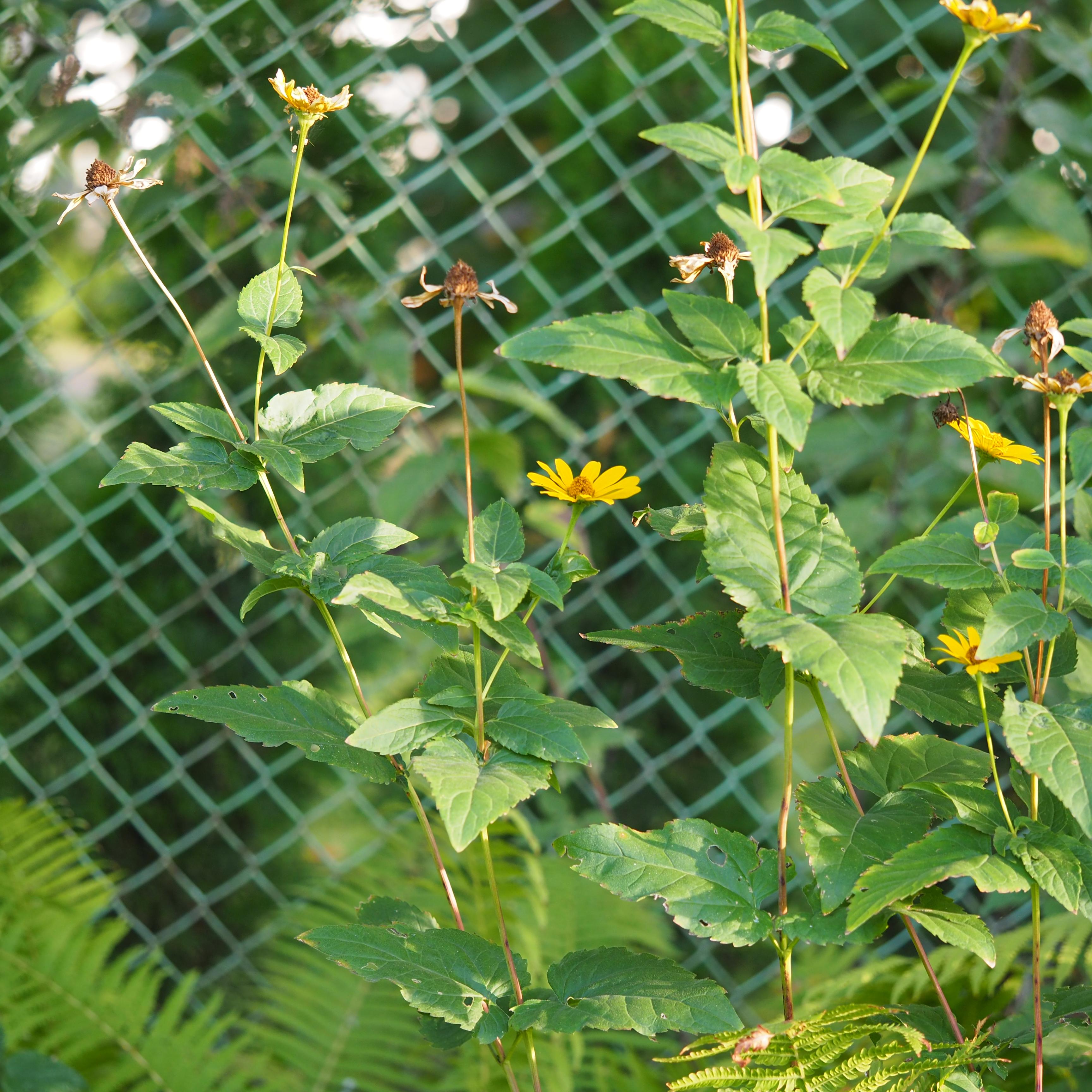
Jerusalem artichoke can grow to up to three metres in height. The shoot is annual and dies back in autumn. The underground tuber is a hibernating organ.
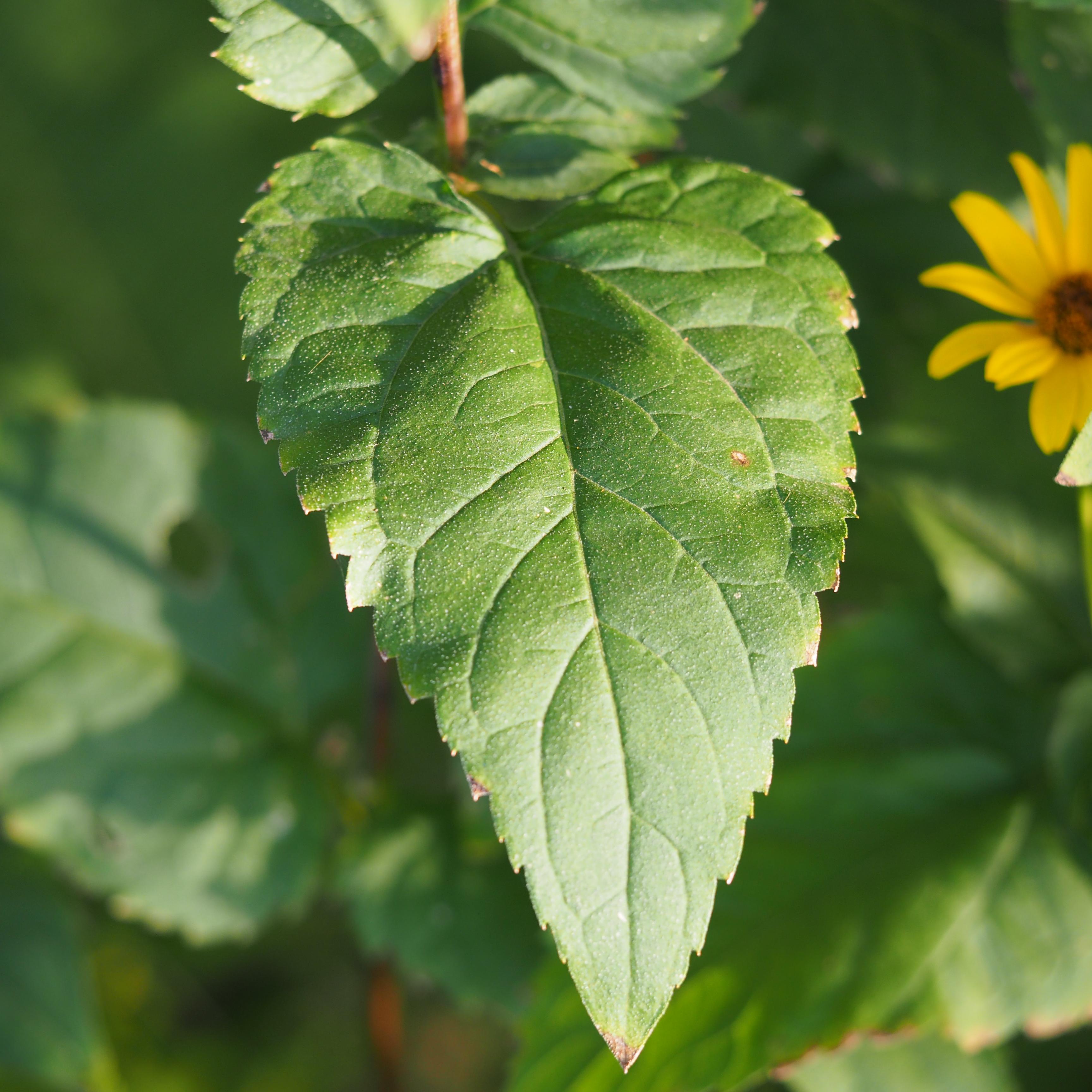
The leaves are oval, pointed and with a stalk. They have a dense hairy texture and thus feel rough.
The stem is straight and branched. It terminates in a highly branched compound flower head with several individual flower heads.
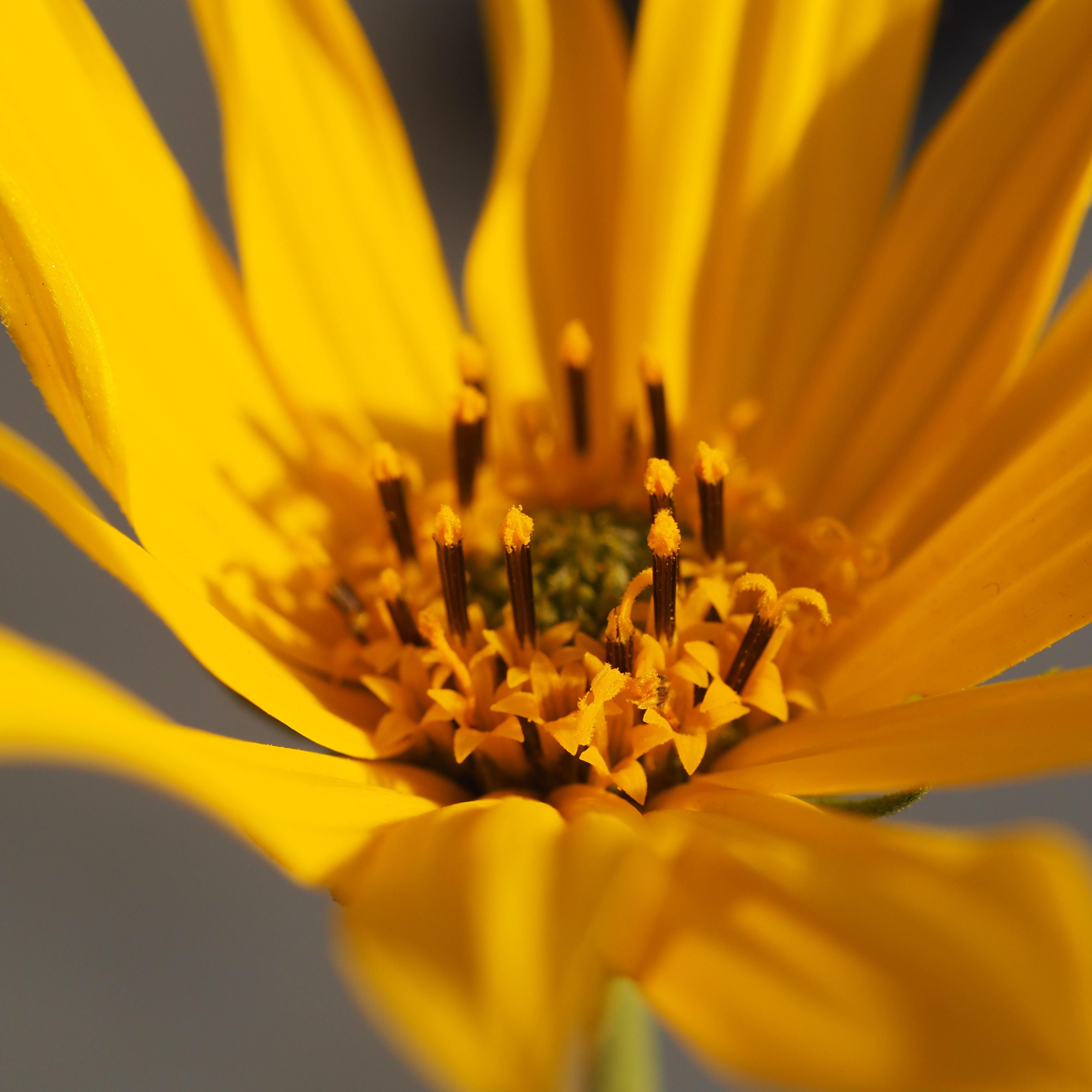
At first glance, the flower head can be mistaken for the flower itself. The pseudanthium (“false flower”) consists of numerous individual yellow ray florets at the edge and dark-brown to yellow disc florets in the middle.
The fruits are small flat seeds reminiscent of sunflower seeds.
Features
Jerusalem artichoke
Helianthus tuberosus
underground tubers near the surface
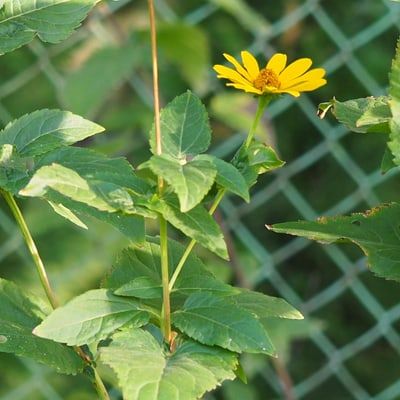
large sunny-yellow flower heads
In the city
Jerusalem artichoke mainly colonises the banks of flowing waters and its roots help stabilise river banks. It is also often planted in gardens as an ornamental plant and spreads from there. It prefers moderately nutrient-rich sunny sites with sandy soil.
Fun Facts
The tubers taste slightly sweet, similar to artichokes, and are of a watery consistency. They can be eaten raw or prepared like potatoes.
Jerusalem artichoke belongs to the sunflower family and is thus closely related to the sunflower.
The syrup from Jerusalem artichoke can be used to produce fructose or a high-fructose syrup.
Jerusalem artichoke tubers are a food suitable for diabetics.
Jerusalem artichoke tubers are used to aid weight loss, as they are particularly rich in dietary fibres.
It flowers from August to November.
- Endangerment level Germany: not evaluated
Jerusalem artichoke originates from North and Central America. The tubers were first brought to Europe in the early 17th century. They are a non-native species (neophytes).
In the 19th century, the tubers became one of the most important foods and animal fodder in Europe. Soon after, it was replaced by the potato.
Sources
Habitus, Alice Kracht, CC BY-SA 4.0, https://offene-naturfuehrer.de/web/Datei:Helianthus_tuberosus_(13).JPG
.JPG)
Blütenkorb mit Röhren- und Zungenblüten, Alice Kracht, CC BY-SA 4.0, https://offene-naturfuehrer.de/web/Datei:Helianthus_tuberosus_(37).JPG
.JPG)
Blatt, Alice Kracht, CC BY-SA 4.0, https://offene-naturfuehrer.de/web/Datei:Helianthus_tuberosus_(15).JPG
.JPG)
Schönfelder, I. & Schönfelder, P. (2010) Der Kosmos-Heilpflanzenführer. Über 600 Heil- und Giftpflanzen Europas, Stuttgart: Franckh Kosmos Verlag.
Fleischhauer, S. G., Guthmann, J. & Spiegelberger, R. (2007) Essbare Wildpflanzen. 200 Arten bestimmen und verwenden, Baden und München: AT Verlag.
Page „Topinambur“. : Wikipedia, The Free Encyclopedia. Date of last revision: 29.07.2016, 17:58 UTC. URL: https://de.wikipedia.org/w/index.php?title=Topinambur&oldid=156565287 (Accessed: 14.09.2016).