
Short Description
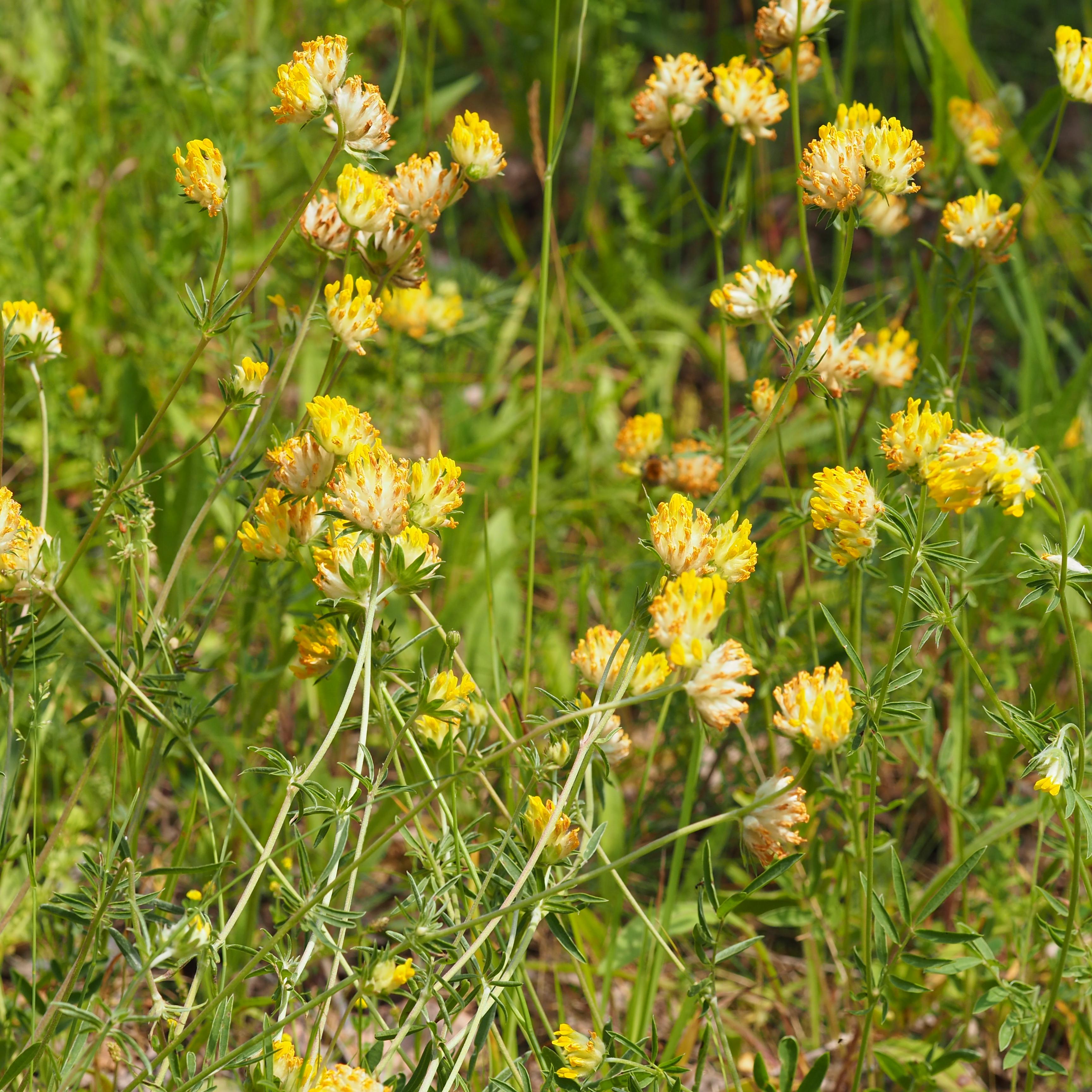
The common kidney vetch can grow to a height of 50 cm.
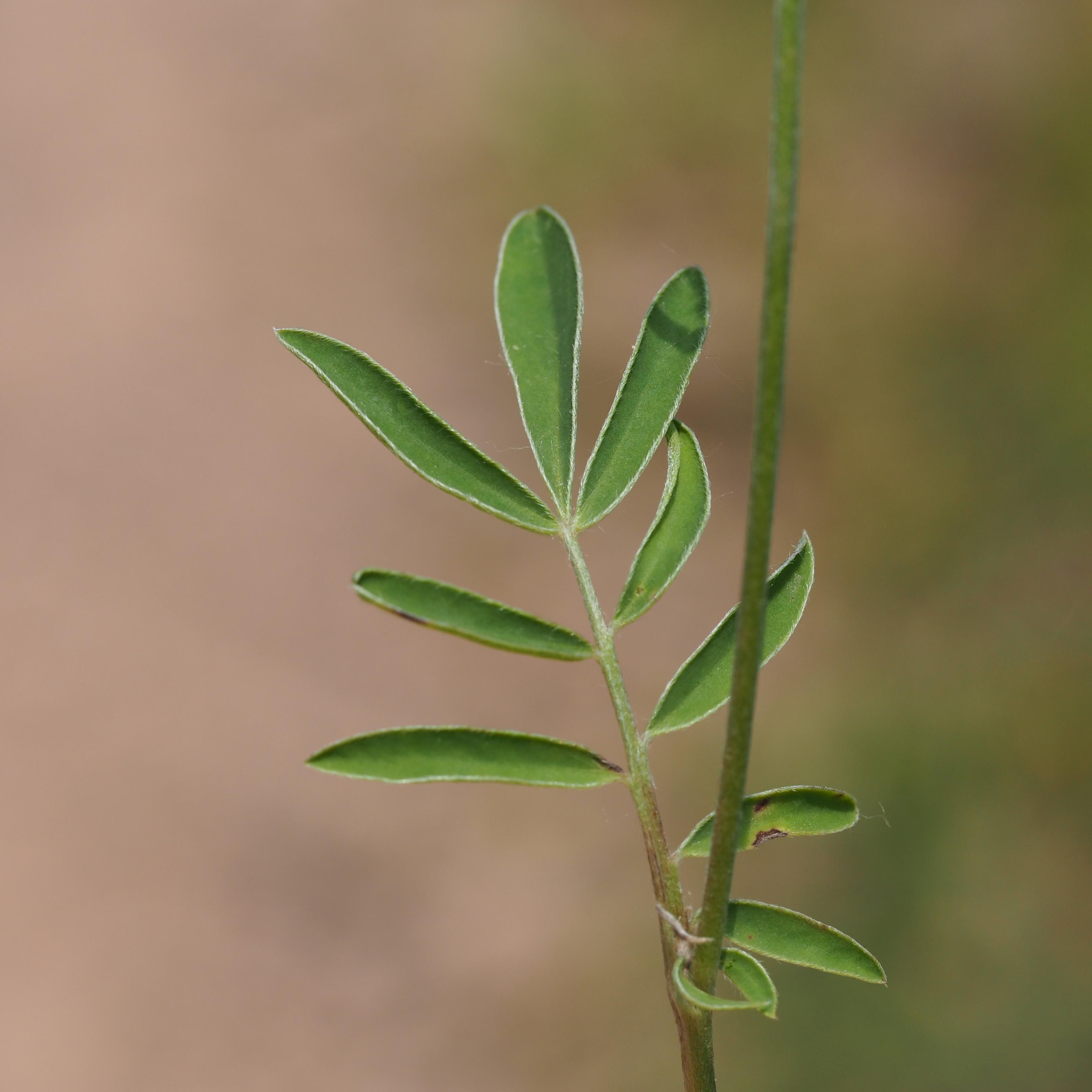
The leaves grow alternately. One leaf consists of several leaflets with a terminal leaflet at the tip (unequally pinnate). The number of leaflets can range from two to seven. The terminal leaflet is always the longest. The leaves are narrow-elliptical with a smooth margin.
The stem is upward to erect, partially subterranean and forms a deep root system.
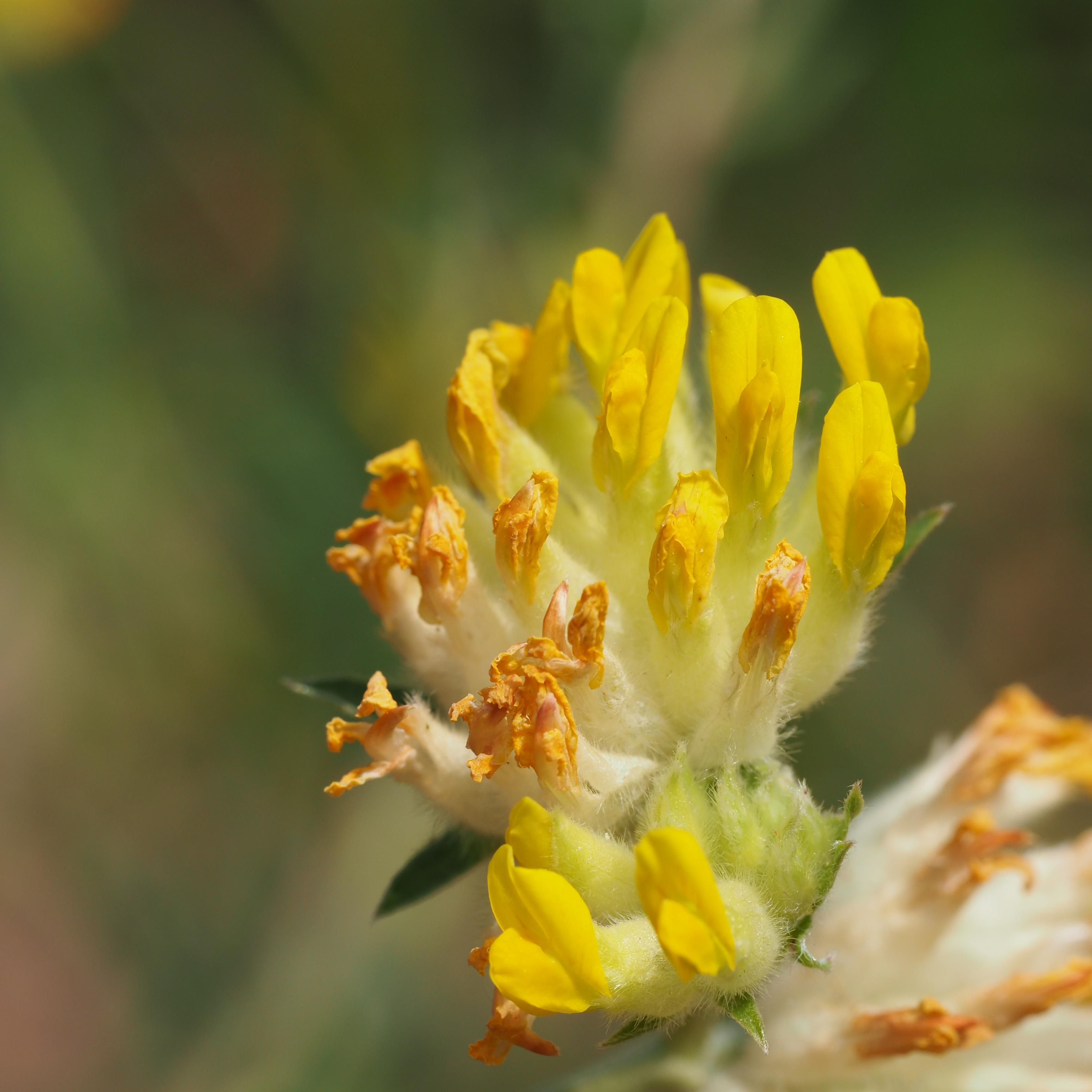
The flowers are clustered in great numbers in spherical flower heads. The individual florets are brilliantly yellow to orange, each with its own hairy calyx. Each flower has only a single mirror axis (mirror-symmetric). It consists of five petals. The large upper petal protrudes upwards. The two lower petals form a hollow boat that surrounds the anthers and pistil.
The fruit is a small singe-seed pod that remains in the calyx until ripe.
Features
Common kidney vetch
Anthyllis vulneraria
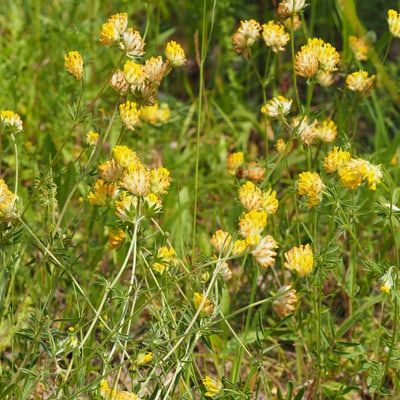
spherical flower heads with yellow flowers
terminal leaf always the largest
Similar species
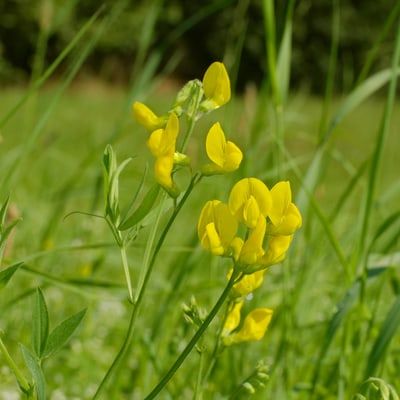
Meadow vetchling
Lathyrus pratensis
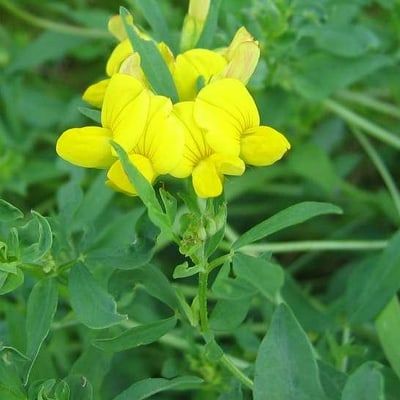
Bird's-foot trefoil
Lotus corniculatus
In the city
The common kidney vetch naturally grows in coastal dunes and Alpine meadows. As a pioneer plant, it often colonises new areas still free from plants. Building sites that are more common in towns together with stony embankments, railway lands and sandpits provide the plant with substitute habitats. It prefers moderately dry and sunny sites with humus-rich loamy or loess soil.
It grows deep roots, thus preventing land from sliding. For that reason, it is often planted on embankments.
Fun Facts
Symbiosis with root-nodulation bacteria is typical for members of the papilionaceae family. The bacteria supply the plant with nitrogen. As the bacteria require a plant to fix nitrogen, this biological interaction is beneficial to both species (symbiosis).
A papilionaceous flower is a form of flower typical for most members of the legume family.
It flowers from May to September.
- Endangerment level Germany: not endangered
In folk medicine, kidney vetch is often used to support wound healing and as a cough remedy.
Sources
Habitus, Alice Kracht, CC BY-SA 4.0, https://offene-naturfuehrer.de/web/Datei:Anthyllis_vulneraria_(6).JPG
.JPG)
Blatt, Alice Kracht, CC BY-SA 4.0, https://offene-naturfuehrer.de/web/Datei:Anthyllis_vulneraria_(5).JPG
.JPG)
Blütenstand, Alice Kracht, CC BY-SA 4.0, https://offene-naturfuehrer.de/web/Datei:Anthyllis_vulneraria_12.JPG

Spohn, M., Golte-Bechtle, M. & Spohn, R. (2015) Was blüht denn da? Stuttgart: Franckh Kosmos Verlag.
Lippert, W. & Podlech, D. (1993) GU Naturführer. Blumen: die wichtigen Blütenpflanzen Mitteleuropas erkennen und bestimmen, München: Gräfe und Unzer Verlag.
Needon, C. & Petermann, J. (1991) Urania-Naturführer Pflanzen, Leipzig, Jena, Berlin: Urania-Verlag.
Schauer, T., Caspari, C. & Caspari, S. (2015) Der illustrierte BLV-Pflanzenführer für unterwegs. 1150 Blumen, Gräser, Bäume und Sträucher, München: BLV.
Scherf, G. (2006) Wildpflanzen neu entdecken, München: BLV.
Page „Echter Wundklee“. : Wikipedia, The Free Encyclopedia. Date of last revision: 18.11.2015, 11:09 UTC. URL: https://de.wikipedia.org/w/index.php?title=Echter_Wundklee&oldid=148156959 (Accessed: 10.11.2016).
Bundesamt für Naturschutz (n.d.) Artensteckbriefe, URL: http://floraweb.de/pflanzenarten/artenhome.xsql?suchnr=477& (Accessed: 10.11.2016).